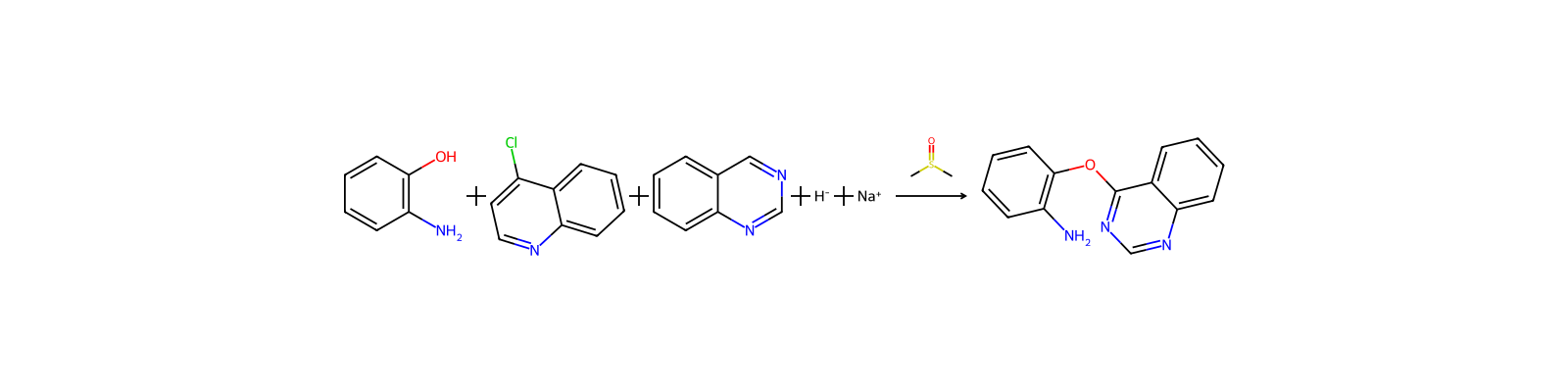
4-クロロキノリン
4-Chloroquinoline
データを補完しています。しばらくしてからページを更新すると最新の内容を表示できます

基本情報
- CAS
611-35-8- 標準SMILES
Clc1ccnc2ccccc12- InChIKey
KNDOFJFSHZCKGT-UHFFFAOYSA-N- 分子式
- C9H6ClN
- 平均分子量
- 163.6 g/mol
- 単同位体質量
- 163.01887687
名称と識別子
- 優先名称
- 4-Chloroquinoline
- IUPAC
- 4-chloroquinoline
- 現地名
- 4-クロロキノリン
- 英語名
- 4-Chloroquinoline
- 分子式
- C9H6ClN
- 分子量
- 163.6
名称と別名
4-Chloroquinoline611-35-8CCRIS 3979EINECS 210-267-7DTXSID40209979NSC 96902RefChem:522082DTXCID40132470210-267-7Quinoline, 4-chloro-MFCD000067734-chloro-quinoline
名称をさらに表示
4-クロロキノリン4クロロキノリン4-クロロキノリン, 99%oroquinoL4-Chloro-1-benzazine4-Chloroquinoline 97%Butyraldehyde,Butanal4-Chloroquinoline,99%4-Chloroquinoline, 98%+4-CHLOROQUINOLINE ISO 9001:2015 REACH
FXK6W2A3GTSCHEMBL201545NSC96902NSC-96902AKOS002680474AC-23128BP-12079SY003930
データベース識別子
- CAS
611-35-8- PubChem CID
- 69140
- DTXSID
DTXSID40209979- UNII
- FXK6W2A3GT
- EC Number
- 210-267-7
- Nikkaji
- J95.373C
物性
構造計算による物性補完中
- XLogP
- 1.6
- 極性表面積
- 12.9 Ų
- 水素結合供与体数
- 0
- 水素結合受容体数
- 1
- 回転可能結合数
- 0
- 重原子数
- 11
- 形式電荷
- 0
- 複雑度
- 138
実験および物理化学的性質
Chemical ClassesNitrogen Compounds -> Quinolines
Physical DescriptionMelting point = 34.5 deg C; [ChemIDplus] Clear dark yellow liquid; mp = 28-31 deg C; [Sigma-Aldrich MSDS]
物理化学的性質
- 融点
- 28 · 28-31 °C (lit.)
- 沸点
- 260 · 260-261 °C (lit.)
- 比重(密度)
- 1.25 g/mL · 1.25 g/mL at 20 °C (lit.)
- 屈折率
- 1.611 · 1.6110 (estimate)
- 闪点
- 230 °F · >230 °F
- 貯蔵温度
- Keep in dark place,Sealed in dry,Room Temperature
- 外見
- powder to lump
- 酸解離定数(Pka)
- 3.57 · 3.57±0.13(Predicted)
- 色
- White to Almost white
- 水溶解度
- 水に部分的に溶ける。
- BRN
- 114721 · 114721
- InChI
- 1S/C9H6ClN/c10-8-5-6-11-9-4-2-1-3-7(8)9/h1-6H
- InChIKey
- KNDOFJFSHZCKGT-UHFFFAOYSA-N
安全と法規制
安全情報は参考情報です。供給元の安全データシート(SDS)、適用法令、専門家による評価に代わるものではありません。
GHS分類
GHS Classification
Warning
H315 (100%): Causes skin irritation [Warning Skin corrosion/irritation]
P261, P264, P264+P265, P271, P280, P302+P352, P304+P340, P305+P351+P338, P319, P321, P332+P317, P337+P317, P362+P364, P403+P233, P405, and P501 (click each P-code to see the statement)
Aggregated GHS information provided per 42 reports by companies from 5 notifications to the ECHA C&L Inventory. Each notification may be associated with multiple companies.
危険有害性情報
Hazards SummaryAn irritant; [Sigma-Aldrich MSDS] See Quinoline.
Hazard Classes and CategoriesSkin Irrit. 2 (100%)
安全データ
- wgk
- 3
- hs_code
- 2933990099
- risk_code
- 36/37/38
- hazard_code
- Xi
- hazard_note
- Irritant
- safety_code
- 26-37/39-36
- Hazard Classifications
- Eye Irrit. 2Skin Irrit. 2STOT SE 3
- ストレージクラス
- 10 - Combustible liquids
化学と産業
応用分野
使用4-Chloroquinoline is an important raw material and intermediate used in organic synthesis, pharmaceuticals, agrochemicals and dyestuffs.
調製方法
純化方法Possible impurities include the 2-isomer. It is best purified by converting to the picrate (m 212-213o dec) in EtOH and recrystallising it from EtOH (where the picrate of the 2-chloroquinoline remains in solution) or EtOAc . The picrate is decomposed with 5% aqueous NaOH, extracted in CHCl3, washed with H2O, dried (MgSO4), evaporated and distilled in a vacuum. It can be steam distilled from slightly alkaline aqueous solutions, the aqueous distillate is extracted with Et2O, evaporated and distilled. The distillate solidifies on cooling. [Bobránski Chem Ber 71 578 1938, Beilstein 20/7 V 314.]
上流・下流製品情報
上流原料
関連反応
181 件




化合物ノート
読み込み中…