反応式
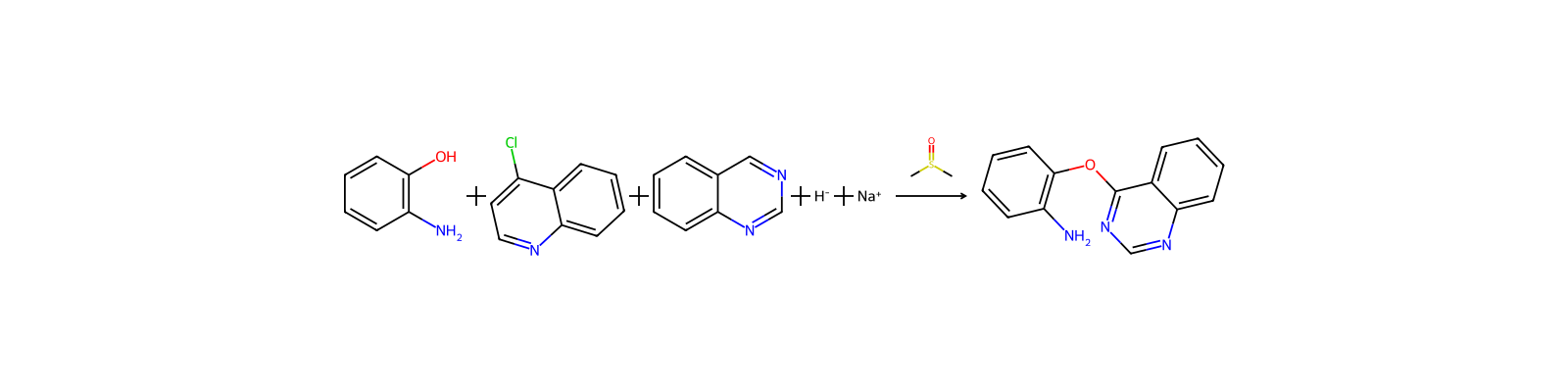
[NH2:1][C:2]1[CH:7]=[CH:6][CH:5]=[CH:4][C:3]=1[OH:8].ClC1C2C(=CC=CC=2)N=CC=1.[N:20]1[C:29]2[C:24](=[CH:25][CH:26]=[CH:27][CH:28]=2)[CH:23]=[N:22][CH:21]=1.[H-].[Na+]>CS(C)=O>[NH2:1][C:2]1[CH:7]=[CH:6][CH:5]=[CH:4][C:3]=1[O:8][C:23]1[C:24]2[C:29](=[CH:28][CH:27]=[CH:26][CH:25]=2)[N:20]=[CH:21][N:22]=1参加物






実験手順
Alternatively, the 4-(aminophenoxy)quinoline derivative or corresponding quinazoline derivative may be produced by reacting an aminophenol derivative with the 4-chloroquinoline derivative or corresponding quinazoline derivative in a suitable solvent, for example, dimethyl sulfoxide, in the presence of a base, for example, sodium hydride. Alternatively, the 4-(aminophenoxy)quinazoline derivative may also be produced by dissolving an aminophenol derivative in an aqueous sodium hydroxide solution and subjecting the solution to a two-phase reaction with a solution of the 4-chloroquinazoline derivative in a suitable organic solvent, for example, ethyl methyl ketone, in the presence of a phase transfer catalyst, for example, tetra-n-butylammonium chloride, or in the absence of the catalyst.
出典と根拠
- ORDレコード
- ord-29ee2f96bcba4431ad89bde7ba652589
- 出典データセット
- uspto-grants-2008_09
- 特許番号
- US07425564B2
関連ノート
読み込み中…