
イソブチロフェノン
Isobutyrophenone
データを補完しています。しばらくしてからページを更新すると最新の内容を表示できます
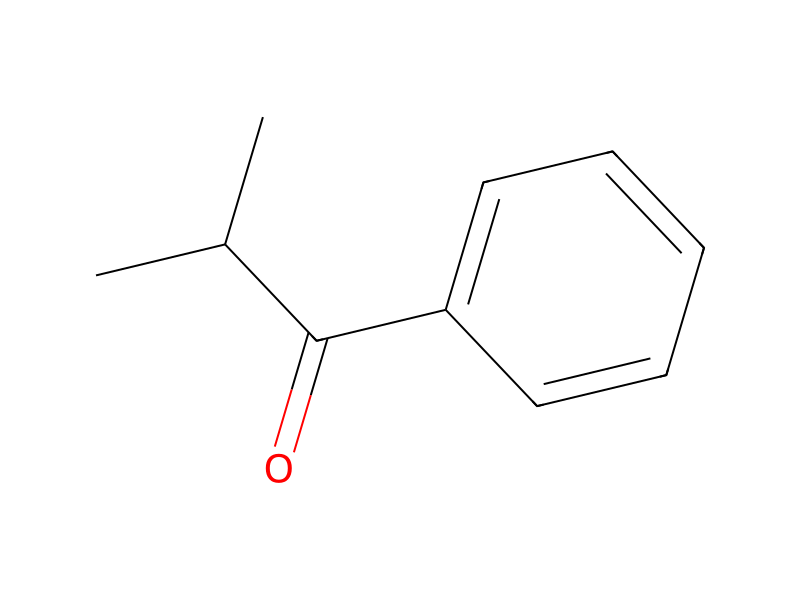
基本情報
- CAS
611-70-1- 標準SMILES
CC(C)C(=O)c1ccccc1- InChIKey
BSMGLVDZZMBWQB-UHFFFAOYSA-N- 分子式
- C10H12O
- 平均分子量
- 148.2 g/mol
- 単同位体質量
- 148.088815
名称と識別子
- 優先名称
- Isobutyrophenone
- IUPAC
- 2-methyl-1-phenylpropan-1-one
- 現地名
- イソブチロフェノン
- 英語名
- Isobutyrophenone
- 分子式
- C10H12O
- 分子量
- 148.2
名称と別名
Isobutyrophenone611-70-12-methyl-1-phenylpropan-1-oneIsopropyl phenyl ketone1-Propanone, 2-methyl-1-phenyl-Isopropyl phenyl ketonUNII-8L53972NTZDTXSID6048202iso-ButyrophenoneEINECS 210-275-01-PHENYL-2-METHYL-1-PROPANONEAI3-11204
名称をさらに表示
イソブチロフェノン2-メチル-1-フェニル-1-プロパノンα-メチルプロピオフェノンフェニル(1-メチルエチル)ケトンフェニルイソプロピルケトン(2-メチル-1-オキソプロピル)ベンゼン1-フェニル-2-メチル-1-プロパノン2-ベンゾイルプロパンイソブチリルベンゼン2-メチル-1-フェニルプロパン-1-オンイソプロピルフェニルケトン2-MethylpropiophenoneisobutyrophenonPHENYL ISOPROPYL KETONEISOBUTROPHENONEsobutyrophenonelsobutyrophenoneISOBUTYRYLBENZENE
8L53972NTZNSC 6552NSC-6552DTXCID4028177EC 210-275-02-METHYL-1-PHENYLPROPANONERefChem:1491242040-14-4
データベース識別子
- CAS
611-70-1- PubChem CID
- 69144
- DTXSID
DTXSID6048202- ChEMBL
CHEMBL3187314- UNII
- 8L53972NTZ
- EC Number
- 210-275-0
- Nikkaji
- J47.812A
物性
構造計算による物性補完中
- XLogP
- 2.7
- 極性表面積
- 17.1 Ų
- 水素結合供与体数
- 0
- 水素結合受容体数
- 1
- 回転可能結合数
- 2
- 重原子数
- 11
- 形式電荷
- 0
- 複雑度
- 132
実験および物理化学的性質
SpringerMaterials Properties13C nuclear magnetic resonance spectrum
LogP2.59
物理化学的性質
- 融点
- 1 °C · 1 °C
- 沸点
- 215 °C · 215 °C
- 比重(密度)
- 0.98 · 0.98
- 蒸気圧
- 1 mm · 1 mm Hg ( 50 °C)
- 屈折率
- 1.52 · 1.52
- 闪点
- 84 °C · 84 °C
- 貯蔵温度
- Sealed in dry,Room Temperature
- 溶解性
- クロロホルム(少量)、メタノール(少量)
- 外見
- clear liquid
- 色
- Colorless to Light yellow
- 水溶解度
- 混和しない
- BRN
- 774499 · 774499
- Henry's Law Constant
- 5.7 · 5.7×10-1 mol/(m3Pa) at 25℃, Zhang et al. (2010)
- InChI
- 1S/C10H12O/c1-8(2)10(11)9-6-4-3-5-7-9/h3-8H,1-2H3
- InChIKey
- BSMGLVDZZMBWQB-UHFFFAOYSA-N
安全と法規制
安全情報は参考情報です。供給元の安全データシート(SDS)、適用法令、専門家による評価に代わるものではありません。
GHS分類
GHS Classification
This chemical does not meet GHS hazard criteria for 70.4% (107 of 152) of all reports.
Warning
H315 (28.9%): Causes skin irritation [Warning Skin corrosion/irritation]
P261, P264, P264+P265, P271, P280, P302+P352, P304+P340, P305+P351+P338, P319, P321, P332+P317, P337+P317, P362+P364, P403+P233, P405, and P501 (click each P-code to see the statement)
Aggregated GHS information provided per 152 reports by companies from 6 notifications to the ECHA C&L Inventory. Each notification may be associated with multiple companies.
危険有害性情報
Regulatory Information
Status: Active Update: 18-11-2019 https://echa.europa.eu/registration-dossier/-/registered-dossier/1890
1-Propanone, 2-methyl-1-phenyl-: Does not have an individual approval but may be used under an appropriate group standard
Hazard Classes and CategoriesSkin Irrit. 2 (28.9%)
安全データ
- wgk
- 3
- tsca
- TSCA listed
- hs_code
- 2914399090
- risk_code
- 36/37/38
- 化審法
- (3)-2673
- 消防法
- 危-4-3-III
- hazard_code
- Xi
- safety_code
- 26-36
- Hazard Classifications
- Acute Tox. 4 Oral
- ストレージクラス
- 10 - Combustible liquids
化学と産業
用途と製造
General Manufacturing Information1-Propanone, 2-methyl-1-phenyl-: ACTIVE
応用分野
使用Isobutyrophenone is used as an internal standard in the determination of hydroxyzine hydrochloride and benzyl alcohol in injection solutions. It is also used in the preparation of alpha-hydroxyisobutyrophenone. Isobutyrophenone is employed as photosensitizer intermediate. It can react with bromoacetic acid ethyl ester to get 3-hydroxy-4-methyl-3-phenyl-valeric acid ethyl ester.
調製方法
製造方法Isobutyrophenone synthesis: Benzene underwent a Friedel–Crafts acylation with isobutyryl chloride to synthesize isobutyrophenone. The reaction was performed using excess benzene as a replacement for a typical solvent and heat to reflux (88 °C) for a period of 3 hours. Any unreacted benzene was recovered after the reaction during the distillation process. A 66 % yield of isobutyrophenone was obtained from the solar synthesis, compared to a 44 % yield from an in-lab, electrical heating analysis.
上流・下流製品情報
上流原料
下流製品
関連反応
41 件



化合物ノート
読み込み中…