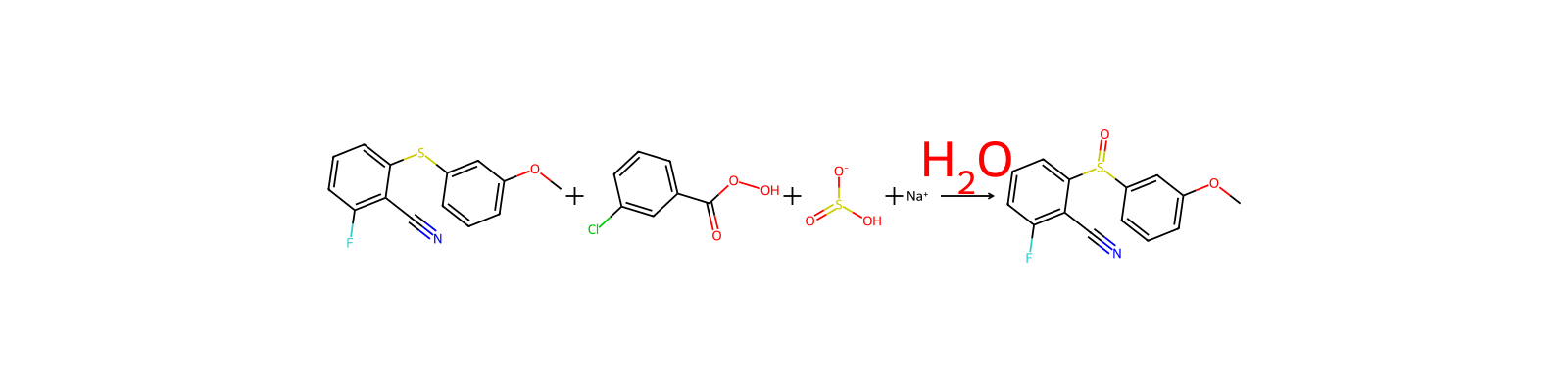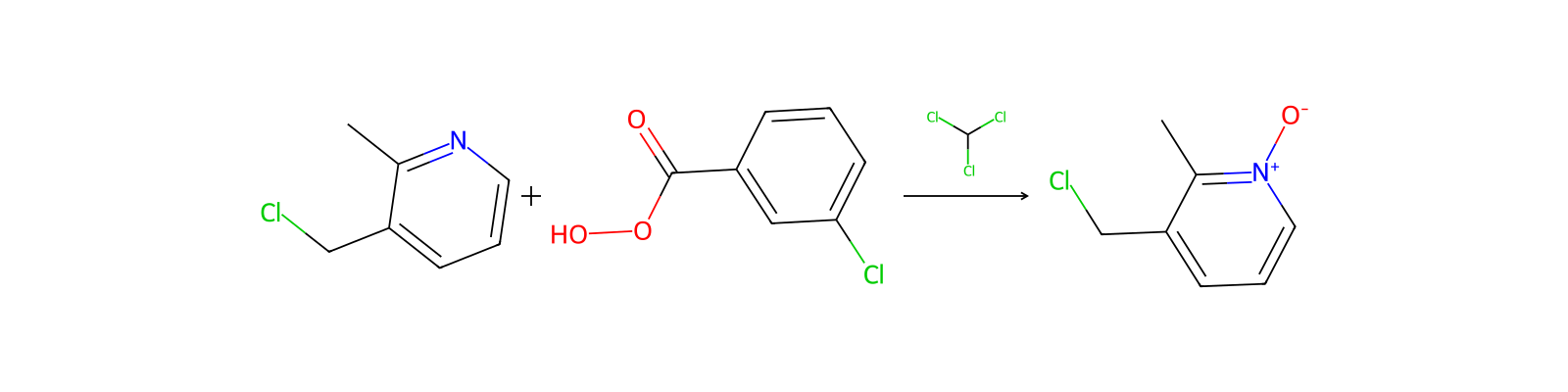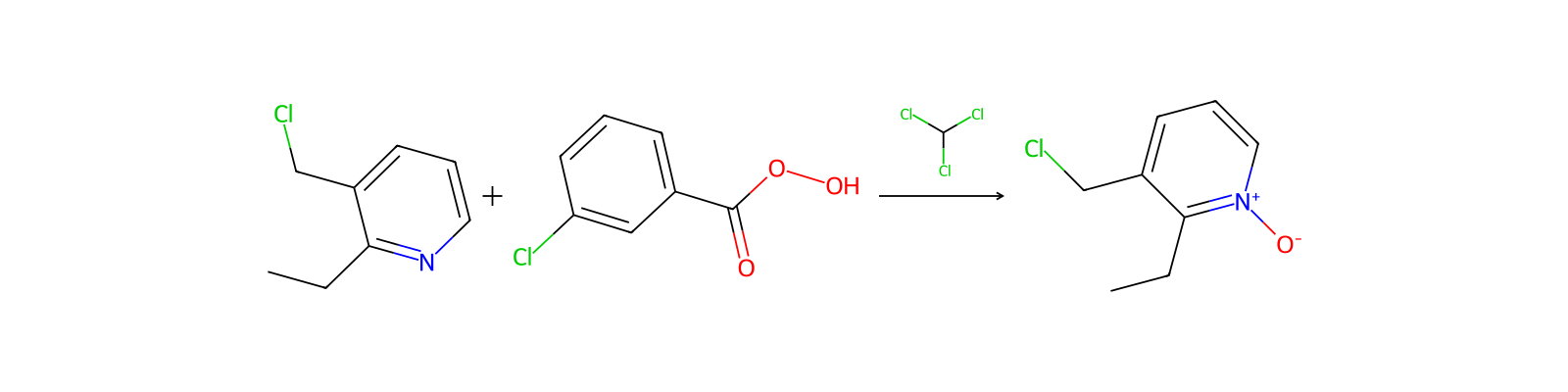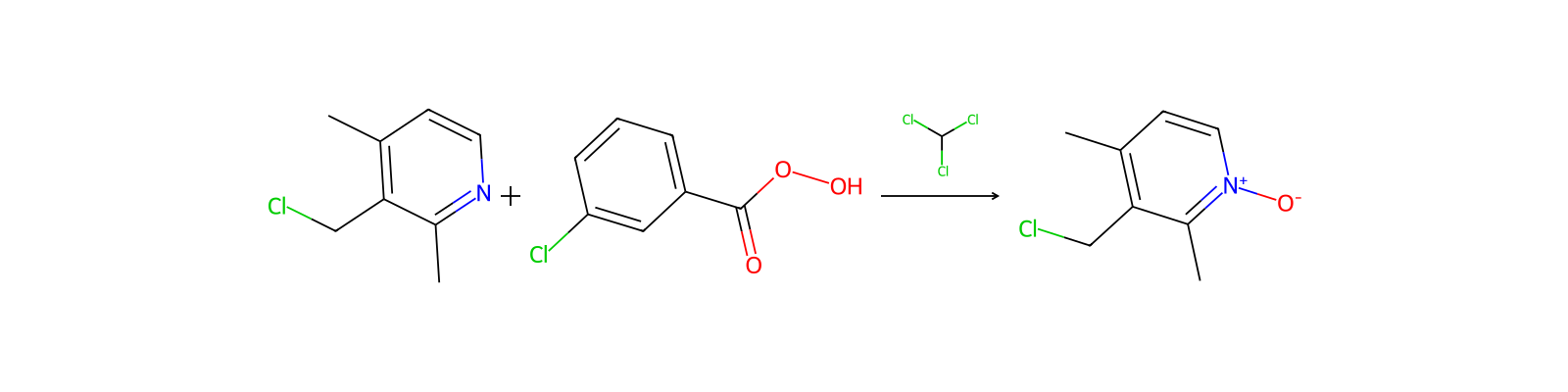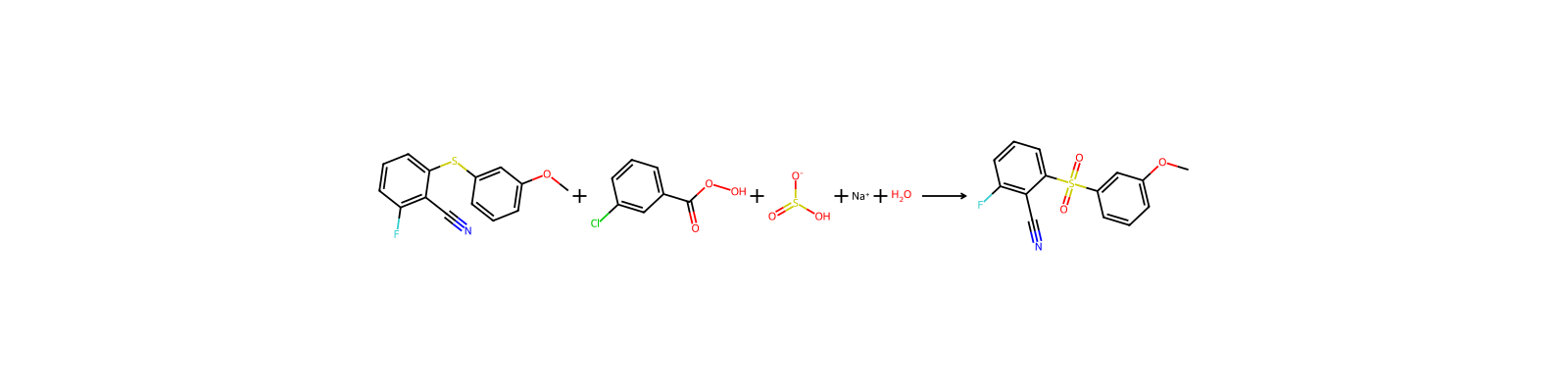
HRID 837反応物として
m-Chloroperbenzoic acid

937-14-4O=C(OO)c1cccc(Cl)c1NHQDETIJWKXCTC-UHFFFAOYSA-NThis solid peroxide is sensitive to heat. Storage of this material must be done so with stringent temperature control measures. Its explosion hazard is also mitigated by mixing the peroxide in a solvent slurry.
937-14-4DTXSID0061325CHEMBL458855CHEBI:52091This solid peroxide is sensitive to heat. Storage of this material must be done so with stringent temperature control measures. Its explosion hazard is also mitigated by mixing the peroxide in a solvent slurry.
Solid; [CAMEO] White, wet crystalline aggregates; [Alfa Aesar MSDS]
化学的特性White moist powder
安全情報は参考情報です。供給元の安全データシート(SDS)、適用法令、専門家による評価に代わるものではありません。
Danger
H226 (60%): Flammable liquid and vapor [Warning Flammable liquids]
P210, P220, P233, P234, P235, P240, P241, P242, P243, P260, P261, P264, P264+P265, P270, P271, P272, P280, P283, P301+P317, P301+P330+P331, P302+P352, P302+P361+P354, P303+P361+P353, P304+P340, P305+P351+P338, P305+P354+P338, P306+P360, P316, P317, P319, P321, P330, P332+P317, P333+P317, P337+P317, P362+P364, P363, P370+P378, P371+P380+P375, P403, P403+P233, P403+P235, P405, P410, P411, P420, and P501 (click each P-code to see the statement)
Aggregated GHS information provided per 60 reports by companies from 22 notifications to the ECHA C&L Inventory. Each notification may be associated with multiple companies.
Chemical: Benzenecarboperoxoic acid, 3-chloro-
REACH registered substance: 3-chloroperbenzoic acid (EC: 213-322-3)
Benzenecarboperoxoic acid, 3-chloro-: Does not have an individual approval but may be used under an appropriate group standard
A strong oxidizing agent that may ignite combustible materials; Explosion hazard by heat, shock, friction, or contamination; [CAMEO] Wetted with 57-86% water; An oxidizer that may cause fire on contact with combustible materials; May explode on heating; Causes irritation or burns; [Sigma-Aldrich MSDS]
CSL00076
3-CHLOROPEROXYBENZOIC ACID + 2-BROMO-6-METHYLPYRIDINE
exploded on the rotovap after work up
Explosive
User-Reported
7/8/18
5.4 [mg/m3]
60 [mg/m3]
360 [mg/m3]
Substances used for the detection, identification, analysis, etc. of chemical, biological, or pathologic processes or conditions. Indicators are substances that change in physical appearance, e.g., color, at or approaching the endpoint of a chemical titration, e.g., on the passage between acidity and alkalinity. Reagents are substances used for the detection or determination of another substance by chemical or microscopical means, especially analysis. Types of reagents are precipitants, solvents, oxidizers, reducers, fluxes, and colorimetric reagents. (From Grant & Hackh's Chemical Dictionary, 5th ed, p301, p499)
Electron-accepting molecules in chemical reactions in which electrons are transferred from one molecule to another (OXIDATION-REDUCTION).
用途有機合成において酸化剤としてしばしば用いられる有機塩素化合物であるものの、比較的不安定な物質であり取り扱いには注意を要する。
使用3-Chloroperoxybenzoic acid is a strong oxidizing agent used in the oxidation reactions such as aldehydes and ketones to esters (Bayer-Villiger-Oxidation), olefines to epoxides, sulfides to sulfoxides and sulfones, and amines to nitroalkanes, N-oxides.
一般的な説明3-Chloroperoxybenzoic acid is sensitive to heat. Storage of 3-Chloroperoxybenzoic acid must be done so with stringent temperature control measures. It's explosion hazard is also mitigated by mixing the peroxide in a solvent slurry.
純化方法Recrystallise MCPBA from CH2Cl2 [Traylor & Mikztal J Am Chem Soc 109 2770 1987]. Peracid of 99+% purity can be obtained by washing commercial 85% material with phosphate buffer pH 7.5 and drying the residue under reduced pressure. Alternatively the peracid can be freed from m-chlorobenzoic acid by dissolving 50g/L of *benzene and washing with an aqueous solution buffered at pH 7.4 (NaH2PO4/NaOH) (5 x 100mL). The organic layer is dried over MgSO4 and carefully evaporated under vacuum. Necessary care should be taken in case of EXPLOSION. The solid is recrystallised twice from CH2Cl2/Et2O and stored at 0o in a plastic container as glass catalyses the decomposition of the peracid. The acid is assayed iodometrically. [Schwartz & Blumbrgs J Org Chem 29 1976 1964, Bortolini et al. J Org Chem 52 5093 1987, McDonald et al. Org Synth Coll Vol VI 276 1988, Beilstein 9 IV 972.]