ホームMCPワークベンチSkills
ホームワークベンチ通知マイページ
llms.txt · MCPガイドプライバシーポリシー · 利用規約 · サポートv1.8.0
  1. ホーム
  2. /化合物

ニトロビフェニル

4-Nitro-1,1'-biphenyl

HCID 7114
ノートを作成反応を作成見積依頼を出す
印刷プレビュー
基本情報概要名称と識別子物性安全と法規制化学と産業関連反応化合物ノート
部分構造検索類似構造を探す

基本情報

CAS
28984-85-2
標準SMILES
O=[N+]([O-])c1ccc(-c2ccccc2)cc1
InChIKey
BAJQRLZAPXASRD-UHFFFAOYSA-N
分子式
C12H9NO2
平均分子量
199.2 g/mol
単同位体質量
199.06332853

概要

4-Nitrobiphenyl can cause cancer according to an independent committee of scientific and health experts.

名称と識別子

優先名称
4-Nitro-1,1'-biphenyl
IUPAC
1-nitro-4-phenylbenzene
現地名
ニトロビフェニル
英語名
Nitrobiphenyl
分子量
0

名称と別名

4-Nitrobiphenyl92-93-3P-NITROBIPHENYL4-Nitro-1,1'-biphenylp-Nitrodiphenylp-Phenylnitrobenzene4-Phenylnitrobenzenep-Phenyl-nitrobenzene4-Phenyl-nitrobenzeneBa 2794QM80NUW6WZDTXSID9041522
名称をさらに表示
ニトロビフェニルNitrobiphenylNitro-1,1'-biphenyl
NSC-1324p-Nitrobiphenypara-nitrobiphenylRefChem:525947DTXCID7021522202-204-71-Nitro-4-phenylbenzene1,1'-Biphenyl, 4-nitro-

データベース識別子

CAS
28984-85-2、92-93-3
PubChem CID
7114
DTXSID
DTXSID9041522
ChEMBL
CHEMBL352531
ChEBI
CHEBI:82504
UNII
QM80NUW6WZ
EC Number
202-204-7
Nikkaji
J3.934I

物性

構造計算による物性

XLogP
3.8
極性表面積
45.8 Ų
水素結合供与体数
0
水素結合受容体数
2
回転可能結合数
1
重原子数
15
形式電荷
0
複雑度
210

実験および物理化学的性質

Chemical Classes · 2 件

Hazardous Air Pollutants (HAPs)

Nitrogen Compounds -> Nitros, Aromatic

DrugsPharmaceuticals -> Listed in ZINC15
SpringerMaterials PropertiesAngular frequency
LogP3.77
Odor · 2 件

SWEETISH ODOR

Sweetish odor.

Color/Form · 3 件

YELLOW NEEDLES FROM ALC

WHITE NEEDLES

White to yellow, needle-like, crystalline solid.

Solubility · 5 件

Insoluble (NIOSH, 2024)

SOL IN ETHER, BENZENE, CHLOROFORM, ACETIC ACID

SLIGHTLY SOL IN COLD ALC

Solubility in water: very poor

Insoluble

Flash Point · 5 件

290 °F (NIOSH, 2024)

290 °F

143 °C c.c.

290 °F

290 °F

Boiling Point · 6 件

644 °F at 760 mmHg (NIOSH, 2024)

340 °C @ 760 MM HG

340 °C

644 °F

340 °C @760 [mm Hg]

安全と法規制

安全情報は参考情報です。供給元の安全データシート(SDS)、適用法令、専門家による評価に代わるものではありません。

GHS分類

GHS Classification · 6 件

Danger

H350: May cause cancer [Danger Carcinogenicity]

P203, P273, P280, P318, P391, P405, and P501 (click each P-code to see the statement)

Danger

H350 (100%): May cause cancer [Danger Carcinogenicity]

P203, P273, P280, P318, P391, P405, and P501 (click each P-code to see the statement)

危険有害性情報

Regulatory Information · 3 件

Hazard Traits - Carcinogenicity; Hepatotoxicity and Digestive System Toxicity; Nephrotoxicity and Other Toxicity to the Urinary System; Neurotoxicity; Ocular Toxicity; Respiratory Toxicity

Restricted substance: 4-Nitrobiphenyl

4-Nitrodiphenyl: Does not have an individual approval but may be used as a component in a product covered by a group standard. It is not approved for use as a chemical in its own right.

DOT LabelPoison
Fire Hazards · 2 件

Excerpt from ERG Guide 154 [Substances - Toxic and/or Corrosive (Non-Combustible)]:

Combustible. Gives off irritating or toxic fumes (or gases) in a fire.

Health HazardsExcerpt from NIOSH Pocket Guide for 4-Nitrobiphenyl:
Hazards Summary · 2 件

4-Nitrobiphenyl is no longer manufactured or used in the United States. Limited information is available on the health effects of 4-nitrobiphenyl. Acute (short-term) exposure to 4-nitrobiphenyl in humans results in irritation of the eyes, mucous membranes, and respiratory tract, and headache, nausea, vomiting, and fatigue. Chronic (long-term) exposure to high concentrations of 4-nitrobiphenyl in workers has resulted in effects on the peripheral and central nervous systems and the liver and kidney. No information is available on the reproductive, developmental, or carcinogenic effects of 4-nitrobiphenyl in humans. EPA has not classified 4-nitrobiphenyl for carcinogenicity.

化学と産業

薬理情報

Mechanism of Action · 1 件

THE PROFILES OF BLADDER EPITHELIUM DNA ADDUCTS QUANTIFIED AT VARIOUS TIMES AFTER TREATMENT OF MALE BEAGLE DOGS WITH ARYLAMINES INCL 4-NITROBIPHENYL WERE REMARKABLY SIMILAR TO PROFILES OBTAINED WHEN THE N-HYDROXYARYLAMINE METABOLITES OF THESE CARCINOGENS WERE REACTED WITH DNA IN VITRO AT PH 5. INCUBATION OF N-HYDROXYARYLAMINES WITH SALMONELLA TYPHIMURIUM STRAINS AND DETERMINATION OF THE RESULTING DNA ADDUCTS AND REVERSIONS SUGGEST THAT THE HYDROXYARYLAMINES ARE ULTIMATE BLADDER CARCINOGENS AND C8-DEOXYGUANOSINE SUBSTITUTION MAY REPRESENT AN INITIATING LESION IN BLADDER TUMOR FORMATION.

Biological Half-LifeNo reports found; [TDR, p. 948]
Metabolism/Metabolites · 4 件

4-NITROBIPHENYL YIELDS 4-NITROSOBIPHENYL IN CAT. /FROM TABLE/

... IN RATS 4-NITROBIPHENYL WAS CONVERTED TO 4-AMINOBIPHENYL & 4-AMINOBIPHENYL-3-YL HYDROGEN SULFATE. ... IN VITRO 25% OF 4-NITROBIPHENYL ... REDUCED TO 4-AMINOBIPHENYL WITHIN 40 MIN DURING ANAEROBIC REDN IN PRESENCE OF RAT LIVER ENZYMES & NECESSARY COFACTORS.

SMALL AMT OF NON-ACETYLATED N-HYDROXY PRODUCTS HAVE BEEN IDENTIFIED IN URINE OF DOGS & MONKEYS GIVEN SINGLE DOSE OF 5 MG/KG BODY WT 4-NITROBIPHENYL ... .

Nitro polycyclic aromatic hydrocarbons are metabolized in vitro to genotoxic agents by way of ring oxidation or nitroreduction. The metabolism of compounds such as 4-nitrobiphenyl, ... in mammalian cells is described. The exact metabolic pathways depend upon the particular compound, but in each case the nitro group appears to play a critical role in the activation process. In oxidative metabolism, the location of the nitro group influences the regioselectivity of ring oxidtaion. Reduction may involve activation to reactive N-hydroxy arylamines.

Absorption, Distribution and Excretion4-NITRODIPHENYL ... KNOWN TO READILY PENETRATE INTACT SKIN.

用途と製造

Uses · 5 件

4-Nitrobiphenyl is no longer manufactured, imported, used, or sold in the United States.

関連反応

18 件
反応記録を作成
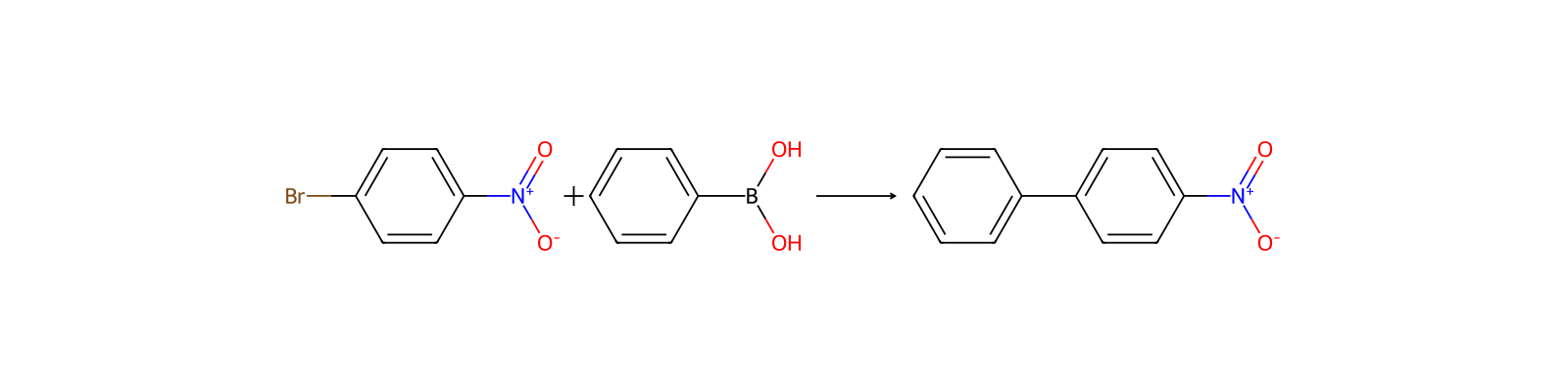
HRID 29279 の反応式
HRID 29279反応物としてuspto-grants-2008_09
HRID 36721 の反応式
HRID 36721生成物としてuspto-grants-1995_05
HRID 72089 の反応式
HRID 72089生成物としてuspto-grants-2014_09
HRID 72092 の反応式
HRID 72092生成物としてuspto-grants-2014_09
HRID 72093 の反応式
HRID 72093生成物としてuspto-grants-2014_09
HRID 75103 の反応式
HRID 75103反応物としてuspto-grants-2014_09
HRID 87592 の反応式
HRID 87592反応物としてTraining data from https://doi.org/10.1039/C8SC04228D (2/10)
HRID 109594 の反応式
HRID 109594生成物としてTraining data from https://doi.org/10.1039/C8SC04228D (2/10)
1 / 3 ページ

化合物ノート

読み込み中…

このページの内容基本情報概要名称と識別子物性安全と法規制化学と産業関連反応化合物ノート
その他の操作
ノートを作成反応を作成見積依頼を出す

644 °F

DecompositionWhen heated to decomp it emits toxic fumes of /nitrogen oxides/.
Melting Point · 6 件

237 °F (NIOSH, 2024)

114 °C

114 °C

237 °F

114 °C

237 °F

Food Contact SubstancesFCS -> FDA Inventory of Food Contact Substances Listed in 21 CFR

A metabolite of 4-nitrodiphenyl (4-aminodiphenyl) is a recognized bladder carcinogen. Therefore, 4-nitrodiphenyl is classified as a suspected human carcinogen, without an assigned TLV. [ACGIH]

Reactive GroupHydrocarbons, Aromatic
EC ClassificationSymbol: T, N; R: 45-51/53; S: 53-45-61
Special Reports · 2 件

Berlin A, Draper M et al; The toxicology of chemicals - 1. Carcinogenicity, Volume 1 - summary reviews of the scientific evidence. Office for Official Publications of the European Communities, L-2985 Luxembourg, 1989, Vol.1. 184p. Data reviewed includes, introduction, animal data, mutagenic and genotoxic information, human data, scientific conclusions, need for further work, references.

Fu PP; Metabolism of nitropolycyclic aromatic hydrocarbons. Drug Metab Rev 22 (2-3): 209-68 (1990). A review with 229 references on metabolism of nitro compounds.

OSHA Standards · 1 件

Workers' exposure to 4-nitrobiphenyl is to be controlled through the required use of engineering controls, work practices, & personal protective equipment, incl respirators. Identified as an occupational carcinogen without establishing a PEL.

Reactivity Profile4-NITROBIPHENYL is incompatible with the following: Strong reducers (NIOSH, 2024).
Atmospheric Standards · 1 件

Listed as a hazardous air pollutant (HAP) generally known or suspected to cause serious health problems. The Clean Air Act, as amended in 1990, directs EPA to set standards requiring major sources to sharply reduce routine emissions of toxic pollutants. EPA is required to establish and phase in specific performance based standards for all air emission sources that emit one or more of the listed pollutants. p-Nitrobiphenyl is included on this list.

Chemical DangersDecomposes on burning. This produces toxic gases. Reacts with strong reducing agents. This generates toxic hazard.

安全と保護具

Fire Fighting · 2 件

Excerpt from ERG Guide 154 [Substances - Toxic and/or Corrosive (Non-Combustible)]:

Use water spray.

First Aid Measures · 4 件

Fresh air, rest. Refer for medical attention.

Remove contaminated clothes. Rinse and then wash skin with water and soap.

First rinse with plenty of water for several minutes (remove contact lenses if easily possible), then refer for medical attention.

Rinse mouth. Refer for medical attention .

First Aid · 2 件

Excerpt from NIOSH Pocket Guide for 4-Nitrobiphenyl:

(General first aid procedures)

Safe StorageSeparated from strong reducing agents. Well closed.
Cleanup Methods · 1 件

RESEARCH PROGRAM WAS CONDUCTED TO DETERMINE THE CAPABILITY OF BIOL TREATMENT AND ACTIVATED CARBON ADSORPTION TO REMOVE CHEM CARCINOGENS FROM WATER AND WASTEWATER. CMPD STUDIED INCL 4-NITROBIPHENYL. ALL CMPD TESTED EXHIBITED SOME DEG OF BIOL DEGRADATION. CARBON ADSORPTION WAS ALSO EFFECTIVE IN REMOVING THE CMPD FROM AQ SOLN.

Nonfire Spill ResponseExcerpt from ERG Guide 154 [Substances - Toxic and/or Corrosive (Non-Combustible)]:
Spillage Disposal · 1 件

Personal protection: particulate filter respirator adapted to the airborne concentration of the substance. Do NOT let this chemical enter the environment. Sweep spilled substance into covered sealable containers. Carefully collect remainder. Then store and dispose of according to local regulations.

Preventive Measures · 5 件

The worker should immediately wash the skin when it becomes contaminated.

Work clothing that becomes wet or significantly contaminated should be removed or replaced.

The worker should wash daily at the end of each work shift.

Workers whose clothing may have become contaminated should change into uncontaminated clothing before leaving the work premises.

SRP: The scientific literature for the use of contact lenses in industry is conflicting. The benefit or detrimental effects of wearing contact lenses depend not only upon the substance, but also on factors including the form of the substance, characteristics and duration of the exposure, the uses of other eye protection equipment, and the hygiene of the lenses. However, there may be individual substances whose irritating or corrosive properties are such that the wearing of contact lenses would be harmful to the eye. In those specific cases, contact lenses should not be worn. In any event, the usual eye protection equipment should be worn even when contact lenses are in place.

Isolation and EvacuationExcerpt from ERG Guide 154 [Substances - Toxic and/or Corrosive (Non-Combustible)]:
Eye PreventionWear safety spectacles or eye protection in combination with breathing protection if powder.
Fire PreventionNO open flames.
Inhalation RiskA harmful concentration of airborne particles can be reached quickly when dispersed, especially if powdered.

毒性情報

Cancer Sites[in animals: bladder tumors]
Target OrgansBladder, blood
Environmental Fate · 3 件

TERRESTRIAL FATE: The important p-nitrobiphenyl degradation process in soil may be biodegradation. A single biodegradation study has shown that p-nitrobiphenyl is biodegradable with rapid microbial adaptation. Estimated Koc values of 2680-3360 indicate that significant leaching should not occur in most types of soil. Photodegradation on soil surfaces exposed to sunlight may be possible. (SRC)

AQUATIC FATE: The important p-nitrobiphenyl degradation processes in water may be biodegradation and photolysis. A single biodegradation study has shown that p-nitrobiphenyl is significantly biodegradable with rapid microbial adaptation. p-Nitrobiphenyl has also been shown to photodegrade rapidly when diethylamine solutions are exposed to uv light above 290 nm. Photolysis in water may be important; however, kinetic rate data pertaining to environmental photolysis are not available to predict its relative significance. Estimated Koc values of 2680-3360 indicate that some partitioning from the water column to sediments and suspended material may occur. Moderate bioconcentration may be possible. Aquatic volatilization is expected to be relatively slow in comparison to other fate processes. Aquatic hydrolysis is not expected to be important. (SRC)

ATMOSPHERIC FATE: Based upon its chemical structure, p-nitrobiphenyl is expected to exist primarily in the vapor-phase in the ambient atmosphere, although a small percentage may be associated with the particulate-phase. Vapor-phase p-nitrobiphenyl is degraded in the ambient atmosphere by reaction with photochemically produced hydroxyl radicals. Degradation via direct photolysis may also be important; however, kinetic rate data pertaining to environmental photolysis are not available to predict its relative significance. (SRC)

Adverse EffectsACGIH Carcinogen - Suspected Human.
Exposure Routes · 2 件

The substance can be absorbed into the body by inhalation, through the skin and by ingestion.

inhalation, skin absorption, ingestion, skin and/or eye contact

Signs and Symptoms · 4 件

See Effects of long-term or repeated exposure.

MAY BE ABSORBED!

Redness.

headache, drowsiness, dizziness; dyspnea (breathing difficulty); ataxia, lassitude (weakness, exhaustion); methemoglobinemia; urinary burning; acute hemorrhagic cystitis; [potential occupational carcinogen]

Effluent Concentrationsp-Nitrobiphenyl was analyzed for, but not detected (detection limit 0.68-3.2 ug/g), in particulate material collected from the exhaust of a heavy-duty diesel engine(1).
ICSC Environmental DataThe substance is toxic to aquatic organisms. The substance may cause long-term effects in the aquatic environment.
Soil Adsorption/MobilityBased upon an estimated log Kow of 3.77(1), the Koc for p-nitrobiphenyl can be estimated to range from 2680 to 3360 using various regression-derived equations(2,SRC). These Koc estimates indicate very low soil mobility(3).
Human Toxicity Excerpts · 3 件

THERE ARE NO DATA ON CARCINOGENICITY OF 4-NITROBIPHENYL IN MAN. HOWEVER, IT HAS BEEN USED IN PRODN OF 4-AMINOBIPHENYL, WHICH IS RECOGNIZED HUMAN BLADDER CARCINOGEN.

SUMMARY TOXICITY STATEMENT: /ACUTE/ ... MODERATE VIA ORAL ROUTE. MODERATE= MAY CAUSE REVERSIBLE OR IRREVERSIBLE CHANGES ... /TO EXPOSED TISSUE/, NOT NECESSARILY SEVERE ENOUGH TO CAUSE SERIOUS PHYSICAL IMPAIRMENT OR THREATEN LIFE.

THE INTERNATIONAL AGENCY FOR RESEARCH ON CANCER WORKING GROUP ON THE EVALUATION OF THE CARCINOGENIC RISK OF CHEMICALS TO MAN FOUND NO REPORTS ON CARCINOGENICITY OF 4-NITROBIPHENYL TO MAN. THE GROUP CONCLUDED THAT IT IS NOT POSSIBLE TO SEPARATE THE EXPOSURES TO 4-NITROBIPHENYL FROM EXPOSURES TO 4-AMINOBIPHENYL BECAUSE THE FORMER IS CONVERTED TO THE LATTER BY REDUCTION.

Artificial Pollution Sources · 1 件

No data are currently available to suggest that p-nitrobiphenyl is currently manufactured, imported, used or sold on a commercial-scale in the United States. No data are available to suggest that p-nitrobiphenyl is inadvertently formed during any commercial process or in the environment. (SRC)

Environmental Biodegradationp-Nitrobiphenyl exhibited fast biodegradation with rapid adaptation using a static-culture screening procedure with a settled domestic wastewater microbial inocula(1); degradation was determined to be 97.5% after 7 days of incubation(1).

法規制情報

Atmospheric Standards · 1 件

Listed as a hazardous air pollutant (HAP) generally known or suspected to cause serious health problems. The Clean Air Act, as amended in 1990, directs EPA to set standards requiring major sources to sharply reduce routine emissions of toxic pollutants. EPA is required to establish and phase in specific performance based standards for all air emission sources that emit one or more of the listed pollutants. p-Nitrobiphenyl is included on this list.

Used as a plasticizer for resins and polystyrene, a fungicide for textiles, and a wood preservative; [ACGIH] Used in the production of 4-Aminobiphenyl, a confirmed bladder carcinogen; [IARC] Formerly used in the production of 4-Aminobiphenyl; [Merck Index]

See carcinogens in 29CFR1910.1003 (Code of Federal Regulations).

Applying Wood Preservatives [Category: Other]

Formerly in prepn of p-biphenylamine.

Consumption Patterns100% USED FORMERLY AS AN INT FOR 4-AMINOBIPHENYL (1970)
Methods of ManufacturingFORMERLY BY CONTROLLED NITRATION OF BIPHENYL
General Manufacturing Information · 3 件

1,1'-Biphenyl, 4-nitro-: ACTIVE

AS PLASTICIZER FOR RESINS, POLYSTYRENES, CELLULOSE ACETATE AND NITRATE, AS A FUNGICIDE FOR TEXTILES AND AS A PRESERVATIVE FOR WOOD.

PRESENCE, USE & MFR OF 4-NITROBIPHENYL IN FACTORIES IS PROHIBITED IN UK UNDER CARCINOGENIC SUBSTANCES REGULATIONS 1967- STATUTORY INSTRUMENT (1967), NUMBER 487. IT IS ALSO LISTED WITH 13 OTHER CMPD IN US FEDERAL REGISTER (USA GOVERNMENT, 1973) AS SUBJECT TO EMERGENCY TEMPORARY STD ON CERTAIN CARCINOGENS UNDER ORDER MADE BY OCCUPATIONAL SAFETY & HEALTH ADMIN, DEPT OF LABOR, ON 26 APRIL, 1973.