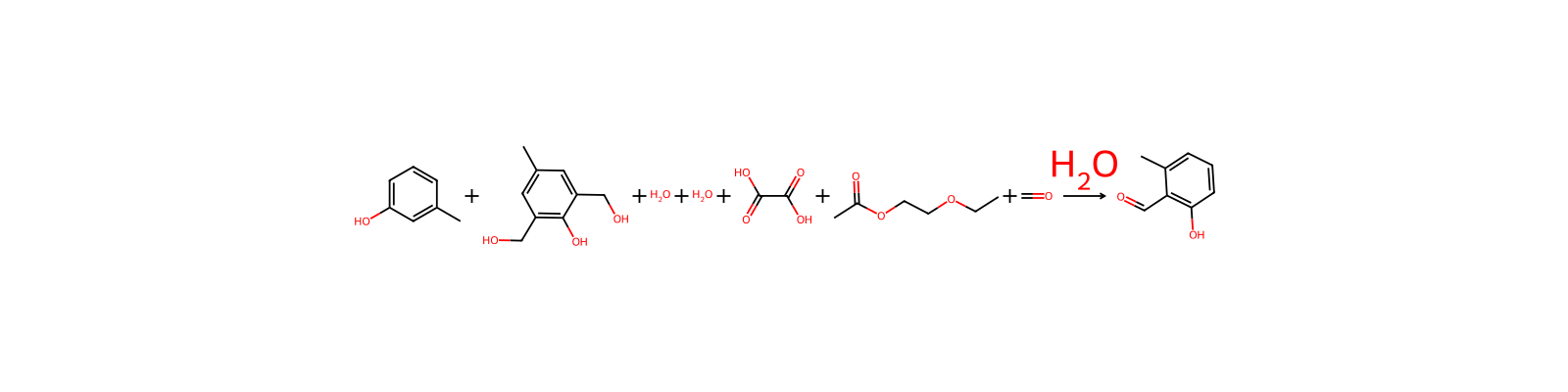

基本情報
- 標準SMILES
C=O- InChIKey
WSFSSNUMVMOOMR-UHFFFAOYSA-N- 分子式
- CH2O
- 平均分子量
- 30.026 g/mol
- 単同位体質量
- 30.01056468
名称と識別子
- 優先名称
- Formaldehyde
- IUPAC
- formaldehyde
- 現地名
- パラホルムアルデヒド
- 英語名
- Paraformaldehyde
- 分子式
- (CH2O)x
- 分子量
- 30.03
名称と別名
formaldehydeformalinmethanal50-00-0formolFormic aldehydeMethylene oxideOxomethaneOxymethyleneMethyl aldehydeSuperlysoformLysoform
名称をさらに表示
パラホルムアルデヒドパラホルムアルダシドフロ-モルポリオキシメチレンパラホルムアルデヒド.粉末4%パラホルムアルデヒド・りん酸緩衝液16W/V% パラホルムアルデヒド溶液, メタノールフリー10W/V%パラホルムアルデヒド溶液, メタノールフリーパラホルムアルデヒド, 16%水溶液, メタノールフリーパラホルムアルデヒド, PUREパラホルムアルデヒド, 97%パラホルムアルデヒド (JP17)POMPOMP-FORMALDEHYDEPOLYFORMALDEHYDEPOLYACETALPARAFORMACETAL RESINParaformalclehydeFORMALDEHYDE RESINparaformaldehyde macromolecule
FannoformFormalithFormalinaMethaldehydeMorbicidKarsanOxomethyleneFormaline
データベース識別子
- CAS
30525-89-4、50-00-0- PubChem CID
- 712
- DTXSID
DTXSID7020637- ChEMBL
CHEMBL1255- ChEBI
CHEBI:16842- UNII
- 1HG84L3525
- EC Number
- 200-001-8
- Nikkaji
- J2.294B
物性
構造計算による物性
- XLogP
- 1.2
- 極性表面積
- 17.1 Ų
- 水素結合供与体数
- 0
- 水素結合受容体数
- 1
- 回転可能結合数
- 0
- 重原子数
- 2
- 形式電荷
- 0
- 複雑度
- 2
物理化学的性質
- 融点
- 120 · 120-170 °C (lit.)
- 沸点
- 107.25 °C · 107.25°C (rough estimate)
- 比重(密度)
- 0.88 g/mL · 0.88 g/mL at 25 °C (lit.)
- 蒸気密度
- 1.03 · 1.03 (vs air)
- 蒸気圧
- 1.45 mm · <1.45 mm Hg ( 25 °C)
- 屈折率
- 1.454 · 1.4540 (estimate)
- 闪点
- 158 °F · 158 °F
- 貯蔵温度
- 2 · 2-8°C
- 溶解性
- 70 ℃以上のクロロフェノール:可溶 · 70℃以上のクロロフェノール:可溶
- 外見
- プリルした
- 色
- ホワイトからオフホワイト
- PH
- 5.5 · 5.5 (H2O, 20℃)(saturated solution)
- 臭い (Odor)
- ホルムアルデヒドの臭い
- 爆発限界(explosive limit)
- 7 · 7-73%(V)
- 水溶解度
- 難溶性
- Merck
- 14 · 14,7025
- BRN
- 102769 · 102769
- Dielectric constant
- 4 · 4.0(Ambient)
- 安定性
- 安定。強酸、有機酸、強酸化剤、酸化物、塩基、強塩基、アミンとは相容れない。可燃性。粉塵は空気と爆発性混合物を形成する可能性があります。燃焼すると有毒ガスが発生します。
- InChI
- 1S/CH2O/c1-2/h1H2
- InChIKey
- VHWYCFISAQVCCP-UHFFFAOYSA-N
- SMILES
- [O-]#[C+H2]
- EPAの化学物質情報
- Paraformaldehyde (30525-89-4)
化学的性質
化学的特性ポリオキシメチレンPOMまたはアセタール樹脂としても知られていますは熱可塑性エンジニアリングプラスチックの一種で優れた機械的強度剛性および摩耗抵抗性を持っていますその化学式は[CH2O]nでメチレン酸素の繰り返し単位から構成されていますPOMはその耐久性と寸法の安定性のため自動車部品電子機器精密機械部品など幅広い用途で使用されています
化学的特性Paraformaldehyde is a polymerized form of formaldehyde (CHO) and is a stable white crystalline powder with the odor of monomeric formaldehyde. Because pure formaldehyde is unstable at ambient conditions, paraformaldehyde is used as a readily-usable form of formaldehyde at use sites. Then,formaldehyde gas is generated during heating. Paraformaldehyde is used for different applications as a source of either gaseousformaldehyde or solution formaldehyde.
化学性质ポリオキシメチレンはその物理的および化学的特性により多くの産業で重宝されていますこの素材は低摩擦高剛性優れた耐化学性を持ち合わせておりさらには水や多くの溶剤に対しても強い耐性を示しますまた40℃から100℃の温度範囲で使用することができるため非常に広い範囲の環境での使用が可能です
安全と法規制
安全データ
- wgk
- 3
- tsca
- TSCA listed
- rtecs
- RV0540000
- ridadr
- UN 2213
- 毒性
- LD50 orally in Rabbit: 592 mg/kg
- PRTR法
- 特定第一種指定化学物質
- hs_code
- 38084090
- risk_code
- 31-43-40-36/37/38-20/22-41-37/38-42/43-20/21/22-11
- 化審法
- (9)-1941
- 安衛法
- 特化則 特定化学物質(特定第2類) 変異原性物質
- hazard_code
- Xn,F
- safety_code
- 36-45-36/37/39-26-24-22
- hazard_class
- 4.1
- packing_group
- III
- 毒劇物取締法
- 劇物
- 自然発火温度
- 572 °F
- Hazard Classifications
- Acute Tox. 4 InhalationAcute Tox. 4 OralCarc. 1BEye Dam. 1Flam. Sol. 2Muta. 2Skin Irrit. 2Skin Sens. 1STOT SE 3
- ストレージクラス
- 4.1B - Flammable solid hazardous materials
- 有毒物質データの
- 30525-89-4(Hazardous Substances Data)
化学と産業
応用分野
解説パラホルムアルデヒド,HO(CH2O)nH.パラホルムともいう.ホルムアルデヒドの直鎖状重合物のこと.一般にホルムアルデヒド水溶液の真空濃縮でつくられる.また,水溶液中に少量の水酸化カリウムを加えることでもつくられる.ホルムアルデヒド臭をもつ白色の固体.融点120~170 ℃.アセトンに不溶,冷水に難溶であるが,微量の酸または塩基の存在下で水に可溶.殺菌,消毒剤のほか,高濃度または安定剤であるメタノールの存在しないホルムアルデヒド水溶液を調製するのに使われる.劇薬.
用途ユピタール(ポリアセタール樹脂)は、エレクトロニクス、OA、自動車、精密機械等、さまざまな分野用途の多用な要求性能に幅広くお答えするため、豊富な高機能グレードを取り揃えています。
用途酵素抗体を含む免疫組織染色の試料固定用。
用途殺虫、消毒剤、防腐剤
使用Paraformaldehyde is used as a fumigant, a disinfectant and in the manufacture of synthetic resins like melamine resin, phenol resin and polyacetal resin. It is also used in cell culture. It also serves as a fixative in electron microscopy. It is also used in the preparation of formalin fixatives for tissues or cells. To use the chemical as a fixative, it must be converted to the monomer formaldehyde by heating as formaldehyde is the active chemical in fixation.
一般的な説明Paraformaldehyde appears as a white solid with a light pungent odor. A linear polymer of formaldehyde of formula HO(CH2-O)xH where x averages about 30. Soluble in water when x is less than 12; higher polymers are not immediately soluble. Slow dissolution in water proceeds by means of hydrolysis to give fragments of lower x. Flammable, although may take some effort to ignite. Flash point 158 °F. Used in fungicides, bactericides, and in the manufacture of adhesives. A hazard to the environment. Immediate steps should be taken to limit spread to the environment.
調製方法
製造方法Paraformaldehyde [30525-89-4] was first produced in 1859. This polymer, at first mistakenly called dioxymethylene and trioxymethylene, consists of a mixture of poly(oxymethylene) glycols HO-(CH2O)n-H with n=8-100. The formaldehyde content varies between 90 and 99 % depending on the degree of polymerization n (the remainder is bound or free water). It is an industrially important linear polyoxymethylene.Paraformaldehyde is prepared industrially in continuously operated plants by concentrating aqueous formaldehyde solutions under vacuum conditions. At first, colloidal, waxy gels are obtained, which later become brittle. The use of a fractionating column through which gases were passed dates from about 1925.Paraformaldehyde is currently produced in several steps which are carried out at low pressure and various temperatures. Highly reactive formaldehyde is produced under vacuum conditions starting with solutions that contain 50-100 ppm of formic acid and also 1-15 ppm of metal formates where the metals have an atomic number of 23-30 (e.g., Mn, Co, and Cu). The solutions are processed in thin-layer evaporators and spray dryers.
上流・下流製品情報
上流原料
下流製品
サプライヤー50 社
国药集团化学试剂有限公司86-21-63210123 · [email protected]
梯希爱(上海)化成工业发展有限公司021-67121386 · [email protected]
上海阿拉丁生化科技股份有限公司400-6206333 13167063860 · [email protected]
上海协瑞实业发展有限公司021-64695700 · [email protected]
上海迈瑞尔生化科技有限公司4006356688 18621169109 · [email protected]
阿法埃莎(中国)化学有限公司400-6106006 · [email protected]
上海德默医药科技有限公司400-021-7337 2355568890 · [email protected]
安耐吉化学&3A(安徽泽升科技股份有限公司)400-0056266 · [email protected]
武汉吉业升化工有限公司13545274181 · [email protected]
上海瀚鸿科技股份有限公司021-54306202 13764082696 · [email protected]
上海景颜化工科技有限公司13817811078 · [email protected]
嘉兴市艾森化工有限公司0573-85285100 18627885956 · [email protected]
上海泰坦科技股份有限公司400-6009262 15618770481 · [email protected]
上海隆盛化工有限公司58099637 13585536065 · [email protected]
山东西亚化学有限公司13355009207 13355009207 · [email protected]
玛雅试剂+86 (573) 82222445 (0)18006601000 452520369 · [email protected]
四川库利南科技有限公司400-1166-196 18981987031 · [email protected]
天津希恩思生化科技有限公司400 638 7771 · [email protected]
武汉吉业升化工有限公司027-13545242311 13545242311 · [email protected]
斯百全化学(上海)有限公司021-021-021-67601398-809-809-809 15221380277 · [email protected]
艾科试剂4008-755-333 18080918076 · [email protected]
上海思域化工科技有限公司86-21-34053660 · [email protected]
赛默飞世尔科技(中国)有限公司800-810-5118 · [email protected]
北京伊诺凯科技有限公司400-810-7969 010-59572699 · [email protected]
TCI AMERICA800-4238616 · [email protected]
TOKYO CHEMICAL INDUSTRY CO., LTD.03-36680489 · [email protected]
TCI Europe320-37350700 · [email protected]
上海皋翔化工有限公司021-57816257 18930243658 · [email protected]
北京环宇世纪化学科技有限公司hysj_bj.com
HBCChem, Inc.+1-510-219-6317 · [email protected]
日照力德士化工有限公司010-51268198 · [email protected]
美岚实业(上海)有限公司021-58958189 · [email protected]
上海石洋化工有限公司021-56795766 · [email protected]
安倍医疗器械贸易(上海)有限公司400-1500-680 021-62402299 · [email protected]
雷丁试剂0510-85629785 18013409632 · [email protected]
上海御略医药科技有限公司021-60345187 13671753212 · [email protected]
济南翱翔化工有限公司18354135979 · [email protected]
上海麦克林生化科技股份有限公司15221275939 15221275939 · [email protected]
杭州杰恒化工有限公司0571-87396432 · [email protected]
上海嵩爰化工科技有限公司010-1234567 18521000990 · [email protected]
上海有朋化工有限公司021-69005955 13701776567 · [email protected]
上海凯赛化工有限公司021-33516722 13701817765 · [email protected]
上海彤源化工有限公司021-021-69182866 13701855675 · [email protected]
成都润泽本土化工有限公司13096311329 028-88469284 616445927 · [email protected]
凯试(上海)科技有限公司021-50135380 · [email protected]
上海蓝润化学有限公司021-69515658 ; 69515628 13701998368 · [email protected]
上海容立化学科技有限公司021-69992220 13701886816 · [email protected]
上海康拓化工有限公司021-69185552 13701777608 · [email protected]
池州凯隆进出口贸易有限公司[email protected]
Sigma-Aldrich西格玛奥德里奇(上海)贸易有限公司021-61415566 800-8193336 · [email protected]
補足説明
定義ChEBI: Paraformaldehyde is a macromolecule composed of repeating methyleneoxy units arising from polymerisation of formaldehyde.
関連反応
11,358 件



関連ノート
読み込み中…