ホームMCPワークベンチSkills
ホームワークベンチ通知マイページ
llms.txt · MCPガイドプライバシーポリシー · 利用規約 · サポートv1.8.1
  1. ホーム
  2. /化合物

5-ニトロベンズイミダゾール

5-Nitrobenzimidazole

HCID 7195
反応を作成
印刷

データを補完しています。しばらくしてからページを更新すると最新の内容を表示できます

基本情報概要名称と識別子物性安全と法規制化学と産業関連反応化合物ノート
部分構造検索類似構造を探す

基本情報

CAS
94-52-0
標準SMILES
O=[N+]([O-])c1ccc2nc[nH]c2c1
InChIKey
XPAZGLFMMUODDK-UHFFFAOYSA-N
分子式
C7H5N3O2
平均分子量
163.13 g/mol
単同位体質量
163.03817641

概要

6-nitrobenzimidazole is an off-white to pale yellow fluffy powder. (NTP, 1992)

名称と識別子

優先名称
5-Nitrobenzimidazole
IUPAC
6-nitro-1H-benzimidazole
現地名
5-ニトロベンズイミダゾール
英語名
5-Nitrobenzimidazole
分子式
C7H5N3O2
分子量
163.13

名称と別名

5-NITROBENZIMIDAZOLE94-52-06-Nitrobenzimidazole5-Nitro-1H-benzimidazole1H-Benzimidazole, 5-nitro-1H-Benzimidazole, 6-nitro-5(6)-NitrobenzimidazoleBenzimidazole, 5-nitro-6-Nitro-benzimidazoleBenzimidazole, 6-nitro-NCI-C01912CCRIS 442
名称をさらに表示
5-ニトロベンズイミダゾール5-ニトロ-1H-ベンゾイミダゾール6-ニトロ-1H-ベンゾイミダゾール6-ニトロベンズイミダゾール6ニトロベンゾイミダゾル5-ニトロベンゾイミダゾール6-ニトロ-1H-1,3-ベンゾジアゾール5-NITRO-1H-BENZO[D]IMIDAZOLEBIO-FARMA BF0024076-nitrobenzimdazole6-nitro-benzimidazo5-Nrtiobenzimidazole5-nitro-benzimidazol6-nitro-benzimidazol
DTXSID8020965Benzimidazole, 5(or 6)-nitro-HSDB 2864NSC 3068EINECS 202-341-2A7V95AYT2TNSC 58858AI3-52609

データベース識別子

CAS
94-52-0
PubChem CID
7195
DTXSID
DTXSID8020965
ChEMBL
CHEMBL164921
UNII
A7V95AYT2T
EC Number
202-341-2
Nikkaji
J68.954H

物性

構造計算による物性補完中

XLogP
1.6
極性表面積
74.5 Ų
水素結合供与体数
1
水素結合受容体数
3
回転可能結合数
0
重原子数
12
形式電荷
0
複雑度
192

実験および物理化学的性質

Chemical ClassesNitrogen Compounds -> Imidazoles
SpringerMaterials Properties15N nuclear magnetic resonance spectrum
LogP1.5
Color/Form · 2 件

Solid

NEEDLES FROM WATER

Solubility · 4 件

less than 0.1 mg/mL at 61.7 °F (NTP, 1992)

INSOL IN ETHER, BENZENE, CHLOROFORM; SOL IN ALCOHOL, ACID

Very soluble in alcohol; slightly soluble in ether and benzene.

In water, >250 mg/l, temp not specified

DecompositionWhen heated to decomposition it emits toxic fumes of /nitrogen oxides/.
Melting Point · 3 件

405 to 408 °F (NTP, 1992)

203 °C

MP: 209-210 °C

Vapor Pressure0.00000017 [mmHg]
Physical Description · 2 件

6-nitrobenzimidazole is an off-white to pale yellow fluffy powder. (NTP, 1992)

Off-white to pale yellow solid; [CAMEO] Tan powder; [MSDSonline]

安全と法規制

安全情報は参考情報です。供給元の安全データシート(SDS)、適用法令、専門家による評価に代わるものではありません。

GHS分類

GHS Classification · 4 件

Warning

H315 (83.7%): Causes skin irritation [Warning Skin corrosion/irritation]

P203, P261, P264, P264+P265, P271, P273, P280, P302+P352, P304+P340, P305+P351+P338, P318, P319, P321, P332+P317, P337+P317, P362+P364, P403+P233, P405, and P501 (click each P-code to see the statement)

Aggregated GHS information provided per 49 reports by companies from 7 notifications to the ECHA C&L Inventory. Each notification may be associated with multiple companies.

危険有害性情報

Regulatory Information · 2 件

Chemical: 1H-Benzimidazole, 5-nitro-

1H-Benzimidazole, 5-nitro-: Does not have an individual approval but may be used under an appropriate group standard

DOT LabelPoison
Fire HazardsFlash point data for this chemical are not available but it is probably combustible. (NTP, 1992)
Health HazardsSYMPTOMS: Exposure to this chemical can cause irritation.
Hazards SummaryOral LD50 (mouse) = 125-150 mg/kg. In chronic feeding studies, not carcinogenic in rats, but caused liver cancer in mice; [HSDB] May cause irritation; [CAMEO] An irritant; [MSDSonline]
Reactive GroupAmines, Phosphines, and Pyridines
Special ReportsBioassay of 6-Nitrobenzimidazole for Carcinogenicity (1979) Technical Rpt Series No. 117 DHEW Pub No. (NIH) 79-1372, U.S. Department of Health Education and Welfare, National Cancer Institute, Bethesda, MD 20014
Reactivity Profile6-NITROBENZIMIDAZOLE is incompatible with strong oxidizing agents and strong bases. (NTP, 1992)

化学と産業

用途と製造

Uses · 3 件

Used in photographic developers (antifogging agent); [Hawley]

Photographic Processing [Category: Other]

Antifogging agent in photographic developers

U.S. Production · 2 件

(1972) PROBABLY GREATER THAN 9.08X10+5 G

(1975) PROBABLY GREATER THAN 9.08X10+5 G

Consumption PatternsESSENTIALLY 100% AS PHOTOGRAPHIC CHEMICAL
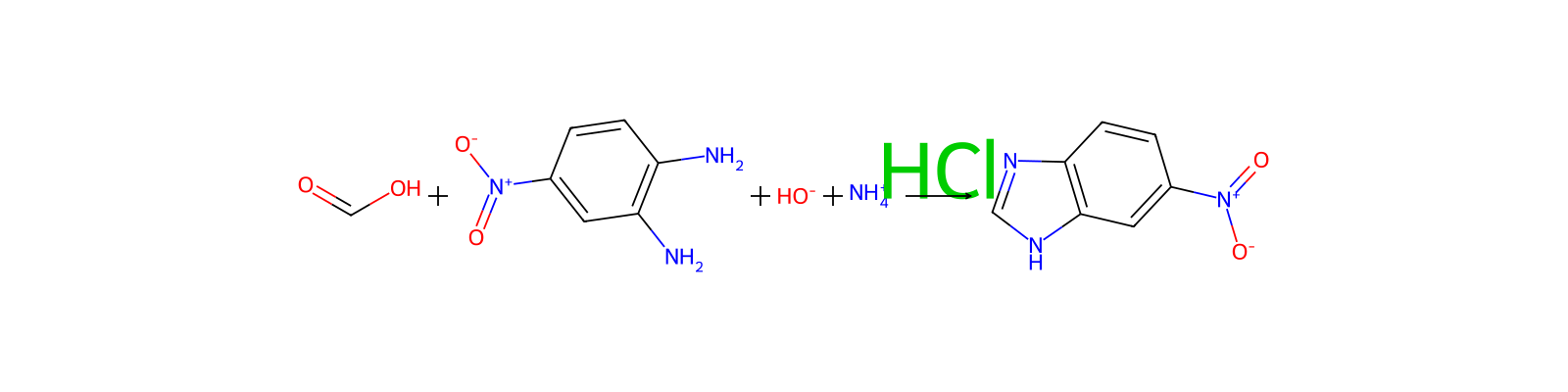
Methods of ManufacturingREACTION OF O-PHENYLENEDIAMINE WITH FORMIC ACID (FORMING BENZIMIDAZOLE), FOLLOWED BY NITRATION
General Manufacturing Information1H-Benzimidazole, 6-nitro-: ACTIVE
応用分野 · 2 件

使用5-Nitrobenzimidazole acts as a reagent in the synthesis of benzimidazoles derivatives with antibacterial and antifungal activities. It also functions as a reagent in the synthesis of xanthine oxidase, a key enzyme that catalyze xanthine to uric acid causing hyperuricemia in humans.

一般的な説明Off-white to pale yellow fluffy powder.

上流・下流製品情報

上流原料

D-グルコピラノースオルトぎ酸トリメチルぎ酸炭素ジオンオルトぎ酸トリエチル

関連反応

49 件
反応記録を作成
HRID 5036 の反応式
HRID 5036反応物としてuspto-grants-1993_09
HRID 26704 の反応式
HRID 26704生成物としてuspto-grants-1979_04
HRID 176054 の反応式
HRID 176054反応物としてTraining data from https://doi.org/10.1039/C8SC04228D (6/10)
HRID 177638 の反応式
HRID 177638反応物としてTraining data from https://doi.org/10.1039/C8SC04228D (6/10)
HRID 268241 の反応式
HRID 268241反応物としてuspto-grants-1976_03
HRID 268282 の反応式
HRID 268282反応物としてuspto-grants-1976_03
HRID 304761 の反応式
HRID 304761反応物としてTraining data from https://doi.org/10.1039/C8SC04228D (8/10)
HRID 358994 の反応式
HRID 358994反応物としてuspto-grants-1991_03
前へ1 / 7 ページ

化合物ノート

このページの内容基本情報概要名称と識別子物性安全と法規制化学と産業関連反応化合物ノート
Ionization Efficiency · 6 件

Positive

3.14

2.7

Agilent XCT

Electrospray ionization

formic acid (5.3nM)

Collision Cross Section136.5 Ų [M+H]+ [CCS Type: DT; Buffer gas: N2; Ionization: ESI+; Dataset: TOXCAST; Source Identifier: DTXSID8020965]

物理化学的性質

融点
207 · 207-210 °C
沸点
290.19 °C · 290.19°C (rough estimate)
比重(密度)
1.4141 · 1.4141 (rough estimate)
屈折率
1.55 · 1.5500 (estimate)
貯蔵温度
30 °C · Store below +30°C.
溶解性
0.5 g/l · 0.5g/l
酸解離定数(Pka)
10.95 · 10.95±0.10(Predicted)
外見
個体
色
ライトベージュ
PH
6 · 6 (10g/l, H2O, 20℃)(slurry)
水溶解度
0.01 g/100 · <0.01 g/100 mL で 16.5 ºC
BRN
7926 · 7926
Henry's Law Constant
2.7 · 2.7×101 mol/(m3Pa) at 25℃, HSDB (2015)
安定性
安定。可燃性。強酸化剤、強塩基とは相容れない。
InChI
1S/C7H5N3O2/c11-10(12)5-1-2-6-7(3-5)9-4-8-6/h1-4H,(H,8,9)
InChIKey
XPAZGLFMMUODDK-UHFFFAOYSA-N
SMILES
[N+](=O)([O-])c1cc2[nH]cnc2cc1
CAS データベース
94 · 94-52-0(CAS DataBase Reference)
EPAの化学物質情報
5 · 5-Nitrobenzimidazole (94-52-0)

化学的性質

化学的特性white or pale yellow powder

Air and Water ReactionsInsoluble in water.
Hazard Classes and CategoriesSkin Irrit. 2 (83.7%)

安全と保護具

Fire FightingFires involving this compound should be controlled with a dry chemical, carbon dioxide, or Halon extinguisher. (NTP, 1992)
First Aid · 1 件

EYES: First check the victim for contact lenses and remove if present. Flush victim's eyes with water or normal saline solution for 20 to 30 minutes while simultaneously calling a hospital or poison control center. Do not put any ointments, oils, or medication in the victim's eyes without specific instructions from a physician. IMMEDIATELY transport the victim after flushing eyes to a hospital even if no symptoms (such as redness or irritation) develop.

Nonfire Spill Response · 1 件

SMALL SPILLS AND LEAKAGE: Should a spill occur while you are handling this chemical, FIRST REMOVE ALL SOURCES OF IGNITION, then you should dampen the solid spill material with 60-70% ethanol and transfer the dampened material to a suitable container. Use absorbent paper dampened with 60-70% ethanol to pick up any remaining material. Seal the absorbent paper, and any of your clothes, which may be contaminated, in a vapor-tight plastic bag for eventual disposal. Solvent wash all contaminated surfaces with 60-70% ethanol followed by washing with a soap and water solution. Do not reenter the contaminated area until the Safety Officer (or other responsible person) has verified that the area has been properly cleaned.

Disposal Methods · 1 件

SRP: At the time of review, criteria for land treatment or burial (sanitary landfill) disposal practices are subject to significant revision. Prior to implementing land disposal of waste residue (including waste sludge), consult with environmental regulatory agencies for guidance on acceptable disposal practices.

Isolation and EvacuationExcerpt from ERG Guide 154 [Substances - Toxic and/or Corrosive (Non-Combustible)]:
Personal Protective Equipment (PPE)MINIMUM PROTECTIVE CLOTHING: If Tyvek-type disposable protective clothing is not worn during handling of this chemical, wear disposable Tyvek-type sleeves taped to your gloves.

毒性情報

Environmental Fate · 3 件

TERRESTRIAL FATE: Based on a classification scheme(1), an estimated Koc value of 120(SRC), determined from a structure estimation method(2), indicates that 5-nitrobenzimidazole is expected to have high mobility in soil(SRC). Estimated pKa's(3) predicted for 5-nitrobenzimidazole are 3.7(SRC) (protonation of one of the nitrogens in the imidazole ring) and 10.6(SRC) (deprotonation of one of the nitrogens in the imidazole ring) using an estimation method from structure(3). Therefore, in neutral soils, 5-nitrobenzimidazole will exist in the uncharged form. In acidic soils, some will be protonated, and since protonated forms are more likely to bind to negatively charged soil particle surfaces, it will be less mobile. Volatilization of 5-nitrobenzimidazole from moist soil surfaces is not expected to be an important fate process(SRC) given an estimated Henry's Law constant of 3.7X10⁻¹⁰ atm-cu m/mole(SRC), using a fragment constant estimation method(4). 5-Nitrobenzimidazole is not expected to volatilize from dry soil surfaces(SRC) based upon an estimated vapor pressure of 1.7X10⁻⁷ mm Hg(SRC), determined from a fragment constant method(5). Biodegradation in soil is not expected to be an important environmental fate process(6). The nitro moeity may be enzymatically reduced by the "classic" nitroreductases, such as those found in Salmonella typhimurium(7). However, the resulting aminobenzimidazole is not biodegraded and is inhibitory to many microbes(8).

AQUATIC FATE: Based on a classification scheme(1), an estimated Koc value of 120(SRC), determined from an estimation method(2), indicates that 5-nitrobenzimidazole is not expected to adsorb to suspended solids and sediment in water(SRC). Estimated pKa's(3) predicted for 5-nitrobenzimidazole are 3.7(SRC) (protonation of one of the nitrogens in the imidazole ring) and 10.6(SRC) (deprotonation of one of the nitrogens in the imidazole ring) using an estimation method from structure(3). Therefore, in neutral aquatic environments, 5-nitrobenzimidazole will exist in the uncharged form. In acidic waters, a portion of the 5-nitrobenzimidazole will be protonated. This protonated form will be more likely to bind to negatively charged sediments and suspended. Volatilization from water surfaces is not expected(4) based upon an estimated Henry's Law constant of 3.7X10⁻¹⁰ atm-cu m/mole(SRC), using a fragment constant estimation method(5). According to a classification scheme(6), BCFs of 0.7-1.8(7) suggests the potential for bioconcentration in aquatic organisms is low. Biodegradation in water is not expected to be an important environmental fate process(7).

ATMOSPHERIC FATE: According to a model of gas/particle partitioning of semivolatile organic compounds in the atmosphere(1), 5-nitrobenzimidazole, which has an estimated vapor pressure of 1.7X10⁻⁷ mm Hg at 25 °C(2), will exist in both the vapor and particulate phases in the ambient atmosphere. Vapor-phase 5-nitrobenzimidazole is degraded in the atmosphere by reaction with photochemically-produced hydroxyl radicals(SRC); the half-life for this reaction in air is estimated to be 3.6 days(SRC), calculated from its rate constant of 4.5X10⁻¹² cu cm/molecule-sec at 25 °C, determined using a structure estimation method(3). Particulate-phase 5-nitrobenzimidazole may be removed from the air by wet and dry deposition(SRC). 5-Nitrobenzimidazole may also be degraded by direct photolysis, as it absorbs light in the environmental UV range (>290 nm); 5-nitrobenzimidazole absorbs UV at 302 nm(4).

Ongoing Test Status · 1 件

The following link will take the user to the National Toxicology Program (NTP) Test Agent Search Results page, which tabulates all of the "Standard Toxicology & Carcinogenesis Studies", "Developmental Studies", and "Genetic Toxicity Studies" performed with this chemical. Clicking on the "Testing Status" link will take the user to the status (i.e., in review, in progress, in preparation, on test, completed, etc.) and results of all the studies that the NTP has done on this chemical. [http://ntp-apps.niehs.nih.gov/ntp_tox/index.cfm?fuseaction=ntpsearch.searchresults&searchterm=94-52-0]

Soil Adsorption/Mobility · 1 件

Using a structure estimation method based on molecular connectivity indices(1), the Koc for 5-nitrobenzimidazole can be estimated to be 120(SRC). According to a classification scheme(2), this estimated Koc value suggests that 5-nitrobenzimidazole is expected to have high mobility in soil. 5-Nitrobenzimidazole is predicted(3) to have two environmentally relevant pKa's, one at 3.7 and the other at 10.7, corresponding to the protonation and deprotonation of one of the nitrogens in the imidazole structure, respectively. Therefore, under neutral environmental conditions, 5-nitrobenzimidazole will exist in the uncharged form. At low pH, some 5-nitrobenzimidazole will be cationic, and in this form will be more likely to sorptive to soil particles.

Artificial Pollution Sources5-Nitrobenzimidazole's production and use as an antifogging agent in photographic developers(1) may result in its release to the environment through various waste streams(SRC).
Environmental BiodegradationAEROBIC: 5-Nitrobenzimidazole, present at 100 mg/l, reached 0% of its theoretical BOD in 6 weeks using an activated sludge inoculum at 30 mg/l and the Japanese MITI test(1).
Carcinogen Classification · 6 件

6-Nitrobenzimidazole

TR-117: Bioassay of 6-Nitrobenzimidazole for Possible Carcinogenicity (CASRN 94-52-0) (1979 )

10/25/78

No Evidence

No Evidence

Clear Evidence

Environmental BioconcentrationBCFs of 0.7-1.8 were measured for 5-nitrobenzimidazole(1). According to a classification scheme(2), this BCF suggests the potential for bioconcentration in aquatic organisms is low.
Volatilization from Water/Soil · 1 件

The Henry's Law constant for 5-nitrobenzimidazole is estimated as 3.7X10⁻⁷ atm-cu m/mole(SRC) using a fragment constant estimation method(1). This Henry's Law constant indicates that 5-nitrobenzimidazole is expected to be essentially nonvolatile from water surfaces(2). 5-Nitrobenzimidazole's Henry's Law constant(1) indicates that volatilization from moist soil surfaces may not occur(SRC). 5-Nitrobenzimidazole is not expected to volatilize from dry soil surfaces(SRC) based upon an estimated vapor pressure of 1.7X10⁻⁷ mm Hg(SRC), determined from a fragment constant method(3).

Non-Human Toxicity Excerpts · 2 件

DIETARY ADMIN OF 6-NITROBENZIMIDAZOLE FOR 78 WK @ 0.5% & 0.12% CONCN WERE NOT CARCINOGENIC TO RATS, BUT 0.24% & 0.12% WERE CARCINOGENIC TO MICE; CAUSING HEPATOCELLULAR CARCINOMAS IN BOTH SEXES.

6-Nitrobenzimidazole (NBI) was tested for mutagenicity in the Salmonella/microsome preincubation assay using the standard protocol approved by the National Toxicology Program. NBI was tested at doses of 0.001, 0.033, 0.33, 1.0, and 2.0 mg/plate in as many as 5 Salmonella typhimurium strains (TA1535, TA1537, TA97, TA98, and TA100) in the presence and absence of rat or hamster liver S-9. 6-Nitrobenzimidazole was positive in these tests and the lowest positive dose tested in any S. typhimurium strain was 0.001 mg/plate. The lowest doubling dose was 0.033 mg/plate.

Environmental Abiotic Degradation · 1 件

The rate constant for the vapor-phase reaction of 5-nitrobenzimidazole with photochemically-produced hydroxyl radicals has been estimated as 4.5X10⁻¹² cu cm/molecule-sec at 25 °C(SRC) using a structure estimation method(1). This corresponds to an atmospheric half-life of about 3.6 days at an atmospheric concentration of 5X10+5 hydroxyl radicals per cu cm(1). 5-Nitrobenzimidazole is not expected to undergo hydrolysis in the environment due to the lack of hydrolyzable functional groups(3) nor to directly photolyze due to the lack of absorption in the environmental UV spectrum (>290 nm); 5-nitrobenzimidazole absorbs UV at 302 nm(4).

Probable Routes of Human ExposureNIOSH has statistically estimated that 4,200 workers (2,000 of these are female) are potentially exposed to 5-nitrobenzimidazole in the US(1).
Environmental Fate/Exposure Summary · 1 件

5-Nitrobenzimidazole's production and use as an antifogging agent in photographic developers may result in its release to the environment through various waste streams. If released to air, an estimated vapor pressure of 1.7X10⁻⁷ mm Hg at 25 °C indicates 5-nitrobenzimidazole will exist in both the vapor and particulate phases in the ambient atmosphere. Vapor-phase 5-nitrobenzimidazole will be degraded in the atmosphere by reaction with photochemically-produced hydroxyl radicals; the half-life for this reaction in air is estimated to be 3.6 days. Particulate-phase 5-nitrobenzimidazole will be removed from the atmosphere by wet and dry deposition. 5-Nitrobenzimidazole may undergo direct photolysis due to UV adsorption at 302 nm. If released to soil, 5-nitrobenzimidazole is expected to have high mobility based upon an estimated Koc of 120. 5-Nitrobenzimidazole is estimated to have two environmentally relevant pKa's: one at 3.7 (protonation of one of the nitrogens in the imidazole ring) and one at 10.6 (deprotonation of one of the nitrogens in the imidazole ring). In most neutral pH environments 5-nitrobenzimidazole will exist in the uncharged form. In acidic environments, some will be protonated, and since protonated forms are more likely to bind to negatively charged soil particle surfaces, it will be less mobile. Volatilization from moist soil surfaces is not expected to be an important fate process based on an estimated Henry's Law constant of 3.7X10⁻¹⁰ atm-cu m/mole. Hydrolysis is not expected to occur due to the lack of hydrolyzable functional groups. If released into water, 5-nitrobenzimidazole is not expected to adsorb to suspended solids and sediment based upon the estimated Koc. Volatilization from water surfaces is not expected to be an important fate process based upon this compound's estimated Henry's Law constant. BCFs of 0.7-1.8 suggest the potential for bioconcentration in aquatic organisms is low. The nitro moeity of 5-nitrobenzimidazole may be enzymatically reduced by some microorganisms to an amino group, especially under reducing or anaerobic conditions. Biodegradation, however, is not expected to be an important environmental fate process for this chemical. Occupational exposure to 5-nitrobenzimidazole may occur through inhalation of dust particles and dermal contact with this compound at workplaces where 5-nitrobenzimidazole is produced or used. (SRC)

安全データ

wgk
3
tsca
TSCA listed
rtecs
DD9800000
ridadr
2811
hs_code
29339990
risk_code
36/37/38-40-22
化審法
(5)-466
hazard_code
Xi,Xn
safety_code
26-45-36/37
Hazard Classifications
Eye Irrit. 2Skin Irrit. 2STOT SE 3
ストレージクラス
11 - Combustible Solids
有毒物質データの
94-52-0(Hazardous Substances Data)
N,N-ジエチルホルムアミド
2-メトキシエタノール
ベンゾイミダゾール
シュウ酸
4-ニトロ-1,2-フェニレンジアミン

下流製品

N-(2,3-ジヒドロ-2-オキソ-1H-ベンゾイミダゾール-5-イル)-3-ヒドロキシ-4-[[2-メトキシ-5-[(フェニルアミノ)カルボニル]フェニル]アゾ]-2-ナフタレンカルボアミド1H-Benzimidazole,1-methyl-5-nitro-(9CI)6-アミノ-1H-ベンゾイミダゾールNsc170648