ホームMCPワークベンチSkills
ホームワークベンチ通知マイページ
llms.txt · MCPガイドプライバシーポリシー · 利用規約 · サポートv1.8.0
  1. ホーム
  2. /化合物

Allyl methacrylate

HCID 7274
ノートを作成反応を作成見積依頼を出す
印刷プレビュー

データを補完しています。しばらくしてからページを更新すると最新の内容を表示できます
基本情報概要名称と識別子物性安全と法規制化学と産業関連反応化合物ノート
部分構造検索類似構造を探す

基本情報

CAS
96-05-9
標準SMILES
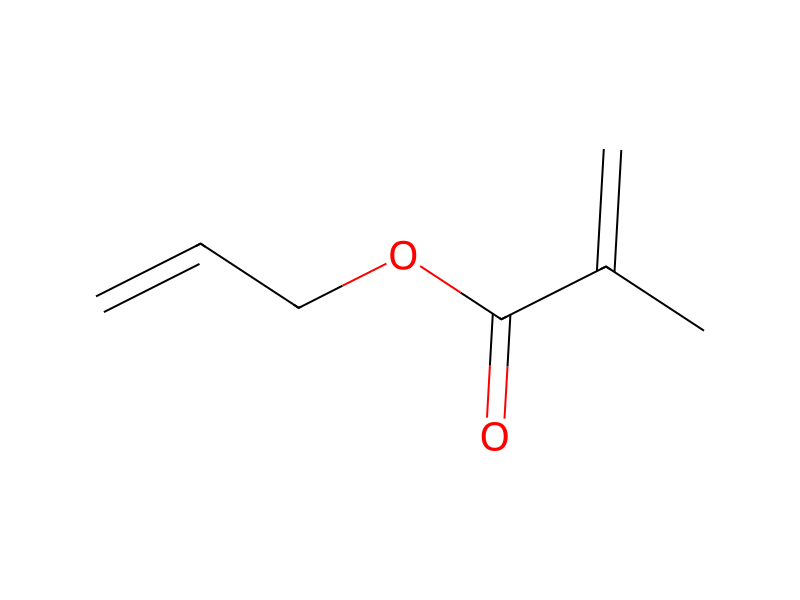
C=CCOC(=O)C(=C)C
InChIKey
FBCQUCJYYPMKRO-UHFFFAOYSA-N
分子式
C7H10O2
平均分子量
126.15 g/mol
単同位体質量
126.06807956

概要

See also: Safrofilcon A (monomer of) ... View More ...

名称と識別子

優先名称
Allyl methacrylate
IUPAC
prop-2-enyl 2-methylprop-2-enoate
英語名
Allyl methacrylate
分子式
C7H10O2
分子量
126.1531

名称と別名

ALLYL METHACRYLATE96-05-9Ageflex AMAMethacrylic acid, allyl ester2-Propenoic acid, 2-methyl-, 2-propenyl esterAllylester kyseliny methakryloveDTXSID20218162-Propenoic acid, 2-methyl-, 2-propen-1-yl esterG2IG50653ZNSC-18597DTXCID401816RefChem:6794
名称をさらに表示
202-473-0Allyl 2-methylacrylateprop-2-enyl 2-methylprop-2-enoateMethacrylic Acid Allyl Esterprop-2-en-1-yl 2-methylprop-2-enoateNSC 18597Allyl Methacrylate (stabilized with MEHQ)MFCD00008592

データベース識別子

CAS
96-05-9
PubChem CID
7274
DTXSID
DTXSID2021816
ChEMBL
CHEMBL1889548
UNII
G2IG50653Z
EC Number
202-473-0
Nikkaji
J38.884J

物性

構造計算による物性補完中

XLogP
1.7
極性表面積
26.3 Ų
水素結合供与体数
0
水素結合受容体数
2
回転可能結合数
4
重原子数
9
形式電荷
0
複雑度
136

実験および物理化学的性質

PolymersPlastics & Rubber -> (Meth)acrylates
SpringerMaterials PropertiesDensity
Density · 2 件

0.9335 g/cu cm at 20 °C

0.9335

Viscosity12 mPa-s at 20 °C
Color/FormColorless liquid
Flash Point33.9 °C
Boiling Point · 2 件

150 °C

302 °F

DecompositionWhen heated to decomposition it emits acrid smoke and irritating fumes.
Polymerization · 1 件

Methyl methacrylate, and in general the methacrylic esters, polymerize much less readily than the corresponding ordinary acrylates. None the less, they are stabilized by adding hydroquinone or pyrogallol, particularly in the presence of metallic copper. /Methacrylates/

Vapor Pressure · 3 件

5.77 [mmHg]

5.77 mm Hg at 25 °C

5.77 mmHg

安全と法規制

安全情報は参考情報です。供給元の安全データシート(SDS)、適用法令、専門家による評価に代わるものではありません。

GHS分類

GHS Classification · 6 件

Danger

H226: Flammable liquid and vapor [Warning Flammable liquids]

P210, P233, P240, P241, P242, P243, P260, P262, P264, P270, P271, P273, P280, P284, P301+P317, P302+P352, P303+P361+P353, P304+P340, P316, P320, P321, P330, P361+P364, P370+P378, P391, P403+P233, P403+P235, P405, and P501 (click each P-code to see the statement)

Danger

H226 (99.7%): Flammable liquid and vapor [Warning Flammable liquids]

P210, P233, P240, P241, P242, P243, P260, P261, P262, P264, P270, P271, P273, P280, P284, P301+P317, P302+P352, P303+P361+P353, P304+P340, P316, P317, P319, P320, P321, P330, P361+P364, P362+P364, P370+P378, P391, P403+P233, P403+P235, P405, and P501 (click each P-code to see the statement)

危険有害性情報

Regulatory Information · 4 件

Chemical: 2-Propenoic acid, 2-methyl-, 2-propenyl ester

2-Propenoic acid, 2-methyl-, 2-propen-1-yl ester is listed on the EPA's Chemical Data Reporting (CDR) system. Manufacturers and importers of 2-Propenoic acid, 2-methyl-, 2-propen-1-yl ester are required to report information about their production and use of this chemical to the EPA under the Toxic Substances Control Act (TSCA). (40 eCFR Part 711)

REACH registered substance: Allyl methacrylate (EC: 202-473-0)

2-Propenoic acid, 2-methyl-, 2-propenyl ester: HSNO Approval: HSR001394 Approved with controls

Hazards Summary · 1 件

TLV Basis: liver damage; Causes liver damage in rats fed 60/mg/kg/day but not at 15 mg/kg/day; Three individuals reported skin irritation after exposure to 3% allyl methacrylate in olive oil; No reports of skin sensitization in humans or after animal testing; [ACGIH] See ACRYLIC RESINS (MONOMERS).

Hazard Classes and Categories · 5 件

Flam. Liq. 3 (99.7%)

Flammable liquid - category 3

Flammable liquids - Category 3

Flammable liquids - Category 3

Flam. Liq. 3

化学と産業

薬理情報

Metabolism/Metabolites · 3 件

... Allyl methacrylate, was metabolized to acrolein. This metabolic pathway can explain the high potency of allyl methacrylate to deplete glutathione despite its low intrinsic chemical reactivity.

Acrylates and methacrylates are detoxified predominantly via conjugation with glutathione via the Michael addition reaction or glutathione-S-transferase. They are also likely to be hydrolyzed via carboxylesterases. The lower molecular weight esters are rapidly metabolized and eliminated, therefore, will not likely cause cumulative toxicity.

Small quantities of methacrylates may readily be metabolized by saponification into the alcohol and methacrylic acid. The latter may form an acetyl-coenzyme a derivative, which then enters the normal lipid metabolism. /Methacrylates/

用途と製造

Uses · 4 件

Used as a monomer, intermediate, and cross-linking agent (contact lenses); Also used in acrylic coatings; [HSDB] Used mainly in closed system processing as a co-monomer (rigid plastics) and cross linker (silanes); Also used in coatings, photoresists, adhesives, dental composites, floor polishes, and vulcanized rubber; [ACGIH]

Painting (Pigments, Binders, and Biocides) [Category: Paint]

Cross-linking agent with methacrylate esters in contact lenses and with alkyl acrylates in pressure-sensitive adhesives; in curable acrylic coatings; for preparing mucilages and thickening agents for aqueous systems

As monomer and intermediate

U.S. Production · 6 件

2023: 700,000 - <850,000 lb

(1984) Probably less than 2.27 X 10+6 g

(1987) 1.27X10+6 lb

(1988) 1.80X10+6 lb

2-Propenoic acid, 2-methyl-, 2-propenyl ester is listed as a High Production Volume (HPV) chemical (65FR81686). Chemicals listed as HPV were produced in or imported into the U.S. in >1 million pounds in 1990 and/or 1994. The HPV list is based on the 1990 Inventory Update Rule. (IUR) (40 CFR part 710 subpart B; 51FR21438).

For more U.S. Production (Complete) data for Allyl methacrylate (6 total), please visit the HSDB record page.

関連反応

60 件
反応記録を作成
HRID 67705 の反応式
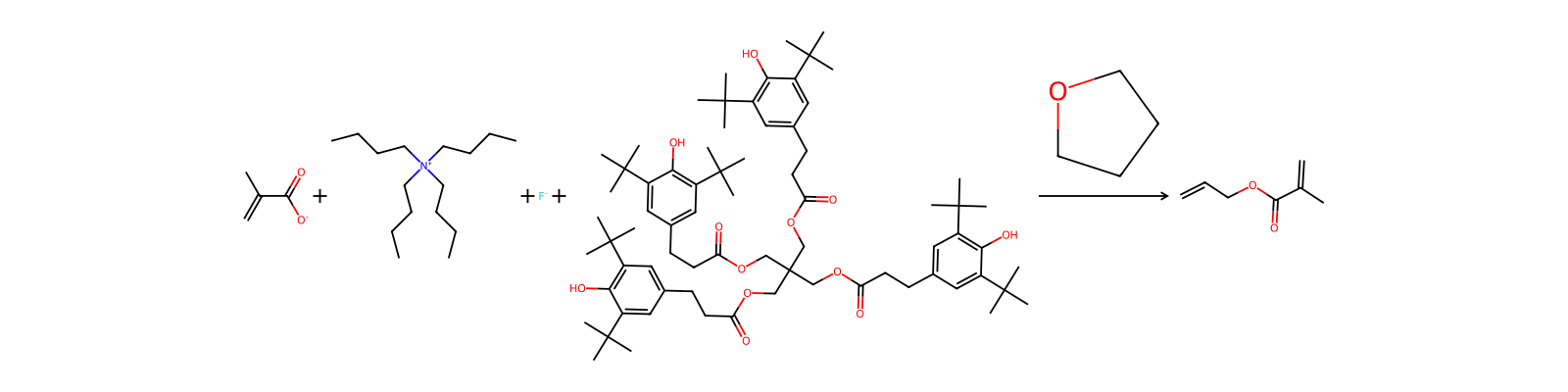
HRID 67705生成物として反応物としてuspto-grants-1982_08
HRID 120012 の反応式
HRID 120012生成物としてTraining data from https://doi.org/10.1039/C8SC04228D (2/10)
HRID 284717 の反応式
HRID 284717反応物としてTraining data from https://doi.org/10.1039/C8SC04228D (8/10)
HRID 325441 の反応式
HRID 325441生成物として反応物としてuspto-grants-1984_04
HRID 359339 の反応式
HRID 359339生成物としてuspto-grants-1991_03
HRID 364154 の反応式
HRID 364154生成物としてuspto-grants-1986_08
HRID 364155 の反応式
HRID 364155生成物としてuspto-grants-1986_08
HRID 364156 の反応式
HRID 364156生成物としてuspto-grants-1986_08
1 / 8 ページ

化合物ノート

読み込み中…

このページの内容基本情報概要名称と識別子物性安全と法規制化学と産業関連反応化合物ノート
その他の操作
ノートを作成反応を作成見積依頼を出す
Food Contact Substances
FCS -> FDA Inventory of Food Contact Substances Listed in 21 CFR
Refractive Index · 2 件

Index of refraction: 1.4360 at 20 °C

Index of refraction: 1.4328 at 25 °C/D

物理化学的性質

沸点
30 · 30-50 °C(Press: 23 Torr)
比重(密度)
0.927 g/cm3 · 0.927 g/cm3
Skin, Eye, and Respiratory Irritations · 2 件

Methacrylates ... produce slight to moderate skin and eye irritation ... depending upon volatility, these materials also may be sensory irritants. /Methacrylic acid & derivatives/

A skin and eye irritant.

安全と保護具

Storage Conditions · 1 件

Temp during storage must be kept low to minimize formation of peroxides and other oxidation products. ... Storage temp below 30 °C are recommended for the polyfunctional methacrylates. ... The methacrylate monomers should not be stored for longer than one year. Shorter storage times are recommended for the aminomethacrylates, ie, three months, and the polyfunctional methacrylates, ie, six months. Many of these cmpd are sensitive to UV light and should, therefore, be stored in the dark. The methacryclic esters may be stored in mild steel, stainless steel, or aluminum. /Methiacrylic acid & derivatives/

Cleanup Methods · 1 件

SRP: Wastewater from contaminant suppression, cleaning of protective clothing/equipment, or contaminated sites should be contained and evaluated for subject chemical or decomposition product concentrations. Concentrations shall be lower than applicable environmental discharge or disposal criteria. Alternatively, pretreatment and/or discharge to a permitted wastewater treatment facility is acceptable only after review by the governing authority and assurance that "pass through" violations will not occur. Due consideration shall be given to remediation worker exposure (inhalation, dermal and ingestion) as well as fate during treatment, transfer and disposal. If it is not practicable to manage the chemical in this fashion, it must be evaluated in accordance with EPA 40 CFR Part 261, specifically Subpart B, in order to determine the appropriate local, state and federal requirements for disposal.

Disposal Methods · 2 件

SRP: The most favorable course of action is to use an alternative chemical product with less inherent propensity for occupational harm/injury/toxicity or environmental contamination. Recycle any unused portion of the material for its approved use or return it to the manufacturer or supplier. Ultimate disposal of the chemical must consider: the material's impact on air quality; potential migration in soil or water; effects on animal and plant life; and conformance with environmental and public health regulations.

SRP: Criteria for land treatment or burial (sanitary landfill) disposal practices are subject to significant revision. Prior to implementing land disposal of waste residue (including waste sludge), consult with environmental regulatory agencies for guidance on acceptable disposal practices.

Preventive Measures · 3 件

SRP: The scientific literature for the use of contact lenses by industrial workers is inconsistent. The benefits or detrimental effects of wearing contact lenses depend not only upon the substance, but also on factors including the form of the substance, characteristics and duration of the exposure, the uses of other eye protection equipment, and the hygiene of the lenses. However, there may be individual substances whose irritating or corrosive properties are such that the wearing of contact lenses would be harmful to the eye. In those specific cases, contact lenses should not be worn. In any event, the usual eye protection equipment should be worn even when contact lenses are in place.

SRP: Contaminated protective clothing should be segregated in a manner that results in no direct personal contact by personnel who handle, dispose of, or clean the clothing. Quality assurance procedures to confirm the efficacy of the cleaning procedures should be implemented prior to the decontaminated protective clothing being returned for reuse by the workers. Contaminated clothing (including shoes/socks) should not be taken home at end of shift, but should remain at employee's place of work for cleaning.

... Hazard is the generation of considerable exothermic heat in some of the reactions, so that high pressures & temp may develop. This danger ... should be borne in mind when designing plant. Awareness of the dangers and of good engineering design are essential to safety. Employees should be instructed about the necessity of cleansing the skin if it is contaminated by materials which are irritants or skin-absorbed. With careful design, however, and complete enclosure of those processes where toxic chemicals or intermediates occur, dangerous exposures can be avoided. /Acrylic acid & derivatives/

Threshold Limit Values (TLV) · 2 件

1.0 [ppm]

1 ppm [2017]

Personal Protective Equipment (PPE)Suitable protective clothing and self-contained respiratory protective apparatus should be available for use of those who may have to rescue persons overcome by fumes. /Acrylic acid and derivatives/

毒性情報

Ecotoxicity Values · 1 件

LC50; Species: Pimephales promelas (Fathead minnow, age 30 days, mean length 20.6 mm, mean weight 0.132 g); Conditions: flow through, 24.9 °C, pH 7.66, hardness 45.6 mg/L (CaCO3), dissolved oxygen 7.1 mg/L, alkalinity 44.4 mg/L (CaCO3); Concentration: 0.99 mg/L for 96 hr (95% confidence limit 0.90-1.1 mg/L) /98+% purity/

Environmental Fate · 3 件

TERRESTRIAL FATE: Based on a classification scheme(1), an estimated Koc value of 110(SRC), determined from a structure estimation method(2), indicates that allyl methacrylate is expected to have high mobility in soil(SRC). Volatilization of allyl methacrylate from moist soil surfaces is expected to be an important fate process(SRC) given an estimated Henry's Law constant of 4.1X10⁻⁴ atm-cu m/mole(SRC), using a fragment constant estimation method(3). Allyl methacrylate is expected to volatilize from dry soil surfaces(SRC) based upon a vapor pressure of 5.77 mm Hg at 25 °C(4). A 62% of theoretical BOD using activated sludge in the Japanese MITI test(5) suggests that biodegradation is an important environmental fate process in soil(SRC).

AQUATIC FATE: Based on a classification scheme(1), an estimated Koc value of 110(SRC), determined from a structure estimation method(2), indicates that allyl methacrylate is not expected to adsorb to suspended solids and sediment(SRC). Volatilization from water surfaces is expected(3) based upon an estimated Henry's Law constant of 4.1X10⁻⁴ atm-cu m/mole(SRC), developed using a fragment constant estimation method(4). Using this Henry's Law constant and an estimation method(3), volatilization half-lives for a model river and model lake are 5.7 hours and 5.2 days, respectively(SRC). According to a classification scheme(5), an estimated BCF of 12(SRC), from an estimated log Kow of 2.12(6) and a regression-derived equation(7), suggests the potential for bioconcentration in aquatic organisms is low(SRC). A 62% of theoretical BOD using activated sludge in the Japanese MITI test(8) suggests that biodegradation is an important environmental process in water(SRC).

ATMOSPHERIC FATE: According to a model of gas/particle partitioning of semivolatile organic compounds in the atmosphere(1), allyl methacrylate, which has a vapor pressure of 5.77 mm Hg at 25 °C(2), is expected to exist solely as a vapor in the ambient atmosphere. Vapor-phase allyl methacrylate is degraded in the atmosphere by reaction with photochemically-produced hydroxyl radicals(SRC); the half-life for this reaction in air is estimated to be 8.4 hours(SRC), calculated from its rate constant of 4.6X10⁻¹¹ cu cm/molecule-sec at 25 °C(SRC) that was derived using a structure estimation method(3). Allyl methacrylate contains chromophores that absorb at wavelengths >290 nm(4) and therefore may be susceptible to direct photolysis by sunlight(SRC).

Adverse EffectsOccupational hepatotoxin - Secondary hepatotoxins: the potential for toxic effect in the occupational setting is based on cases of poisoning by human ingestion or animal experimentation.
Soil Adsorption/Mobility · 1 件

Using a structure estimation method based on molecular connectivity indices(1), the Koc of allyl methacrylate can be estimated to be 110(SRC). According to a classification scheme(2), this estimated Koc value suggests that allyl methacrylate is expected to have high mobility in soil.

Human Toxicity Excerpts · 1 件

/OTHER TOXICITY INFORMATION/ Biologically, methacrylates resemble acrylates, except for lower reactivity and thus decreased toxicity. This is probably due to steric hindrance by its methyl group and in turn decreased rates of membrane transport and systemic translocation. /Methacrylic esters/

Artificial Pollution SourcesAllyl methacrylate's production and use as a cross-linking agent, a monomer, and an intermediate(1,2) may result in its release to the environment through various waste streams(SRC).
Environmental BiodegradationAEROBIC: Allyl methacrylate, present at 100 mg/L, reached 62% of its theoretical BOD in 2 weeks using an activated sludge inoculum at 30 mg/L in the Japanese MITI test(1).
Environmental Bioconcentration · 1 件

An estimated BCF of 12 was calculated for allyl methacrylate(SRC), using an estimated log Kow of 2.12(1) and a regression-derived equation(2). According to a classification scheme(3), this BCF suggests the potential for bioconcentration in aquatic organisms is low(SRC).

Volatilization from Water/Soil · 1 件

The Henry's Law constant for allyl methacrylate is estimated as 4.1X10⁻⁴ atm-cu m/mole(SRC) using a fragment constant estimation method(1). This Henry's Law constant indicates that allyl methacrylate is expected to volatilize from water surfaces(2). Based on this Henry's Law constant, the volatilization half-life from a model river (1 m deep, flowing 1 m/sec, wind velocity of 3 m/sec)(2) is estimated as 5.7 hours(SRC). The volatilization half-life from a model lake (1 m deep, flowing 0.05 m/sec, wind velocity of 0.5 m/sec)(2) is estimated as 5.2 days(SRC). Allyl methacrylate's Henry's Law constant indicates that volatilization from moist soil surfaces may occur(SRC). Allyl methacrylate is expected to volatilize from dry soil surfaces(SRC) based upon a vapor pressure of 5.77 mm Hg(3).

Non-Human Toxicity Excerpts · 5 件

/LABORATORY ANIMALS: Acute Exposure/ The skin sensitization potential of allyl methacrylate (AMA) was studied in Hartley albino guinea pigs. Two groups of guinea pigs (10 per compound) were subjected to repeated insult patch tests either with AMA or with dinitrochlorobenzene (DNCB). All guinea pigs treated with DNCB (positive control) were sensitized. None of the guinea pigs treated with AMA exhibited any evidence of sensitization and no reactions attributable to AMA were elicited as a result of exposure during the insult phase of the patch test.

/LABORATORY ANIMALS: Acute Exposure/ 21 different acrylate and methacrylate compounds, including allyl methacrylate, were scanned for their ability to induce contact sensitivity, using 5 different sensitization protocols. Contact reactions of varying intensities were produced to all the mono-, di-, and triacrylates tested. Methacrylates did not sensitize guinea pigs.

/LABORATORY ANIMALS: Subchronic or Prechronic Exposure/ A 28-day subchronic dermal toxicity of allyl methacrylate (AMA) was conducted in New Zealand white rabbits. Groups of six male and six female rabbits were treated with the test material at dose levels of 0, 25, 50, and 100 mg/kg/day for four weeks. One (recovery) group of male and female rabbits was also treated with 100 mg/kg/day of AMA. No overt signs of toxicity or abnormal behavior were seen among the rabbits during the treatment period. Two females from the 50 mg/kg/day group and two females at the highest dose level died during the course of the study. No mortalities and no significant adverse effects were observed in the low dose and control rabbits. Males treated with the highest dose level exhibited reduced weight gain and lower food consumption. The test material has no significant adverse effects on serum biochemistry, urine and hematological parameters or absolute and relative organ weights. No chemical related gross pathological alterations were observed in any of the organs or tissues examined at the time of necropsy except slight hemorrhage in the fascia of the skin of rabbits treated with 100 mg/kg/day of AMA. There were no significant chemical related microscopic changes found in any of the test rabbits. The animals of the satellite group appeared fully recovered following the 28-day dermal exposure to AMA.

/LABORATORY ANIMALS: Developmental or Reproductive Toxicity/ The developmental toxicities of 4 methacrylates /including allyl methacrylate/ were studied in Sprague-Dawley rats after inhalation exposure for 6 hr/day, during days 6 to 20 of gestation. The exposure concentrations were, ... for allyl methacrylate, 0, 12, 25, 50, or 100 ppm. No significant increases in embryo/fetal lethality or fetal malformations were observed after exposure ... . Fetal toxicity evidenced by statistically significant decreases in fetal body weights was observed at exposure levels > or = 100 ppm allyl methacrylate...

/LABORATORY ANIMALS: Neurotoxicity/ Monomeric methyl methacrylate at concentrations of approx 10 mmol decreased the amplitude of action potential of desheathed amphibian sciatic nerve and produced hyperpolarization of resting potential. The ethyl, allyl, and butyl esters were more active than methyl methacrylate. Isobutyl methacrylate was less active, and sodium methacrylate had no effect. Sodium and potassium currents across the nerve membrane at the node of Ranvier were decreased by methyl methacrylate.

Environmental Abiotic Degradation · 1 件

The rate constant for the vapor-phase reaction of allyl methacrylate with photochemically-produced hydroxyl radicals has been estimated as 4.6X10⁻¹¹ cu cm/molecule-sec at 25 °C(SRC) using a structure estimation method(1). This corresponds to an atmospheric half-life of about 8.4 hours at an atmospheric concentration of 5X10+5 hydroxyl radicals per cu cm(1). The rate constant for the vapor-phase reaction of allyl methacrylate with ozone has been estimated as 2.3X10⁻¹⁷ cu cm/molecule-sec at 25 °C(SRC) that was derived using a structure estimation method(1). This corresponds to an atmospheric half-life of about 0.49 days at an atmospheric concentration of 7X10+11 ozone molecules per cu cm(2). A base-catalyzed second-order hydrolysis rate constant of 9.2X10⁻³ L/mole-sec(SRC) was estimated using a structure estimation method(3); this corresponds to half-lives of 24 and 2.4 years at pH values of 7 and 8, respectively(3). Hydrolysis products include methacrylic acid and allyl alcohol(4). Allyl methacrylate contains chromophores that absorb at wavelengths >290 nm(5) and therefore may be susceptible to direct photolysis by sunlight(SRC).

Probable Routes of Human Exposure · 2 件

According to the 2006 TSCA Inventory Update Report, the number of persons reasonably likely to be exposed in the industrial manufacturing, processing, and use for allyl methacrylate is 100 to 999; the data may be greatly underestimated(1).

Occupational exposure to allyl methacrylate may occur through inhalation and dermal contact with this compound at workplaces where allyl methacrylate is produced or used. Use data indicate that the general population may be exposed to allyl methacrylate via dermal contact with this compound. (SRC)

Industry Uses
Monomers
Methods of Manufacturing · 2 件

Alcoholysis of methyl methacrylate by allyl alcohol in the presence of sodium methylate and hydroquinone, a polymerization inhibitor; also can be made by esterification of the acid by allyl alcohol. Hydroquinone can be removed by distillation or washing with 5% sodium hydroxide.

The methacrylates can be synthesized by catalytic oxidation of isobutylene and subsequent esterification with the appropriate alcohol, or by reacting acetone with hydrocyanic acid and subsequent esterification in sulfuric acid with the appropriate alcohol. /Methacrylic esters/

General Manufacturing Information · 3 件

Paint and Coating Manufacturing

2-Propenoic acid, 2-methyl-, 2-propen-1-yl ester: ACTIVE

Alkyl mercury compounds have been used as seed disinfectants and for fungicides. They have also been used in organic synthesis. /Mercury alkyl compounds/