

基本情報
- 標準SMILES
N#CC(C#N)=c1ccc(=C(C#N)C#N)cc1- InChIKey
PCCVSPMFGIFTHU-UHFFFAOYSA-N- 分子式
- C12H4N4
- 平均分子量
- 204.19 g/mol
- 単同位体質量
- 204.04359613
概要
Tetracyanoquinodimethane is a quinodimethane that is p-quinodimethane in which the methylidene hydrogens are replaced by cyano groups. It is a nitrile, an alicyclic compound and a quinodimethane. It is functionally related to a p-quinodimethane.
名称と識別子
- 優先名称
- Tetracyanoquinodimethane
- IUPAC
- 2-[4-(dicyanomethylidene)cyclohexa-2,5-dien-1-ylidene]propanedinitrile
- 現地名
- 7,7,8,8-テトラシアノキノジメタン
- 英語名
- 7,7,8,8-Tetracyanoquinodimethane
- 分子式
- C12H4N4
- 分子量
- 204.19
名称と別名
1518-16-77,7,8,8-TetracyanoquinodimethaneTCNQTetracyanoquinodimethaneTetracyanoquinodimethanTetracyano-p-quinodimethanePropanedinitrile, 2,2'-(2,5-cyclohexadiene-1,4-diylidene)bis-Tetracyanoquinodimethan(e)7,7,8,8-Tetracyano-p-quinodimethane7,7,8,8-Tetracyano-1,4-quinodimethan7,7',8,8'-Tetracyanoquinodimethane2-[4-(dicyanomethylidene)cyclohexa-2,5-dien-1-ylidene]propanedinitrile
名称をさらに表示
7,7,8,8-テトラシアノキノジメタン2,2'-(シクロヘキサ-2,5-ジエン-1,4-ジイリデン)ビス(プロパンジニトリル)2,2'-(2,5-シクロヘキサジエン-1,4-ジイリデン)ビス(プロパンジニトリル)2,2'-(2,5-シクロヘキサジエン-1,4-ジイリデン)ビス(マロノニトリル)1,4-ビス(ジシアノメチレン)-2,5-シクロヘキサジエンテトラシアノキノジメタン3,6-ビス(ジシアノメチレン)-1,4-シクロヘキサジエン2,2'-(2,5-シクロヘキサンジエン-1,4-ジイリデン)ビス(プロパンジニトリル)2,2'-(2,5-シクロヘキサジエン-1,4-ジイリデン)ビスプロパンジニトリル(2,5-シクロヘキサジエン-1,4-ジイリデン)ビス(マロノニトリル)2,5-シクロヘキサジエン-1,4-ジイリデンビス(マロノニトリル)2,2'-(シクロヘキサ-2,5-ジエン-1,4-ジイリデン)ビス(マロノニトリル)2,5-シクロヘキサジエン-1,4-ジイリデンビス(メタンジカルボニトリル)2,5-シクロヘキサジエン-1,4-ジイリデン-α,α'-ジマロノニトリル1,4ビス(ジシアノメチレン)シクロヘキサジエン7,7,8,8-テトラシアノキノジメタン (昇華精製品)1,4-ビス(ジシアノメチレン)シクロヘキサジエン1,4-ビス(ジシアノメチレン)シクロヘキサジエン (昇華精製品)7,7,8,8‐テトラシアノキノジメタン2,5-シクロヘキサジエン-1,4-ジイリデンジマロノニトリルTetracyano p-Quinone Dimethane2,2'-(Cyclohexa-2,5-diene-1,4-diylidene)dimalononitrileTIMTEC-BB SBB0004357,7,8,8-Tetracyanoqutetracyano-quinodimethaetracyanoquinodimethane7,7,8,8-Tetracyanodimethan
2,5-Cyclohexadiene-1,4-diylidenedimalononitrileHC6FB4H2KW2,5-Cyclohexadiene-delta(sup1alpha:4alpha)dimalononitrileNSC-1052372,5-Cyclohexadiene-delta1,alpha:4,alpha'-dimalononitrileDTXSID5061748CHEBI:524452,5-Cyclohexadiene-1,4-diylidene-alpha,alpha'-dimalononitrile
データベース識別子
- CAS
1518-16-7- PubChem CID
- 73697
- DTXSID
DTXSID5061748- ChEBI
CHEBI:52445- UNII
- HC6FB4H2KW
- EC Number
- 216-174-8
- Nikkaji
- J38.157H
物性
構造計算による物性
- XLogP
- 1
- 極性表面積
- 95.2 Ų
- 水素結合供与体数
- 0
- 水素結合受容体数
- 4
- 回転可能結合数
- 0
- 重原子数
- 16
- 形式電荷
- 0
- 複雑度
- 535
実験および物理化学的性質
Chemical ClassesNitrogen Compounds -> Nitriles
SpringerMaterials PropertiesBand gap energy
Physical DescriptionGreen crystalline solid; [Alfa Aesar MSDS]
物理化学的性質
- 融点
- 287 · 287-289 °C (dec.) (lit.)
- 沸点
- 332.67 °C · 332.67°C (rough estimate)
- 比重(密度)
- 1.3596 · 1.3596 (rough estimate)
- 屈折率
- 1.5 · 1.5000 (estimate)
- 貯蔵温度
- Sealed in dry,Room Temperature
- 外見
- 結晶性粉末
- 色
- オレンジブラウンからグリーン
- 水溶解度
- 不溶性
- BRN
- 611604 · 611604
- 安定性
- 安定。強酸、強塩基、強還元剤、強酸化剤とは相容れない。
- InChI
- InChI=1S/C12H4N4/c13-5-11(6-14)9-1-2-10(4-3-9)12(7-15)8-16/h1-4H
- InChIKey
- PCCVSPMFGIFTHU-UHFFFAOYSA-N
- SMILES
- C1(=C(C#N)C#N)C=CC(=C(C#N)C#N)C=C1 |c:8,t:0|
- CAS データベース
- 1518 · 1518-16-7(CAS DataBase Reference)
- NISTの化学物質情報
- 2 · Propanedinitrile, 2,2'-(2,5-cyclohexadiene-1,4-diylidene)bis-(1518-16-7)
- EPAの化学物質情報
- 2 · Propanedinitrile, 2,2'-(2,5-cyclohexadiene-1,4-diylidene)bis- (1518-16-7)
化学的性質
化学的特性orange to green crystalline powder
安全と法規制
GHS分類
GHS Classification
Danger
H301+H311+H331 (87%): Toxic if swallowed, in contact with skin or if inhaled [Danger Acute toxicity, oral; acute toxicity, dermal; acute toxicity, inhalation]
P261, P262, P264, P270, P271, P280, P301+P316, P301+P317, P302+P352, P304+P340, P316, P317, P321, P330, P361+P364, P403+P233, P405, and P501 (click each P-code to see the statement)
Aggregated GHS information provided per 46 reports by companies from 4 notifications to the ECHA C&L Inventory. Each notification may be associated with multiple companies.
危険有害性情報
Regulatory Information7,7,8,8-Tetracyanoquinonedimethane: Does not have an individual approval but may be used under an appropriate group standard
Hazards SummaryIntravenous LD50 (mouse) = 56 mg/kg; [RTECS] May cause irritation; Harmful by ingestion and skin absorption; Toxic by inhalation; [Alfa Aesar MSDS] See NITRILES.
Hazard Classes and CategoriesAcute Tox. 3 (89.1%)
安全と保護具
Protective Action Criteria (PAC)
0.18 [mg/m3]
2.0 [mg/m3]
12 [mg/m3]
毒性情報
Treatment
Antidotes to cyanide poisoning include hydroxocobalamin and sodium nitrite, which release the cyanide from the cytochrome system, and rhodanase, which is an enzyme occurring naturally in mammals that combines serum cyanide with thiosulfate, producing comparatively harmless thiocyanate. Oxygen therapy can also be administered. (L97)
Health Effects
Exposure to high levels of cyanide for a short time harms the brain and heart and can even cause coma, seizures, apnea, cardiac arrest and death. Chronic inhalation of cyanide causes breathing difficulties, chest pain, vomiting, blood changes, headaches, and enlargement of the thyroid gland. Skin contact with cyanide salts can irritate and produce sores. (L96, L97)
Exposure RoutesOral (L96) ; inhalation (L96) ; dermal (L96)
Toxicity Summary
Organic nitriles decompose into cyanide ions both in vivo and in vitro. Consequently the primary mechanism of toxicity for organic nitriles is their production of toxic cyanide ions or hydrogen cyanide. Cyanide is an inhibitor of cytochrome c oxidase in the fourth complex of the electron transport chain (found in the membrane of the mitochondria of eukaryotic cells). It complexes with the ferric iron atom in this enzyme. The binding of cyanide to this cytochrome prevents transport of electrons from cytochrome c oxidase to oxygen. As a result, the electron transport chain is disrupted and the cell can no longer aerobically produce ATP for energy. Tissues that mainly depend on aerobic respiration, such as the central nervous system and the heart, are particularly affected. Cyanide is also known produce some of its toxic effects by binding to catalase, glutathione peroxidase, methemoglobin, hydroxocobalamin, phosphatase, tyrosinase, ascorbic acid oxidase, xanthine oxidase, succinic dehydrogenase, and Cu/Zn superoxide dismutase. Cyanide binds to the ferric ion of methemoglobin to form inactive cyanmethemoglobin. (L97)
Signs and SymptomsCyanide poisoning is identified by rapid, deep breathing and shortness of breath, general weakness, giddiness, headaches, vertigo, confusion, convulsions/seizures and eventually loss of consciousness. (L96, L97)
Carcinogen ClassificationNo indication of carcinogenicity to humans (not listed by IARC).
安全データ
- wgk
- 3
- tsca
- TSCA listed
- rtecs
- GU4850000
- ridadr
- 3276
- hs_code
- 29269095
- risk_code
- 22-20/21/22-23/24/25
- 化審法
- (3)-1798
- hazard_code
- Xn,Xi,T
- hazard_note
- Irritant
- safety_code
- 22-24/25-36/37-26-36-45
- hazard_class
- 6.1
- packing_group
- II
- 毒劇物取締法
- 劇物
- Hazard Classifications
- Acute Tox. 3 DermalAcute Tox. 3 InhalationAcute Tox. 3 Oral
- ストレージクラス
- 6.1A - Combustible acute toxic Cat. 1 and 2very toxic hazardous materials
化学と産業
薬理情報
Metabolism/Metabolites
Organic nitriles are converted into cyanide ions through the action of cytochrome P450 enzymes in the liver. Cyanide is rapidly absorbed and distributed throughout the body. Cyanide is mainly metabolized into thiocyanate by either rhodanese or 3-mercaptopyruvate sulfur transferase. Cyanide metabolites are excreted in the urine. (L96)
用途と製造
Uses
Synthetic Polymer MALDI Matrix Compounds
Tetracyanoquinodimethane is an electron-acceptor that is used to prepare charge transfer salts, which are of interest in the area of molecular electronics. (L614)
General Manufacturing InformationPropanedinitrile, 2,2'-(2,5-cyclohexadiene-1,4-diylidene)bis-: ACTIVE
応用分野
解説2,2′-(2,5-cyclohexadiene-1,4-diylidene)bispropanedinitrile.C12H4N4(204.19).略称TCNQ.シクロヘキサン-1,4-ジオンとマロノニトリルとを縮合させて1,4-ビス(ジシアノメチレン)シクロヘキサンとし,ついで臭素化,脱臭化水素して合成する."橙色の結晶.分解点297~298 ℃.アセトニトリル,ジオキサン,THFなどに可溶.強力な電子受容体として分子錯体を形成するほか,多数の単純および複雑陰イオンラジカル塩,M+ (TCNQ)n(n = 1,4/3,3/2,2)などを与え,高電導性のものも多い.電導性および光電導性複合材料として,ケミカルコンデンサーなどの電子材料,電子写真用感光材料に用いられる.[CAS 1518-16-7]森北出版「化学辞典(第2版)
説明7,7,8,8-tetracyanoquinodimethane (TCNQ), with a LUMO at 4.5 eV, is known for the charge-transfer salts formed by its radical anion TCNQ inphotovoltaic, light-emitting diodes, and organic field-effect transistordevices. TCNQ and its derivativeshave been used as dopants, leading to an increase in hole mobility or to the lowering of injectionbarriers. One classic example of such is the treatment of tetrathiafulvene (TTF), an electron donor with TCNQ. TFF and TCNQ form an ion pair, the TTF-TCNQ complex. This process of doping leads to the crystallisation of the ion pair into a one-dimensionally stacked polymer. This polymer consists of segregated stacks of cations and anions of the donors and the acceptors, respectively. The complex crystal is an organic semiconductor that exhibits metallic electric conductivity [1, 2].
来歴The first report on the electrical conductivity in an organic solid appeared in 1954, namely, a perylene—bromine complex with a room-temperature conductivity of 0.1 S cm1. In 1960, the organic acceptor Tetracyanoquinodimethane (TCNQ; 7,7,8,8-Tetracyanoquinodimethane) was synthesized, as well as a great number of its conducting charge-transfer complexes and radical ion salts. In the 1970s, the organic donor TTF led to the first organic metal TTF-TCNQ. Its room-temperature conductivity (500 S cm1) increases with a decrease in the temperature to the value of 6000 S cm1 at 60 K, where a metal-insulator transition occurs[1].
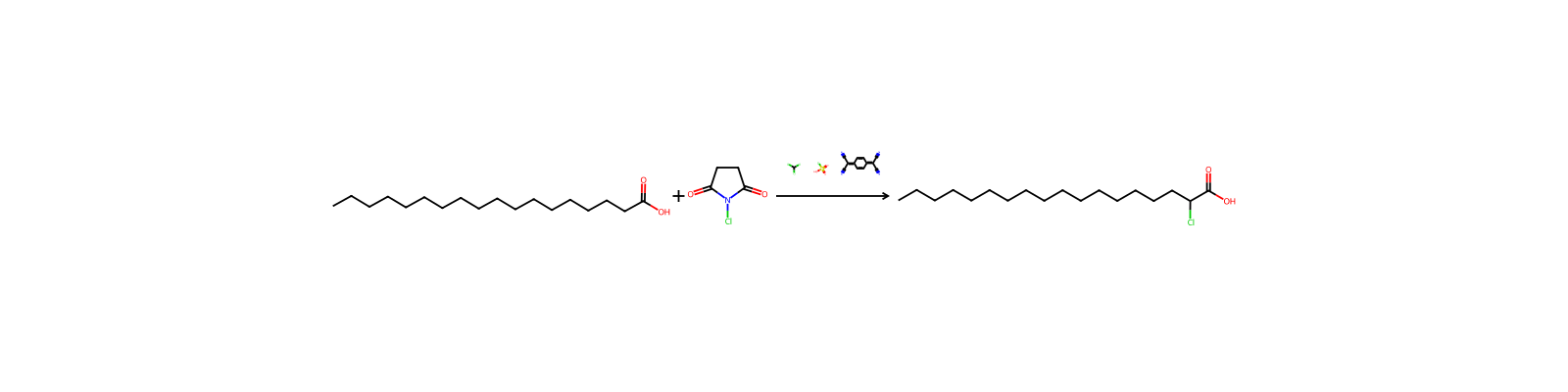
使用7,7,8,8-Tetracyanoquinodimethane is an electron-acceptor molecule used to form charge-transfer superconductors. It is an effective catalyst used for the -chlorination of carboxylic acids using chlorosulfonic acid; the presence of TCNQ suppresses competing free-radical chlorination.
一般的な説明7,7,8,8-Tetracyanoquinodimethane (TNCQ) is a strong electron acceptor as it has four cyano groups and π-conjugation bonds that form charge transferring chains and ion radical salts which are mainly used as p-dopants for the fabrication of a variety of semiconductor applications.
上流・下流製品情報
下流製品
サプライヤー50 社
国药集团化学试剂有限公司86-21-63210123 · [email protected]
梯希爱(上海)化成工业发展有限公司021-67121386 · [email protected]
郑州阿尔法化工有限公司+86-18530059196 · [email protected]
上海阿拉丁生化科技股份有限公司400-6206333 13167063860 · [email protected]
南京凯美西化工有限公司02558748998 18951874644 · [email protected]
南京予善化工有限公司025-025-85281586 +86-18105181009
毕佳索(上海毕得医药科技股份有限公司)400-6005915 · [email protected]
杭州奥得科技有限公司0571-88772972-0 15057128248 · [email protected]
上海毕得医药科技股份有限公司400-1647117 13681763483 · [email protected]
Dayang Chem (Hangzhou) Co.,Ltd.+86-0571-88938639 17705817739 · [email protected]
Syntechem Co.,Ltd[email protected]
上海迈瑞尔生化科技有限公司4006356688 18621169109 · [email protected]
上海晶抗生物工程有限公司021-54721350 13524668266 · [email protected]
上海颖心实验室设备有限公司021-59178156 17002132182 · [email protected]
阿法埃莎(中国)化学有限公司400-6106006 · [email protected]
安耐吉化学&3A(安徽泽升科技股份有限公司)400-0056266 · [email protected]
上海柏卡化学技术有限公司400-026-1533/(021) 6478-0600 · [email protected]
上海瀚鸿科技股份有限公司021-54306202 13764082696 · [email protected]
吉林奥来德光电材料股份有限公司0431-85877181 · [email protected]
上海景颜化工科技有限公司13817811078 · [email protected]
郑州研德生物科技有限公司0371-63682289 15538176268 · [email protected]
武汉丰泰威远科技有限公司+86-27-8746-5837 +86-18627785180 · [email protected]
武汉丰泰威远科技有限公司027-87465837 19945049750 · [email protected]
瀚商化工科技有限公司021-50521775 15800962688
天津希恩思生化科技有限公司400 638 7771 · [email protected]
北京研诺信诚化工有限公司86-10-82830276
常州创视电子科技有限公司+86 (519) 8829-2061 · [email protected]
斯百全化学(上海)有限公司021-021-021-67601398-809-809-809 15221380277 · [email protected]
艾科试剂4008-755-333 18080918076 · [email protected]
上海思域化工科技有限公司86-21-34053660 · [email protected]
赛默飞世尔科技(中国)有限公司800-810-5118 · [email protected]
北京伊诺凯科技有限公司400-810-7969 010-59572699 · [email protected]
TOKYO CHEMICAL INDUSTRY CO., LTD.03-36680489 · [email protected]
越林试剂021-62960152 · [email protected]
上海敏寒医药科技有限公司17612188245 · [email protected]
上海将来实业股份有限公司021-61552785 · [email protected]
成都零六生物科技有限公司400-1166-196 13458535857 · [email protected]
湖北丽都新材料科技有限公司19307245857 · [email protected]
上海鑫圭生物科技有限公司15121041756 · [email protected]
上海麦克林生化科技股份有限公司15221275939 15221275939 · [email protected]
湖北巨胜科技有限公司027-59599241 18871490274 · [email protected]
吉林中科研伸科技有限公司0431-80534353 19917294565 · [email protected]
Sigma-Aldrich西格玛奥德里奇(上海)贸易有限公司021-61415566 800-8193336 · [email protected]
宁波智锐新材料有限公司0574-87487840-805 15888368997
上海皓之翔生物科技有限公司(原上海拓青化工有限公司)526763801 13301653310 · [email protected]
九鼎化学(上海)科技有限公司4009209199 · [email protected]
上海玻尔化学试剂有限公司19102157732 · [email protected]
上海珈得尔化学技术有限公司021-4007787-550 400-7787-550 · [email protected]
陕西缔都医药化工有限公司029-029-81120477 17792793610 · [email protected]
武汉市罗氏科技发展有限公司19171595131 · [email protected]
補足説明
定義ChEBI: A quinodimethane that is p-quinodimethane in which the methylidene hydrogens are replaced by cyano groups.
関連反応
13 件


関連ノート
読み込み中…