
基本情報
- 標準SMILES
Cc1ccc([N+](=O)[O-])cc1- InChIKey
ZPTVNYMJQHSSEA-UHFFFAOYSA-N- 分子式
- C7H7NO2
- 平均分子量
- 137.14 g/mol
- 単同位体質量
- 137.04767846
概要
P-nitrotoluene appears as a yellow liquid with a weak aromatic odor. Toxic. Insoluble in water. Combustible but may take some effort to ignite. Produces toxic oxides of nitrogen when burned. In a spill, immediate steps should be taken to limit its spread to the environment. Can easily penetrate the soil and contaminate groundwater or nearby streams. Used to make other chemicals.
名称と識別子
- 優先名称
- 4-Nitrotoluene
- IUPAC
- 1-methyl-4-nitrobenzene
- 現地名
- 4-ニトロトルエン
- 英語名
- 4-Nitrotoluene
- 分子式
- C7H7NO2
- 分子量
- 137.14
名称と別名
4-NITROTOLUENE1-Methyl-4-nitrobenzene99-99-0p-Nitrotoluene4-Nitrotoluol4-MethylnitrobenzeneBenzene, 1-methyl-4-nitro-Toluene, p-nitro-p-MethylnitrobenzeneNitrotoluenospara-NitrotoluolDTXSID5023792
名称をさらに表示
4-ニトロトルエンp-ニトロトルエン4-ニトロ-1-メチルベンゼン1-ニトロ-4-メチルベンゼン4-メチル-1-ニトロベンゼン1-メチル-4-ニトロベンゼンpニトロトルエン4-ニトロトルエン標準品4‐ニトロトルエン4‐ニトロトルエン標準品4-ニトロトルエン(P-)P-ニトロトルエン標準品4-ニトロトルエン 溶液4-ニトロトルエン, 100 µg/mL in MeOH:AcCN (50:50)4-ニトロトルエン, 1000 µg/mL in MeOH:AcCN (50:50)4-ニトロトルエン標準液4-ニトロトルエ ンPNTPARA NITRO TOLUENE4-nitrobenzenep-Nitrotoluene 5g [99-99-0]4NTp-Nitrotoluol4-Nitrotoluene,>99%
NCI-C60537para-nitrotolueneNCI 9579E88IMG14EXNSC-9579DTXCID203792CHEBI:35227p-nitrophenylmethane
データベース識別子
- CAS
99-99-0- PubChem CID
- 7473
- DTXSID
DTXSID5023792- ChEMBL
CHEMBL155320- ChEBI
CHEBI:35227- UNII
- E88IMG14EX
- EC Number
- 202-808-0
- Nikkaji
- J3.999C
物性
構造計算による物性
- XLogP
- 2.4
- 極性表面積
- 45.8 Ų
- 水素結合供与体数
- 0
- 水素結合受容体数
- 2
- 回転可能結合数
- 0
- 重原子数
- 10
- 形式電荷
- 0
- 複雑度
- 122
実験および物理化学的性質
Chemical Classes
Nitrogen Compounds -> Nitros, Aromatic
Reactive agents - 1st degree
SpringerMaterials Properties13C nuclear magnetic resonance spectrum
LogP
log Kow = 2.37
2.41
2.4
Odor
Bitter almond
Weak aromatic odor
Density
1.286 at 68 °F (USCG, 1999) - Denser than water; will sink
1.1038 at 75 deg/4 °C
1.29 g/cm³
1.1038 @ 75°C
1.12
Viscosity1.2 mPa (= cP) at 60 °C
Color/Form
Yellowish crystals
Colorless rhombic needles
Orthorhombic crystals from alcohol and ether
Crystalline solid
Solubility
less than 1 mg/mL at 68.9 °F (NTP, 1992)
Soluble in alcohol, benzene, ether, chloroform, acetone
Soluble in ethanol; very soluble in ethyl ether, acetone, benzene, carbon tetrachloride, chloroform, pyridine, toluene, carbon disulfide.
In water, 442 mg/L at 30 °C
In water, 361 mg/L at 25 °C
In water, 242 mg/L at 20 °C
Flash Point
223 °F (NTP, 1992)
106 °C
106 °C; 223 °F (Closed cup)
103 °C c.c.
223 °F
Endocrine DisruptorsPotential endocrine disrupting compound
Boiling Point
460.9 °F at 760 mmHg (NTP, 1992)
238.3 °C
Boiling point: 105 °C at 9 mm Hg
238 °C
238.3 °C @760 [mm Hg]
460 °F
Decomposition
The substance decomposes on heating producing toxic fumes /of/ (nitrogen oxides).
Energy of decomposition ( in range 300-420 C) was measured as 1.74 kJ/g by differential scanning calorimetry, and temperature of adiabatic storage which gives an induction time to exothermic decomposition of 24 hours was determined as 232 C by adiabatic Dewar tests, with an apparent energy of activation of 162 kJ/mol. Energy of decomposition of pure 4-nitrotoluene in the range 240-460 C was determined by micro differential scanning calorimetry as 3.52 kJ/g, peaking at 409 C.
Decomposes violently at 279 °C and will burn even in absence of air.
物理化学的性質
- 融点
- 52 · 52-54 °C (lit.)
- 沸点
- 238 °C · 238 °C (lit.)
- 比重(密度)
- 1.392 g/mL · 1.392 g/mL at 25 °C (lit.)
- 蒸気密度
- 4.7 · 4.7 (vs air)
- 蒸気圧
- 5 mm · 5 mm Hg ( 85 °C)
- 屈折率
- 1.5382 · 1.5382
- 闪点
- 223 °F · 223 °F
- 貯蔵温度
- 2 · 2-8°C
- 溶解性
- 0.26 g/リットル · 0.26g/リットル
- 外見
- 結晶性固体
- 酸解離定数(Pka)
- 11.27 · 11.27 (Perrin, 1972)
- 比重
- 1.392 · 1.392
- 色
- 黄色
- 爆発限界(explosive limit)
- 1.6 % · 1.6%(V)
- 水溶解度
- 0.35 g/L · 0.35g/L(20℃)
- 比熱容量
- 1.26 J/ · Cp(crystal): 1.26 J/(g·K), at 25℃
- Merck
- 14 · 14,6650
- BRN
- 1906911 · 1906911
- Henry's Law Constant
- 5.64 at · 5.64 at 25 °C (thermodynamic method-GC/UV spectrophotometry, Altschuh et al., 1999)
- Dielectric constant
- 22.2 · 22.2(58.0℃)
- 安定性
- 安定性 衝撃に弱い場合があります。硫酸、強塩基、還元剤、強酸化剤とは相容れない。
- InChI
- 1S/C7H7NO2/c1-6-2-4-7(5-3-6)8(9)10/h2-5H,1H3
- InChIKey
- ZPTVNYMJQHSSEA-UHFFFAOYSA-N
- SMILES
- Cc1ccc(cc1)[N+]([O-])=O
- LogP
- 2.37 at · 2.37 at 25℃
- CAS データベース
- 99 · 99-99-0(CAS DataBase Reference)
- NISTの化学物質情報
- 1 · Benzene, 1-methyl-4-nitro-(99-99-0)
- EPAの化学物質情報
- p-Nitrotoluene (99-99-0)
化学的性質
化学的特性light yellow crystals
安全と法規制
GHS分類
GHS Classification
Danger
H301: Toxic if swallowed [Danger Acute toxicity, oral]
P260, P261, P262, P264, P270, P271, P273, P280, P301+P316, P302+P352, P304+P340, P316, P319, P321, P330, P361+P364, P391, P403+P233, P405, and P501 (click each P-code to see the statement)
Danger
H301+H311+H331 (33.9%): Toxic if swallowed, in contact with skin or if inhaled [Danger Acute toxicity, oral; acute toxicity, dermal; acute toxicity, inhalation]
P260, P261, P262, P264, P270, P271, P273, P280, P301+P316, P302+P352, P304+P340, P316, P319, P321, P330, P361+P364, P391, P403+P233, P405, and P501 (click each P-code to see the statement)
危険有害性情報
Regulatory Information
Chemical: Benzene, 1-methyl-4-nitro-
Status: Active Update: 22-12-2022 https://echa.europa.eu/registration-dossier/-/registered-dossier/13893
Benzene, 1-methyl-4-nitro-: HSNO Approval: HSR002789 Approved with controls
The New Jersey Worker and Community Right to Know Act requires public and private employers to provide information about hazardous substances at their workplaces. (N.J.S.A. 34:5A-1 et. seq.)
DOT LabelPoison
Fire Hazards
Special Hazards of Combustion Products: Yields toxic oxides of nitrogen when burning. (USCG, 1999)
Combustible. Risk of fire and explosion on contact with acids or oxidizing agents.
Fire Potential
Combustible when exposed to heat or flame.
... Contact with strong oxidizers or sulfuric acid may cause fires ... /Nitrotoluene/
Health HazardsINHALATION, INGESTION, OR SKIN: Headache, flushed face, dizziness, dyspnea (difficult breathing), cyanosis, nausea, vomiting, muscular weakness, rapid pulse and respiration, irritability, and convulsions. (USCG, 1999)
Hazards Summary
Nitrotoluenes (all isomers) have the potential to induce methemoglobinemia in the same manner as aniline and nitrobenzene. [ACGIH] Irritating to the eyes; Can induce methemoglobinemia; [ICSC]
The major hazards encountered in the use and handling of 4-nitrotoluene stem from its toxicologic properties and explosivity. Toxic by all routes (ie, inhalation, ingestion, and dermal absorption), exposure to this bitter-almond-smelling, white-to-yellowish, crystalline substance may occur from its manufacture and use in the synthesis of dinitrotoluene, trinitrotoluene, and various azo and sulfur dye intermediates such as p-toluidine, p-nitrobenzaldehyde and 4-nitro-2-chlorotoluene. Effects from exposure may include contact burns to the skin and eyes, headache, weakness, dizziness, nausea, shortness-of-breath, tachycardia, and methemoglobinemia. The onset of symptoms may be delayed up to 4 hours. OSHA has set a time-weighted-average (TWA) limit of 2 ppm as a final rule to become effective December 31, 1992. Local exhaust ventilation should be applied to control airborne 4-nitrotoluene to permissible limits. In activities and situations where over-exposure may occur, wear a positive pressure self-contained breathing apparatus and chemical protective clothing which is specifically recommended by the shipper or manufacturer. If contact should occur, irrigate exposed eyes with copious amounts of tepid water for at least 15 minutes, and wash exposed skin thoroughly with soap and water. Contaminated clothing should be removed and left at the site for cleaning. While 4-nitrotoluene does not ignite easily, it may burn with the production of irritating or poisonous gases. Also, containers of this substance may explode violently in the heat of a fire. For fires involving 4-nitrotoluene, extinguish with dry chemical, CO2, water spray, fog, or standard foam. Fight fire from as far a distance as possible, and if fire is advanced, evacuate the area. Dike fire control water. 4-Nitrotoluene should be stored away from sources of ignition, heat, strong oxidizers, and sulfuric acid. Small spills of 4-nitrotoluene should be carefully shovelled into a clean, dry container and covered loosely (liquid solutions are taken up with vermiculite, dry sand, or earth). Large dry spills on land should be covered with a plastic sheet to prevent dissolving in the rain or firefighting water, until removal is possible. Large liquid solution spills on land should be diked far ahead of the spill and not allowed to enter water sources or sewers. Spills into bodies of water should be trapped at the bottom with sand bag barriers and removed with suction hoses, or treated with activated carbon and the resulting immobilized masses removed with mechanical dredges or lifts.
DOT ID and Guide1664 152
Reactive GroupNitro, Nitroso, Nitrate, and Nitrite Compounds, Organic
EC ClassificationSymbol: T, N; R: 23/24/25-33-51/53; S: (1/2)-28-37-45-61; Note: C
UN ClassificationUN Hazard Class: 6.1; UN Pack Group: II
Special ReportsDHHS/NTP; NTP Technical Report on Toxicity Studies of o-, m-, and p-Nitrotoluenes Administered in Dosed Feed to F344/N Rats and B6C3F1 Mice Toxicity Rpt Series No. 23 NIH Publication No. 93-3346 (1992)
TSCA Requirements
Section 8(a) of TSCA requires manufacturers of this chemical substance to report preliminary assessment information concerned with production, exposure, and use to EPA as cited in the preamble in 51 FR 41329. Effective date: 8-4-95; Reporting date: 10-3-95.
Pursuant to section 8(d) of TSCA, EPA promulgated a model Health and Safety Data Reporting Rule. The section 8(d) model rule requires manufacturers, importers, and processors of listed chemical substances and mixtures to submit to EPA copies and lists of unpublished health and safety studies. p-Nitrotoluene is included on this list. Effective date: 8-4-95; Sunset date: 6-30-98.
安全と保護具
Fire Fighting
Excerpt from ERG Guide 152 [Substances - Toxic (Combustible)]:
Use water spray, powder, foam, carbon dioxide. In case of fire: keep drums, etc., cool by spraying with water.
First Aid Measures
Fresh air, rest. Artificial respiration may be needed. Refer for medical attention.
Rinse and then wash skin with water and soap. Refer for medical attention . Wear protective gloves when administering first aid.
First rinse with plenty of water for several minutes (remove contact lenses if easily possible), then refer for medical attention.
Rinse mouth. Refer for medical attention .
First Aid
EYES: First check the victim for contact lenses and remove if present. Flush victim's eyes with water or normal saline solution for 20 to 30 minutes while simultaneously calling a hospital or poison control center. Do not put any ointments, oils, or medication in the victim's eyes without specific instructions from a physician. IMMEDIATELY transport the victim after flushing eyes to a hospital even if no symptoms (such as redness or irritation) develop.
(General first aid procedures)
Safe StorageSeparated from food and feedstuffs. See Chemical Dangers. Well closed.
Exposure Control and Personal ProtectionBiological Exposure Indices (BEI) [ACGIH] - Methemoglobin in blood = 1.5% of hemoglobin during or at end of shift. [ACGIH]
Fire Fighting Procedures
Use dry chemical, carbon dioxide, or water spray. Water streams or foam may cause frothing. Use water spray to keep fire-exposed containers cool. Approach fire from upwind to avoid hazardous vapors and toxic decomposition products. Extinguish fire using agent suitable for surrounding fire.
If material on fire or involved in fire: Use water in flooding quantities as fog. Cool all affected containers with flooding quantities of water. Apply water from as far a distance as possible. Use foam, dry chemical, or carbon dioxide.
Storage ConditionsStore in a cool. dry, well-ventilated location. Separate from acids, alkalies, oxidizing materials, and reducing agents.
Cleanup Methods
Ventilate area of spill or leak. For small quantities of liq nitrotoluene, absorb on paper towels. For small quantities of solid nitrotoluene, sweep onto paper or other suitable material. Remove to safe place (such as fume hood) & burn. Large quantities of liq nitrotoluene can be collected & atomized in suitable combustion chamber equipped with appropriate effluent gas cleaning device. Large quantities of solid nitrotoluene can be reclaimed; ... If not practical, dissolve in flammable solvent (such as alcohol) & atomize in suitable combustion chamber equipped with appropriate effluent gas cleaning device. /Nitrotoluene/
Environmental considerations: Land Spill: Dig a pit, pond, lagoon, or holding area to contain liquid or solid material. /SRP: If time permits, pits, ponds, lagoons, soak holes, or holding areas should be sealed with an impermeable flexible membrane liner./ Cover solids with plastic sheet to prevent dissolving in rain or fire fighting water. Dike surface flow using soil, sand bags, foamed polyurethane, or foamed concrete.
Environmental considerations: Water Spill: Use natural barriers or oil spill control booms to limit spill travel. Use natural deep water pockets, excavated lagoons, or sand bag barriers to trap material at bottom. Remove trapped material with suction hoses.
Nonfire Spill ResponseExcerpt from ERG Guide 152 [Substances - Toxic (Combustible)]:
Disposal Methods
SRP: The most favorable course of action is to use an alternative chemical product with less inherent propensity for occupational harm/injury/toxicity or environmental contamination. Recycle any unused portion of the material for its approved use or return it to the manufacturer or supplier. Ultimate disposal of the chemical must consider: the material's impact on air quality; potential migration in soil or water; effects on animal and plant life; and conformance with environmental and public health regulations.
SRP: Wastewater from contaminant suppression, cleaning of protective clothing/equipment, or contaminated sites should be contained and evaluated for subject chemical or decomposition product concentrations. Concentrations shall be lower than applicable environmental discharge or disposal criteria. Alternatively, pretreatment and/or discharge to a permitted wastewater treatment facility is acceptable only after review by the governing authority and assurance that "pass through" violations will not occur. Due consideration shall be given to remediation worker exposure (inhalation, dermal and ingestion) as well as fate during treatment, transfer and disposal. If it is not practicable to manage the chemical in this fashion, it must be evaluated in accordance with EPA 40 CFR Part 261, specifically Subpart B, in order to determine the appropriate local, state and federal requirements for disposal.
For liquid nitrotoluene, by absorbing it in vermiculite, dry sand, earth or similar material & disposing in secured sanitary landfill. By atomizing liquid nitrotoluene in suitable combustion chamber equipped with appropriate effluent gas cleaning device. By making packages of solid nitrotoluene in paper or other suitable material or by dissolving in a flammable solvent (such as alcohol) & burning in a suitable combustion chamber equipped with appropriate effluent gas cleaning device. /Nitrotoluene/
The following wastewater treatment technologies have been investigated for 4-nitrotoluene: Concentration process: Biological treatment.
For more Disposal Methods (Complete) data for 4-NITROTOLUENE (6 total), please visit the HSDB record page.
Spillage Disposal
Personal protection: chemical protection suit including self-contained breathing apparatus. Do NOT let this chemical enter the environment. Sweep spilled substance into covered containers. Carefully collect remainder. Then store and dispose of according to local regulations.
Preventive Measures
SRP: The scientific literature for the use of contact lenses in industry is conflicting. The benefit or detrimental effects of wearing contact lenses depend not only upon the substance, but also on factors including the form of the substance, characteristics and duration of the exposure, the uses of other eye protection equipment, and the hygiene of the lenses. However, there may be individual substances whose irritating or corrosive properties are such that the wearing of contact lenses would be harmful to the eye. In those specific cases, contact lenses should not be worn. In any event, the usual eye protection equipment should be worn even when contact lenses are in place.
SRP: Contaminated protective clothing should be segregated in such a manner so that there is no direct personal contact by personnel who handle, dispose, or clean the clothing. The completeness of the cleaning procedures should be considered before the decontaminated protective clothing is returned for reuse by the workers. Contaminated clothing should not be taken home at the end of shift, but should remain at employee's place of work for cleaning.
... A complete respiratory protection program should be instituted which incl regular training, maintenance, inspection, cleaning, & evaluation. ... Non-impervious clothing which becomes contaminated ... should be removed ... & not reworn until nitrotoluene is removed. Eating & smoking should not be permitted in areas where solid nitrotoluene is handled, processed, or stored. Employees who handle solid or liq nitrotoluene should wash ... hands thoroughly with soap or mild detergent & water before eating or smoking. /Nitrotoluene/
The worker should immediately wash the skin when it becomes contaminated.
For more Preventive Measures (Complete) data for 4-NITROTOLUENE (8 total), please visit the HSDB record page.
毒性情報
InteractionsIn the fluctuation test the mutation frequency of Klebsiella pneumoniae by the 5-nitroimidazoles panidazole and dimetridazole was increased by adding ... 4-nitrotoluene ...
Target OrgansBlood, central nervous system, cardiovascular system, skin, gastrointestinal tract
Ecotoxicity Values
EC50; Species: Chlorella pyrenoidosa; Concentration: 2.21 umol/L for 96 hr; Effect: population, decreased maximum density (yield) /Conditions of bioassay not specified in source examined/
EC50; Species: Photobacterium phosphoreum; Concentration: 1.90 umol/L for 15 min; Effect: decreased bioluminescence /Conditions of bioassay not specified in source examined/
IC50 (immobilization concentration); Species: Daphnia magna (Water flea); Conditions: static; Concentration: 2.14 umol/L for 48 hr. Using a semi-static procedure, the log of the 21 day IC50 was 1.71 umol/L for 4-nitrotoluene.
EC50; Species: Chlorella pyrenoidosa (Green algae); Conditions: static; Concentration: 22 mg/L for 96 hr; Effect: general growth
For more Ecotoxicity Values (Complete) data for 4-NITROTOLUENE (15 total), please visit the HSDB record page.
Environmental Fate
TERRESTRIAL FATE: Based on a classification scheme(1), a measured Koc value of 138 for a single sediment(2) and an estimated Koc value of 363(SRC), determined from a structure estimation method(3), indicates that 4-nitrotoluene is expected to have high to moderate mobility in soil(SRC). Volatilization of 4-nitrotoluene from moist soil surfaces is expected to be an important fate process(SRC) given a Henry's Law constant of 5.63X10⁻⁶ atm-cu m/mole(4). 4-Nitrotoluene is not expected to volatilize from dry soil surfaces(SRC) based upon an extrapolated vapor pressure of 0.0157 mm Hg at 25 °C(5). 4-Nitrotoluene (at 100 ppm) reached 0.8% of its theoretical BOD in 2 weeks using an activated sludge inoculum in the Japanese MITI test which indicates the compound is not readily biodegradable(6). Two studies demonstrated that 4-nitrotoluene could be completely biodegraded by unacclimated sludge within two weeks when lower concentrations of 4-nitrotoluene (10 ppm) were used(7,8). Studies using adapted inocula have demonstrated that 4-nitrotoluene can biodegrade readily(9,10).
AQUATIC FATE: Based on a classification scheme(1), a measured Koc value of 138 for a single sediment(2) and an estimated Koc value of 363(SRC), determined from a structure estimation method(3), indicates that 4-nitrotoluene is not expected to adsorb to suspended solids and sediment(SRC). Volatilization from water surfaces is expected to be an important fate process(4) based upon a Henry's Law constant of 5.63X10⁻⁶ atm-cu m/mole(5). Using this Henry's Law constant and an estimation method(4), volatilization half-lives for a model river and model lake are 7.8 days and 60 days, respectively(SRC). In aqueous solution, 4-nitrotoluene has a quantum yield of 0.0046 at 313 nm(6) indicating that it is susceptible to direct photolysis by sunlight(SRC). 4-Nitrotoluene is not expected to undergo hydrolysis in the environment due to the lack of hydrolyzable functional groups(4). According to a classification scheme(7), measured BCF values of 3.7 to 8.0 in carp (Carprinus carpio)(8) suggest the potential for bioconcentration in aquatic organisms is low(SRC). 4-Nitrotoluene (at 100 ppm) reached 0.8% of its theoretical BOD in 2 weeks using an activated sludge inoculum in the Japanese MITI test which indicates the compound is not readily biodegradable(8). Two studies demonstrated that 4-nitrotoluene could be completely biodegraded by unacclimated sludge within two weeks when lower concentrations of 4-nitrotoluene (10 ppm) were used(9,10). Studies using adapted inocula have demonstrated that 4-nitrotoluene can biodegrade readily(11,12).
ATMOSPHERIC FATE: According to a model of gas/particle partitioning of semivolatile organic compounds in the atmosphere(1), 4-nitrotoluene, which has an extrapolated vapor pressure of 0.0157 mm Hg at 25 °C(2), is expected to exist solely as a vapor in the ambient atmosphere. Vapor-phase 4-nitrotoluene is degraded in the atmosphere by reaction with photochemically-produced hydroxyl radicals(SRC); the half-life for this reaction in air is estimated to be 21 days(SRC), calculated from its rate constant of 7.7X10⁻¹³ cu cm/molecule-sec at 25 °C(SRC) that was derived using a structure estimation method(3). 4-Nitrotoluene is susceptible to direct photolysis, with the primary photoproduct being 4-methyl-2-nitrophenol(4).
Adverse EffectsMethemoglobinemia - The presence of increased methemoglobin in the blood; the compound is classified as primary toxic effect.
Exposure Routes
The substance can be absorbed into the body by inhalation of its aerosol, through the skin and by ingestion.
inhalation, skin absorption, ingestion, skin and/or eye contact
Ecotoxicity Excerpts
/AQUATIC SPECIES/ ...The lowest concentration of 4-nitrotoluene tested that significantly (p< 0.01) lowered the population growth constant of Daphnia after 21 days was 1.61 umol/L. This same concentration was the lowest concentration to significantly (p< 0.01) lower the mean length of Daphnia after 21 days.
Signs and Symptoms
Headache. Blue lips, fingernails and skin. Dizziness. Laboured breathing.
MAY BE ABSORBED! Further see Inhalation.
Redness. Pain.
Abdominal pain. Further see Inhalation.
Anoxia, cyanosis; headache, lassitude (weakness, exhaustion), dizziness; ataxia; dyspnea (breathing difficulty); tachycardia; nausea, vomiting
Ongoing Test Status
The following link will take the user to the National Toxicology Program (NTP) Test Agent Search Results page, which tabulates all of the "Standard Toxicology & Carcinogenesis Studies", "Developmental Studies", and "Genetic Toxicity Studies" performed with this chemical. Clicking on the "Testing Status" link will take the user to the status (i.e., in review, in progress, in preparation, on test, completed, etc.) and results of all the studies that the NTP has done on this chemical.[Available from: http://ntp-apps.niehs.nih.gov/ntp_tox/index.cfm?fuseaction=ntpsearch.searchresults&searchterm=99-99-0]
Effluent Concentrations
4-Nitrotoluene has been found in the effluent from a plant manufacturing trinitrotoluene (TNT) in Radford, VA, with 0.12 to 9.2 mg/L detected(1). 4-Nitrotoluene has been detected in the wastewater resulting from the production and purification of 2,4,6-trinitrotoluene, with between 0.01 to 0.17 mg/L detected, and with 43% of samples positive for 4-nitrotoluene(2). 4-Nitrotoluene has also been detected in the raw effluent from a plant manufacturing dinitrotoluene, with 8.8 mg/L detected, and in a waste treatment lagoon of a chemical company, with 0.04 mg/L(1). 4-Nitrotoluene was detected in 64.3% of sewage treatment plant effluents tested in England and Wales in 1995 at an average concentration of 2.19 ug/L(3).
ICSC Environmental DataThe substance is toxic to aquatic organisms. The substance may cause long-term effects in the aquatic environment.
Medical Surveillance
Routine checking of lips, tongue, and nail beds of exposed personnel for signs of cyanosis. /Nitrotoluene/
The following medical procedures should be made available to each employee who is exposed to nitrotoluene at potentially hazardous levels.Initial Medical Exam: A complete history & physical exam: ... Exam of blood, nervous system, GI system, & cardiovascular system should be stressed. Skin should be exam for evidence of chronic disorders. ... A complete blood count should be performed, including red cell count, a white cell count, a differential count of stained smear, as well as hemoglobin & hematocrit. Persons with blood disorders may be at increased risk from exposure.Periodic Medical Exam: The ... /initial med exam/ should be repeated on an annual basis. Methemoglobin determinations should be performed if overexposure is suspected or signs & symptoms of toxicity occur.
法規制情報
TSCA Requirements
Section 8(a) of TSCA requires manufacturers of this chemical substance to report preliminary assessment information concerned with production, exposure, and use to EPA as cited in the preamble in 51 FR 41329. Effective date: 8-4-95; Reporting date: 10-3-95.
Pursuant to section 8(d) of TSCA, EPA promulgated a model Health and Safety Data Reporting Rule. The section 8(d) model rule requires manufacturers, importers, and processors of listed chemical substances and mixtures to submit to EPA copies and lists of unpublished health and safety studies. p-Nitrotoluene is included on this list. Effective date: 8-4-95; Sunset date: 6-30-98.
Atmospheric Standards
This action promulgates standards of performance for equipment leaks of Volatile Organic Compounds (VOC) in the Synthetic Organic Chemical Manufacturing Industry (SOCMI). The intended effect of these standards is to require all newly constructed, modified, and reconstructed SOCMI process units to use the best demonstrated system of continuous emission reduction for equipment leaks of VOC, considering costs, non air quality health and environmental impact and energy requirements. Nitrotoluene is produced, as an intermediate or a final product, by process units covered under this subpart. /Nitrotoluene/
CERCLA Reportable Quantities
Persons in charge of vessels or facilities are required to notify the National Response Center (NRC) immediately, when there is a release of this designated hazardous substance, in an amount equal to or greater than its reportable quantity of 1000 lb or 454 kg. The toll free number of the NRC is (800) 424-8802. The rule for determining when notification is required is stated in 40 CFR 302.4 (section IV. D.3.b).
Clean Water Act Requirements
p-Nitrotoluene is designated as a hazardous substance under section 311(b)(2)(A) of the Federal Water Pollution Control Act and further regulated by the Clean Water Act Amendments of 1977 and 1978. These regulations apply to discharges of this substance. This designation includes any isomers and hydrates, as well as any solutions and mixtures containing this substance.
安全データ
- OEB
- A
- OEL
- TWA: 2 ppm (11 mg/m3) [skin]
- wgk
- 2
- tsca
- TSCA listed
- rtecs
- XT3325000
- ridadr
- UN 3446 (NITROTOLUENES, SOLID)
- 毒性
- LD50 orally in Rabbit: 1960 mg/kg LD50 dermal Rat > 16000 mg/kg
- hs_code
- 29042000
- risk_code
- 23/24/25-33-51/53-36/37/38-11-36-20/21/22
- 化審法
- (3)-437
- 安衛法
- 57,57-2
- hazard_code
- T,N,F,Xn
- safety_code
- 28-37-45-61-28A-27-16-36/37-26
- hazard_class
- 6.1
- packing_group
- II
- 自然発火温度
- 734 °F
- 環境リスク評価
- p-ニトロトルエン(99-99-0)
- Hazard Classifications
- Acute Tox. 3 DermalAcute Tox. 3 InhalationAcute Tox. 3 OralAquatic Chronic 2STOT RE 2
- ストレージクラス
- 6.1A - Combustible acute toxic Cat. 1 and 2very toxic hazardous materials
- 有毒物質データの
- 99-99-0(Hazardous Substances Data)
- 発がん性評価について
- IARC 3
化学と産業
薬理情報
Metabolism/Metabolites
Yields p-nitrobenzyl alcohol in rabbits. ...Yields p-nitrobenzyl alcohol in rats and mice ... . /from table/
Eel liver homogenates metabolize methyl group of p-nitrotoluene, model compound of toluene, more slowly than rat liver homogenates.
Vertebrate liver enzymes and intact grass grubs oxidized methyl groups of p-nitrotoluene into carboxy groups at different rates.
The metabolism and excretion of 2-, 3-, and 4-nitrotoluene (2NT, 3NT, and 4NT, respectively) were studied in male Fischer 344 rats. ... The major metabolites excreted in urine in 72 hr after administration of 4NT were 4-nitrobenzoic acid (28% of the dose), 4-acetamidobenzoic acid (27% of the dose), and 4-nitrohippuric acid (13% of the dose).
Eight metabolites were found in urine following administration of 4-nitrotoluene. ... For three rats 72 hr after treatment, the mean percentage of the dose administered plus or minus the standard error the mean for each metabolite was: 4-nitrobenzoic acid (28.0 +/- 2.6); 4-acetamidobenzoic acid (27.1 +/- 3.0); 4-nitrohippuric acid (13.0 +/- 0.7); S-(4-nitrobenzyl)-N-acetylcysteine (3.7 +/- 0.1); 4-nitrobenzyl glucuronide (1.4 +/- 0.1); 4-aminobenzoic acid (0.8 +/- 0.1); S-methyl-2- nitrophenyl glucuronide (0.3 +/- 0.0); and 5-methyl-2-nitrophenyl sulfate (0.2 +/- 0.0)
Absorption, Distribution and Excretion
The metabolism and excretion of 2-, 3-, and 4-nitrotoluene (2NT, 3NT, and 4NT, respectively) were studied in male Fischer 344 rats. Excreta were collected for 72 hr after an oral dose (200 mg/kg) of radiolabeled 2NT, 3NT, or 4NT. Radiolabel from each NT isomer was rapidly excreted (86, 73 and 74% of the dose for 2NT, 3NT, and 4NT, respectively in 24 hr). The urine was the major route of excretion with 70-85% of the dose being excreted by that route in 72 hr. Five to 13% and 0.0 to 0.1% of the dose was excreted in the feces and expired air, respectively, in 72 hr. ...
The substance can be absorbed into the body by inhalation of its aerosol, through the skin and by ingestion
After a single dose of (14)C-labeled 4-nitrotoluene to male rats, about 77% was excreted in the urine within 72 hr... .
In bile duct-cannulated male Fischer 344 rats administered 200 mg/kg bw nitro (14)C toluene isomers ... 9.8% of the 4-nitrotoluene dose was excreted in bile, compared to 1.3% in females.
用途と製造
Uses
Used in the production of dyes, pesticides, and rubber chemicals; [ACGIH]
For 4-nitrotoluene (USEPA/OPP Pesticide Code: 028901) there are 0 labels match. /SRP: Not registered for current use in the U.S., but approved pesticide uses may change periodically and so federal, state and local authorities must be consulted for currently approved uses./
A dyestuff intermediate in producing rubber and agricultural chemicals and explosives, and as a chemical intermediate.
For production of toluidine, fuchsin, and various synthetic dyes.
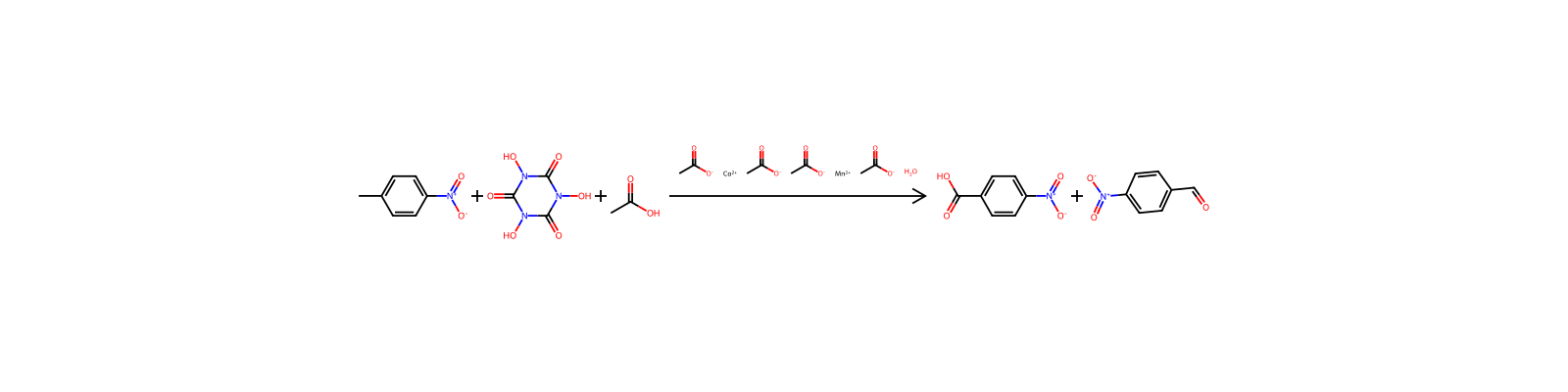
4-Nitrotoluene is used principally in the production of intermediates for azo and sulfur dyes; typical intermediates are p-toluidine, p-nitrobenzaldehyde, and 4-nitro-2-chlorotoluene.
U.S. Production
(1972) GREATER THAN 4.54X10+5 G
(1975) GREATER THAN 4.54X10+5 G
(1981) 7.0x10+9 G /CALCULATED/
(1983) 2.0X10+10 G /ORTHO- AND PARA- ISOMERS COMBINED/
For more U.S. Production (Complete) data for 4-NITROTOLUENE (8 total), please visit the HSDB record page.
Methods of Manufacturing
From toluene by nitration and separation by fractional distillation.
After distillation of the meta fraction from the isomer mixture, the still residues are cooled in a crystallizer to separate technical quality 4-nitrotoluene.
Mononitrotoluenes can be produced by either a batch or continuous process. With a typical batch process, the toluene is fed into the nitrator and cooled to about 25 °C. The nitrating acid (52-56 wt% H2SO4, 28-32 wt% HNO3, and 12-20 wt% H2O) is added slowly below the surface of the toluene and the temperature of the reaction mixture is maintained at 25 °C by adjusting the feed rate of the nitrating acid and the amount of cooling. After all of the acid is added, the temperature is raised slowly to 35-40 °C. After completion of the reaction, the reaction mixture is put into a separator where the spent acid is withdrawn from the bottom and is reconcentrated. The crude product is washed in several steps with dilute caustic and then water. The product is steam distilled to remove excess toluene and then dried by distilling the remaining traces of water. The resulting product contains 55-60 wt% o-nitrotoluene, 3-4 wt% m-nitrotoluene, and 35-40 wt% p-nitrotoluene. The yield of mononitrotoluenes is about 96%. ... The separation of the isomers is carried out by a combination of fractional distillation and crystallization.
General Manufacturing InformationBenzene, 1-methyl-4-nitro-: ACTIVE
応用分野
解説C7H7NO2(137.14).C6H4(CH3)NO2.o-,m-,p-ニトロトルエンの3種類の異性体がある.トルエンを混酸でモノニトロ化すれば,o-ニトロトルエン63%,p-ニトロトルエン33%,m-ニトロトルエン4% の割合でニトロトルエンが生成し,これらは冷却法,減圧蒸留などによってそれぞれを分離できる.また,m-ニトロトルエンのみを合成するには,p-トルイジンをニトロ化,ついでアミノ基をジアゾ化し,ジアゾニウム基を還元分解すれば得られる.p-ニトロトルエンは黄色の結晶であるが,o-ニトロトルエンおよびm-ニトロトルエンは常温では液体である.いずれもエーテル,ベンゼンに可溶.水に難溶であるが,還元すればそれぞれ対応するトルイジンが,酸化すればやはり対応するニトロ安息香酸が得られる.
用途環境試料中の内分泌攪乱物質のGCーMS分析で標準品として使用されます。
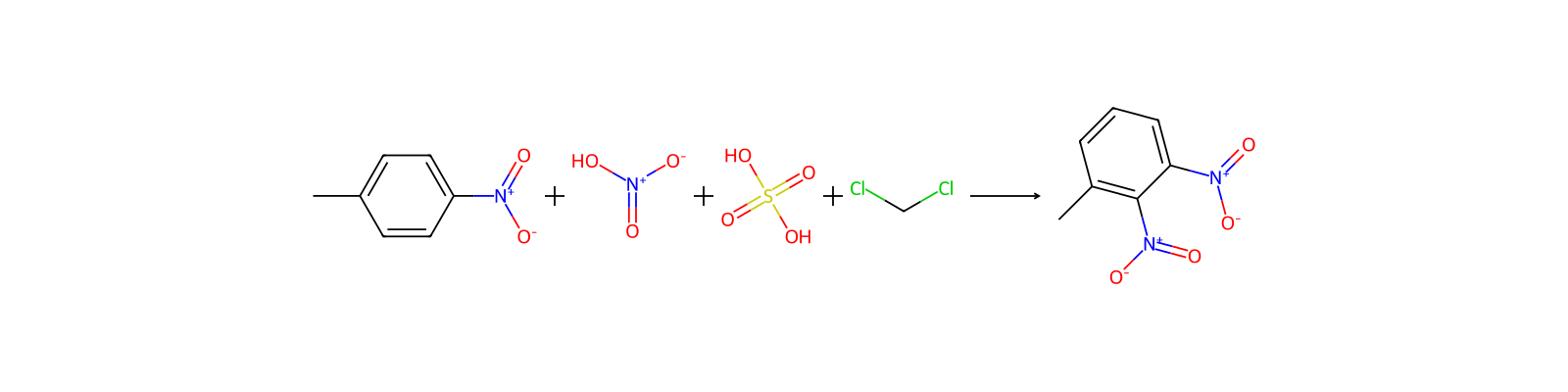
用途P-トルイジン、2,4-ジニトロトルエン、2,4,6-トリニトロトルエン、P-ニトロトルエン-O-スルホン酸などの中間物
使用4-Nitrotoluene is an explosive material.
一般的な説明A yellow liquid with a weak aromatic odor. Toxic. Insoluble in water. Combustible but may take some effort to ignite. Produces toxic oxides of nitrogen when burned. In a spill, immediate steps should be taken to limit its spread to the environment. Can easily penetrate the soil and contaminate groundwater or nearby streams. Used to make other chemicals.
調製方法
After distillation of the meta fraction from the isomer mixture, the still residues are cooled in a crystallizer to separate technical quality 4-nitrotoluene. Further distillation of nitrotoluene residues and fractions should be implemented with great care because this has been reported to cause explosions.
純化方法Dry it in air, then dry it in a vacuum desiccator over H2SO4. [Wright & Grilliom J Am Chem Soc 108 2340 1986, Beilstein 5 IV 848.]
上流・下流製品情報
上流原料
下流製品
関連反応
67 件



関連ノート
読み込み中…