

基本情報
- 標準SMILES
O=S(=O)(O)NC1CCCCC1- InChIKey
HCAJEUSONLESMK-UHFFFAOYSA-N- 分子式
- C6H13NO3S
- 平均分子量
- 179.24 g/mol
- 単同位体質量
- 179.06161428
概要
Cyclohexylsulfamic acid is a member of the class of sulfamic acids that is sulfamic acid carrying an N-cyclohexyl substituent. It has a role as a human xenobiotic metabolite and an environmental contaminant. It is functionally related to a sulfamic acid. It is a conjugate acid of a cyclohexylsulfamate.
名称と識別子
- 優先名称
- Cyclamate
- IUPAC
- cyclohexylsulfamic acid
名称と別名
Cyclamic acidCyclohexylsulfamic acid100-88-9N-Cyclohexylsulfamic acidCYCLAMATECyclohexanesulfamic acidHexamic acidSucaryl acidSucarylCyclohexylaminesulphonic acidCyclohexylamidosulfuric acidCyclohexylaminesulfonic acid
名称をさらに表示
Cyclohexylsulphamic acidCyclamsaeureCyclohexanesulphamic acidCyclohexylamidosulphuric acidDTXSID5041809NSC-220327HN3OFO5036INS NO.952(I)
データベース識別子
- CAS
100-88-9- PubChem CID
- 7533
- DTXSID
DTXSID5041809- ChEMBL
CHEMBL1206440- ChEBI
CHEBI:15964- UNII
- HN3OFO5036
- EC Number
- 202-898-1
- Nikkaji
- J4.986G
物性
構造計算による物性
- XLogP
- 0.6
- 極性表面積
- 74.8 Ų
- 水素結合供与体数
- 2
- 水素結合受容体数
- 4
- 回転可能結合数
- 2
- 重原子数
- 11
- 形式電荷
- 0
- 複雑度
- 200
実験および物理化学的性質
Chemical ClassesOther Uses -> Food Additives
pHpH of 10% aqueous solution: 0.8-1.6
SpringerMaterials PropertiesCrystal structure
OdorOdorless
Taste
Sweet-sour
A bitter taste becomes noticeable when quantity in foods approaches 0.5%.
Color/Form
Crystals
White crystalline powder
Solubility
1 G DISSOLVES IN ABOUT 7.5 ML OF WATER, 4 ML OF ALC, 4 ML OF PROPYLENE GLYCOL, OR 6 ML OF ACETONE; SLIGHTLY SOL IN CHLOROFORM AND INSOL IN HEXANE
Very soluble in alkali
Soluble in alcohol; insoluble in oils
1000000 mg/L @ 25 °C (exp)
Human DrugsBreast Feeding; Lactation; Milk, Human; Artificial Sweeteners; Sweetening Agents
Decomposition
When heated to decomposition it emits toxic fumes of sulfoxides and nitroxides.
When heated to decomposition it emits toxic fumes of sulfoxides and nitroxides. /Calcium cyclamate dihydrate/
Melting Point
169.5 °C
169 - 170 °C
Vapor Pressure0.0000027 [mmHg]
Physical Description
Large Crystals
White odorless solid; [Hawley] Fine white crystals; [MSDSonline]
Solid
安全と法規制
GHS分類
GHS Classification
This chemical does not meet GHS hazard criteria for 25% (7 of 28) of reports.
Warning
H315 (71.4%): Causes skin irritation [Warning Skin corrosion/irritation]
P264, P264+P265, P280, P302+P352, P305+P351+P338, P321, P332+P317, P337+P317, and P362+P364 (click each P-code to see the statement)
Aggregated GHS information provided per 28 reports by companies from 3 notifications to the ECHA C&L Inventory. Each notification may be associated with multiple companies.
危険有害性情報
Regulatory Information
Sulfamic acid, N-cyclohexyl- is listed on the EPA's Chemical Data Reporting (CDR) system. Manufacturers and importers of Sulfamic acid, N-cyclohexyl- are required to report information about their production and use of this chemical to the EPA under the Toxic Substances Control Act (TSCA). (40 eCFR Part 711)
Status: Active Update: 26-04-2019 https://echa.europa.eu/registration-dossier/-/registered-dossier/28203
Sulfamic acid, cyclohexyl-: Does not have an individual approval but may be used as a component in a product covered by a group standard. It is not approved for use as a chemical in its own right.
Hazards Summary
In lethal dose studies, mice have seizures; Oral LD50 (mouse) = 680 mg/kg; Oral LD50 (rat) = 12,000 mg/kg; [ChemIDplus] No toxic effects found in rats fed high doses for entire life; [HSDB] An irritant; May cause skin sensitization; Effects in lethal-dose animal studies include convulsions and injury to liver and kidneys; [MSDSonline] See Potassium cyclamate. See Sodium cyclamate.
FDA Requirements
Cyclamate and its derivatives. Calcium, sodium, magnesium and potassium salts of cyclohexane sulfamic acid. Cyclamates are synthetic chemicals having a sweet taste 30 to 40 times that of sucrose, are not found in natural products at levels detectable by the official methodology, and have been used as artificial sweeteners. Food containing any added or detectable level of cyclamate is deemed to be adulterated in violation of the act based upon an order published in the Federal Register of October 21, 1969 (34 FR 17063).
Hazard Classes and CategoriesSkin Irrit. 2 (71.4%)
安全と保護具
Disposal Methods
SRP: The most favorable course of action is to use an alternative chemical product with less inherent propensity for occupational harm/injury/toxicity or environmental contamination. Recycle any unused portion of the material for its approved use or return it to the manufacturer or supplier. Ultimate disposal of the chemical must consider: the material's impact on air quality; potential migration in soil or water; effects on animal and plant life; and conformance with environmental and public health regulations.
SRP: Criteria for land treatment or burial (sanitary landfill) disposal practices are subject to significant revision. Prior to implementing land disposal of waste residue (including waste sludge), consult with environmental regulatory agencies for guidance on acceptable disposal practices.
毒性情報
Interactions
Cyclamate has been shown to interfere with the intestinal absorption of lincomycin by competing for plasma protein absorption sites.
PHENYLBUTAZONE ACCELERATES URINARY EXCRETION OF SODIUM CYCLAMATE IN RABBITS, APPARENTLY OWING TO DISPLACEMENT OF CYCLAMATE FROM PLASMA PROTEINS. /SODIUM SALT/
NEOMYCIN & SULFAGUANIDINE CAUSED SIGNIFICANT DEPLETION IN URINARY OUTPUT OF SODIUM CYCLAMATE METABOLITES IN MICE & RATS, BUT NOT IN RABBITS... /NA SALT/
The effect of cyclamate on the anticoagulant activity of phenprocoumon was investigated in rats after single oral doses of phenprocoumon, cyclamate, or phenprocoumon/cyclamate. By means of high pressure liquid chromatrography (HPLC) the change of the concentration of phenprocoumon per unit time in sera was determined. The anticoagulant acitivity of phenprocoumon was determined by the extension of the prothromin-time (Quick-test). It was found that cyclamate gives rise to an elevation of phenprocoumon in the blood, and a reduction of the anticoagulating potency.
For more Interactions (Complete) data for CYCLAMATE (6 total), please visit the HSDB record page.
Environmental Fate
TERRESTRIAL FATE: Based on a classification scheme(1), an estimated Koc value of 12(SRC), determined from a structure estimation method(2), indicates that cyclamate is expected to have very high mobility in soil(SRC). The estimated pKa of cyclamate is 1.71(3), indicating that this compound will almost entirely exist in the anion form in the environment and anions generally do not adsorb more strongly to soils containing organic carbon and clay than their neutral counterparts(4). Volatilization from moist soil is not expected because the compound exists as an anion and ions do not volatilize. Cyclamate is not expected to volatilize from dry soil surfaces(SRC) based upon an estimated vapor pressure of 5.3X10⁻⁷ mm Hg at 25 °C(SRC), determined from a fragment constant method(5). Incubation experiments with activated sludge resulted in a first order half-life of 20 minutes with 99% removal efficiency after 3 hours(6) suggesting that biodegradation is an important environmental fate process in soil(SRC).
AQUATIC FATE: Based on a classification scheme(1), an estimated Koc value of 12(SRC), determined from a structure estimation method(2), indicates that cyclamate is not expected to adsorb to suspended solids and sediment(SRC). A pKa of 1.71(3) indicates cyclamate will exist almost entirely in the anion form at pH values of 5 to 9 and therefore volatilization from water surfaces is not expected to be an important fate process(SRC). Bioconcentration of cyclamate in aquatic organisms is low due to its ionic nature. Incubation experiments with activated sludge resulted in a first order half-life of 20 minutes with 99% removal efficiency after 3 hours(4) suggesting that biodegradation is an important environmental fate process in water(SRC).
ATMOSPHERIC FATE: According to a model of gas/particle partitioning of semivolatile organic compounds in the atmosphere(1), cyclamate, which has an estimated vapor pressure of 5.3X10⁻⁷ mm Hg at 25 °C(SRC), determined from a fragment constant method(2), will exist in both the vapor and particulate phases in the ambient atmosphere. Vapor-phase cyclamate is degraded in the atmosphere by reaction with photochemically-produced hydroxyl radicals(SRC); the half-life for this reaction in air is estimated to be 3.7 hours(SRC), calculated from its rate constant of 3.4X10⁻¹¹ cu cm/molecule-sec at 25 °C(SRC) that was derived using a structure estimation method(3). Particulate-phase cyclamate may be removed from the air by wet or dry deposition(SRC). Cyclamate does not contain chromophores that absorb at wavelengths >290 nm(4), and therefore is not expected to be susceptible to direct photolysis by sunlight(SRC).
Adverse EffectsOccupational hepatotoxin - Secondary hepatotoxins: the potential for toxic effect in the occupational setting is based on cases of poisoning by human ingestion or animal experimentation.
Average Daily IntakeCyclamates are widely used as non-caloric sweeteners, the average daily dietary intake generally being less than 3 mg/kg body weight.
Effluent ConcentrationsCyclamate concentrations in untreated and treated wastewater from the Canton of Zurich, Switzerland, collected in 2008(1). [Table#960]
Soil Adsorption/Mobility
Using a structure estimation method based on molecular connectivity indices(1), the Koc of cyclamate can be estimated to be 12(SRC). According to a classification scheme(2), this estimated Koc value suggests that cyclamate is expected to have very high mobility in soil. The estimated pKa of cyclamate is 1.71(3), indicating that this compound will exist almost entirely in the anion form in the environment and anions generally do not adsorb more strongly to soils containing organic carbon and clay than their neutral counterparts(4).
Human Toxicity Excerpts
/HUMAN EXPOSURE STUDIES/ Four groups of 8 men each were administered sodium cyclamate in hard gelatin capsules at 0 (sucrose placebo), 5, 10 or 16 g/day for 213 days. Capsules were taken with regular meals. Blood, urine and semen were collected twice prior to commencing study. Samples of blood and urine were then collected on days 2 and 8 and weekly thereafter while semen was obtained every 2 weeks. Blood was examined for glucose, BUN, cholesterol, Na+, K+, protein bound iodine (PBI), SGPT, hemoglobin, hematocrit and complete blood count. The concentration and motility of sperm in the semen were estimated. Stool was collected on days 2, 4, 9 and 11 and on 2 non-consecutive days and graded as to consistency. Body weight and blood pressure were monitored weekly. The only untoward effect observed was softening of the stool which occurred in 7/8 men receiving 16 g/day and 2/8 receiving 10 g/day. All subjects receiving cyclamate excreted cyclohexylamine in varying amounts on one or more occasions. The percentage of cyclohexylamine that appeared in the urine as free cyclohexylamine varied between 0.25 and 75.4% with a mean value of 17.2%. A significant increase in the concentration of PBI in the serum was also observed. This was shown to be an artifact arising from iodine in the color used in coloring the gelatin capsules
/HUMAN EXPOSURE STUDIES/ To determine whether there was a connection between the complaint of restless legs and the ingestion of artificial sweeteners in a patient with these symptoms after drinking certain 'light' beverages.Randomized, double-blind, placebo-controlled N-of-1 trial with a cross-over design. During a period of 48 days, the patient took 4 capsules per day containing either 150 mg of cyclamate, 22.5 mg of saccharine, both sweeteners, or placebo on two successive days. Between each of these 2-day periods there was a 2-day rest period during which no capsules were taken. The hospital pharmacist had prepared the capsules and determined the sequence of the 2-day periods on a random basis. The patient did not know which capsules he was taking. Every day on arising, starting 3 weeks before the trial period, the patient noted the intensity and duration of the symptoms in the late evening and previous night. For this notation he used an 11-point scale, from 0 (= no restless legs) to 10 (= almost total inability to sleep because of restless legs). A score of 1-3 corresponded to mild symptoms that had no effect on the patient's sleep; at a score of 4-6 his sleep was disturbed and at a score of 7-10 the patient hardly slept at all. The patient had symptoms more often while using saccharine or the combination of saccharine and cyclamate than when taking the placebo (4 and 4 versus 2 of the 6 nights); moreover, the average score was then statistically significantly higher (5.2 and 5.8 versus 3.3). There was a connection between the patient's complaints of restless legs and the use of saccharine, but not the use of cyclamate.
/CASE REPORTS/ SOME SKIN CONDITIONS (EG, PRURITUS, DERMOGRAPHIA, URTICARIA, ANGIONEUROTIC EDEMA) HAVE BEEN ATTRIBUTED TO CYCLAMATES. A WOMAN PT WHO TOOK LARGE AMT OF CALCIUM CYCLAMATE HAD PHOTOSENSITIVE DERMATITIS & RENAL TUBULAR NECROSIS ASSOCIATED WITH HYPOPHOSPHATEMIA. ...A CASE OF PHOTOSENSITIZATION IN A BLACK WOMAN TAKING CALCIUM CYCLAMATE PLUS SACCHARIN. /CA SALT/
/CASE REPORTS/ An 18-yr old male with bulimia nervosa ingested up to 22.0 g of cyclamate daily. He developed diarrhea, dilatation of the proximal small bowel, and loss of the normal mucosal pattern. These findings reverted to normal after cessation of cyclamate ingestion.
For more Human Toxicity Excerpts (Complete) data for CYCLAMATE (13 total), please visit the HSDB record page.
Artificial Pollution SourcesCyclamate's production and use as a non-nutritive sweetener(1) may result in its release to the environment through various waste streams(SRC).
Environmental Biodegradation
AEROBIC: Cyclamate was eliminated in wastewater treatment plants with activated sludge processes sampled in Zurich Switzerland; a mean removal efficiency of 99% was observed. Incubation experiments with activated sludge resulted in a first order half-life of 20 minutes with 99% removal efficiency after 3 hours. No loss was observed using sterile controls(1).
Environmental BioconcentrationAn estimated pKa of 1.71(1) indicates cyclamate will exist almost entirely in the anion form at pH values of 5 to 9 and therefore bioconcentration of cyclamate in aquatic organisms is low(SRC).
Volatilization from Water/Soil
The estimated pKa of 1.71(1) indicates cyclamate will exist almost entirely in the anion form at pH values of 5 to 9 and therefore volatilization from water surfaces is not expected to be an important fate process. Cyclamate is not expected to volatilize from dry soil surfaces(SRC) based upon an estimated vapor pressure of 5.3X10⁻⁷ mm Hg(SRC), determined from a fragment constant method(2).
Non-Human Toxicity Excerpts
/LABORATORY ANIMALS: Subchronic or Prechronic Exposure/ PROLONGED ADMIN OF 2% SODIUM CYCLAMATE IN DRINKING-WATER TO GUINEA PIGS CAUSED CHANGES IN LIVER, KIDNEY & PANCREATIC CELLS. IN A SUBCHRONIC STUDY, 5 WK OLD MICE WERE GIVEN 0, 1, 2, 4, 8 & 16% CALCIUM CYCLAMATE IN DRINKING WATER FOR 5 WK. LEVELS OF 8 & 16% SIGNIFICANTLY REDUCED SURVIVAL & BODY WT; BODY WT WAS SLIGHTLY REDUCED WITH THE 4% LEVEL. MICROSCOPIC VACUOLATED CELLS WERE OBSERVED IN LIVER PARENCHYMA & RENAL TUBULES, ESPECIALLY IN...LOWER LEVELS. DESQUAMATOUS CHANGES & NECROSIS OCCURRED IN TRANSITIONAL EPITHELIUM OF URINARY BLADDER. ...MONKEYS GIVEN SINGLE DOSES OF 4 OR 8 G/KG BODY WT OR RATS GIVEN 5 DAILY DOSES OF 2-8 G/KG BODY WT SODIUM CYCLAMATE ORALLY SHOWED DIFFUSE MILD VESICULATION OF THE ENDOPLASMIC RETICULUM ASSOCIATED WITH VACUOLIZATION OF LIVERS & KIDNEYS. /SODIUM & CALCIUM SALT/
/LABORATORY ANIMALS: Subchronic or Prechronic Exposure/ ADMIN OF 5% CALCIUM CYCLAMATE IN DRINKING-WATER TO RABBITS FOR 150 DAYS DELAYED & SUPPRESSED THE TITRE OF ANTIBODIES AGAINST BOVINE SERUM ALBUMIN. PROLONGED ADMIN OF CALCIUM CYCLAMATE TO RATS REDUCED ACTIVITY OF ENZYMES IN INTESTINAL MUCOSA, INCLUDING ACID AND ALKALINE PHOSPHATASE, ATP-ASE & ENZYMES INVOLVED IN GLYCOLYSIS, KREBS CYCLE & IN PROTEIN & LIPID METABOLISM. /CALCIUM SALT/
/LABORATORY ANIMALS: Chronic Exposure or Carcinogenicity/ Groups of 100 female Swiss mice were fed diets containing 0 and 5% sodium cyclamate for 18 months. At the start of the feeding 50 mice in each group received intragastrically a single dose of 50 ug of 3,4-benzopyrene in 0.2 mL of polyethylene glycol 400 (PEG) the other 50 receiving PEG alone. Results did not indicate that the feeding of cyclamate was associated with an increase in tumors either arising in the G.I. tract or tumors at other sites, nor was there any evidence of carcinogenicity or effects upon mortality. /Sodium cyclamate/
/LABORATORY ANIMALS: Chronic Exposure or Carcinogenicity/ Implantation of cholesterol pellets containing 20% sodium cyclamate into the urinary bladder have produced an increased number of tumors in mice after 16 months. /Sodium cyclamate/
For more Non-Human Toxicity Excerpts (Complete) data for CYCLAMATE (33 total), please visit the HSDB record page.
法規制情報
FDA Requirements
Cyclamate and its derivatives. Calcium, sodium, magnesium and potassium salts of cyclohexane sulfamic acid. Cyclamates are synthetic chemicals having a sweet taste 30 to 40 times that of sucrose, are not found in natural products at levels detectable by the official methodology, and have been used as artificial sweeteners. Food containing any added or detectable level of cyclamate is deemed to be adulterated in violation of the act based upon an order published in the Federal Register of October 21, 1969 (34 FR 17063).
化学と産業
薬理情報
Mechanism of Action
The sweet taste receptor is a heterodimer of two G protein coupled receptors, T1R2 and T1R3. Previous experimental studies using sweet receptor chimeras and mutants show that there are at least three potential binding sites in this heterodimeric receptor. Receptor activity toward the artificial sweeteners aspartame and neotame depends on residues in the amino terminal domain of human T1R2. In contrast, receptor activity toward the sweetener cyclamate and the sweet taste inhibitor lactisole depends on residues within the transmembrane domain of human T1R3. Furthermore, receptor activity toward the sweet protein brazzein depends on the cysteine rich domain of human T1R3.
The sweet protein brazzein [recombinant protein with sequence identical with the native protein lacking the N-terminal pyroglutamate (the numbering system used has Asp2 as the N-terminal residue)] activates the human sweet receptor, a heterodimeric G-protein-coupled receptor composed of subunits Taste type 1 Receptor 2 (T1R2) and Taste type 1 Receptor 3 (T1R3). In order to elucidate the key amino acid(s) responsible for this interaction, we mutated residues in brazzein and each of the two subunits of the receptor. The effects of brazzein mutations were assayed by a human taste panel and by an in vitro assay involving receptor subunits expressed recombinantly in human embryonic kidney cells; the effects of the receptor mutations were assayed by in vitro assay. We mutated surface residues of brazzein at three putative interaction sites: site 1 (Loop43), site 2 (N- and C-termini and adjacent Glu36, Loop33), and site 3 (Loop9-19). Basic residues in site 1 and acidic residues in site 2 were essential for positive responses from each assay. Mutation of Y39A (site 1) greatly reduced positive responses. A bulky side chain at position 54 (site 2), rather than a side chain with hydrogen-bonding potential, was required for positive responses, as was the presence of the native disulfide bond in Loop9-19 (site 3). Results from mutagenesis and chimeras of the receptor indicated that brazzein interacts with both T1R2 and T1R3 and that the Venus flytrap module of T1R2 is important for brazzein agonism. With one exception, all mutations of receptor residues at putative interaction sites predicted by wedge models failed to yield the expected decrease in brazzein response. The exception, hT1R2 (human T1R2 subunit of the sweet receptor):R217A/hT1R3 (human T1R3 subunit of the sweet receptor), which contained a substitution in lobe 2 at the interface between the two subunits, exhibited a small selective decrease in brazzein activity. However, because the mutation was found to increase the positive cooperativity of binding by multiple ligands proposed to bind both T1R subunits (brazzein, monellin, and sucralose) but not those that bind to a single subunit (neotame and cyclamate), we suggest that this site is involved in subunit-subunit interaction rather than in direct brazzein binding. Results from this study support a multi-point interaction between brazzein and the sweet receptor by some mechanism other than the proposed wedge models.
Biological Half-Life(14)C-labelled cyclamate was shown to have an average serum half-life of 8 hours in dogs and rats.
Metabolism/Metabolites
Most humans convert only small amounts of cyclamate to cyclohexylamine, and the majority converted < 0.1-8%; however, there is wide interindividual variation in the daily urinary excretion of cyclohexylamine, which can amount to 60% of a dose of cyclamate. Gastrointestinal microflora are the source of the conversion of unabsorbed cyclamate to cyclohexylamine.
Orally administered cyclamate appears to be readily absorbed by rabbits but less readily by guinea-pigs, rats and humans. All of these species convert cyclamate to cyclohexylamine, via the action of gastrointestinal microflora on unabsorbed cyclamate. The metabolism of cyclohexylamine to other products differs somewhat in humans and other species, although most cyclohexylamine is rapidly excreted unchanged in the urine. In rats, it is metabolized mainly by hydroxylation of the cyclohexane ring; in humans, it is metabolized by deamination; and in guinea-pigs and rabbits, it is metabolized by ring hydroxylation and deamination.
Two metabolites were definitely identified in the urine of volunteers who received an oral dose of (14)C-cyclohexylamine, namely cyclohexanol and trans-cyclohexane-1,2- diol. No N-hydroxycyclohexylamine was found in human urine.
...TO DETERMINE INDUCTION OF CYCLOHEXYLAMINE PRODUCTION...2 GROUPS OF RATS WERE FED NORMAL DIETS WITH & WITHOUT CYCLAMATE FOR 8 MO. BOTH GROUPS...WERE THEN GIVEN (14)C-CYCLAMATE...THOSE FED FORMER DIET CONVERTED 18% OF (14)C-DOSE INTO CYCLOHEXYLAMINE...THOSE FED LATTER CONVERTED LESS THAN 1%. ...DIETARY PRETREATMENT WITH CYCLAMATE IS USUALLY NECESSARY BEFORE.../BIOTRANSFORMATION/ TO CYCLOHEXYLAMINE...IN MAN, RAT, GUINEA-PIG, & RABBIT.
For more Metabolism/Metabolites (Complete) data for CYCLAMATE (9 total), please visit the HSDB record page.
MeSH Pharmacological ClassificationSubstances that sweeten food, beverages, medications, etc., such as sugar, saccharine or other low-calorie synthetic products. (From Random House Unabridged Dictionary, 2d ed)
Absorption, Distribution and Excretion
In pregnant rats, significant amounts of sodium cyclamate were distributed to fetal tissues. /Sodium cyclamate/
Absorption of cyclamate from the gut is incomplete, and absorbed cyclamate is excreted in the urine. When three men received 1 g calcium (14)C-cyclamate orally, 87-90% was recovered in the urine and feces in about equal amounts within four days. /Calcium cyclamate/
When given to lactating dogs and rats, calcium cyclamate reached higher concentrations in the milk than in the blood. /Calcium cyclamate/
In guinea-pigs, rats and rabbits, 30, 50 and 5% of orally administered cyclamate was excreted in the feces and 65, 40 and 95% in the urine, respectively, over two to three days. Cyclamate thus appears to be readily absorbed by rabbits but less readily by guinea-pigs and rats.
For more Absorption, Distribution and Excretion (Complete) data for CYCLAMATE (11 total), please visit the HSDB record page.
Cellular LocationsCytoplasm
用途と製造
Uses
Used as intermediate for its salts (non-caloric sweeteners); Used formerly as non-nutritive sweetener; [HSDB] Used as acidulant; [Hawley]
Non-nutritive sweetener
Acidulant
Sodium and calcium cyclamates are used as non-nutritive sweeteners ... Calcium cyclamate is used in low-sodium and sodium-free products /Cyclamate salts/
CHEM INT FOR SALTS (NONCALORIC SWEETENERS)
The main application of cyclamates ... is in blends with saccharin in a 10:1 ratio by weight. In these blends, quantitative and qualitative synergistic effects can be used to advantage, rendering them an important sweetener system in countries approving the use of both sweeteners.
U.S. Production
2023: 276,787 lb
(1972) PROBABLY GREATER THAN 4.54X10+5 GRAMS
(1972) PROBABLY GREATER THAN 4.54X10+5 GRAMS /Calcium cyclamate/
(1975) PROBABLY GREATER THAN 4.54X10+5 GRAMS
(1975) PROBABLY GREATER THAN 4.54X10+5 GRAMS /Calcium cyclamate/
Production volumes for non-confidential chemicals reported under the Inventory Update Rule. [Table#961]
Consumption Patterns
SALE OF BEVERAGES CONTAINING CYCLAMATES WAS PROHIBITED BY US FOOD & DRUG ADMINISTRATION ON JANUARY 1, 1970, AND SALE OF OTHER FOOD PRODUCTS CONTAINING CYCLAMATES WAS PROHIBITED ON SEPTEMBER 1, 1970 (1970)
Global consumption (1000 tons): 47
100% as a chemical intended for its salts (sale of beverages containing cyclamates was prohibited by US Food & Drug Administration on January 1, 1970, and sale of other food products containing cyclamates was prohibited on September 1, 1970) (1977)
THE US CONSUMPTION PATTERN FOR ALL 3 FORMS OF CYCLAMATES IN 1965 WAS AS FOLLOWS: 53% IN CARBONATED BEVERAGES, 17% IN DRY BEVERAGE BASES, 13% IN DIET FOODS, 12% IN SWEETENER FORMULATIONS...& 5 IN MISCELLANEOUS APPLICATIONS...
Consumer UsesCleaning agent
Industry UsesCleaning agent
Methods of Manufacturing
The starting material for cyclamate production is cyclohexylamine, which is reacted with sulfonating agents. The originally used chlorosulfonic acid has been replaced by other compounds. In high-boiling-point solvents, cyclohexylamine reacts with sulfamic acid to N-cyclohexyl-N-cyclohexylammonium sulfamate. Reaction with sodium or calcium hydroxide yields cyclamates and free cyclohexylamine. In a corresponding way, equimolar amounts of cyclohexylamine and tertiary amines react to trialkylammonium-N-cyclohexyl sulfamates, the respective cyclamates being formed after reaction with sodium or calcium hydroxide.
Cyclamic acid was synthesized by the reaction of barium-N-cyclohexylsulphamate (made by the sulphonation of cyclohexylamine with chlorosulphonic acid in chloroform followed by treatment with barium hydroxide) with sulphuric acid.
Sodium cyclamate was synthesized ... by the sulfonation of cyclohexylamine with chlorosulfonic acid in chloroform to produce cyclohexylammonium N-cyclohexylsulfamate, which was then treated with sodium hydroxide. Sodium cyclamate has also been made by the reaction of nitrocyclohexane with sodium dithionite in aqueous solution in the presence of trisodium phosphate. /Sodium cyclamate/
By neutralizing cyclamic acid with ... calcium hydroxide ... or by sulfonation of cyclohexylamine with ... calcium sulfamate. /Calcium cyclamate/
Formulations/Preparations
SODIUM AND CALCIUM CYCLAMATES WERE USED MAINLY IN THE FORM OF THE 10:1 CYCLAMATE:SACCHARIN SALT MIXT. /NA & CA SALT/
Grades: NF /National Formulary/; FCC /Food Chem Codex, NRC/. /Sodium salt/
In the US, cyclamic acid is available with a minimum purity of 98% on an anhydrous basis
In the USA, calcium cyclamate was available commercially in 1970 as a US National Formulary (NF) grade crystalline powder containing 98-101% active ingredient on an anhydrous basis, 6-9% water, a maximum of 30 mg/kg selenium, 25 mg/kg cyclohexylamine, 10 mg/kg heavy metals and 3 mg/kg arsenic. It was also available in: (1) aqueous solutions containing about 6% calcium cyclamate combined with about 0.6% calcium saccharin, and (2) tablets containing about 50 mg calcium cyclamate combined with about 5 mg calcium saccharin. /Calcium cyclamate/
Trade names: Cyclan; Cylan; Dietil; Sucaryl Calcium. /Calcium cyclamate/
Use Classification
Food Additives -> SWEETENER -> JECFA Functional Classes
Food Additives -> SWEETENER -> JECFA Functional Classes
General Manufacturing Information
Soap, Cleaning Compound, and Toilet Preparation Manufacturing
Sulfamic acid, N-cyclohexyl-: ACTIVE
Group name for synthetic nonnutritive sweetening agents derived from cyclohexylamine or cyclamic acid. The series includes sodium, potassium, and calcium cyclamates. As a result of a study made on laboratory animals in 1970, which indicated that these compounds cause genetic damage in chick embryos and cancer in rats at high dosage, their use in beverages and food products was banned in the U.S. More recent research has failed to confirm the carcinogenicity of these compounds in laboratory animals even at levels up to 240 times human intake. Notwithstanding these results, FDA has not yet withdrawn its ban on use of cyclamates as food additives or as table-top sweeteners, in view of the continuing uncertainty about their safety.
Cyclamate was banned in the United States in 1970
Cyclamate is allowed for use in any or all three categories, ie food, beverage, and tabletop, in approximately 50 countries. In 2004, the maximum beverage use level ... in the European Union was lowered to 250 ppm (as cyclamic acid). Sweet n' Low, known in the US as a saccharin-based tabletop sweetener, contains exclusively cyclamate in Canada.
... Sweetening effect of 125 mg approx equiv to 1 teaspoonful of sugar ...
関連反応
24 件


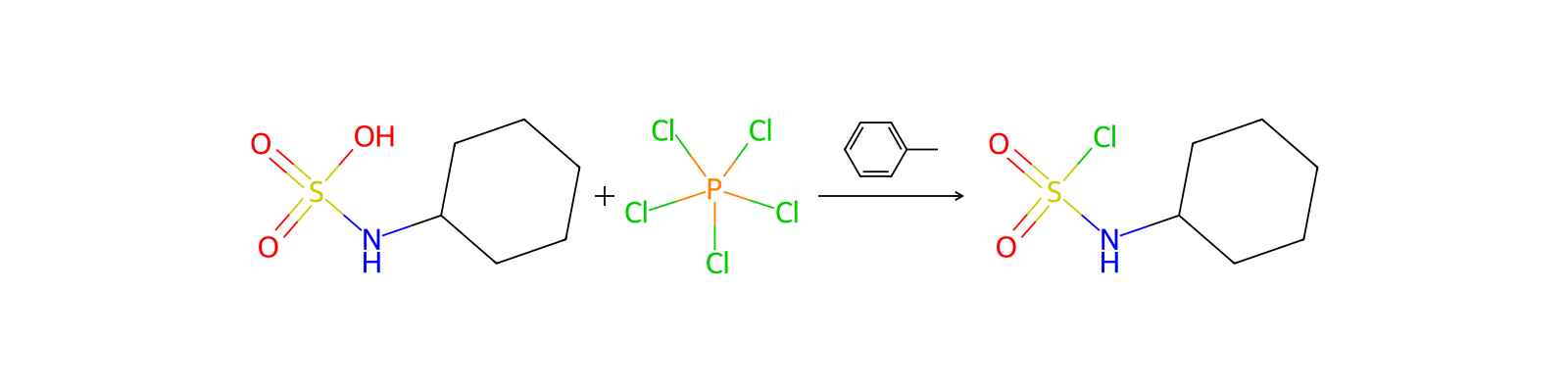
関連ノート
読み込み中…