ホームMCPワークベンチSkills
ホームワークベンチ通知マイページ
llms.txt · MCPガイドプライバシーポリシー · 利用規約 · サポートv1.8.0
  1. ホーム
  2. /化合物

(2-ブロモエチル)ベンゼン

Phenethyl bromide

HCID 7666
ノートを作成反応を作成見積依頼を出す
印刷プレビュー

データを補完しています。しばらくしてからページを更新すると最新の内容を表示できます

基本情報概要名称と識別子物性安全と法規制化学と産業関連反応化合物ノート
部分構造検索類似構造を探す

基本情報

CAS
103-63-9
標準SMILES
BrCCc1ccccc1
InChIKey
WMPPDTMATNBGJN-UHFFFAOYSA-N
分子式
C8H9Br
平均分子量
185.06 g/mol
単同位体質量
183.98876239

概要

structure

名称と識別子

優先名称
Phenethyl bromide
IUPAC
2-bromoethylbenzene
現地名
(2-ブロモエチル)ベンゼン
英語名
(2-Bromoethyl)benzene
分子式
C8H9Br
分子量
185.06

名称と別名

(2-BROMOETHYL)BENZENE103-63-9Phenethyl bromide2-Phenylethyl bromidePhenylethyl bromide1-Bromo-2-phenylethaneBenzene, (2-bromoethyl)-2-Phenethyl bromide2-Phenyl-1-bromoethanebeta-BromoethylbenzeneDTXSID1033876NSC-33926
名称をさらに表示
(2-ブロモエチル)ベンゼン1-フェニル-2-ブロモエタンフェネチルブロミド2-フェニルエチルブロミドフェニルエチルブロミド1-ブロモ-2-フェニルエタン2-(2-ブロモエチル)ベンゼン2-ブロモエチルベンゼンβ-ブロモエチルベンゼン臭化フェネチルβ-ブロモフェニルエタンフェニルエチルブロマイド(2‐ブロモエチル)ベンゼンフェネチルブロマイドPHENYL ETHYL BROMIDEβ-BroMoethyl-benzeneTetrabomoethaneβ - Bromobenzene
96O442668XDTXCID9013876RefChem:395520203-130-82-Bromoethylbenzene.beta.-Bromoethylbenzenephenethylbromide1-phenyl-2-bromoethane

データベース識別子

CAS
103-63-9、31620-80-1
PubChem CID
7666
DTXSID
DTXSID1033876
ChEMBL
CHEMBL1340745
UNII
96O442668X
EC Number
203-130-8、250-734-2
Nikkaji
J44.198H

物性

構造計算による物性補完中

XLogP
3.1
極性表面積
0 Ų
水素結合供与体数
0
水素結合受容体数
0
回転可能結合数
2
重原子数
9
形式電荷
0
複雑度
65

実験および物理化学的性質

Chemical Classes · 2 件

Other Classes -> Halogenated Monoaromatics

Other Classes -> Halogenated Monoaromatics

SpringerMaterials PropertiesBoiling point
LogP · 2 件

Log Kow = 3.09

3.09

DensityDensity = 1.355
Solubility · 2 件

Sol in ether, benzene; slightly soluble in carbon tetrachloride

Water solubility = 39.05 mg/l at 25 °C

Boiling Point219 °C
Melting Point-67.5 °C
Vapor Pressure · 2 件

0.24 [mmHg]

Vapor pressure = 0.2445 mm Hg at 25 °C

Refractive IndexINDEX OF REFRACTION: 1.5572 AT 20 °C; SADTLER REFERENCE NUMBER: 4682 (IR, PRISM), 434 (IR, GRATING)
Physical Description · 2 件

Liquid

Colorless liquid; [MSDSonline]

安全と法規制

安全情報は参考情報です。供給元の安全データシート(SDS)、適用法令、専門家による評価に代わるものではありません。

GHS分類

GHS Classification · 6 件

Warning

H302 (98.9%): Harmful if swallowed [Warning Acute toxicity, oral]

P264, P264+P265, P270, P280, P301+P317, P302+P352, P305+P351+P338, P321, P330, P332+P317, P337+P317, P362+P364, and P501 (click each P-code to see the statement)

Aggregated GHS information provided per 88 reports by companies from 9 notifications to the ECHA C&L Inventory. Each notification may be associated with multiple companies.

Warning

H227: Combustible liquid [Warning Flammable liquids]

危険有害性情報

Regulatory Information · 4 件

Chemical: Benzene, (2-bromoethyl)-

Benzene, (2-bromoethyl)- is listed on the EPA's Chemical Data Reporting (CDR) system. Manufacturers and importers of Benzene, (2-bromoethyl)- are required to report information about their production and use of this chemical to the EPA under the Toxic Substances Control Act (TSCA). (40 eCFR Part 711)

Status: Active Update: 04-01-2022 https://echa.europa.eu/registration-dossier/-/registered-dossier/19673

2-Phenylethyl bromide: Does not have an individual approval but may be used under an appropriate group standard

Hazards Summary · 1 件

Causes somnolence in lethal-dose feeding studies of rats; [RTECS] Effects observed in rats that died during seven day feeding study include reddened adrenal glands, hemorrhagic thymus glands, and intestinal abnormalities; [HSDB] An irritant; [MSDSonline] See Benzyl bromide.

Hazard Classes and Categories · 2 件

Acute Tox. 4 (98.9%)

Flammable liquids - Category 4

安全と保護具

Disposal Methods · 1 件

SRP: At the time of review, criteria for land treatment or burial (sanitary landfill) disposal practices are subject to significant revision. Prior to implementing land disposal of waste residue (including waste sludge), consult with environmental regulatory agencies for guidance on acceptable disposal practices.

化学と産業

薬理情報

Metabolism/Metabolites · 2 件

AFTER INJECTING (2-BROMOETHYL)BENZENE IN RATS ONLY N-ACETYL-S-2-PHENYLETHYLCYSTEINE & N-ACETYL-S-(2-PHENYL-2-HYDROXYETHYL)CYSTEINE WERE FOUND IN URINE. INTERMEDIATE FORMATION OF STYRENE OR STYRENE OXIDE DOES NOT OCCUR.

THE CHIEF SULFUR CONTAINING URINARY METABOLITE OF PHENETHYL BROMIDE IN RAT & RABBIT WAS CHROMATOGRAPHICALLY IDENTIFIED AS N-ACETYL-S-BETA-HYDROXYPHENETHYL-L-CYSTEINE (HYDROXYPHENETHYLMERCAPTURIC ACID) & N-ACETYL-S-PHENETHYL-L-CYSTEINE (PHENETHYLMERCAPTURIC ACID). AMT OF PHENETHYLMERCAPTURIC ACID & HYDROXYPHENETHYLMERCAPTURIC ACID EXCRETED IN URINE OF RABBITS & RATS DOSED BY STOMACH TUBE WERE 11.8 & 6.1, 14.2 & 1.9 OF DOSE RESPECTIVELY. RAT LIVER SLICES CONVERTED PHENETHYLCYSTEINE & PHENETHYLMERCAPTURIC ACID INTO N-ACETYL-S-BETA-HYDROXYPHENETHYL-L-CYSTEINE.

用途と製造

Uses · 2 件

Used as a starting material for the production of various beta-phenethyl derivatives, pharmaceuticals, fragrances, and other chemicals; [HSDB]

Important starting material for the production of various beta-phenethyl derivatives, pharmaceuticals, fragrances, and other fine chemicals.

U.S. Production2023: 5,000,000 - <10,000,000 lb
Industry UsesIntermediate
Methods of Manufacturing · 2 件

Usually manufactured by the free-radical addition of hydrogen bromide to styrene.

Reaction of beta-phenethyl alcohol with phosphorus tribromide or with other reagents.

General Manufacturing Information · 3 件

All Other Chemical Product and Preparation Manufacturing

Benzene, (2-bromoethyl)-: ACTIVE

Benzene, bromoethyl-: INACTIVE

応用分野 · 5 件

関連反応

776 件
反応記録を作成
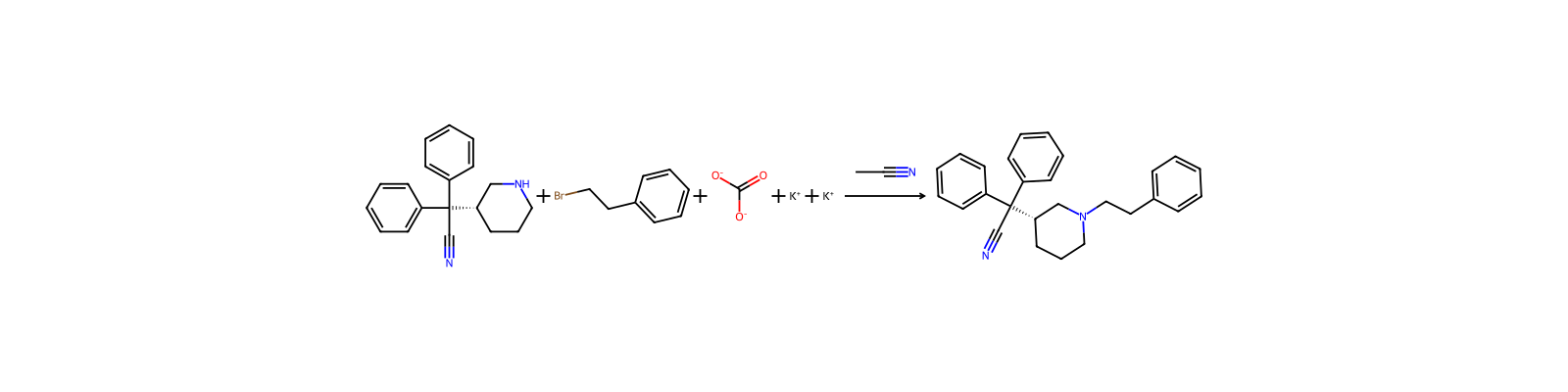
HRID 20665 の反応式
HRID 20665反応物としてuspto-grants-2010_06
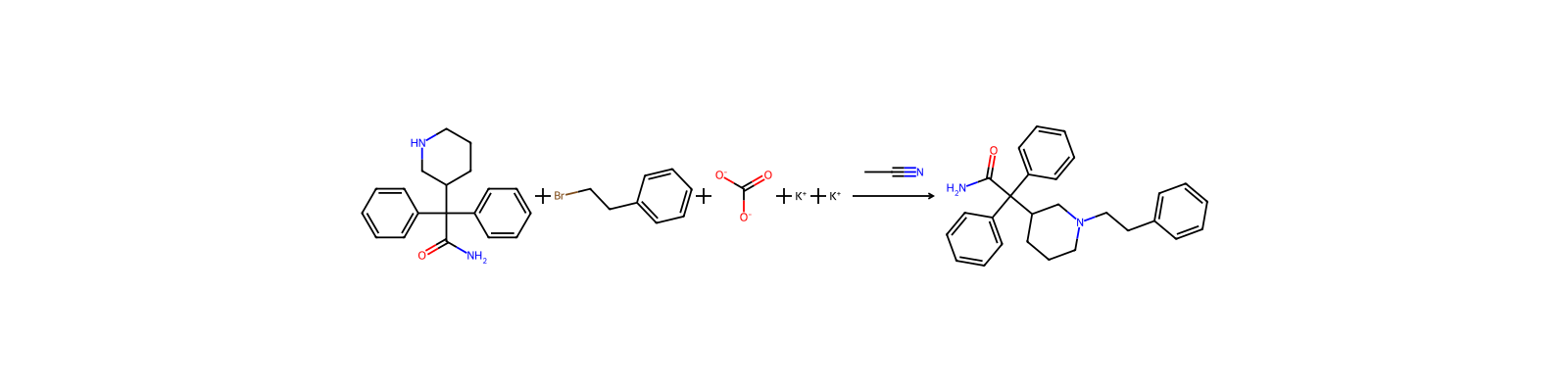
HRID 21386 の反応式
HRID 21386反応物としてuspto-grants-1995_06
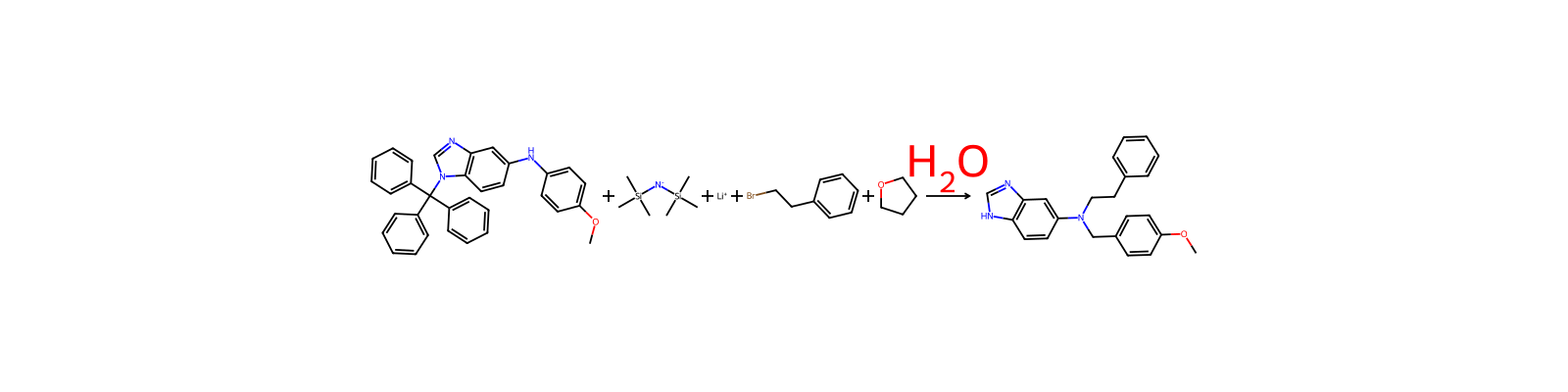
HRID 21397 の反応式
HRID 21397反応物としてuspto-grants-1995_06
HRID 25791 の反応式
HRID 25791溶媒としてuspto-grants-2005_02
HRID 26479 の反応式
HRID 26479反応物としてuspto-grants-1979_04
HRID 28265 の反応式
HRID 28265反応物としてuspto-grants-1980_09
HRID 45971 の反応式
HRID 45971反応物としてuspto-grants-2013_09
HRID 46773 の反応式
HRID 46773反応物としてuspto-grants-1979_11
1 / 97 ページ

化合物ノート

読み込み中…

このページの内容基本情報概要名称と識別子物性安全と法規制化学と産業関連反応化合物ノート
その他の操作
ノートを作成反応を作成見積依頼を出す

物理化学的性質

融点
56 °C · −56 °C (−69 °F; 217 K)
沸点
221 °C · 221 °C (430 °F; 494 K)
比重(密度)
1.355 g/cm3 · 1.355 g/cm3
屈折率
1.56 · 1.56
闪点
89 °C · 89 °C (192 °F; 362 K)
貯蔵温度
2 · 2-8°C
溶解性
0.039 g/リットル · 0.039g/リットル
外見
liquid
色
Colorless
水溶解度
不溶性
BRN
507487 · 507487
Henry's Law Constant
6.5 · 6.5×10-3 mol/(m3Pa) at 25℃, Duchowicz et al. (2020)
安定性
安定。強力な酸化剤とは相容れない。
InChI
1S/C8H9Br/c9-7-6-8-4-2-1-3-5-8/h1-5H,6-7H2
InChIKey
WMPPDTMATNBGJN-UHFFFAOYSA-N
SMILES
BrCCc1ccccc1
CAS データベース
103 · 103-63-9(CAS DataBase Reference)
NISTの化学物質情報
1 · 1-Bromo-2-phenylethane(103-63-9)
EPAの化学物質情報
Benzene, (2-bromoethyl)- (103-63-9)

化学的性質

化学的特性colourless to yellow liquid. It is miscible with ether and benzene, but insoluble in water.

毒性情報

Environmental Fate · 3 件

TERRESTRIAL FATE: (2-Bromoethyl)benzene will have low mobility(3) in soil based on estimated Koc values of 581.6 and 955(1,2,SRC). Insufficient data are available to determine the rate or importance of biodegradation of (2-bromoethyl)benzene in soil conditions. Volatilization of (2-bromoethyl)benzene is expected from moist and dry soils based on an experimental vapor pressure of 0.2445 mm Hg at 25 °C(4) and an Henry's Law constant of 1.52X10⁻³ atm cu m/mole estimated from an experimental water solubility of 39.05 mg/l(4) and a vapor pressure of 0.2445 mm Hg(4).

AQUATIC FATE: (2-Bromoethyl)benzene is expected to volatilize rapidly from water(1) based upon an estimated Henry's Law constant of 1.52X10⁻³ atm cu m/mol estimated from an experimental water solubility of 39.05 mg/L(2) and a vapor pressure of 0.2445 mm Hg(2). Based on this Henry's Law constant the volatilization half-life from a model river (1 meter deep flowing 1 m/sec with a wind velocity of 3 m/sec) can be estimated to be about 4.8 hours(1,SRC). The volatilization half-life from a model lake (1 meter deep) can be estimated to be about 5.6 days(1,SRC). Insufficient data are available to determine the rate or importance of biodegradation of (2-bromoethyl)benzene in aquatic conditions(SRC). Aquatic bioconcentration and adsorption to sediment may be important fate processes in aquatic systems based on an estimated BCF of 78(1,SRC) and estimated Koc values of 582 and 955(1,3,SRC) but hydrolysis is not expected to be important(SRC).

ATMOSPHERIC FATE: Based on an experimental vapor pressure of 0.2445 mm Hg at 25 °C(1), (2-bromoethyl)benzene will exist in the atmosphere in the vapor phase(2). It will degrade in the atmosphere by reaction with photochemically produced hydroxyl radicals with an estimated half-life of 2.87 days(3). Removal of (2-bromoethyl)benzene from the atmosphere can occur through wet deposition(SRC).

Soil Adsorption/Mobility · 1 件

Using a structure estimation method based on molecular connectivity indices, the Koc for (2-bromoethyl)benzene can be estimated to be about 955(1). The Koc for (2-bromoethyl)benzene can also be estimated to be about 582 based on an experimental water solubility of 39.05 mg/l(3) and a regression derived equation(2). According to a suggested classification scheme(4), these estimated Koc values suggest that (2-bromoethyl)benzene has low soil mobility.

TSCA Test Submissions · 1 件

2-Bromoethylbenzene (CAS # 103-62-9) was evaluated for acute oral toxicity. The test substance was administered once orally, by gavage to groups of male and female fasted albino rats. Dosage and mortality data are as follows: 521 mg/kg (0/5 M, 0/5 F); 750 mg/kg (2/5 M, 2/5 F); and 1080 mg/kg (5/5 M, 4/5 F). All deaths occurred within 7 days of dosing. The combined LD50 value was determined to be 811 mg/kg. At 521 mg/kg and above, treatment-related toxicity included hypoactivity and salivation; at 750 mg/kg and above, ataxia, clear ocular discharge and labored breathing were seen. There also was a low incidence of urogenital staining, abnormal defecation, dry brown staining around nose, hypothermia, dried red material around the eye(s), prostration and rales. There were no treatment-related changes in body weights. Necropsy of rats that died revealed external matting, dark red or reddened adrenal glands, stomach abnormalities, hemorrhagic thymus glands, and intestinal abnormalities.

Artificial Pollution Sources · 1 件

(2-Bromoethyl)benzene's use as a starting material for the production of various beta-phenethyl derivatives, pharmaceuticals, fragrances, and other fine chemicals(1) could result in its release to the environment through various waste streams(SRC).

Environmental Bioconcentration · 1 件

Based upon an experimental water solubility of 39.05 mg/l(1), the BCF of (2-bromoethyl)benzene can be estimated to be approximately 78 from a regression-derived equation(2). This estimated BCF value suggests that bioconcentration in aquatic organisms may be an important fate process(SRC).

Volatilization from Water/Soil · 1 件

The Henry's Law constant for (2-bromoethyl)benzene can be estimated to be 1.52X10⁻³ atm-cu m/mole based on an experimental water solubility of 39.05(1) and an experimental vapor pressure of 0.2445(1). This value of the Henry's Law constant indicates that volatilization of (2-bromoethyl)benzene from water is rapid(2). Based on this Henry's Law constant, the volatilization half-life from a model river (1 meter deep flowing 1 m/sec with a wind velocity of 3 m/sec) can be estimated to be about 4.8 hours(2,SRC). The volatilization half-life from a model lake (1 meter deep) can be estimated to be about 5.6 days(2,SRC).

Environmental Abiotic Degradation · 1 件

The rate constant for the vapor-phase reaction of (2- bromoethyl)benzene with photochemically produced hydroxyl radicals has been estimated to be approximately 5.59X10⁻¹² cu cm/molecule-sec at 25 °C, which corresponds to an atmospheric half-life of about 2.9 days at an atmospheric concentration of 5X10+5 hydroxyl radicals per cu cm(1,SRC).

Probable Routes of Human ExposureOccupational exposure to bromine and compounds, such as (2-bromoethyl)benzene(SRC), can occur through dermal contact, inhalation, and ingestion(1).
Environmental Fate/Exposure Summary · 1 件

(2-Bromoethyl)benzene's use as an starting material for the production of various beta-phenethyl derivatives, pharmaceuticals, and fragrances could result in its release to the environment through various waste streams. (2-Bromoethyl)benzene should have low mobility in soil. Volatilization of (2-bromoethyl)benzene is expected from both moist and dry soils. In water, (2-bromoethyl)benzene is expected to volatilize rapidly with estimated half-lives of 4.8 hours and 5.6 days from a model river and a model lake, respectively. Bioconcentration and adsorption to sediment may be important fate processes in aquatic systems, but hydrolysis is not expected to be important. Insufficient data are available to determine the rate or importance of biodegradation of (2-bromoethyl)benzene in either soil or aquatic conditions. (2-Bromoethyl)benzene will exist in the vapor phase in the ambient atmosphere. If released to the atmosphere, it will degrade by reaction with photochemically produced hydroxyl radicals with an estimated half-life of approximately 2.9 days. Removal of (2-bromoethyl)benzene from the atmosphere can occur through wet deposition. Exposure to (2-bromoethyl)benzene can occur through dermal contact, inhalation, and ingestion. (SRC)

安全データ

wgk
3
tsca
TSCA listed
rtecs
CY9032000
ridadr
UN 1993 / PGIII
hs_code
2903999090
risk_code
22-36-36/37/38
化審法
(3)-35
消防法
危-4-3-III
hazard_code
Xn
safety_code
26-37/39-39
Hazard Classifications
Acute Tox. 4 OralEye Irrit. 2
ストレージクラス
10 - Combustible liquids
有毒物質データの
103-63-9(Hazardous Substances Data)

用途ベータ-フェネチル誘導体、医薬品、香料、その他精密化学品の重要な出発物質

用途有機合成原料。

説明Phenethylbromide is an analytical reference material that is structurally categorized as an organobromide. It is used in the synthesis of a variety of compounds, including fentanyl. Phenethylbromide is combined with 4-piperidinone to produce N-phenethyl-4-piperidone, which, as a precursor in the synthesis of fentanyl, is scheduled as a List I chemical in the United States. Phenethylbromide may be found as in impurity in samples of fentanyl produced using this pathway.

使用(2-Bromoethyl)benzene is used in the preparation of phenelzine by reacting with hydrazine. It is also used as a starting material to prepare various beta-phenethyl derivatives, active pharmaceutical ingredients, and fragrances. It finds application as a flame retardant.

使用(2-Bromoethyl)benzene is an important starting material for the production of various b-phenethyl derivatives, pharmaceuticals, fragrances, and other fine chemicals.

調製方法 · 2 件

製造方法(2-Bromoethyl)benzene is synthesized by the reaction of phenethyl alcohol with hydrogen bromide.Reaction: The phenethyl alcohol was heated to 110°C, hydrogen bromide was slowly introduced, and the reaction was refluxed. The reaction was completed, cooled, washed with water, 10% sodium carbonate solution, and water in turn. After drying with anhydrous potassium carbonate, fractional distillation under reduced pressure was carried out to collect fractions at 97-99°C (2.0 kPa) with a yield of over 90%.

純化方法Wash the bromide with conc H2SO4, water, aqueous 10% Na2CO3 and water again, then dry it with CaCl2 and fractionally distil it just before use. [Beilstein 5 IV 907.]

上流・下流製品情報

上流原料

炭酸カリウム2-フェニルエチルアルコール

下流製品

フェニルエチレングリコール1-フェネチルピペラジン4-(クロロメチル)スチレンN-メチル-2-フェニルエチルアミンカルフェンタニルBenzene, [dimethyl(2-phenylethyl)silyl]-5-フェニル吉草酸メチル2-アセトアミド-2-フェネチルマロン酸ジエチル2-フェネチル-4,4,5,5-テトラメチル-1,3,2-ジオキサボロラン1-フェニル-2-ニトロエタン1-フェノキシ-2-フェニルエタン4-(2-ブロモエチル)安息香酸2,2-ジメチルプロパン酸2-フェニルエチル1,2-ビスベンジルエタン4-フェニルブチルブロミドプロピオン酸フェネチル1,2-Ethanediyl, 1-phenyl- (9CI)