
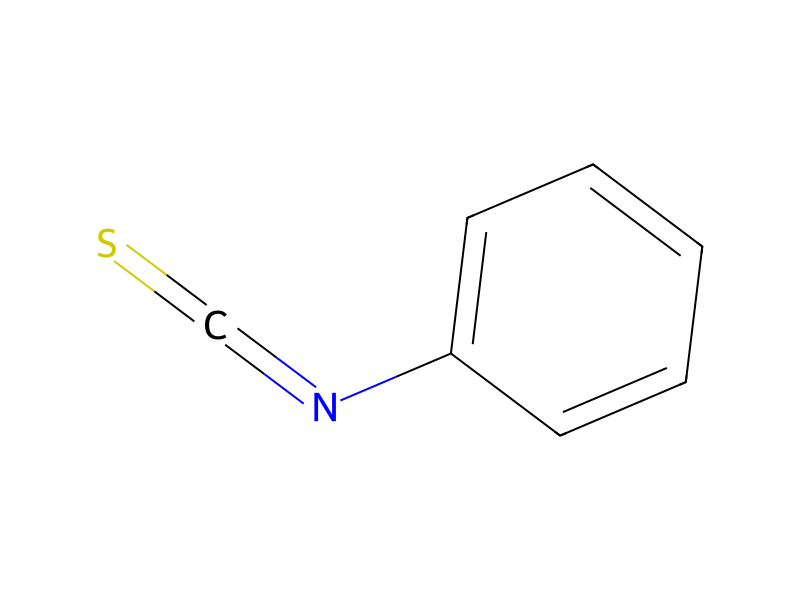
基本情報
- 標準SMILES
S=C=Nc1ccccc1- InChIKey
QKFJKGMPGYROCL-UHFFFAOYSA-N- 分子式
- C7H5NS
- 平均分子量
- 135.19 g/mol
- 単同位体質量
- 135.01427034
名称と識別子
- 優先名称
- Phenyl Isothiocyanate
- IUPAC
- isothiocyanatobenzene
- 現地名
- フェニルイソチオシアナート
- 英語名
- Phenyl isothiocyanate
- 分子式
- C7H5NS
- 分子量
- 135.19
名称と別名
IsothiocyanatobenzenePHENYL ISOTHIOCYANATE103-72-0PhenylisothiocyanatePITCThiocarbanilBenzene, isothiocyanato-PhenylsenfoelIsothiocyanic acid phenyl esterBenzene-1-isothiocyanatePhenyl thioisocyanateIsothiocyanic acid, phenyl ester
名称をさらに表示
イソチオシアン酸フェニル(フェニルイミノ)メタンチオンフェニルチオイソシアナートチオカルバニルN-(チオキソメチレン)アニリンフェニルからし油フェニルマスタードオイルフェニルイソチオシアネートフェニルゼンフオイルイソチオシアナトベンゼンフェニルイソチオシアネ-トイソチオシアン酸フェニル(PITC)イソチオシアン酸フェニル 溶液フェニル=イソチオシアナートフェニル=チオシアナートフェニルイソチオシアナート(イソシアナトスルファニル)ベンゼン(2S,3R,4S,5S,6R)-2-{[(2S)-2-[(1S,3aR,3bR,5S,5aR,9aR,9bR,11aR)-5-{[(2R,3R,4S,5S,6R)-4,5-ジヒドロキシ-6-(ヒドロキシメチル)-3-{[(2S,3R,4S,5S,6R)-3,4,5-トリヒドロキシ-6-(ヒドロキシメチル)オキサン-2-イル]オキシ}オキサン-2-イル]オキシ}-7,11-ジヒドロキシ-3a,3b,6,6,9a-ペンタメチル-ヘキサデカヒドロ-1H-シクロペンタ[a]フェナントレン-1-イル]-6-メチルヘプタ-5-エン-2-イル]オキシ}-6-(ヒドロキシメチル)オキサン-3,4,5-トリオール3,12-ジヒドロキシ-6α-(2-O-β-D-グルコピラノシル-β-D-グルコピラノシルオキシ)-20-β-D-グルコピラノシルオキシダンマラ-24-エンスルホカルバニルPTCR1PITPhenyl thiocyanatePhenyl isothiocyanate,PITCPHENYL ISOTHIOCYANATE SOLUTION, FOR PROT.SEQ. ANAL.RR1H174
FenylisothiokyanatDTXSID0021129CHEBI:851030D58F84LSUNSC-5583DTXCID501129RefChem:57537Phenylisothiocyanate 1533
データベース識別子
- CAS
103-72-0- PubChem CID
- 7673
- DTXSID
DTXSID0021129- ChEMBL
CHEMBL309036- ChEBI
CHEBI:85103- UNII
- 0D58F84LSU
- EC Number
- 203-138-1
- Nikkaji
- J5.019I
物性
構造計算による物性
- XLogP
- 3.3
- 極性表面積
- 44.5 Ų
- 水素結合供与体数
- 0
- 水素結合受容体数
- 2
- 回転可能結合数
- 1
- 重原子数
- 9
- 形式電荷
- 0
- 複雑度
- 121
実験および物理化学的性質
Vapor Pressure1.5 [mmHg]
Physical DescriptionLiquid; [Merck Index] Colorless liquid; [Sigma-Aldrich MSDS]
Kovats Retention Index
1163
1138
物理化学的性質
- 融点
- 21 °C · −21 °C(lit.)
- 沸点
- 218 °C · 218 °C(lit.)
- 比重(密度)
- 1.132 g/mL · 1.132 g/mL at 20 °C(lit.)
- 蒸気圧
- 10 hPa · 10 hPa (20 °C)
- 屈折率
- 20 · n20/D 1.6515(lit.)
- 闪点
- 190 °F · 190 °F
- 貯蔵温度
- 2 · 2-8°C
- 溶解性
- 水:不溶
- 外見
- 液体
- 比重
- 1.137 · 1.137 (20/4℃)
- 色
- 澄んだ淡い黄色~黄色
- 水溶解度
- アルコール、エーテルに可溶。水に不溶。
- Merck
- 14 · 14,7297
- BRN
- 471392 · 471392
- Henry's Law Constant
- 3.3 · 3.3×10-3 mol/(m3Pa) at 25℃, Duchowicz et al. (2020)
- Dielectric constant
- 10.7 · 10.7(20℃)
- 安定性
- 安定。可燃性。強酸化剤、強酸とは相容れない。
- InChI
- 1S/C7H5NS/c9-6-8-7-4-2-1-3-5-7/h1-5H
- InChIKey
- QKFJKGMPGYROCL-UHFFFAOYSA-N
- SMILES
- S=C=Nc1ccccc1
- LogP
- 3.28 · 3.280
- 表面張力
- 41.5 mN/m · 41.5mN/m at 20°C
- CAS データベース
- 103 · 103-72-0(CAS DataBase Reference)
- NISTの化学物質情報
- Benzene, isothiocyanato-(103-72-0)
- EPAの化学物質情報
- Benzene, isothiocyanato- (103-72-0)
化学的性質
化学的特性colourless to pale yellow liquid with a penetrating odour
安全と法規制
GHS分類
GHS Classification
This chemical does not meet GHS hazard criteria for 0.5% (1 of 214) of reports.
Danger
H301 (82.2%): Toxic if swallowed [Danger Acute toxicity, oral];H314 (79.4%): Causes severe skin burns and eye damage [Danger Skin corrosion/irritation];H317 (79%): May cause an allergic skin reaction [Warning Sensitization, Skin];H318 (54.7%): Causes serious eye damage [Danger Serious eye damage/eye irritation];H334 (76.2%): May cause allergy or asthma symptoms or breathing difficulties if inhaled [Danger Sensitization, respiratory];H341 (54.2%): Suspected of causing genetic defects [Warning Germ cell mutagenicity];H361 (54.2%): Suspected of damaging fertility or the unborn child [Warning Reproductive toxicity];H400 (21.5%): Very toxic to aquatic life [Warning Hazardous to the aquatic environment, acute hazard];H410 (24.3%): Very toxic to aquatic life with long lasting effects [Warning Hazardous to the aquatic environment, long-term hazard]
P203, P233, P260, P261, P264, P264+P265, P270, P271, P272, P273, P280, P284, P301+P316, P301+P330+P331, P302+P352, P302+P361+P354, P304+P340, P305+P354+P338, P316, P317, P318, P321, P330, P333+P317, P342+P316, P362+P364, P363, P391, P403, P405, and P501 (click each P-code to see the statement)
Aggregated GHS information provided per 214 reports by companies from 11 notifications to the ECHA C&L Inventory. Each notification may be associated with multiple companies.;Reported as not meeting GHS hazard criteria per 1 of 214 reports by companies.;There are 10 notifications provided by 213 of 214 reports by companies with hazard statement code(s).;Information may vary between notifications depending on impurities, additives, and other factors. The percentage value in parenthesis indicates the notified classification ratio from companies that provide hazard codes. Only hazard codes with percentage values above 10% are shown. For more detailed information, please visit ECHA C&L website.
危険有害性情報
Regulatory Information
Chemical: Benzene, isothiocyanato-
Status: Active Update: 10-12-2018 https://echa.europa.eu/registration-dossier/-/registered-dossier/26134
Phenyl isothiocyanate: Does not have an individual approval but may be used under an appropriate group standard
Hazards Summary
Dermal studies of guinea pigs demonstrate severe irritation, good absorption, and sensitization; Effects on thyroid function (decreased serum T4 levels) observed in 4-week oral study of rats; [EPA - PPRTV] Causes burns and lachrymation; May cause skin and respiratory sensitization; Inhalation may cause corrosive injuries to upper respiratory tract and lungs; Harmful by ingestion; Targets the kidney and bladder; [Sigma-Aldrich MSDS]
Hazard Classes and CategoriesAcute Tox. 3 (82.2%);Skin Corr. 1B (79.4%);Skin Sens. 1 (79%);Eye Dam. 1 (54.7%);Resp. Sens. 1 (76.2%);Muta. 2 (54.2%);Repr. 2 (54.2%);Aquatic Acute 1 (21.5%);Aquatic Chronic 1 (24.3%)
毒性情報
Treatment
EYES: irrigate opened eyes for several minutes under running water. INGESTION: do not induce vomiting. Rinse mouth with water (never give anything by mouth to an unconscious person). Seek immediate medical advice. SKIN: should be treated immediately by rinsing the affected parts in cold running water for at least 15 minutes, followed by thorough washing with soap and water. If necessary, the person should shower and change contaminated clothing and shoes, and then must seek medical attention. INHALATION: supply fresh air. If required provide artificial respiration.
Health Effects
Exposure to high levels of cyanide for a short time harms the brain and heart and can even cause coma, seizures, apnea, cardiac arrest and death. Chronic inhalation of cyanide causes breathing difficulties, chest pain, vomiting, blood changes, headaches, and enlargement of the thyroid gland. Skin contact with cyanide salts can irritate and produce sores. (L96, L97)
Adverse Effects
Dermatotoxin - Skin burns.;Lacrimator (Lachrymator) - A substance that irritates the eyes and induces the flow of tears.;Skin Sensitizer - An agent that can induce an allergic reaction in the skin.;Toxic Pneumonitis - Inflammation of the lungs induced by inhalation of metal fumes or toxic gases and vapors.
Exposure RoutesInhalation (L96) ; oral (L96) ; dermal (L96)
Toxicity Summary
Cyanide is an inhibitor of cytochrome c oxidase in the fourth complex of the electron transport chain (found in the membrane of the mitochondria of eukaryotic cells). It complexes with the ferric iron atom in this enzyme. The binding of cyanide to this cytochrome prevents transport of electrons from cytochrome c oxidase to oxygen. As a result, the electron transport chain is disrupted and the cell can no longer aerobically produce ATP for energy. Tissues that mainly depend on aerobic respiration, such as the central nervous system and the heart, are particularly affected. Cyanide is also known produce some of its toxic effects by binding to catalase, glutathione peroxidase, methemoglobin, hydroxocobalamin, phosphatase, tyrosinase, ascorbic acid oxidase, xanthine oxidase, succinic dehydrogenase, and Cu/Zn superoxide dismutase. Cyanide binds to the ferric ion of methemoglobin to form inactive cyanmethemoglobin. (L97)
Signs and SymptomsCyanide poisoning is identified by rapid, deep breathing and shortness of breath, general weakness, giddiness, headaches, vertigo, confusion, convulsions/seizures and eventually loss of consciousness. (L96, L97)
Carcinogen ClassificationNo indication of carcinogenicity to humans (not listed by IARC).
Toxicity DataLD50: 87 mg/kg (Oral, Mouse) (L565)
LD50: 250 mg/kg (Subcutaneous, Mouse) (L565)
LD50: 100 mg/kg (Intraperitoneal, Mouse) (L565)
RAIS Toxicity Values
0.0002
SCREEN Current
0.002
PPRTV Current
EPA Provisional Peer-Reviewed Toxicity Values
Phenyl Isothiocyanate
2 x 10^-3 mg/kg-day
PDF Document
Inadequate information to assess carcinogenic potential
2009
Hazard Quotient Level 0.1 or Cancer Risk Level 1E-06
1.60e+01
2.30e+02
2.60e+00
1.5E+01(G)
1.70e-03
2.00e-04
Hazard Quotient Level 3 or Cancer Risk Level 1E-04
4.70e+01
7.00e+02
7.90e+00
1.5E+01 (G)
2.00e-04
Volatile
法規制情報
Regulatory Information
Chemical: Benzene, isothiocyanato-
Status: Active Update: 10-12-2018 https://echa.europa.eu/registration-dossier/-/registered-dossier/26134
Phenyl isothiocyanate: Does not have an individual approval but may be used under an appropriate group standard
安全データ
- F
- 19
- wgk
- 3
- tsca
- TSCA listed
- rtecs
- NX9275000
- ridadr
- UN 1993 3/PG 2
- 毒性
- LD50 orally in Rabbit: 157 mg/kg
- hs_code
- 2930 90 98
- risk_code
- 25-34-42/43-51/53-67-65-50/53-36/37/38-22-11-38-63-23/24/25-36/38
- 化審法
- (3)-3239
- 消防法
- 危-4-3-III
- hazard_code
- T,N,Xn,F
- safety_code
- 9-16-29-33-60-61-62-36-26-23-45-36/37/39-38-28A-36/37
- hazard_class
- 6.1
- packing_group
- II
- Hazard Classifications
- Acute Tox. 3 OralResp. Sens. 1Skin Corr. 1BSkin Sens. 1
- ストレージクラス
- 6.1A - Combustible acute toxic Cat. 1 and 2very toxic hazardous materials
毒性と防護
毒性LD50 87 mg/kg(マウス,経口).
化学と産業
薬理情報
Metabolism/Metabolites
Cyanide is rapidly alsorbed through oral, inhalation, and dermal routes and distributed throughout the body. Cyanide is mainly metabolized into thiocyanate by either rhodanese or 3-mercaptopyruvate sulfur transferase. Cyanide metabolites are excreted in the urine. (L96)
用途と製造
Uses
Used to derive primary and secondary amines, in sequencing of peptides by Edman degradation, and in amino acid analysis by HPLC; [Merck Index]
Phenyl isothiocyanate is a reagent used in reversed phase high-performance liquid chromatography (HPLC). (L197)
General Manufacturing InformationBenzene, isothiocyanato-: ACTIVE
応用分野
解説フェニルイソチオシアナート,可燃性の無色の液体(着火温度38 ℃).融点-21 ℃,沸点221 ℃,95 ℃(1.6 kPa).d425"1.13.nD23"1.649.水に不溶,有機溶媒に可溶.アミノ酸と反応してフェニルチオヒダントインを生成する.アミノ酸の自動分析試薬(エドマン分解)に用いられる.催奇形性がある.森北出版「化学辞典(第2版)
用途フェニルイソチオシアネート (PITC、イソチオシアン酸フェニル)は、逆相高速液体クロマトグラフィーに利用される試薬である。PITCはオルトフタルアルデヒド(OPA)以下の感度で、自動化出来ない。OPAと異なり、第二級アミンを分析する事が可能である。 エドマン分解に使用されるエドマン試薬としても知られる。 リノグリリドの合成にも利用される。
使用Phenyl isothiocyanate is the reagent of choice in automated Edman degradation systems. However, this reagent is highly toxic and for manual modification other reagents are preferred such as dimethy laminoazobenzene isothiocyanate (Chang, 1983; Wang et al, 2000) or trifluoroethyl isothiocyanate (Bartlet-Jones et al, 1994). This last reagent has the advantage of being volatile, so that the excess of reagent is easily removed by vacuum before MS analysis (Spengler, 1997). This compound was used successfully during seven successive cycles of manual cleavage coupled with MS analysis. Nevertheless, the high reactivity of such compounds seems to shows artefactual modification such as“acetylation' of the hydroxyl groups of the Ser and Thr. Allyl isothiocyanate shows better selectivity, but again this reagent is toxic and difficult to use in manual approaches (Gu & Preswich, 1997) .
一般的な説明Phenyl isothiocyanate is an aromatic isothiocyanate. It participates in dehydration reactions of alcohols. It is widely used for synthesis of various biologically important heterocyclic compounds.
調製方法
製造方法Synthetic procedure for phenyl isothiocyanate in 1-mol scaleInto a 2-L jacketed flask, 91.2 g of CS2 (1.2 mol) was dropwise added to a mixture of aniline (93.0 g, 1.0 mol) and K2CO3 (276.0 g, 2.0 mol) in 700 mL of water at room temperature within a period of 2.5 h. After the addition was complete, the mixture was stirred another 2 h. Then, the mixture was cooled to 0 °C, and a solution of 92.3 g of TCT (0.5 mol) in 450 mL of CH2Cl2 was dropwise added within 4 h. After the addition was complete, the mixture was stirred another 1 h to complete the conversion. The resulting mixture was basified to pH >11 with 250 mL of 6 N NaOH and yielded a clear solution. The organic layer was separated and the aqueous layer was extracted with 150 mL of CH2Cl2. The combined organic layers were dried over anhydrous Na2SO4, filtered, and the solvent of filtrate was removed via distillation under atmospheric pressure with a 25-cm Vigreux column. The residue was vacuum distilled and the desired product fraction was collected at 72–74 °C/1 mmHg. Finally, 127.0 g of colorless liquid (94%) was obtained.
純化方法It is insoluble in H2O, but soluble in Et2O and EtOH. If impure (due to formation of thiourea), then steam distil it into a receiver containing 5-10mL of N H2SO4. Separate the oil, dry over CaCl2 and distil it under vacuum. [Dains et al. Org Synth Coll Vol I 447 1941, Beilstein 12 IV 867.]
上流・下流製品情報
上流原料
下流製品
サプライヤー50 社
国药集团化学试剂有限公司86-21-63210123 · [email protected]
北京华美互利生物化工010-56205725 · [email protected]
梯希爱(上海)化成工业发展有限公司021-67121386 · [email protected]
上海阿拉丁生化科技股份有限公司400-6206333 13167063860 · [email protected]
河北创海生物科技有限公司+86-86-13131129325 · [email protected]
江苏星科元信息科技有限公司400-605-7200 15335295587
爱斯特(成都)生物制药股份有限公司+86-28-85122536 85324413 · [email protected]
Dayang Chem (Hangzhou) Co.,Ltd.+86-0571-88938639 17705817739 · [email protected]
Syntechem Co.,Ltd[email protected]
上海迈瑞尔生化科技有限公司4006356688 18621169109 · [email protected]
江苏普乐司生物科技有限公司0513-66017706 18551496367 · [email protected]
武汉市聚舜化工有限公司027-02783261126 18971318572 · [email protected]
阿法埃莎(中国)化学有限公司400-6106006 · [email protected]
安耐吉化学&3A(安徽泽升科技股份有限公司)400-0056266 · [email protected]
武汉卡诺斯科技有限公司027-83238443 15327105076 · [email protected]
上海瀚鸿科技股份有限公司021-54306202 13764082696 · [email protected]
上海柯维化学技术有限公司021-64609169 18901607656 · [email protected]
嘉兴市艾森化工有限公司0573-85285100 18627885956 · [email protected]
佛山宝诺生物科技有限公司0757-85921206 18520245316 · [email protected]
贵州迪大科技有限责任公司0851-8475-2296 18096062265 · [email protected]
山东西亚化学有限公司13355009207 13355009207 · [email protected]
玛雅试剂+86 (573) 82222445 (0)18006601000 452520369 · [email protected]
天津希恩思生化科技有限公司400 638 7771 · [email protected]
斯百全化学(上海)有限公司021-021-021-67601398-809-809-809 15221380277 · [email protected]
艾科试剂4008-755-333 18080918076 · [email protected]
上海思域化工科技有限公司86-21-34053660 · [email protected]
赛默飞世尔科技(中国)有限公司800-810-5118 · [email protected]
北京伊诺凯科技有限公司400-810-7969 010-59572699 · [email protected]
TCI AMERICA800-4238616 · [email protected]
TOKYO CHEMICAL INDUSTRY CO., LTD.03-36680489 · [email protected]
TCI Europe320-37350700 · [email protected]
深圳康特腾科技有限公司86-0755-86635001 · [email protected]
越林试剂021-62960152 · [email protected]
上海灏云化工科技有限公司021-68367562 · [email protected]
上海倍卓生物科技有限公司021-61119791,13386096464 · [email protected]
上海湄水化工科技有限公司021-60549325 18616193163
上海将来实业股份有限公司021-61552785 · [email protected]
天津阿尔塔科技有限公司022-65378550-8551 · [email protected]
成都迈斯克医药科技有限公司028-84552636 18084815636 · [email protected]
上海石洋化工有限公司021-56795766 · [email protected]
成都零六生物科技有限公司400-1166-196 13458535857 · [email protected]
上海麦克林生化科技股份有限公司15221275939 15221275939 · [email protected]
杭州杰恒化工有限公司0571-87396432 · [email protected]
上海嵩爰化工科技有限公司010-1234567 18521000990 · [email protected]
Sigma-Aldrich西格玛奥德里奇(上海)贸易有限公司021-61415566 800-8193336 · [email protected]
深圳振强药物研发有限公司+86-0755-66853366 +86-13670046396 · [email protected]
郑州科豫隆化工产品有限公司17319789407 17319789407 · [email protected]
山东鑫牧源化工科技有限公司19105383610
成都瑞欧克科技有限公司028-64353063 · [email protected]
九鼎化学(上海)科技有限公司4009209199 · [email protected]
補足説明
定義ChEBI: Phenyl isothiocyanate is an isothiocyanate having a phenyl group attached to the nitrogen; used for amino acid sequencing in the Edman degradation. It has a role as an allergen and a reagent.
関連反応
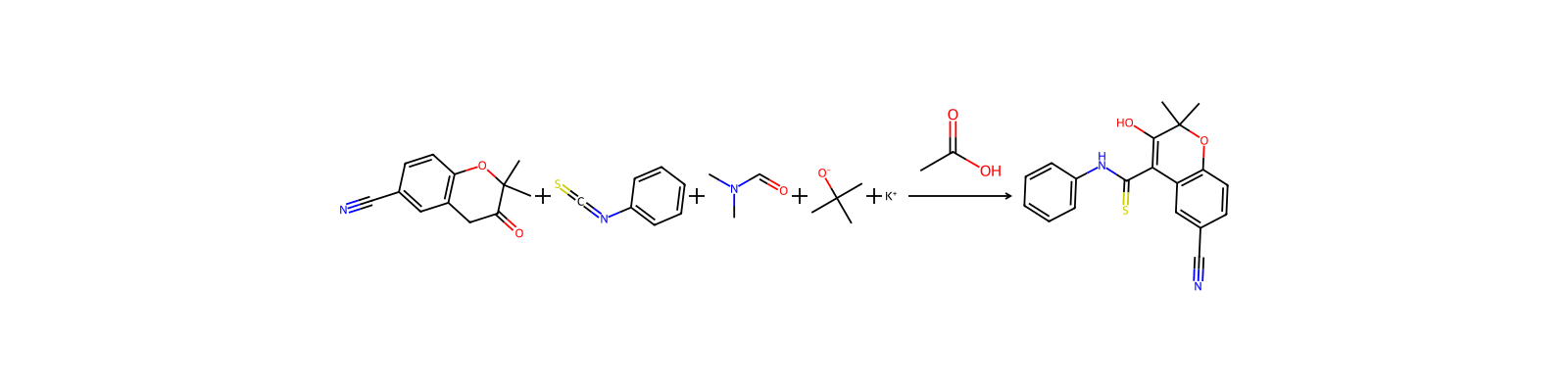
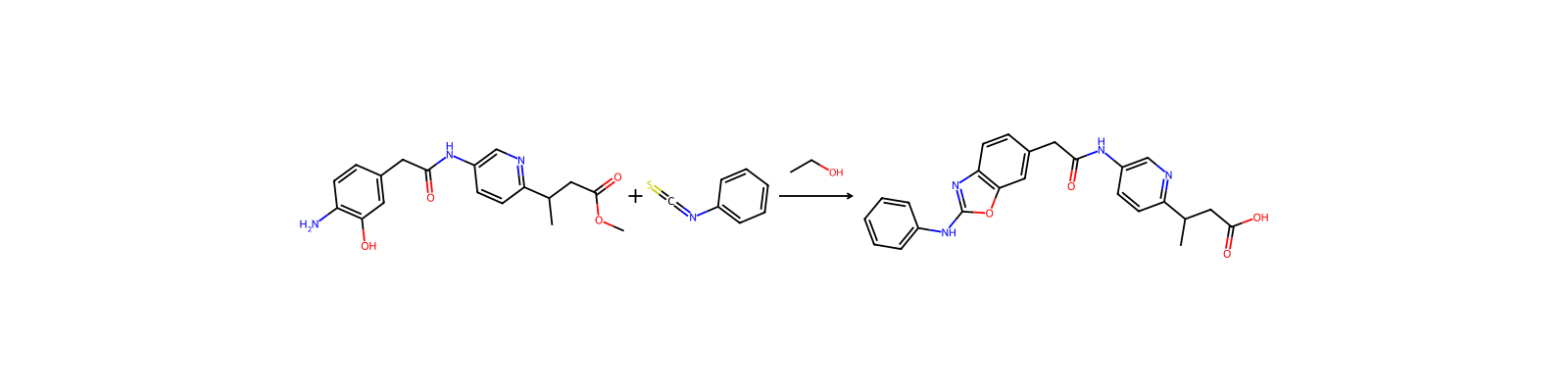
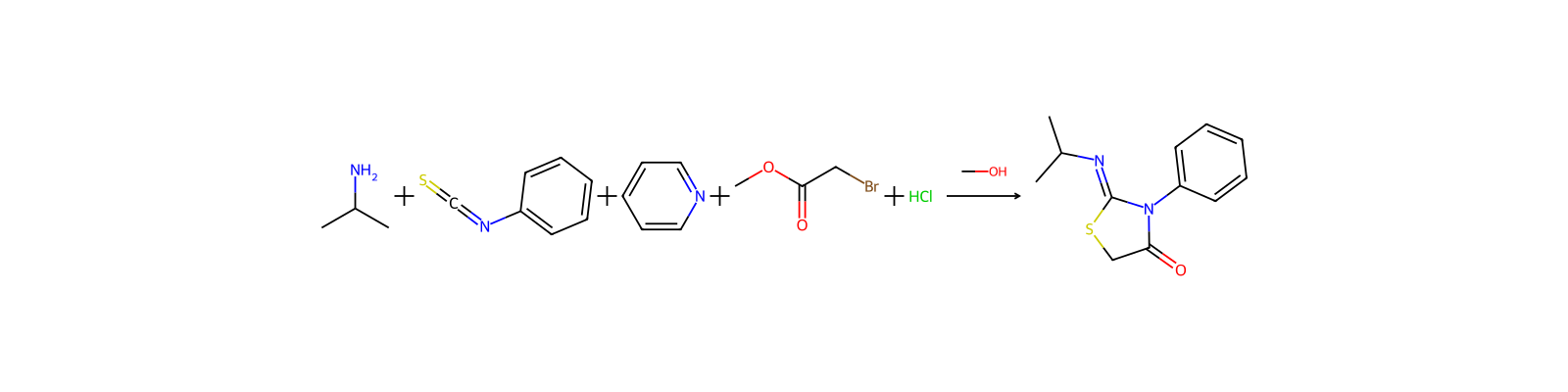
334 件



関連ノート
読み込み中…