マロン酸ジエチル
Diethyl Malonate
データを補完しています。しばらくしてからページを更新すると最新の内容を表示できます
基本情報
- CAS
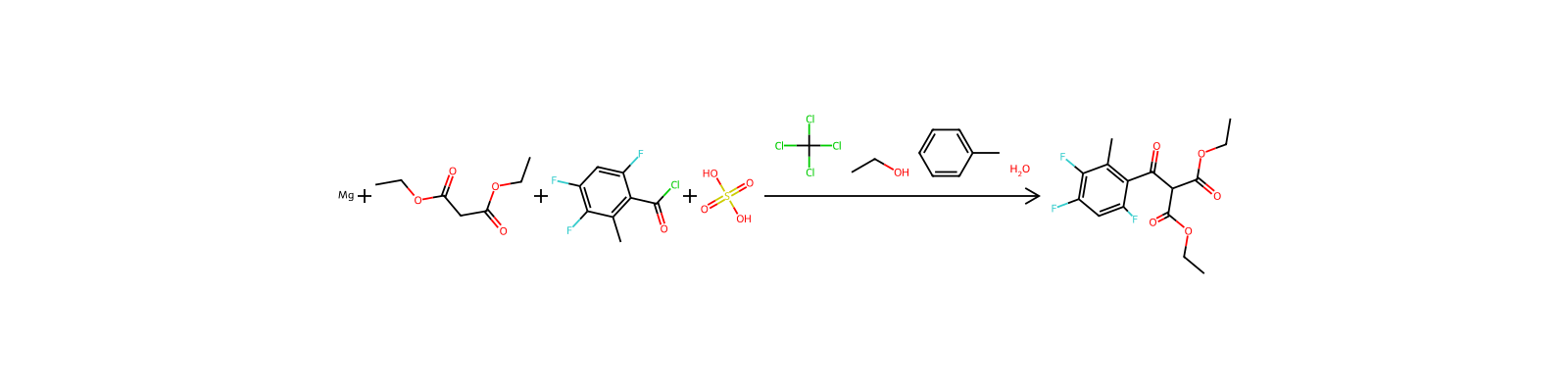
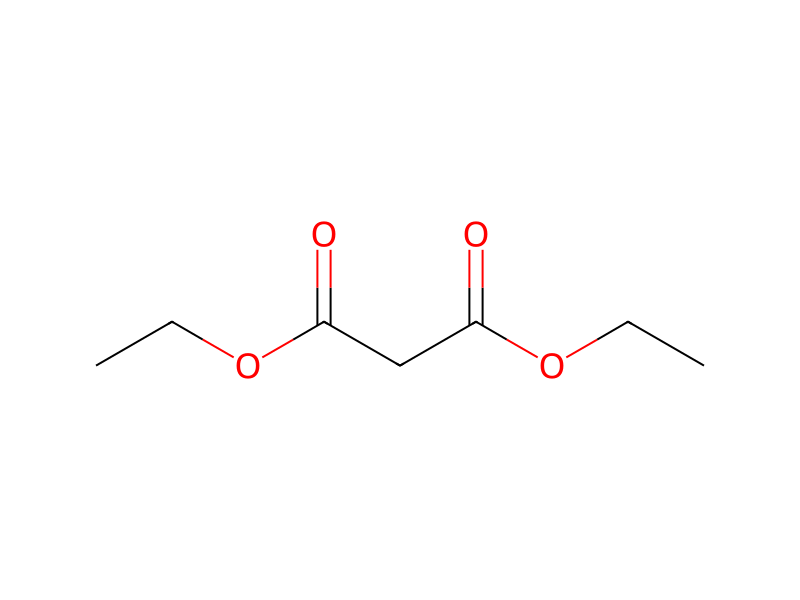
105-53-3- 標準SMILES
CCOC(=O)CC(=O)OCC- InChIKey
IYXGSMUGOJNHAZ-UHFFFAOYSA-N- 分子式
- C7H12O4
- 平均分子量
- 160.17 g/mol
- 単同位体質量
- 160.07355886
概要
Ethyl malonate is a dicarboxylic acid.
名称と識別子
- 優先名称
- Diethyl Malonate
- IUPAC
- diethyl propanedioate
- 現地名
- マロン酸ジエチル
- 英語名
- Diethyl malonate
- 分子式
- C7H12O4
- 分子量
- 160.17
名称と別名
DIETHYL MALONATE105-53-3Diethyl propanedioateEthyl malonateMalonic esterPropanedioic acid, diethyl esterCarbethoxyacetic esterMalonic acid, diethyl esterDicarbethoxymethane1,3-diethyl propanedioateEthyl propanedioateEthyl methanedicarboxylate
名称をさらに表示
マロン酸ジエチル1,3-ジエトキシプロパン-1,3-ジオンプロパン二酸ジエチルマロン酸エチルジエチル マロネート マロン酸ジエチルマロン酸エチル(マロン酸ジエチル)マロン酸ジエチル マロン酸エチル1,3-プロパンジオン酸ジエチルマロン酸エチル( マロン酸ジエチル)DEMMALONIC ACID DIETHYL ESTERDiethyi malonateFEMA 2375Diethyl malonatDiethyl Malonate-1-13C2DIETHYL MALONATE extrapure
Methanedicarboxylic acid, diethyl esterFEMA No. 2375DTXSID7021863Propanedioic acid, 1,3-diethyl esterNSC-886453A58PA183DTXCID701863NSC-136903
データベース識別子
- CAS
105-53-3- PubChem CID
- 7761
- DTXSID
DTXSID7021863- ChEMBL
CHEMBL177114- ChEBI
CHEBI:167785- UNII
- 53A58PA183
- EC Number
- 203-305-9
- Nikkaji
- J3.234D
物性
構造計算による物性補完中
- XLogP
- 1
- 極性表面積
- 52.6 Ų
- 水素結合供与体数
- 0
- 水素結合受容体数
- 4
- 回転可能結合数
- 6
- 重原子数
- 11
- 形式電荷
- 0
- 複雑度
- 125
実験および物理化学的性質
Chemical Classes
Other Classes -> Esters, Other
Flammable agents - 2nd degree
CosmeticsCosmetic ingredients (Diethyl Malonate) -> CIR (Cosmetic Ingredient Review)
SpringerMaterials PropertiesBoiling point
FragrancesFragrance Ingredient (Diethyl malonate) -> IFRA transparency List
LogP
log Kow = 0.96
0.96
0.96
0.96
Odor
Sweet ester odor
Slightly aromatic, pleasant odor
Aroma of ripe fruit, peach, cut grass
TasteSweet and fruity taste with apple and pineapple nuances
Food AdditivesFLAVORING AGENT OR ADJUVANT -> FDA Substance added to food
Density
1.0551 g/cu cm at 20 °C
Density (at 20 °C): 1.06 g/cm³
Relative density of the vapour/air-mixture at 20 °C (air = 1): 1.00
1.053-1.056
1.055 @ 20°C
Flavoring AgentsEU Flavoring substances
Viscosity1.86 centistokes at 25 °C
Color/Form
Colorless liquid
Clear, colorless liquid
物理化学的性質
- 融点
- -51 · -51--50 °C (lit.)
- 沸点
- 199 °C · 199 °C (lit.)
- 比重(密度)
- 1.055 g/mL · 1.055 g/mL at 25 °C (lit.)
- 蒸気密度
- 5.52 · 5.52 (vs air)
- 蒸気圧
- 1 mm · 1 mm Hg ( 40 °C)
- 屈折率
- 20 · n20/D 1.413(lit.)
- FEMA
- 2375 · 2375 | DIETHYL MALONATE
- 闪点
- 212 °F · 212 °F
- 貯蔵温度
- 30 °C · Store below +30°C.
- 溶解性
- 20.8 g/l · 20.8g/l (外部MSDS)
- 酸解離定数(Pka)
- 13.5 · 13.5(at 25℃)
- 外見
- 液体
- 色
- 無色の液体
- 臭い (Odor)
- 甘いエステル臭
- 由来生物
- synthetic
- においのタイプ
- フルーティーな
- 爆発限界(explosive limit)
- 0.8 · 0.8-12.8%(V)
- 水溶解度
- エタノール、エーテル、クロロホルム、ベンゼンと混和します。水とわずかに混和する。
- 比熱容量
- 1.78 J/ · Cp(liquid): 1.78 J/(g·K), at 25℃
- Merck
- 14 · 14,3823
- JECFA Number
- 614 · 614
- BRN
- 774687 · 774687
- Henry's Law Constant
- 3.9 · 3.9×100 mol/(m3Pa) at 25℃, Brockbank (2013)
- Dielectric constant
- 7.9 · 7.9(21℃)
- 安定性
- 安定。可燃性。強力な酸化剤と相容れない、
- 主な用途
- フレーバーそして香料
- 化粧品成分の機能
- 香料
- InChI
- 1S/C7H12O4/c1-3-10-6(8)5-7(9)11-4-2/h3-5H2,1-2H3
- InChIKey
化学的性質
化学的特性Diethyl malonate has a faint, pleasant, aromatic odor.
安全と法規制
安全情報は参考情報です。供給元の安全データシート(SDS)、適用法令、専門家による評価に代わるものではありません。
GHS分類
GHS Classification
This chemical does not meet GHS hazard criteria for 2.7% (69 of 2532) of reports.
Warning
H319 (96.9%): Causes serious eye irritation [Warning Serious eye damage/eye irritation]
P264+P265, P280, P305+P351+P338, and P337+P317 (click each P-code to see the statement)
Aggregated GHS information provided per 2532 reports by companies from 18 notifications to the ECHA C&L Inventory.
Warning
危険有害性情報
Regulatory Information
Chemical: Propanedioic acid, diethyl ester
Regulation (EC) No 1831/2003 (amended)
Propanedioic acid, 1,3-diethyl ester is listed on the EPA's Chemical Data Reporting (CDR) system. Manufacturers and importers of Propanedioic acid, 1,3-diethyl ester are required to report information about their production and use of this chemical to the EPA under the Toxic Substances Control Act (TSCA). (40 eCFR Part 711)
Status: Active Update: 06-04-2023 https://echa.europa.eu/registration-dossier/-/registered-dossier/5774
Diethyl malonate: Does not have an individual approval but may be used under an appropriate group standard
The New Jersey Worker and Community Right to Know Act requires public and private employers to provide information about hazardous substances at their workplaces. (N.J.S.A. 34:5A-1 et. seq.)
Fire HazardsCombustible. Gives off irritating or toxic fumes (or gases) in a fire. Heating will cause rise in pressure with risk of bursting.
Fire PotentialCombustible liquid when exposed to heat or flame.
Hazards SummaryA slight to moderate eye irritant based on animal studies; [eChemPortal: SIDSUNEP] A mild skin irritant based on animal studies; [MSDSonline]
Chemical DangersIt reacts with strong oxidants. This generates fire and explosion hazard.
NFPA Hazard Classification
1 - Materials that, under emergency conditions, can cause significant irritation.
2 - Materials that must be moderately heated or exposed to relatively high ambient temperatures before ignition can occur. Materials would not under normal conditions form hazardous atmospheres with air, but under high ambient temperatures or under moderate heating could release vapor in sufficient quantities to produce hazardous atmospheres with air.
0 - Materials that in themselves are normally stable, even under fire conditions.
Hazard Classes and Categories
Eye Irrit. 2A (96.9%)
Flammable liquids - Category 4
Flammable agents - 2nd degree
Explosive Limits and PotentialExplosive limits , vol% in air: 0.8 - 12.8
Skin, Eye, and Respiratory Irritations
Eye irritation in rabbits: moderately irritating.
A skin irritant.
Critical Temperature and PressureCritical temperature: 653 K (estimated); Critical pressure: 2780 kPa (estimated)
Hazardous Reactivities and Incompatibilities
Conditions to avoid: Heat, flames and sparks. Incompatible materials: Acids, Bases, Oxidizing agents, Reducing agents
can react with oxidizing materials.
安全と保護具
Fire FightingUse carbon dioxide, dry powder, water spray, foam. In case of fire: keep drums, etc., cool by spraying with water.
First Aid Measures
Fresh air, rest. Seek medical attention if you feel unwell.
Rinse and then wash skin with water and soap.
First rinse with plenty of water for several minutes (remove contact lenses if easily possible), then refer for medical attention.
Give one or two glasses of water to drink. Seek medical attention if you feel unwell.
Safe StorageSeparated from strong oxidants. Ventilation along the floor. Store in an area without drain or sewer access.
Fire Fighting Procedures
Water may be used to blanket fire.
To fight fire, use water to blanket fire, foam, CO2, dry chemical.
Extinguishing media: Suitable extinguishing media Use water spray, alcohol-resistant foam, dry chemical or carbon dioxide. Advice for firefighters: Wear self-contained breathing apparatus for firefighting if necessary. Further information: Use water spray to cool unopened containers.
Storage ConditionsKeep container tightly closed in a dry and well-ventilated place.
Cleanup Methods
ACCIDENTAL RELEASE MEASURES; Personal precautions, protective equipment and emergency procedures: Avoid breathing vapors, mist or gas. Ensure adequate ventilation. Remove all sources of ignition. Beware of vapors accumulating to form explosive concentrations. Vapors can accumulate in low areas. Environmental precautions: Prevent further leakage or spillage if safe to do so. Do not let product enter drains. Discharge into the environment must be avoided. Methods and materials for containment and cleaning up: Contain spillage, and then collect with an electrically protected vacuum cleaner or by wet-brushing and place in container for disposal according to local regulations. Keep in suitable, closed containers for disposal.
Disposal Methods
SRP: Recycle any unused portion of the material for its approved use or return it to the manufacturer or supplier. Ultimate disposal of the chemical must consider: the material's impact on air quality; potential migration in air, soil or water; effects on animal, aquatic and plant life; and conformance with environmental and public health regulations. If it is possible or reasonable use an alternative chemical product with less inherent propensity for occupational harm/injury/toxicity or environmental contamination.
毒性情報
InteractionsBecause it inhibits dehydrochlorinase activity, diethyl malonate (10-40 ppm) increased the toxicity of DDT (2 ppm) to DDT-resistant mosquitoes Culex fatinans.
Ecotoxicity Values
EC50; Species: Pimephales promelas (Fathead Minnow) age 33 days, length 14 mm, weight 0.036 g; Conditions: freshwater, flow through, 25.4 °C (23.5-27.7 °C), pH 7.42 (7.35-7.45), hardness 44.0 mg/L CaCO3, alkalinity 45.0 mg/L CaCO3, dissolved oxygen 87.6 mg/L (73.7-102 mg/L); Concentration: 20900 ug/L for 24 hr; Effect: behavior, loss of equilibrium /99% purity/
EC50; Species: Pimephales promelas (Fathead Minnow) age 33 days, length 14 mm, weight 0.036 g; Conditions: freshwater, flow through, 25.4 °C (23.5-27.7 °C), pH 7.42 (7.35-7.45), hardness 44.0 mg/L CaCO3, alkalinity 45.0 mg/L CaCO3, dissolved oxygen 87.6 mg/L (73.7-102 mg/L); Concentration: 15600 ug/L for 48 hr; Effect: behavior, loss of equilibrium /99% purity/
LC50; Species: Pimephales promelas (Fathead Minnow) age 33 days, length 14 mm, weight 0.036 g; Conditions: freshwater, flow through, 25.4 °C (23.5-27.7 °C), pH 7.42 (7.35-7.45), hardness 44.0 mg/L CaCO3, alkalinity 45.0 mg/L CaCO3, dissolved oxygen 87.6 mg/L (73.7-102 mg/L); Concentration: 23500 ug/L for 24 hr /99% purity/
LC50; Species: Pimephales promelas (Fathead Minnow) age 33 days, length 14 mm, weight 0.036 g; Conditions: freshwater, flow through, 25.4 °C (23.5-27.7 °C), pH 7.42 (7.35-7.45), hardness 44.0 mg/L CaCO3, alkalinity 45.0 mg/L CaCO3, dissolved oxygen 87.6 mg/L (73.7-102 mg/L); Concentration: 16600 ug/L for 48 hr /99% purity/
For more Ecotoxicity Values (Complete) data for Diethyl malonate (7 total), please visit the HSDB record page.
Environmental Fate
TERRESTRIAL FATE: Based on a classification scheme(1), an estimated Koc value of 10(SRC), determined from a structure estimation method(2), indicates that diethyl malonate is expected to have very high mobility in soil(SRC). Volatilization of diethyl malonate from moist soil surfaces may occur(SRC) given an estimated Henry's Law constant of 2.0X10⁻⁶ atm-cu m/mole(SRC), derived from its vapor pressure, 0.19 mm Hg(3), and water solubility, 2.0X10+4 mg/L(4). In chemical stimulant studies simulating chemical warfare agents, diethyl malonate deposited to dry soil and foliar surfaces was rapidly lost through volatilization processes with observed half-lives on soil of about 2 hours (fast) to 5-16 hours (residual material)(4); foliar half-lives ranged from 1 to 242 hours(5). Two screening studies found diethyl malonate to be readily biodegradable(6,7). An 86% of theoretical BOD in two weeks using activated sludge in the Japanese MITI test(6) suggests that biodegradation is an important environmental fate process in soil(SRC).
安全データ
- wgk
- 1
- tsca
- TSCA listed
- rtecs
- OO0700000
- 毒性
- LD50 orally in Rabbit: 15720 mg/kg LD50 dermal Rabbit > 16000 mg/kg
- hs_code
- 29171910
- risk_code
- 36/37/38-36
- 化審法
- (2)-913
- 消防法
- 危険物第4類第三石油類(非水溶性)
- hazard_code
- Xi
- hazard_note
- Irritant
- safety_code
- 24/25-26
- 自然発火温度
- 435 °C DIN 51794
- Hazard Classifications
- Eye Irrit. 2
- ストレージクラス
- 10 - Combustible liquids
- 有毒物質データの
- 105-53-3(Hazardous Substances Data)
化学と産業
薬理情報
Metabolism/Metabolites
Hydrolysis of diethyl malonate would produce ethanol and malonic acid, which is a relatively strong acid and acts as an inhibitor of enzymes, including succinic dehydrogenase.
Diethyl malonate was hydrolyzed by adipose-tisue lipase and to the monoester by alpha-chymotrypsin.
Absorption, Distribution and Excretion
A shower decontamination bench model has been used to assess quantitatively the importance of several variables (water pressure and temperature, surfactant concentration in the decontamination fluid, nozzle type, and shower time) on decontamination of nontoxic chemical warfare-agent simulants diethyl malonate and thickened diethyl malonate from pig skin in vitro. Diethyl malonate was validated as a simulant for 1,2,2-trimethylpropyl methylphosphonofluoridate (soman) by comparison of the skin penetration and decontamination of radiolabeled diethyl malonate to the radiolabeled phosphonofluoridate in shower decontamination trials of pig skin in vitro. Percutaneous penetration of diethyl malonate was significantly greater than that of the phosphonofluoridate during the 15-min period after application. However, both were less than 0.1% of the applied dose. Showering or thickener had no significant effect on the percutaneous penetration of diethyl malonate or the phosphonofluoridate. Most of the phosphonofluoridate removed by showering or scrubbing the skin was inactivated. The quantity of intact 1,2,2-trimethylpropyl methylphosphonofluoridate that penetrated through the skin was below the detection limit of the enzymatic analysis. There was no statistically significant difference between the phosphonofluoridate and diethyl malonate in efficacy of shower decontamination. The presence of thickener did not have a significant effect on decontamination efficacy.
The in vitro distribution and fate of [(14)C]diethyl malonate and [(14)C]diisopropyl fluorophosphate were evaluated on normal and heat-treated pig skin. The extent of hydrolysis from the skin surface, skin, and receptor fluid was determined. A significant skin-mediated hydrolysis (15-35% of applied dose) was observed for diethyl malonate in normal skin, but not in heat-treated skin. These results indicated that a heat labile process (e.g., enzymatic hydrolysis) was in part responsible for the degradation of diethyl malonate after topical application to normal skin. Heat treatment tripled the skin penetration of diisopropyl fluorophosphate and reduced the amount of recovered hydrolysis product, diisopropyl phosphoric acid. Enzymatic and spontaneous hydrolysis, as well as impurity, accounted for the presence of degradation product.
Cellular LocationsCytoplasm
用途と製造
Uses
CIR ingredient: Diethyl Malonate
Used to make barbiturates and pigments and as a flavoring; [Hawley] Used to make agrochemicals and industrial chemicals; [eChemPortal: SIDSUNEP]
Dimethyl and diethyl malonates are widely used for the production of vitamins, pharmaceuticals, agrochemicals, fragrances, and dyes.
Manufacture of barbiturates.
Table: Reported uses (ppm): [Table#8510]
Diethyl malonate was used to investigate Knoevenagel condensation reactions in microreactor using zeolite catalysts obtained by grafting amino groups onto NaX and CsNaX zeolites. It may be used in the synthesis of diethyl benzylidenemalonate by base catalyzed Knoevenagel condensation with benzaldehyde. It may be used in the synthesis of a-aryl malonates
Impurities
In some cases, the use of conventional GC/FTIR technique is limited due to its lower detectability to micro-components in organic mixtues in comparison to GC/MS. In this paper, an integration of LG/GC using retention gap technique with partially concurrent solvent evaporation, as a efficient chromatographic system for sample preconcentration and preseparation, was coupled into FTIR system in order to overcome the detectability problems of GC/FTIR analysis. The applicability of the on-line LG-GC/FTIR method is demonstrated by analysis of the isomers of divinylbenzene in purified diethyl malonate under conditions of hexane/dichloromethane (85:15) used as mobile phase in LC, solvent evaporation temperature of 75 degrees C and inlet pressure of 0.20MPa etc.
U.S. Production
2023: 7,000,000 - <8,500,000 lb
Non-confidential 2016 Chemical Data Reporting (CDR) information on the production and use of chemicals manufactured or imported into the United States. Chemical: Diethyl malonate:
Consumer UsesChemical reaction regulator
Industry UsesProcessing aids not otherwise specified
Methods of Manufacturing
By passing hydrogen chloride into cyanoacetic acid dissolved in absolute alcohol with subsequent distillation.
Carbon Monoxide Process. According to this process, dimethyl, diethyl, and diisopropyl malonates are produced by a dicobalt octacarbonyl-catalyzed reaction of chloroacetates (methyl, ethyl, or isopropyl) with carbon monoxide in the presence of the appropriate alcohol. In the case of diethyl malonate the reaction is conducted at around 100 °C and 18 bar at pH 5.7. Ethyl acetate is formed as a major byproduct. After completion of the reaction, sodium chloride and catalyst are separated. The alcohol and the low-boiling components are distilled off and the nonconverted chloroacetate recovered by distillation. The crude ethyl malonate obtained is purified by redistillation.
応用分野
解説マロン酸エチル,化学式 CH2(CO2C2H5)2 。マロン酸ジエチル,マロン酸エステルともいわれる。融点-50℃,沸点 199℃の無色の液体。果実様の芳香をもつ。クロロ酢酸ナトリウムとシアン化ナトリウムから得られるシアン酢酸ナトリウムに,エチルアルコールと硫酸を作用させて合成される。メチレン基の水素が反応しやすいので,合成化学上重要な物質であり,染料,医薬,香料など,多くの有機化合物の合成中間原料となる。
用途医薬品原料、香料原料
用途有機合成原料。香料材料。
用途農薬?医薬?香料原料
説明Diethyl malonate is a diester derivative of malonic acid, a dicarboxylic acid with two carboxyl groups (-COO-) separated by one methylene group (-CH2-). Diethyl malonate is formed by the replacement of the hydroxyl groups (-OH) of malonic acid with ethoxy groups (-OCH2CH3). The hydrogen atoms on the methylene carbon between the two carboxyl groups make this compound acidic. Because of its unique structure, diethyl malonate is reactive and functions as a reagent for organic synthesis and to make products such as barbiturates, pigments, and agrochemicals. Volatile esters are known to have fruity scents and are often used as fragrances and flavorings. Diethyl malonate is a volatile diester that occurs naturally in fruits such as grapes, strawberries, guava, melon, pineapple, and blackberries.
天然物の起源Reported found in pineapple, bilberry, Cape gooseberry, cognac, malt whiskey, apple brandy, grape brandy, port, cider, sherry and red, white, strawberry and bilberry wines.
使用Diethyl Malonate occurs naturally in grapes and strawberries. It is used in the preparation of barbiturates, artificial flavourings, vitamin B1, and vitamin B6 as well as in perfumes.
一般的な説明Diethyl malonate is diethyl ester of malonic acid. Acylation of diethyl malonate using magnesium chloride and triethylamine is reported. K2CO3-catalyzed 1,4-addition reaction of diethyl malonate with various substituted 1,2-allenic ketones yields polyfunctionalized β,γ-unsaturated enones.
調製方法
製造方法Reacting chloroacetic acid to cyanoacetic acid using sodium cyanide and subsequent saponification; malonic acid is finally esterified by azeotropic distillation with ethanol in benzene
純化方法If too impure (IR, NMR) the ester (250g) is heated on a steam bath for 36hours with absolute EtOH (125mL) and conc H2SO4 (75mL), then fractionally distilled under reduced pressure. Otherwise fractionally distil it under reduced pressure and collect the steady boiling middle fraction. [Beilstein 2 IV 1881.]
上流・下流製品情報
上流原料
下流製品
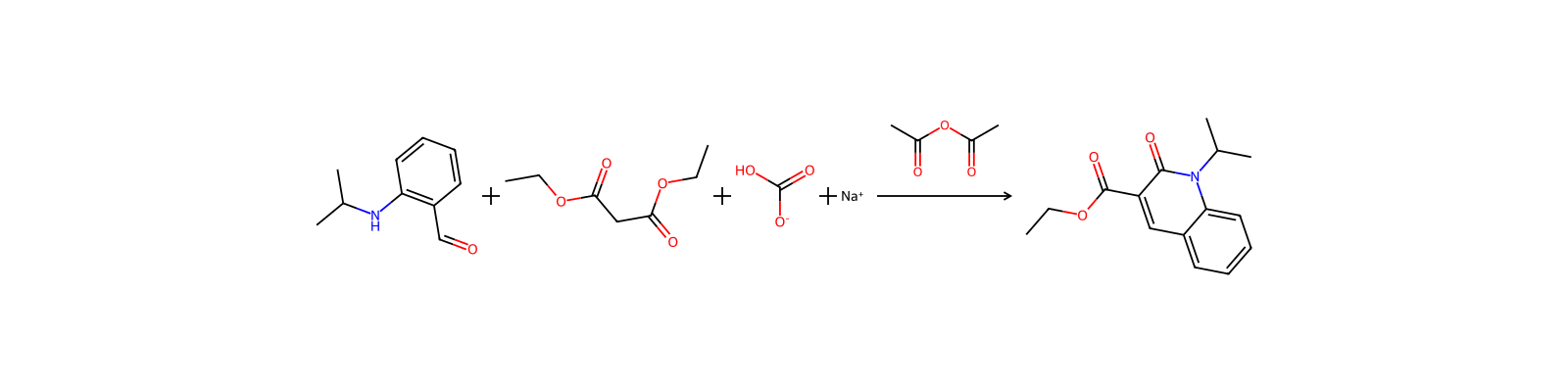
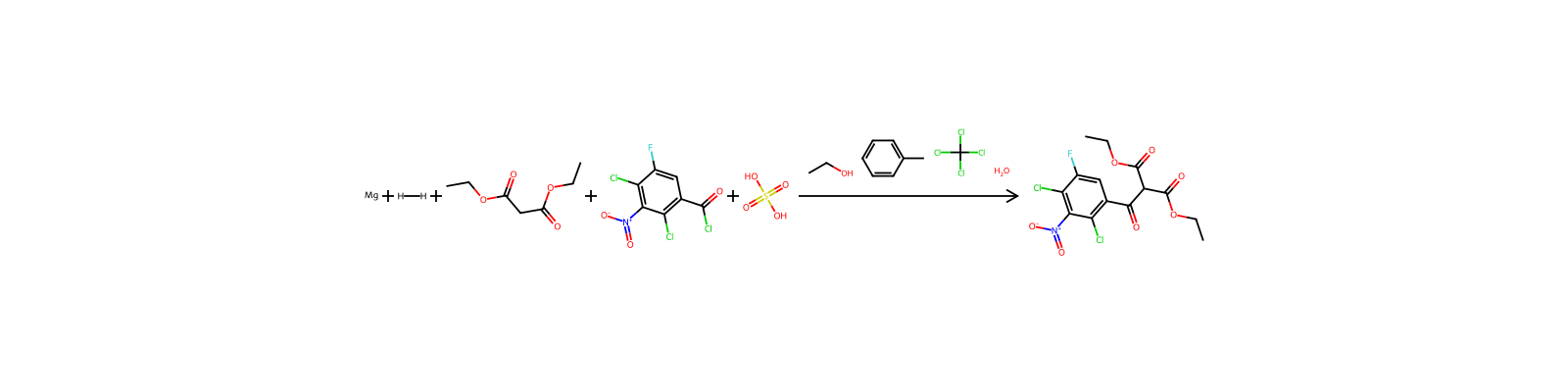
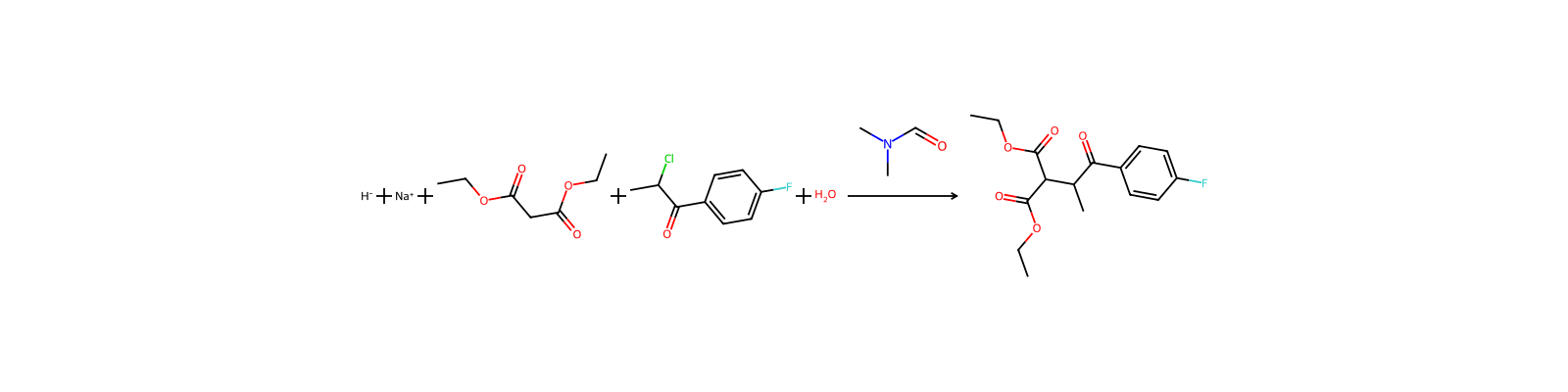
関連反応
2,029 件




化合物ノート
読み込み中…