ホームMCPワークベンチSkills
ホームワークベンチ通知マイページ
llms.txt · MCPガイドプライバシーポリシー · 利用規約 · サポートv1.8.0
  1. ホーム
  2. /化合物

4-クロロトルエン (1mg/mlメタノール溶液) [水質分析用]

4-Chlorotoluene
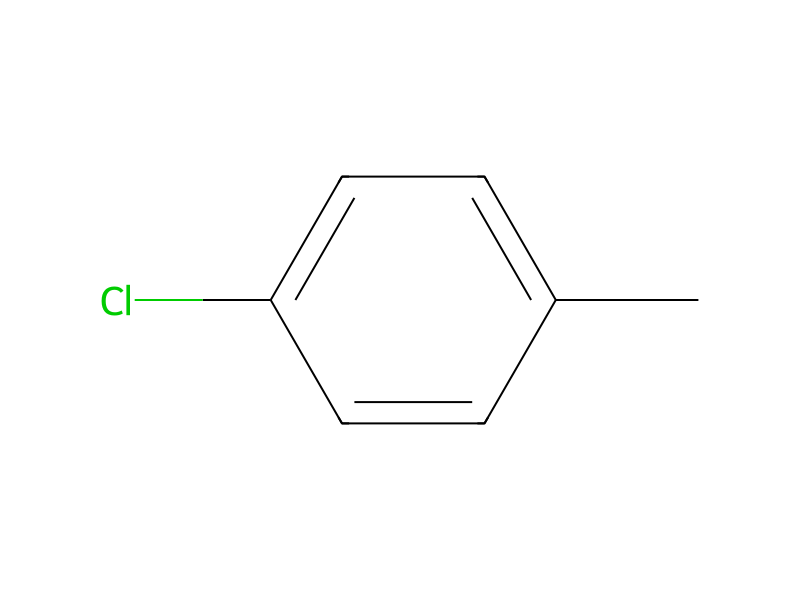
HCID 7810
ノートを作成反応を作成見積依頼を出す
印刷プレビュー
基本情報概要名称と識別子物性安全と法規制化学と産業関連反応化合物ノート
部分構造検索類似構造を探す

基本情報

CAS
106-43-4
標準SMILES
Cc1ccc(Cl)cc1
InChIKey
NPDACUSDTOMAMK-UHFFFAOYSA-N
分子式
C7H7Cl
平均分子量
126.58 g/mol
単同位体質量
126.0236279

概要

4-Chlorotoluene is a member of monochlorobenzenes.

名称と識別子

優先名称
4-Chlorotoluene
IUPAC
1-chloro-4-methylbenzene
現地名
4-クロロトルエン (1mg/mlメタノール溶液) [水質分析用]
英語名
4-Chlorotoluene
分子式
C7H7Cl
分子量
126.58

名称と別名

4-Chlorotoluene106-43-41-Chloro-4-methylbenzeneP-CHLOROTOLUENEp-Tolyl chlorideBenzene, 1-chloro-4-methyl-Toluene, p-chloro-1-Methyl-4-chlorobenzene4-Chloro-1-methylbenzenepara-ChlorotolueneDTXSID8024814Q8R236H42N
名称をさらに表示
4-クロロトルエン4-クロロトルエン (1mg/mlメタノール溶液) [水質分析用]4-メチルフェニルクロリド1-クロロ-4-メチルベンゼン塩化p-トリル4-クロロ-1-メチルベンゼン4-メチル-1-クロロベンゼン1-メチル-4-クロロベンゼンp-クロロトルエンp-トリルクロリドパラ-クロロトルエンpクロロトルエン4-クロロトルエン標準品4‐クロロトルエン標準品P‐クロロトルエン4-クロロトルエン 溶液4-クロロトルエン, 0.2 mg/mL in MeOH4-クロロトルエン, 2.0 mg/mL in MeOHchlorotoluenesUPDp-chloro-toluen1-chloro-4-methyl-benzen4-Chlorotoluene p-Chlorotoluenep-ChLp-Chlortoluol
NSC-404114DTXCID904814RefChem:98627203-397-04-methylchlorobenzene1-chloranyl-4-methyl-benzeneNSC 4041141-chloro-4-methyl-benzene

データベース識別子

CAS
106-43-4
PubChem CID
7810
DTXSID
DTXSID8024814
ChEMBL
CHEMBL1797268
ChEBI
CHEBI:34401
UNII
Q8R236H42N
EC Number
203-397-0
Nikkaji
J3.610B

物性

構造計算による物性

XLogP
3.3
極性表面積
0 Ų
水素結合供与体数
0
水素結合受容体数
0
回転可能結合数
0
重原子数
8
形式電荷
0
複雑度
62.8

実験および物理化学的性質

Chemical ClassesVolatile Organic Compound (VOC)
SolventsSolvents -> Chlorinated Aromatics
SpringerMaterials Properties13C nuclear magnetic resonance spectrum
LogP · 3 件

Log Kow = 3.33

3.33

3.42

Density · 3 件

1.0697 @ 20 °C/4 °C

Relative density (water = 1): 1.07

1.0697 @ 20°C

Viscosity0.892 mPa-s @ 20 °C
Color/FormColorless liquid
Solubility · 6 件

SOL IN ALCOHOL, BENZENE

SOL IN ACETIC ACID

>10% in ethyl ether

>10% in ethanol

For more Solubility (Complete) data for 4-CHLOROTOLUENE (9 total), please visit the HSDB record page.

Solubility in water, g/100ml at 20 °C: 0.01

Flash Point · 3 件

49 °C

140 °F, open cup

49 °C

Boiling Point · 3 件

安全と法規制

安全情報は参考情報です。供給元の安全データシート(SDS)、適用法令、専門家による評価に代わるものではありません。

GHS分類

GHS Classification · 6 件

Warning

H332: Harmful if inhaled [Warning Acute toxicity, inhalation]

P261, P271, P273, P304+P340, P317, P391, and P501 (click each P-code to see the statement)

Danger

H226 (72.6%): Flammable liquid and vapor [Warning Flammable liquids]

P210, P233, P240, P241, P242, P243, P261, P271, P272, P273, P280, P302+P352, P303+P361+P353, P304+P340, P316, P317, P321, P333+P317, P362+P364, P370+P378, P391, P403+P233, P403+P235, P405, and P501 (click each P-code to see the statement)

危険有害性情報

Regulatory Information · 4 件

Chemical: Benzene, 1-chloro-4-methyl-

Hazard Traits - Other Toxicological Hazard Traits

REACH registered substance: 4-chlorotoluene (EC: 203-397-0)

Benzene, 1-chloro-4-methyl-: Does not have an individual approval but may be used under an appropriate group standard

Fire HazardsFlammable. Gives off irritating or toxic fumes (or gases) in a fire. Above 49 °C explosive vapour/air mixtures may be formed.
Fire PotentialSLIGHT, WHEN EXPOSED TO HEAT OR FLAME.
Hazards Summary · 2 件

Defats the skin; [ICSC] Histopathological effects to liver (centrilobular hepatocellular hypertrophy), kidney (exacerbation of chronic progressive nephropathy), and adrenal cortex (adrenal cortical hyperplasia) were observed in 90 day feeding study with rats at the highest dose (800 mg/kg); Not mutagenic in Ames salmonella/microsome assay; [HSDB] A very mild skin and eye irritant, based on animal studies; [CHEMINFO] Rapidly absorbed by GI and respiratory tract, with limited absorption through the skin; Primarily excreted through urine; Mildly irritating to skin and eyes of rabbits; A skin sensitizer in the guinea pig maximization test; Effects in high single oral doses with rats include body tremor, decreased motor activity, and cyanosis; Histopathological findings limited to signs of irritation in the GI and respiratory tracts (severity increasing with dosage); Liver and kidney shown to be target organs of toxicity based on 29 and 90 day feeding studies with rats; No effects observed to reproductive organs; No evidence of mutagenicity; May be teratogenic at doses maternally toxic based on limited evidence from studies with the o-isomer; [eChemPortal: SIDSUNEP]

化学と産業

薬理情報

Metabolism/Metabolites · 2 件

P-CHLOROTOLUENE GIVES P-CHLOROBENZOIC ACID IN RABBIT. /FROM TABLE/

Two products were isolated from a study of the metabolism of p-chlorotoluene by Pseudomonas putida: (+) cis-4-chloro-2,3-dihydroxy-1-methylcyclohex-4,6-diene and 4-chloro-2,3-dihydroxy-1-methylbenzene. The enzymatic dehydrogenation of the former compound to the latter was demonstrated.

用途と製造

Uses · 4 件

Used as a solvent and intermediate for dyes and other organic chemicals; [Hawley] As of 2005, used only as intermediate for other organic compounds; [eChemPortal: SIDSUNEP]

SOLVENT & INTERMEDIATE FOR ORG CHEMICALS & DYES

CHEMICAL INTERMEDIATE; SPECIALTY SOLVENT

4-Chlorotoluene is used mainly to produce p-chlorobenzotrichloride, from which is obtained p-chlorobenzotrifluoride ... . Other side-chain-chlorinated products or their derivatives are 4-chlorobenzyl chloride, 4-chlorobenzaldehyde, and 4-chlorobenzoic acid. 4-Chlorotoluene is also a starting material in the synthesis of 2,4- and 3,4-dichlorotoluene and of 4-chlorobenzonitrile.

U.S. Production · 2 件

(1972) GREATER THAN 4.54X10+5 G

(1975) GREATER THAN 9.08X10+5 G

Methods of Manufacturing · 3 件

Good yields of chlorotoluenes can be obtained by the reaction of toluene with molecular proportions of certain Lewis acid halides as the chlorinating agent. With ferric chloride at 50-60 °C, the isomer mixture contains 13% ortho, 87% para, and less than 1% meta isomers. The reaction is accompanied by the formation of polymeric by-products ... /Chlorotoluenes/

Para isomer contents of 45-55% are obtained through the use of certain specific metal sulfides or cocatalyst systems consisting of specific metal salts and sulfur, inorganic sulfides, or divalent organic sulfur cmpds.

Manufacture of o- and p-isomers by catalytic chlorination of toluene.

Formulations/Preparations · 1 件

A typical analysis for 4-chlorotoluene, technical grade, has >98% 4-chlorotoluene, <1% 3-chlorotoluene, <0.5% 2-chlorotoluene, and <0.5% dichlorotoluenes. Pure grade with >99.5% 4-chlorotoluene has <0.2% 3-chlorotoluene, <0.2% 2-chlorotoluene, and <0.1% dichlorotoluenes.

関連反応

217 件
反応記録を作成
HRID 169 の反応式
HRID 169反応物として750 AstraZeneca ELN dataset
HRID 9750 の反応式
HRID 9750生成物として反応物としてuspto-grants-2006_08
HRID 65129 の反応式
HRID 65129反応物としてuspto-grants-1986_09
HRID 78989 の反応式
HRID 78989反応物としてuspto-grants-2014_09
HRID 78993 の反応式
HRID 78993反応物としてuspto-grants-2014_09
HRID 134612 の反応式
HRID 134612反応物としてTraining data from https://doi.org/10.1039/C8SC04228D (9/10)
HRID 139137 の反応式
HRID 139137反応物としてTraining data from https://doi.org/10.1039/C8SC04228D (9/10)
HRID 140980 の反応式
HRID 140980反応物としてTraining data from https://doi.org/10.1039/C8SC04228D (9/10)
1 / 28 ページ

化合物ノート

読み込み中…

このページの内容基本情報概要名称と識別子物性安全と法規制化学と産業関連反応化合物ノート
その他の操作
ノートを作成反応を作成見積依頼を出す

162.4 °C

162 °C

162.4 °C @760 [mm Hg]

Melting Point · 3 件

7.5 °C

7.5 °C

7.5 °C

Vapor Density · 2 件

4.37 (Air= 1)

Relative vapor density (air = 1): 4.4

物理化学的性質

融点
6 · 6-8 °C(lit.)
沸点
162 °C · 162 °C(lit.)
比重(密度)
1.07 g/mL · 1.07 g/mL at 25 °C(lit.)
蒸気密度
4.38 · 4.38 (vs air)
蒸気圧
10 mm · 10 mm Hg ( 45 °C)
屈折率
20 · n20/D 1.52(lit.)
闪点
121 °F · 121 °F
貯蔵温度
2 · 2-8°C
溶解性
0.04 g/l · 0.040g/l
外見
液体
色
クリア
PH
7.4 · 7.4 (H2O)(saturated aqueous solution)
爆発限界(explosive limit)
0.7 · 0.7-12.2%(V)
水溶解度
0.1 g/100 · <0.1 g/100 mL で 20 ºC
Merck
14 · 14,2171
BRN
1903635 · 1903635
Henry's Law Constant
2.7 · 2.7×10-3 mol/(m3Pa) at 25℃, Brockbank (2013)
Dielectric constant
6.08 · 6.0800000000000001
安定性
安定。可燃性。強力な酸化剤とは相容れない。
InChI
1S/C7H7Cl/c1-6-2-4-7(8)5-3-6/h2-5H,1H3
InChIKey
NPDACUSDTOMAMK-UHFFFAOYSA-N
SMILES
Cc1ccc(Cl)cc1
LogP
3.33 at · 3.33 at 20℃
CAS データベース
106 · 106-43-4(CAS DataBase Reference)
NISTの化学物質情報
1 · Benzene, 1-chloro-4-methyl-(106-43-4)
EPAの化学物質情報
p-Chlorotoluene (106-43-4)

化学的性質

化学的特性Colorless oily liquid. Slightly soluble in water. Soluble in ethanol, ether, acetone, benzene and chloroform.

The major hazards encountered in the use and handling of 4-chlorotoluene stem from its toxicologic properties, and flammability. Exposure may occur at sites where 4-chlorotoluene is manufactured or used as a solvent, disinfectant, or as an intermediate for organic chemicals and dyes. This colorless liquid may exert its strong irritant properties upon dermal contact or inhalation. Avoid breathing vapor. This may necessitate wearing a full-face mask self-contained breathing apparatus. Boots, and protective gloves are recommended; particularly when handling broken packages of this substance. Wash away any material which may have contacted the body with copious amounts of water. While this substance must be moderately heated before ignition occurs (flash point 140 °F, open cup), 4-chlorotoluene is nevertheless considered a combustion hazard. For fires involving 4-chlorotoluene, extinguish with "alcohol foam", CO2, dry chemical, or water in flooding quantities as fog (solid streams may be inefective). Flooding quantities of water also should be applied, from as far a distance as possible, to cool affected containers. This substance should be stored away from sparks, flames, and other sources of ignition. Shipping regulations and other DOT regulatory requirements should be consulted before transport. For small spills of 4-chlorotoluene, take up with sand or other noncombustible absorbent and place into containers for later disposal. For large spills, dike to prevent 4-chlorotoluene from entering water sources and sewers. Use water spray to knock down vapor. Before implementing land disposal of waste residue (including waste sludge) consult with environmental regulatory agencies for guidance.

EC ClassificationSymbol: Xn, N; R: 20-51/53; S: (2)-24/25-61; Note: C
UN ClassificationUN Hazard Class: 3; UN Pack Group: III
TSCA Requirements · 1 件

Pursuant to section 8(d) of TSCA, EPA promulgated a model Health and Safety Data Reporting Rule. The section 8(d) model rule requires manufacturers, importers, and processors of listed chemical substances and mixtures to submit to EPA copies and lists of unpublished health and safety studies. Benzene, 1-chloro-4-methyl is included on this list.

FIFRA Requirements · 1 件

Chlorotoluene, an isomeric mixture predominantly of ortho- and para-monochlorotoluene with up to 6 percent unreacted toluene and a boiling range of 110 °C to 162 °C, is exempted from the reqiurement of a tolerance when used as a solvent or cosolvent in pesticide formulations with the following restrictions: (a) Not for use after edible parts of the plant begin to form. (b) Do not graze livestock in treated areas within 48 hrs after application. /Chlorotoluene/

Atmospheric Standards · 1 件

This action promulgates standards of performance for equipment leaks of Volatile Organic Compounds (VOC) in the Synthetic Organic Chemical Manufacturing Industry (SOCMI). These standards implement Section 111 of the Clean Air Act and are based on the Administrator's determination that emissions from the SOCMI cause, or contribute significantly to, air pollution which may reasonably be anticipated to endanger public health or welfare. The intended effect of these standards is to require all newly constructed, modified, and reconstructed SOCMI process units to use the best demonstrated system of continuous emission reduction for equipment leaks of VOC, considering costs, non air quality health and environmental impact and energy requirements. p-Chlorotoluene is produced, as an intermediate or final product, by process units covered under this subpart. These standards of performance become effective upon promulgation but apply to affected facilities for which construction or modification commenced after January 5, 1981.

Chemical DangersOn combustion, forms toxic gases including carbon monoxide, hydrogen chloride and possibly phosgene. Reacts with strong oxidants.
Packaging and LabellingMarine pollutant.
DOT Emergency Guidelines · 5 件

/GUIDE 129: FLAMMABLE LIQUIDS (POLAR/WATER-MISCIBLE/NOXIOUS)/ Fire or Explosion: HIGHLY FLAMMABLE: Will be easily ignited by heat, sparks or flames. Vapors may form explosive mixtures with air. Vapors may travel to source of ignition and flash back. Most vapors are heavier than air. They will spread along ground and collect in low confined areas (sewers, basements, tanks). Vapor explosion hazard indoors, outdoors or in sewers. Those substances designated with "P" may polymerize explosively when heated or involved in a fire. Runoff to sewer may create fire or explosion hazard. Containers may explode when heated. Many liquids are lighter than water. /Chlorotoluenes/

/GUIDE 129: FLAMMABLE LIQUIDS (POLAR/WATER-MISCIBLE/NOXIOUS)/ Health: May cause toxic effects if inhaled or absorbed through skin. Inhalation or contact with material may irritate or burn skin and eyes. Fire will produce irritating, corrosive and/or toxic gases. Vapors may cause dizziness or suffocation. Runoff from fire control or dilution water may cause pollution. /Chlorotoluenes/

/GUIDE 129: FLAMMABLE LIQUIDS (POLAR/WATER-MISCIBLE/NOXIOUS)/ Public Safety: CALL Emergency Response Telephone Number ... . As an immediate precautionary measure, isolate spill or leak area for at least 50 meters (150 feet) in all directions. Keep unauthorized personnel away. Stay upwind. Keep out of low areas. Ventilate closed spaces before entering. /Chlorotoluenes/

/GUIDE 129: FLAMMABLE LIQUIDS (POLAR/WATER-MISCIBLE/NOXIOUS)/ Protective Clothing: Wear positive pressure self-contained breathing apparatus (SCBA). Structural firefighters' protective clothing will only provide limited protection. /Chlorotoluenes/

For more DOT Emergency Guidelines (Complete) data for 4-CHLOROTOLUENE (8 total), please visit the HSDB record page.

安全と保護具

Fire FightingUse powder, AFFF, foam, carbon dioxide. In case of fire: keep drums, etc., cool by spraying with water.
First Aid Measures · 4 件

Fresh air, rest.

Remove contaminated clothes. Rinse and then wash skin with water and soap.

First rinse with plenty of water for several minutes (remove contact lenses if easily possible), then refer for medical attention.

Do NOT induce vomiting. Refer for medical attention .

Safe StorageFireproof. Separated from strong oxidants.
Fire Fighting Procedures · 1 件

If material on fire or involved in fire: Do not extinguish fire unless flow can be stopped or safely confined. Use water in flooding quantities as fog. Solid streams of water may spread fire. Cool all affected containers with flooding quantities of water. Apply water from as far a distance as possible. Use foam, dry chemical, or carbon dioxide. /Chlorotoluenes/

Disposal Methods · 1 件

SRP: At the time of review, criteria for land treatment or burial (sanitary landfill) disposal practices are subject to significant revision. Prior to implementing land disposal of waste residue (including waste sludge), consult with environmental regulatory agencies for guidance on acceptable disposal practices.

Spillage Disposal · 1 件

Personal protection: filter respirator for organic gases and vapours adapted to the airborne concentration of the substance. Ventilation. Remove all ignition sources. Collect leaking and spilled liquid in sealable containers as far as possible. Absorb remaining liquid in sand or inert absorbent. Then store and dispose of according to local regulations. Do NOT wash away into sewer.

Preventive Measures · 3 件

AVOID PROLONGED BREATHING OF VAPOR. USE WITH ADEQUATE VENTILATION.

If material not on fire and not involved in fire: Keep sparks, flames, and other sources of ignition away. Keep material out of water sources and sewers. Build dikes to contain flow as necessary. Use water spray to knock-down vapors. /Chlorotoluenes/

Personnel protection: Avoid breathing vapors. Keep upwind. ... Do not handle broken packages unless wearing appropriate personal protective equipment. Wash away any material which may have contacted the body with copious amounts of water or soap and water. /Chlorotoluenes/

Eye PreventionWear safety spectacles.
Fire PreventionNO open flames, NO sparks and NO smoking. Above 49 °C use a closed system, ventilation and explosion-proof electrical equipment.
Skin PreventionProtective gloves. Protective clothing.
Allowable Tolerances · 1 件

Chlorotoluene, an isomeric mixture predominantly of ortho- and para-monochlorotoluene with up to 6 percent unreacted toluene and a boiling range of 110 °C to 162 °C, is exempted from the reqiurement of a tolerance when used as a solvent or cosolvent in pesticide formulations with the following restrictions: (a) Not for use after edible parts of the plant begin to form. (b) Do not graze livestock in treated areas within 48 hrs after application. /Chlorotoluene/

Ingestion PreventionDo not eat, drink, or smoke during work.

毒性情報

Ecotoxicity Values · 1 件

Quantitative structure-activity relationship estimates of toxicity of narcotic chemicals for 19 species of bacteria, algae, fungi, protozoans, coelenterates, rotifers, molluscs, crustaceans, insects, fish, and amphibians were used to predict no-effect levels at the ecosystem level by means of recently developed extrapolation methods. Equilibrium partitioning theory was used to derive no effect levels for aquatic sediments and internal toxicant concentrations for aquatic organisms. A simple table is given from which no effect levels for narcotic chemicals for water, sediment, and residues in biota can be predicted on the basis of only the octanol/water partition coefficient and molecular weight. The method may be applied to setting quality criteria for the aquatic environment and to ecotoxicological interpretation of (bio)monitoring data. Calculations were carried out for 102 narcotic compounds.

Environmental Fate · 3 件

TERRESTRIAL FATE: Based on a recommended classification scheme(1), an estimated Koc value of 340(SRC), determined from a measured water solubility(2) and a recommended regression-derived equation(3), indicates that 4-chlorotoluene will have moderate mobility in soil(SRC). Volatilization of 4-chlorotoluene may be important from moist soil surfaces(SRC) given an estimated Henry's Law constant of 4.4X10⁻³ atm-cu m/mole(SRC), determined from experimental values for vapor pressure(4) and water solubility(2), and from dry soil surfaces(SRC) based on an experimental vapor pressure of 2.79 mm Hg(SRC), determined from experimentally-derived coefficients(4). Based on limited data, 4-chlorotoluene may biodegrade aerobically in soil under some conditions(SRC). 4-Chlorotoluene at 20 mg/l, was 44% and 64% biodegraded in three days using a river water and a seawater inoculum, respectively(5). However, at 100 ppm, 4-chlorotoluene showed only 0(6)-<30%(7) biodegradation in 14 days using an activated sludge inoculum. An isolated strain of Pseudomonas putida 39/D, oxidized 4-chlorotoluene to (+)-cis-4-chloro-2,3-dihydroxy-1-methylcyclohexa-4,6-diene(8); 4-chlorotoluene is metabolized via cis-dihydrodiol(9).

AQUATIC FATE: Based on a recommended classification scheme(1), an estimated Koc value of 340(SRC), determined from a measured water solubility(2) and a recommended regression-derived equation(1), indicates that 4-chlorotoluene may adsorb to suspended solids and sediment in the water(SRC). Based on limited data, 4-chlorotoluene may biodegrade aerobically in water under some conditions(SRC). 4-Chlorotoluene at 20 mg/l, was 44% and 64% biodegraded in three days using a river water and a seawater inoculum, respectively(3). However, at 100 ppm, 4-chlorotoluene showed only 0(4)-<30%(5) biodegradation in 14 days using an activated sludge inoculum. An isolated strain of Pseudomonas putida 39/D, oxidized p-chlorotoluene to (+)-cis-4-chloro-2,3-dihydroxy-1-methylcyclohexa-4,6-diene(6); p-chlorotoluene is metabolized via cis-dihydrodiol(7). 4-Chlorotoluene should volatilize from water surfaces based on an estimated Henry's Law constant of 4.4X10⁻³ atm-cu m/mole(SRC), calculated from experimental values for vapor pressure(8) and water solubility(2). Estimated half-lives for a model river and model lake are 4 hours and 5 days, respectively(1,SRC). BCF values from 14 to 101.6(4), measured in carp, indicate that 4-chlorotoluene may moderately bioconcentrate in aquatic organisms(SRC), according to a recommended classification scheme(9). Based on monitoring data from the River Rhine, the half-life of 4-chlorotoluene in a river 4-5 m deep during mid-summer was estimated to be 1.2 days(10).

ATMOSPHERIC FATE: According to a model of gas/particle partitioning of semivolatile organic compounds in the atmosphere(1), 4-chlorotoluene, which has a measured vapor pressure of 2.79 mm Hg at 25 °C(2), determined from experimentally-derived coefficients, should exist solely as a vapor in the ambient atmosphere. Vapor-phase 4-chlorotoluene is degraded in the atmosphere by reaction with photochemically produced hydroxyl radicals(SRC); the half-life for this reaction in air is estimated to be about 9 days(3,SRC).

Food Survey Values4-Chlorotoluene was detected in 6 of 234 food items at an average concentration of 7.9 ppb; the highest concentrations of this compound were found in cake doughnuts(1).
Adverse EffectsNeurotoxin - Acute solvent syndrome
Exposure RoutesThe substance can be absorbed into the body by inhalation.
Signs and Symptoms · 2 件

Dry skin. Redness. Pain.

Redness. Pain.

Effluent Concentrations · 1 件

Identified in chlorinated leachate from a simulated landfill lysimeter used to study codisposal of metal plating sludge with municipal solid waste(1). Identified as a principal organic hazardous constituent (POHC) in the emissions from an incinerator test burn(2). 4-Chlorotoluene was detected in the volatile organic fraction from compost samples from eight solid waste composting facilities with a maximum concentration of 240 ug/cu m(3). 4-Chlorotoluene was detected in 5 of 5 hazardous waste sites in New Jersey at concentrations ranging from 0.04-0.71 ppbv; 4-chlorotoluene was detected in the volatile organic emissions of a sanitary landfill which received only non-hazardous industrial and municipal waste at an average concentration of 0.03 ppbv(4). Thermal decomposition of vinylidene chloride polymers (food wrapping film) resulted in the formation of 4-chlorotoluene at an average concentration of 11.2 ug/g(5). 4-Chlorotoluene was detected in the leachate of fabric used for the manufacture of collapsible potable water storage tanks at 0.3 ug/l following exposure to low pH conditions(6).

ICSC Environmental DataThe substance is toxic to aquatic organisms.
Soil Adsorption/Mobility · 1 件

The Koc of 4-chlorotoluene is estimated as approximately 340(SRC), using an experimental water solubility of 106 mg/l at 20 °C(1,SRC) and a regression-derived equation(2,SRC). According to a recommended classification scheme(3), this estimated Koc value suggests that 4-chlorotoluene will have moderate mobility in soil(SRC).

TSCA Test Submissions · 4 件

Acute oral toxicity was evaluated in groups of 2 adult male albino Sprague-Dawley rats administered para-chlorotoluene by gavage as either a 1.0 or 10% volume/volume solution in corn oil or in undiluted form at dosage levels of 10, 31.6, 100, 316, 1000 or 3160 ul/kg. Mortality was observed in both rats in the 3160 ul/kg dose group (100% solution) and the LD50 was estimated to be 1780 ul/kg. Clinical observations included depression, lacrimation, labored respiration, ataxia, tremors, depressed righting and placement reflexes and prostration. Gross necropsy revealed congestion of the lungs, kidneys and adrenals and inflammation of the gastrointestinal tract in the decedents. Sacrificed animals did not display this inflammation.

Acute oral toxicity was evaluated in groups of 5 male and 5 female fasted Sprague-Dawley rats administered 4-chlorotoluene by gavage at a level of 1.7, 2.3, 3.3 or 4.6 g/kg. Mortality was observed in 2 males in the 1.7 g/kg group, 3 males and 4 females in the 2.3 g/kg group, and in all 5 males and females in the 3.3 and 4.6 g/kg groups. The LD50 was determined to be 2.1 g/kg (1.8 - 2.4 g/kg). Clinical observations included a decrease in motor activity, tremors, cyanosis, piloerection, excess salivation, chromodacryorrhea, increase in respiratory rate, decrease in respiratory rate and lacrimation. Gross necropsy revealed bright red or red and mottled lungs, stomach and intestinal irritation and cream colored, white or dark fluid in the stomach and intestine, red stained fur around the nose, "blanched" stomachs and fluid filled stomachs.

Acute dermal toxicity was evaluated in 2 male and 2 female New Zealand white rabbits exposed to a single occluded dose of undiluted parachlorotoluene to abraded and intact skin. There were no mortalities and an LD50 value was not reported. Clinical and necropsy observations revealed nothing remarkable except for diarrhea in 1 male.

p-Chlorotoluene (CAS # 106-43-4) was evaluated for chromosomal effects. A single intraperitoneal injection of 1000 mg/kg body weight was administered to male and female mice. Animals were sacrificed and femoral marrow was prepared at 16-hours (5 M, 5 F); 24-hours (5 M, 5 F); and 48-hours (5 M, 5 F) after administration. Signs of toxicity included apathy, roughened fur, staggering gait, spasm, twitching, shivering, and difficulty in breathing. Two animals died during treatment. Gross necropsy revealed slightly inflated lungs and spotted livers. The ratio between polychromatic and normochromatic erythrocytes and clastogenic effect was not altered.

Atmospheric Concentrations · 2 件

July-Aug 1981: Newark, NJ, 38 samples, 95% pos, mean concn 0.21 ppb; Elizabeth, NJ, 37 samples, 97% pos, mean concn 0.25 ppb; Camden, NJ, 35 samples, 97% pos, mean concn 0.22 ppb(1). Jan-Feb 1982, Newark, NJ, 28 samples, 96% pos, mean concn 0.17 ppb; Elizabeth, NJ, 38 samples, 92% pos, mean concn 0.14 ppb; Camden, NJ, 37 samples, 78% pos, mean concn 0.07 ppb(1). During 1983-84, detected in air samples collected at 6 hazardous waste sites in NJ, mean concn range <0.03-0.70 ppb, and one sanitary landfill in NJ, mean concn 0.04 ppb(2). Chlorotoluene isomers (o-, m-, and p-): Love Canal in Niagara Falls, NY, 15 samples, 80% pos, concn range trace-12,274 ng/cu m(3); Love Canal, 10 samples, 50% pos, concn range <0.010-1.64 ng/cu m(4); Baton Rouge, LA, 11 samples, 9% pos, 35 ng/cu m(3).

Human air pollution inhalation season ploy cyclic aromatic hydro carbon mutagenesis sulfate space heating motor vehicle exhaust.

Artificial Pollution Sources · 1 件

4-Chlorotoluene's production and use as a solvent and intermediate in the synthesis of organic chemicals, dyes(5), pharmaceuticals, and synthetic rubber chemicals(3) may result in its release to the environment through various waste streams(SRC). 4-Chlorotoluene may be formed in the environment as a photodegradation product of 4-chlorobenzyl chloride(4), an intermediate used in the manufacture of pharmaceuticals, dyes and other organic chemicals(1,2,SRC).

法規制情報

TSCA Requirements · 1 件

Pursuant to section 8(d) of TSCA, EPA promulgated a model Health and Safety Data Reporting Rule. The section 8(d) model rule requires manufacturers, importers, and processors of listed chemical substances and mixtures to submit to EPA copies and lists of unpublished health and safety studies. Benzene, 1-chloro-4-methyl is included on this list.

FIFRA Requirements · 1 件

Chlorotoluene, an isomeric mixture predominantly of ortho- and para-monochlorotoluene with up to 6 percent unreacted toluene and a boiling range of 110 °C to 162 °C, is exempted from the reqiurement of a tolerance when used as a solvent or cosolvent in pesticide formulations with the following restrictions: (a) Not for use after edible parts of the plant begin to form. (b) Do not graze livestock in treated areas within 48 hrs after application. /Chlorotoluene/

Atmospheric Standards · 1 件

This action promulgates standards of performance for equipment leaks of Volatile Organic Compounds (VOC) in the Synthetic Organic Chemical Manufacturing Industry (SOCMI). These standards implement Section 111 of the Clean Air Act and are based on the Administrator's determination that emissions from the SOCMI cause, or contribute significantly to, air pollution which may reasonably be anticipated to endanger public health or welfare. The intended effect of these standards is to require all newly constructed, modified, and reconstructed SOCMI process units to use the best demonstrated system of continuous emission reduction for equipment leaks of VOC, considering costs, non air quality health and environmental impact and energy requirements. p-Chlorotoluene is produced, as an intermediate or final product, by process units covered under this subpart. These standards of performance become effective upon promulgation but apply to affected facilities for which construction or modification commenced after January 5, 1981.

State Drinking Water Guidelines · 3 件

(CA) CALIFORNIA 140 ug/l

(NH) NEW HAMPSHIRE 100 ug/l

(ME) MAINE 140 ug/l

Federal Drinking Water GuidelinesEPA 100 ug/l

安全データ

wgk
2
tsca
TSCA listed
rtecs
XS9010000
ridadr
UN 2238 3/PG 3
PRTR法
第一種指定化学物質
hs_code
29337900
risk_code
20-51/53-39/23/24/25-23/24/25-11-10-43
化審法
(3)-39
消防法
危-4-2-III
hazard_code
Xn,N,T,F
hazard_note
Harmful
safety_code
24/25-61-45-36/37-16-7
hazard_class
3
packing_group
III
環境リスク評価
p-クロロトルエン(106-43-4)
Hazard Classifications
Acute Tox. 4 InhalationAquatic Chronic 2Flam. Liq. 3Skin Sens. 1
ストレージクラス
3 - Flammable liquids
有毒物質データの
106-43-4(Hazardous Substances Data)
General Manufacturing Information · 5 件

Benzene, 1-chloro-4-methyl-: ACTIVE

DISINFECTANT AGAINST COCCIDIA OOCYSTS WITH LOW TOXICITY TO FOWL. EMULSION CONTAINING 70% P-CHLOROTOLUENE KILLED OOCYSTS COMPLETELY WITHIN 30 MIN @ 100-FOLD DILUTION.

CHLOROTOLUENE IS AN ISOMERIC MIXT PREDOMINANTLY O- & P-MONOCHLOROTOLUENE.

Para-chlorotoluene forms binary azeotropes with various organic compounds incl alcohols, acids, and esters. ... p-chlorotoluene forms stable ionic complexes with antimony pentachloride.

DISINFECTANT AGAINST COCCIDIA OOCYSTS WITH LOW TOXICITY TO FOWL.

応用分野 · 3 件

用途溶剤,染料?農薬?医薬中間体

使用4-Chlorotoluene is used in a variety of organic synthesis, such as acting as coupling precursors for palladium-catalyzed acylation of acetanilides. It is also used for the preparation model gas of 4-chlorotoulene by passing synthesized air into liquid 4-chlorotoulene.

一般的な説明The reaction of 4-chlorotouleneand phenylboronic acid with Pd(OAc)2/L2HX as the catalyst is the model reaction for determining the efficiencies of bisimidazolylidene (L) ligand precursors.

調製方法 · 2 件

製造方法4-Chlorotoluene is obtained from p-toluidine by diazotization and substitution. Add p-toluidine and hydrochloric acid to the reaction pot and stir and heat until dissolved at 60℃, then cool to below 15℃ and add sodium nitrite solution dropwise. After reaching the end point, continue to stir for 0.5h. Add cuprous chloride hydrochloric acid solution and stir at room temperature for 3h. Then raise the temperature to 60℃ and keep for 0.5h, cool to room temperature and leave to stratify, discard the acid water layer, wash with water to neutral, filter and get p-chlorotoluene.

純化方法Dry it with BaO, fractionally distil it, then fractionally crystallise it by partial freezing. [Beilstein 5 IV 806.]

上流・下流製品情報

上流原料

トルエン塩素Industrial hydrochloric acidトリクロロ鉄(III)銅(I)クロリド硫酸銅(II)Monochlorotoluenep-トルイジン2-クロロトルエン二亜硫酸二ナトリウム

下流製品

ブラシナゾール2-クロロベンゾトリクロリド4-クロロベンゾトリクロリド4-クロロベンズアルデヒド2,4-ジクロロベンゾトリフルオリド2,4-ジクロロトルエン4-クロロベンジルシアニド2-(4-クロロフェニル)イソ吉草酸3,4-ジクロロベンゾトリフルオリドシフルトリン2-ニトロ-1-(4-ニトロフェノキシ)-4-(トリフルオロメチル)ベンゼン4-クロロ安息香酸2-メトキシ-5-メチルアニリン4-フルオロベンズアルデヒド5-クロロ-2-メチルベンゼンジアゾニウムbrofenvalerate4,α,α-トリクロロトルエン4-クロロベンジルクロリド5-[2-クロロ-4-(トリフルオロメチル)フェノキシ]-N-(メチルスルホニル)-2-ニトロベンズアミド4-フルオロ-3-フェノキシベンズアルデヒド4-クロロベンゾトリフルオリド

補足説明

定義ChEBI: 4-Chlorotoluene is a member of monochlorobenzenes. It is an intermediate for the manufacture of Fenvalerate, Paclobutrazol, Uniconazole, Trifluralin,Thiobencarb, Daimuron and other pesticides.