ホームMCPワークベンチSkills
ホームワークベンチ通知マイページ
llms.txt · MCPガイドプライバシーポリシー · 利用規約 · サポートv1.8.0
  1. ホーム
  2. /化合物

イソプロピルエーテル

Diisopropyl Ether

HCID 7914
ノートを作成反応を作成見積依頼を出す
印刷プレビュー

データを補完しています。しばらくしてからページを更新すると最新の内容を表示できます
基本情報概要名称と識別子物性安全と法規制化学と産業関連反応化合物ノート
部分構造検索類似構造を探す

基本情報

CAS
108-20-3
標準SMILES
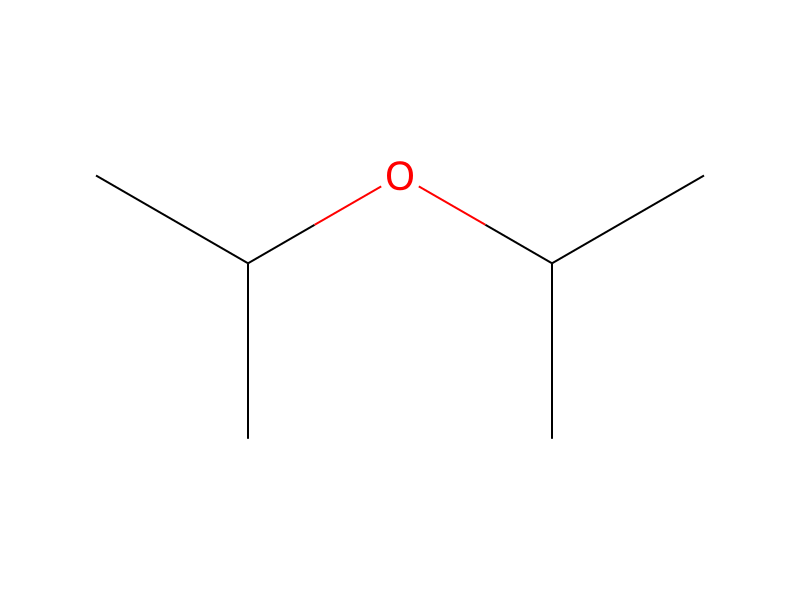
CC(C)OC(C)C
InChIKey
ZAFNJMIOTHYJRJ-UHFFFAOYSA-N
分子式
C6H14O
平均分子量
102.17 g/mol
単同位体質量
102.10446507

概要

Diisopropyl ether appears as a clear colorless liquid with an ethereal odor. Flash point -18 °F. Less dense than water. Vapors heavier than air.

名称と識別子

優先名称
Diisopropyl Ether
IUPAC
2-propan-2-yloxypropane
現地名
イソプロピルエーテル
英語名
Diisopropyl ether
分子式
C6H14O
分子量
102.17

名称と別名

Diisopropyl etherISOPROPYL ETHER108-20-32-IsopropoxypropanePropane, 2,2'-oxybis-Diisopropyl oxideEther, isopropylBis(isopropyl) etherIzopropylowy eterEther isopropylique2,2'-OxybispropaneDTXSID4021890
名称をさらに表示
イソプロピルエーテル2,2'-オキシビスプロパン酸化イソプロピルジイソプロピルエーテルビス(1-メチルエチル)エーテルジ(イソプロピル)エーテル2-イソプロピルオキシプロパン2,2'-オキシビス(プロパン)ジ(1-メチルエチル)エーテル2-イソプロポキシプロパンISO-プロピルエーテルISO-プロピルエーテル(脱水)イソプロピルエーテル(脱水)ジ-ISO-プロピルエーテルジ-ISO-プロピルエーテル(脱水)ジイソプロピルエーテル(脱水)ジイソプロピルエテルイソプロピルエーテル(ジイソプロピルエーテル)ジイソプロピルエーテル(脱水) ‐SUPER‐ジイソプロピルエーテル CONTAINS EITHER BHT OR HYDROQUINONE AS STABILIZER,ACS REAGENT,≥99.0%DIPEDiisopropyl etheIsoprpyl etherDiisoproyl etherISOPROPYL ETHER, 1000MG, NEAT
DO7Y998826DTXCID4018902-Isopropoxy propaneRefChem:134066203-560-6diisopropylether2,2'-oxydipropane2-propan-2-yloxypropane

データベース識別子

CAS
108-20-3
PubChem CID
7914
DTXSID
DTXSID4021890
ChEMBL
CHEMBL3185565
UNII
DO7Y998826
EC Number
203-560-6
Nikkaji
J5.069E

物性

構造計算による物性補完中

XLogP
1.5
極性表面積
9.2 Ų
水素結合供与体数
0
水素結合受容体数
1
回転可能結合数
2
重原子数
7
形式電荷
0
複雑度
33.4

実験および物理化学的性質

Chemical Classes · 2 件

Flammable agents - 3rd degree

Volatile Organic Compound (VOC)

SolventsSolvents -> Ethers (<C12)
SpringerMaterials PropertiesSchoenflies notation
LogP · 2 件

log Kow= 1.52

1.94

Odor · 4 件

Sweet, slightly sharp, pungent like camphor and ethyl ether

The odor is more irritating and less pleasant than that of ethyl ether.

Sharp, sweet, ether-like odor.

Ether-like odor

Density · 6 件

0.724 at 68 °F (USCG, 1999) - Less dense than water; will float

0.7258 @ 20 °C/4 °C

Bulk density: 6.05 lb/gal @ 15.5 °C; similar to ethyl ether in properties but does tend to form peroxides more readily than ethyl ether

Relative density (water = 1): 0.7

0.73

0.719 @25 °C

Viscosity0.273 centipoise at 20 °F
Color/Form · 3 件

Colorless volatile liquid

Colorless liquid.

Colorless liquid

安全と法規制

安全情報は参考情報です。供給元の安全データシート(SDS)、適用法令、専門家による評価に代わるものではありません。

GHS分類

GHS Classification · 6 件

Danger

H225: Highly Flammable liquid and vapor [Danger Flammable liquids]

P210, P233, P240, P241, P242, P243, P261, P271, P280, P303+P361+P353, P304+P340, P319, P370+P378, P403+P233, P403+P235, P405, and P501 (click each P-code to see the statement)

This chemical does not meet GHS hazard criteria for 0.4% (1 of 265) of reports.

Danger

H225 (99.6%): Highly Flammable liquid and vapor [Danger Flammable liquids]

危険有害性情報

Regulatory Information · 5 件

Chemical: Propane, 2,2'-oxybis-

Propane, 2,2'-oxybis- is listed on the EPA's Chemical Data Reporting (CDR) system. Manufacturers and importers of Propane, 2,2'-oxybis- are required to report information about their production and use of this chemical to the EPA under the Toxic Substances Control Act (TSCA). (40 eCFR Part 711)

Status: Active Update: 13-01-2021 https://echa.europa.eu/registration-dossier/-/registered-dossier/15860

Propane, 2,2'-oxybis-: HSNO Approval: HSR001131 Approved with controls

The New Jersey Worker and Community Right to Know Act requires public and private employers to provide information about hazardous substances at their workplaces. (N.J.S.A. 34:5A-1 et. seq.)

DOT LabelFlammable Liquid
Fire Hazards · 3 件

Behavior in Fire: Vapor is heavier than air and may travel a considerable distance to a source of ignition and flash back. Containers may explode when heated. (USCG, 1999)

· HIGHLY FLAMMABLE: Will be easily ignited by heat, sparks or flames.

Highly flammable. Vapour/air mixtures are explosive.

Fire Potential · 2 件

FLAMMABLE LIQUID.

ONLY ELECTRICAL EQUIPMENT OF EXPLOSION-PROOF TYPE (GROUP C CLASSIFICATION) IS PERMITTED TO BE OPERATED IN ETHER AREAS. ETHER SHOULD NOT BE STORED NEAR POWERFUL OXIDIZERS OR IN AREAS OF HIGH FIRE HAZARD. /ETHERS/

化学と産業

薬理情報

Absorption, Distribution and Excretion... ISOPROPYL ETHER IS RAPIDLY ABSORBED BY BLOOD FROM LUNGS OR GI TRACT. ... IT IS PROBABLE THAT MAJOR PORTION OF DOSE IS ELIMINATED THROUGH LUNGS AFTER CESSATION OF EXPOSURE ... .

用途と製造

Uses · 6 件

Used as a solvent for resins, waxes, oils, dyes, and surface coatings; [ACGIH]

Painting (Solvents) [Category: Paint]

Solvent for animal, vegetable, mineral oils, waxes and resins; extraction of acetic acid from aq solutions; solvent for dyes in presence of small amt of alcohol; spotting compositions; paint & varnish; rubber cements.

Isopropyl ether is used as a solvent in the Israel Mining Industries acid cleaning process for extraction of cationic impurities. /anionic impurities to a much lesser extent/

Isopropyl ether is used as a solvent to separate polonium from lead and bismuth.

Extraction agent (phosphoric acid, phenol purification); solvent (paints, stain removers)

Impurities · 3 件

COMMERCIAL VARIETY MAY CONTAIN APPROX 3% OF ISOPROPYL ALC, LESS THAN 0.01% OF SULFUR & LESS THAN 0.04% OF PEROXIDE.

The dehydration of isopropyl alcohol with sulfuric acid produces propylene as an impurity in the production of isopropyl ether. The amounts of propylene by-product will vary with type of catalyst and reaction conditions.

Isopropyl ether autooxidizes to form peroxides and hydroperoxides at 20 °C with UV radiation or in the presence of a photosensitizer, eg, benzophenone

U.S. Imports(1984) 2.49X10+8 g
U.S. Production · 2 件

2023: 40,000,000 - <55,000,000 lb

(1972) PROBABLY GREATER THAN 4.54X10+5 G

Consumer UsesFuel agents
Industry UsesFuel agents

関連反応

2,836 件
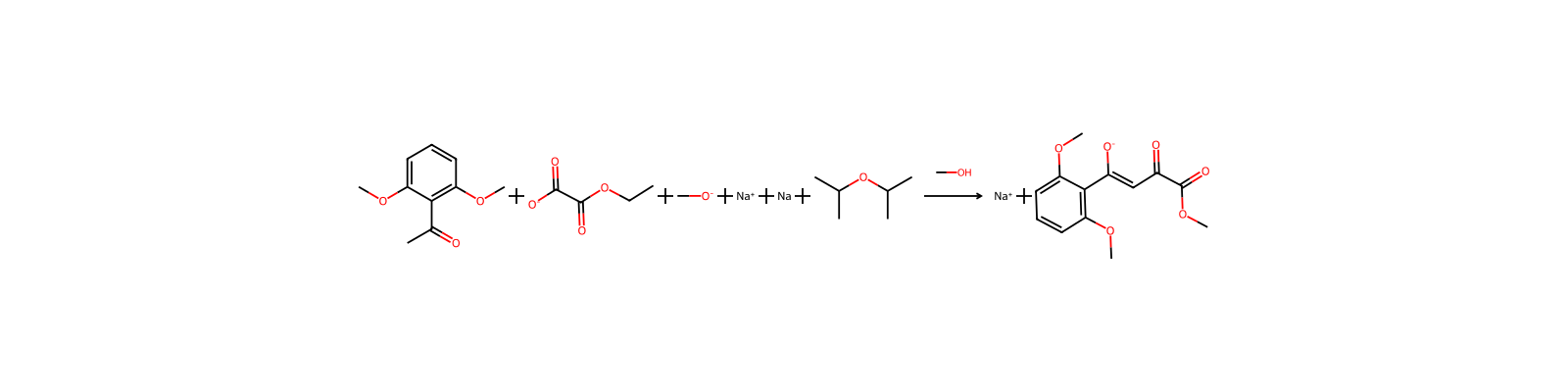
反応記録を作成
HRID 1024 の反応式
HRID 1024反応物としてuspto-grants-1998_03
HRID 1081 の反応式
HRID 1081反応物としてuspto-grants-1998_03
HRID 2923 の反応式
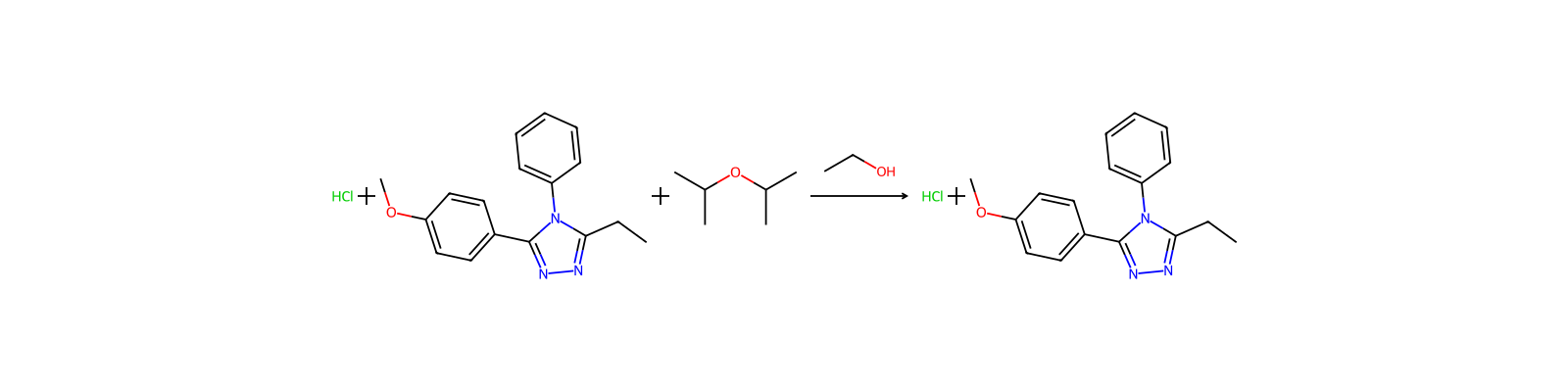
HRID 2923溶媒としてuspto-grants-1998_03
HRID 4594 の反応式
HRID 4594反応物としてuspto-grants-1988_02
HRID 4595 の反応式
HRID 4595反応物としてuspto-grants-1988_02
HRID 5089 の反応式
HRID 5089溶媒としてuspto-grants-1993_09
HRID 5514 の反応式
HRID 5514溶媒としてuspto-grants-1993_09
HRID 5520 の反応式
HRID 5520反応物としてuspto-grants-1993_09
1 / 355 ページ

化合物ノート

読み込み中…

このページの内容基本情報概要名称と識別子物性安全と法規制化学と産業関連反応化合物ノート
その他の操作
ノートを作成反応を作成見積依頼を出す
Solubility · 6 件

0.2 % (NIOSH, 2024)

Sol of commercial grade in water, 1.71% @ 19 °C; miscible with most organic solvents.

Sol in acetone; miscible in ethyl alcohol, ethyl ether

MISCIBLE WITH MOST ORG SOLVENTS

Water solubility = 8,800 mg/l @ 20 °C

Soluble in oxygenated solvents

Flash Point · 6 件

-18 °F (USCG, 1999)

-28 °C

-18 °F (-28 °C) (closed cup)

-28 °C

-18 °F

-18 °F

Boiling Point · 6 件

156 °F at 760 mmHg (USCG, 1999)

68.5 °C

69 °C

154 °F

68.5 °C @760 [mm Hg]

154 °F

DecompositionWhen heated to decomposition it emits acrid smoke and fumes.

物理化学的性質

融点
-85.5 °C · -85.5 °C
沸点
68 · 68-69 °C(lit.)
比重(密度)
0.725 g/mL · 0.725 g/mL at 25 °C(lit.)
蒸気密度
3.5 · 3.5 (vs air)
蒸気圧
120 mm · 120 mm Hg ( 20 °C)
屈折率
20 · n20/D 1.367(lit.)
闪点
29 °F · −29 °F
貯蔵温度
30 °C · Store below +30°C.
溶解性
3.11 g/リットル · 3.11g/リットル
外見
液体
色
25 · APHA: ≤25
臭い (Odor)
ヤギのファット ボールやジエチル エーテルのように、甘く、やや歯ごたえがあり、典型的にはスパイシーです。
PH
7 · 7 (20°C)
爆発限界(explosive limit)
1 · 1-21%, 100°F
水溶解度
9 g/L · 9g/L(20℃)
比熱容量
2.12 J/ · Cp(liquid): 2.12 J/(g·K), at 25℃
Merck
14 · 14,5212
BRN
1731256 · 1731256
Henry's Law Constant
2.57 at · 2.57 at 25 °C (headspace-GC, Arp and Schmidt, 2004)
Dielectric constant
3.9 · 3.9(25℃)
安定性
とても燃えやすい。この物質は、重大な火災および爆発の危険をもたらします。蒸気は発火源までかなりの距離を移動する可能性があり、着火源は裸火である必要はありませんが、ホットプレート、蒸気パイプなどである可能性があります.イソプロピル エーテルを注ぐときに発生する静電気は、蒸気に引火する可能性があります。
InChI
1S/C6H14O/c1-5(2)7-6(3)4/h5-6H,1-4H3
InChIKey
ZAFNJMIOTHYJRJ-UHFFFAOYSA-N
SMILES
CC(C)OC(C)C
LogP
2.4 at · 2.4 at 20℃
表面張力
17.74 mN/m · 17.74mN/m at 293.15K
CAS データベース
108 · 108-20-3(CAS DataBase Reference)
NISTの化学物質情報
Diisopropyl ether(108-20-3)
EPAの化学物質情報
Isopropyl ether (108-20-3)
化学的性質 · 1 件

化学的特性Diisopropyl ether(Isopropyl ether) is highly flammable, with a wide flammable range of 1.4%–21% in air. Boiling point is 156°F (68°C), flash point is 18°F (27°C), and ignition temperature is 830°F (443°C). Vapor density is 3.5, which is heavier than air. In addition to flammability, isopropyl ether is toxic by inhalation and a strong irritant, with a TLV of 250 ppm in air. Diisopropyl ether is an excellent solvent for natural oils, mineral oils, and waxes. It is used as an extracting agent and reaction medium in chemical and pharmaceutical syntheses.

Health Hazards · 2 件

Inhalation causes anesthesia, nausea, headache, dizziness, and irritation of the eyes and nose. Contact of liquid with eyes causes only minor injury; repeated contact with skin will remove natural oils and may cause dermatitis. (USCG, 1999)

· Inhalation or contact with material may irritate or burn skin and eyes.

Hazards SummaryThe odor is more irritating and less pleasant than that of ethyl ether. [ACGIH] A skin, eye, and respiratory tract irritant; Inhalation of high concentrations can cause CNS depression; [ICSC]
DOT ID and Guide · 2 件

1159 127

1159 127

Reactive GroupEthers
EC ClassificationSymbol: F; R: 11-19-66-67; S: (2)-9-16-29-33; Note: C
UN ClassificationUN Hazard Class: 3; UN Pack Group: II
Reactivity AlertsHighly Flammable
OSHA StandardsPermissible Exposure Limit: Table Z-1 8-hr Time Weighted Avg: 500 ppm (2100 mg/cu m).

安全と保護具

Fire Fighting · 2 件

Excerpt from ERG Guide 127 [Flammable Liquids (Water-Miscible)]:

Use water spray, AFFF, powder, alcohol-resistant foam, carbon dioxide. In case of fire: keep drums, etc., cool by spraying with water.

First Aid Measures · 4 件

Fresh air, rest. Refer for medical attention.

Remove contaminated clothes. Rinse skin with plenty of water or shower.

First rinse with plenty of water for several minutes (remove contact lenses if easily possible), then refer for medical attention.

Rinse mouth. Rest. Refer for medical attention .

Accidental Release Measures · 2 件

· CALL 911. Then call emergency response telephone number on shipping paper. If shipping paper not available or no answer, refer to appropriate telephone number listed on the inside back cover.

· ELIMINATE all ignition sources (no smoking, flares, sparks or flames) from immediate area.

First Aid · 3 件

Excerpt from NIOSH Pocket Guide for Isopropyl ether:

General First Aid:

(General first aid procedures)

Safe StorageFireproof. Cool. Keep in the dark. Keep in a well-ventilated room. Store only if stabilized.
Firefighting HazardsVAPORS ARE HEAVIER THAN AIR & MAY TRAVEL TO A SOURCE OF IGNITION & FLASH BACK. LIQUID FLOATS ON WATER & MAY TRAVEL TO A SOURCE OF IGNITION & SPREAD FIRE. ETHER TENDS TO FORM UNSTABLE, EXPLOSIVE PEROXIDES ON STANDING.
Exposure Control and Personal Protection · 2 件

· Wear positive pressure self-contained breathing apparatus (SCBA).

200.0 [ppm]

Fire Fighting ProceduresAlcohol foam, CO2, foam, dry chemical.
Storage ConditionsStore in cool, dry, well-ventilated location. Separate from acids & oxidizing materials.
Cleanup Methods · 1 件

1. Remove all ignition sources. 2. Ventilate area of spill or leak. 3. For small quantities, absorb on paper towels. Evaporate in a safe place (such as fume hood). Allow sufficient time for evaporating vapors to completely clear the hood ductwork. Burn the paper in a suitable location away from combustible materials. Large quantities can be reclaimed or collected and atomized in a suitable combustion chamber.

Nonfire Spill ResponseExcerpt from ERG Guide 127 [Flammable Liquids (Water-Miscible)]:
Disposal Methods · 5 件

SRP: At the time of review, criteria for land treatment or burial (sanitary landfill) disposal practices are subject to significant revision. Prior to implementing land disposal of waste residue (including waste sludge), consult with environmental regulatory agencies for guidance on acceptable disposal practices.

Isopropylether may be disposed of by atomizing in a suitable combustion chamber.

Isopropyl ether is a waste chemical stream constituent which may be subjected to ultimate disposal by controlled incineration.

The following wastewater treatment technologies have been investigated for isopropyl ether: Concentration process: Biological treatment.

For more Disposal Methods (Complete) data for ISOPROPYL ETHER (8 total), please visit the HSDB record page.

毒性情報

Target OrgansEyes, skin, respiratory system, central nervous system
Ecotoxicity ValuesLC50 Pimephales promelas (fathead minnow) 91.7 mg/l 96 hr flow-through bioassay, wt 0.12 g, water hardness 45.5 mg/l CaCO3, temp: 25 + or - 1 °C, pH 7.5, dissolved oxygen greater than 60% of saturation
Environmental Fate · 3 件

TERRESTRIAL FATE: Based on a classification scheme(1), an estimated Koc value of 160(SRC), determined from a log Kow of 1.52(2) and a regression-derived equation(3), indicates that isopropyl ether is expected to have high mobility in soil(SRC). Volatilization of isopropyl ether from moist soil surfaces is expected to be important(3,SRC) given an estimated Henry's Law constant of 2.3X10⁻³ atm-cu m/mole(SRC), calculated from its water solubility(4) and vapor pressure(5). The potential for volatilization of isopropyl ether from dry soil surfaces may exist(SRC) based on a vapor pressure of 149 mm Hg(5). Isopropyl ether is not expected to hydrolyze in soil due to lack of hydrolyzable functional groups(3). Aqueous screening test data from studies using activated sludge or sewage inocula(6,7) suggest that isopropyl ether may be resistant to biodegradation in environmental media(SRC). Many ethers are known to be resistant to biodegradation(8).

AQUATIC FATE: Based on a classification scheme(1), an estimated Koc value of 160(SRC), determined from a log Kow of 1.52(2) and a regression-derived equation(3), indicates that isopropyl ether is not expected to adsorb to suspended solids and sediment in water(SRC). Isopropyl ether is expected to volatilize rapidly from water surfaces(3,SRC) based on an estimated Henry's Law constant of 2.3X10⁻³ atm-cu m/mole(SRC), calculated from its water solubility(4) and vapor pressure(5). Estimated volatilization half-lives for a model river and model lake are 3 hours and 4 days, respectively(3,SRC). Isopropyl ether is not expected to undergo hydrolysis in the environment due to the lack of hydrolyzable functional groups(3). Isopropyl ether will not significantly photooxidize via reaction with photochemically produced hydroxyl radicals in the water(6). According to a classification scheme(7), an estimated BCF of 8(3,SRC), from isopropyl ether's log Kow(2), suggests the potential for bioconcentration in aquatic organisms is low(SRC). Isopropyl ether may be resistant to biodegradation in environmental media based upon screening test data from studies using activated sludge or sewage inocula(8,9,SRC). Many ethers are known to be resistant to biodegradation(10).

ATMOSPHERIC FATE: According to a model of gas/particle partitioning of semivolatile organic compounds in the atmosphere(1), isopropyl ether, which has a vapor pressure of 149 mm Hg at 25 °C(2), is expected to exist solely as a vapor in the ambient atmosphere. Vapor-phase isopropyl ether is degraded in the atmosphere by reaction with photochemically-produced hydroxyl radicals(SRC); the half-life for this reaction in air is estimated to be 21 hours(3,SRC). The half-life for the reaction of isopropyl ether with nitrate radicals is estimated as 9 seconds(4,SRC). Direct photolysis will not be an important removal process since aliphatic ethers do not absorb light at wavelengths >290 nm(5).

Adverse EffectsNeurotoxin - Acute solvent syndrome
Exposure Routes · 2 件

The substance can be absorbed into the body by inhalation of its vapour.

inhalation, ingestion, skin and/or eye contact

Signs and Symptoms · 5 件

Cough. Drowsiness. Sore throat.

Dry skin. Redness.

Redness.

Further see Inhalation.

irritation eyes, skin, nose; resp discomfort; dermatitis; In Animals: drowsiness, dizziness, unconsciousness, narcosis

Effluent Concentrations · 1 件

Isopropyl ether has been detected in 10 out of 63 samples of industrial effluents collected from a wide variety of industries across the USA (dates not reported)(1). Six of the positive samples contained <10 ug/L isopropyl ether, 3 samples contained 10-100 ug/L and 1 sample contained >100 ug/L(1). Samples of landfill gas from an unspecified landfill which had for more than 15 months accepted municipal and industrial solid wastes and unspecified liquid wastes contained 220 mg/cu m isopropyl ether(2).

Medical Surveillance · 1 件

Employees should be screened for history of certain medical conditions /chronic respiratory disease or skin disease/ which might place the employee at increased risk from isopropylether exposure. In persons with impaired pulmonary function, especially those with obstructive airway diseases, the breathing of isopropylether might cause exacerbation of symptoms due to its irritant properties. Isopropylether is a defatting agent and can cause dermatitis on prolonged exposure. Persons with existing skin disorders may be more susceptible to the effects of this agent. Any employee developing the above-listed conditions should be referred for further medical examination. /Chronic respiratory disease or skin disease/

Soil Adsorption/Mobility · 1 件

The Koc of isopropyl ether is estimated as approximately 160(SRC), using a log Kow of 1.52(1) and a regression-derived equation(2,SRC). According to a classification scheme(3), this estimated Koc value suggests that isopropyl ether is expected to have high mobility in soil(SRC).

Atmospheric ConcentrationsIsopropyl ether was identified, but not quantified, at 4 of 7 sites in the Kanawha Valley, WV, sampled in Sept 1977(1).
Human Toxicity Excerpts · 5 件

Toxic symptoms similar to ethyl ether.

MILDLY IRRITATING TO SKIN, MUCOUS MEMBRANES. INHALATION OF HIGH CONCENTRATIONS CAUSES /CNS DEPRESSION/, UNCONSCIOUSNESS. DEATH MAY OCCUR DUE TO RESP PARALYSIS. /ETHYL ETHER/

Isopropyl ether has an anesthetic action very much like ethyl ether, but is somewhat more toxic.

Human exposure to 500 ppm over a 15 min period caused no irritation, but irritation of the eyes and nose was noted at 800 ppm for 5 min with some respiratory discomfort. Industrial exposure has caused but few cases of death or serious injury. Repeated skin contact would be expected to cause dermatitis.

... a group of subjects exposed for 15 minutes at 500 ppm did not consider the exposure to be irritating. At a concentration of 300 ppm, however, about one-third of the subjects objected to the unpleasant odor, while at 800 ppm for five minutes most subjects reported irritation of the eyes and nose.

Artificial Pollution SourcesIsopropyl ether's production and use as an extraction agent and as a solvent in paints/stain removers(1) may result in its release to the environment through various waste streams(SRC).

法規制情報

State Drinking Water Guidelines(NH) NEW HAMPSHIRE 120 ug/L

安全データ

F
10
OEB
A
OEL
TWA: 500 ppm (2100 mg/m3)
wgk
1
IDLA
1,400 ppm [10% LEL]
tsca
TSCA listed
rtecs
TZ5425000
ridadr
UN 1159
毒性
LD50 in 14 day old, young adult, adult rats (ml/kg): 6.4, 16.5, 16.0 orally (Kimura)
hs_code
2909 19 90
risk_code
11-19-66-67-52/53
化審法
(2)-362
安衛法
57,57-2
消防法
危険物第4類第一石油類(非水溶性)
hazard_code
F
safety_code
9-16-29-33-61
hazard_class
3
packing_group
II
自然発火温度
827 °F
Hazard Classifications
Flam. Liq. 2STOT SE 3
ストレージクラス
3 - Flammable liquids
有毒物質データの
108-20-3(Hazardous Substances Data)
Methods of Manufacturing · 2 件

PREPARED ... AS BY-PRODUCT OF PRODN OF ISOPROPYL ALC FROM CRACKED GASOLINE.

Obtained in large quantities as a by-product from the manufacture of isopropyl alcohol from propylene by the sulfuric acid process.

Formulations/Preparations · 3 件

Grade: technical.

Purity: 94+%. May contain 0.01% hydroquinone or other inhibitor to prevent peroxide formation

USUALLY CONTAINS P-BENZYLAMINOPHENOL AS STABILIZER.

Use ClassificationFood Additives -> EXTRACTION_SOLVENT -> JECFA Functional Classes
General Manufacturing Information · 2 件

Pharmaceutical and Medicine Manufacturing

Propane, 2,2'-oxybis-: ACTIVE

応用分野 · 6 件

解説ジイソプロピルエーテル (英: Diisopropyl ether, DIPE) とは、分子式C6H14Oで表される有機化合物です。 イソプロピルエーテルの名称で呼ばれることもあります。示性式は(CH3)2CH2Oと表記され、二級エーテルに分類される化合物です。CAS登録番号108-20-3の有機化合物です。 分子量102.17、融点-60℃、沸点68℃であり、常温では無色の澄明な液体です。特異臭を呈します。密度は0.725g/mLです。・に極めて溶けやすく、水に溶けにくい性質があります。 ジイソプロピルエーテルは、引火点が-6.7℃と低く、引火性の高い液体及び蒸気です。このため、消防法では「危険物第四類・第一石油類・危険等級Ⅱ」に指定されており、労働安全衛生法では「名称等を表示すべき危険有害物」「危険物・引火性の物」に指定されています。

用途抽出溶剤=動植物油、鉱油、ろう、樹脂などを溶解するため、抽出溶剤としては広い用途がありタバコからニコチン、魚の肝臓 からビタミンAを抽出したり希薄水溶液から酢酸、乳酸、石炭酸など回収に利用されている 一般溶剤=アルコールとの混合溶液は硝化綿を溶解してコロジオン液をつくる。帽体原糸、タイプ原紙などに用いられる。また無煙火薬、ラバーセメントの製造、ペイントワニス類のはく離剤、レンズ、金属部品の清拭剤としても使用される 合成原料=染料の製造やアルキル化剤として用いられる

説明Diisopropyl ether [108-20-3], also known as 2-isopropoxyisopropane or isopropyl ether, is a clear, colorless, mobile, highly flammable liquid with a characteristic ethereal odor. Its solubility in water is low, but it is soluble in organic solvents and readily forms explosive peroxides. It has a higher boiling point, a lower vapor pressure, and a lower water solubility than diethyl ether, which means that diisopropyl ether can be recovered without significant loss after use as a solvent or as an extractant.

使用Isopropyl ether is used as a solvent for oils,waxes, resins, and dyes; and as a varnishremover.

一般的な説明Diisopropyl ether appears as a clear colorless liquid with an ethereal odor. Flash point -18°F. Less dense than water. Vapors heavier than air.

使用用途ジイソプロピルエーテルは、抽出溶剤、一般溶剤、合成化学原料などの用途で広く使用されています。抽出溶剤としては、動植物油、鉱油、ろう、樹脂などを溶解するために用いられます。それ以外にも、医薬、抗生物質等の抽出溶剤として用いられる他、タバコからニコチンを抽出したり、魚の肝臓からビタミンAを抽出したりするなどの用途があります。香料の抽出や、希薄水溶液から、、石炭酸などを回収する際にも利用されている物質です。 一般溶剤としては、アルコールとの混合溶液は硝化綿を溶解してコロジオン液をつくることが知られており、帽体原糸、タイプ原紙などに用いられます。また無煙火薬、ラバーセメントの製造などの用途もある他、ペイントワニス類のはく離剤、レンズ、金属部品の清拭剤としても使用される物質です。 合成原料としては、染料の製造などの用途があります。アルキル化剤として用いられることの多い物質です。また、との混合液はアンチノッキング剤としてガソリンに添加されています。

調製方法

製造方法Diisopropyl ether can be prepared by liquid-phase dehydration of 2-propanol at 130 – 190°C and 1.96– 7.85 MPa over acidic catalysts containing aluminum.

上流・下流製品情報

上流原料

ジヒドリド硫黄硫酸ジイソプロピルイソプロピルアルコール

下流製品

(1R,1β,4β)-2-アザビシクロ[2.2.1]ヘプタ-5-エン-3-オン酢酸DL-α-トコフェロール2,3-Dimethyl-pyridin-4-ylamineN-ethyl perfluorooctylsulfonylaminoacetateゾピクロンアセメタシンPhenyl(piperidin-4-yl)methanoneS,S'-ジメチル N-シアノジチオイミノカルボナート3-ブロモ-2-(ブロモメチル)プロピオン酸エチル 臭化物1-アセチル-4-ベンゾイルピペリジンN-(アクリロイルオキシ)スクシンイミド3-ニトロキノリン-4-アミンニゾフェノン2,6-ジイソプロピルフェノール6-アミノピリミジン-4(3H)-オン5-ニトロインドール-2-カルボン酸エチル4-Hydrazino-6-hydroxypyrimidine2-(ジフルオロメチル)-L-オルニチン2-(ピペラジン-1-イル)酢酸-N(2-フェニルエチル)アミド1-[2-(ピリジン-2-イル)エチル]ピペラジン1,4-ジヒドロ-2,6-ジメチル-4-(3-ニトロフェニル)-3,5-ピリジンジカルボン酸3-[2-[4-(ジフェニルメチル)ピペラジン-1-イル]エチル]5-メチル1,4,7,10-テトラアザシクロドデカン(4-Amino-3-nitrophenyl)-(2-thienyl)methanoneCHILLIORANGEミフェプリストン3-ブトキシフェノール4-クロロ-3-ニトロキノリン3-(3,5-ジクロロフェニル)-N-イソプロピル-2,4-ジオキソ-1-イミダゾリジンカルボアミド3,4-ジクロロ-N-メチルアニリン4-(4-ホルミルフェニル)テトラヒドロ-1(2H)-ピラジンカルボン酸TERT-ブチル1R,3R-chrysanthemic acidセフタジジムEthyl 5-amino-1H-indole-2-carboxylateチクロピジン1-アセチル-4-ピペリジンカルボン酸(4-Methoxy-3-nitrophenyl)-(thiophen-2-yl)methanone ,98%Methyl 8-aminoquinoline-4-carboxylate3-ブロモ-2-(ブロモメチル)プロピオン酸4-クロロ-6-ヒドロキシピリミジン1-(2-クロロエチル)ピロリジン 塩酸塩