ホームMCPワークベンチSkills
ホームワークベンチ通知マイページ
llms.txt · MCPガイドプライバシーポリシー · 利用規約 · サポートv1.8.1
  1. ホーム
  2. /化合物

Propyl Acetate

HCID 7997
反応を作成
印刷

データを補完しています。しばらくしてからページを更新すると最新の内容を表示できます

基本情報概要名称と識別子物性安全と法規制化学と産業関連反応化合物ノート
部分構造検索類似構造を探す

基本情報

CAS
109-60-4
標準SMILES
CCCOC(C)=O
InChIKey
YKYONYBAUNKHLG-UHFFFAOYSA-N
分子式
C5H10O2
平均分子量
102.13 g/mol
単同位体質量
102.06807956

概要

N-propyl acetate appears as a clear colorless liquid with a pleasant odor. Flash point 58 °F. Less dense than water, Vapors are heavier than air.

名称と識別子

優先名称
Propyl Acetate
IUPAC
propyl acetate
英語名
Propyl acetate
分子式
C5H10O2
分子量
102.1317

名称と別名

Propyl acetate109-60-4N-PROPYL ACETATEAcetic acid, propyl esterPropyl ethanoate1-Acetoxypropane1-Propyl acetateOctan propyluAcetic acid n-propyl esterPropylacetateAcetate de propyle normalFEMA No. 2925
名称をさらに表示
Propylester kyseliny octoveDTXSID60219014AWM8C91G6NSC-72025DTXCID301901CHEBI:40116n-Propyl ester of acetic acidRefChem:6172

データベース識別子

CAS
109-60-4
PubChem CID
7997
DTXSID
DTXSID6021901
ChEMBL
CHEMBL44857
ChEBI
CHEBI:40116
UNII
4AWM8C91G6
EC Number
203-686-1
Nikkaji
J2.877K

物性

構造計算による物性補完中

XLogP
1.2
極性表面積
26.3 Ų
水素結合供与体数
0
水素結合受容体数
2
回転可能結合数
3
重原子数
7
形式電荷
0
複雑度
59.1

実験および物理化学的性質

Chemical Classes · 2 件

Flammable agents - 3rd degree

Volatile Organic Compound (VOC)

DrugsPharmaceuticals -> Listed in ZINC15
SolventsSolvents -> Esters (<C12)
Cosmetics · 2 件

Cosmetic ingredients (Propyl Acetate) -> CIR (Cosmetic Ingredient Review)

Solvent

SpringerMaterials PropertiesBoiling point
FragrancesFragrance Ingredient (Propyl acetate) -> IFRA transparency List
LogP · 4 件

log Kow = 1.24

1.24

1.24

1.11

Odor · 3 件

Pleasant odor

Odor of pears

Mild, fruity odor

TastePleasant, bittersweet flavor reminiscent of pear on dilution.
Food AdditivesFLAVORING AGENT OR ADJUVANT -> FDA Substance added to food
Density

安全と法規制

安全情報は参考情報です。供給元の安全データシート(SDS)、適用法令、専門家による評価に代わるものではありません。

GHS分類

GHS Classification · 6 件

Danger

H225: Highly Flammable liquid and vapor [Danger Flammable liquids]

P210, P233, P240, P241, P242, P243, P261, P264+P265, P271, P280, P303+P361+P353, P304+P340, P305+P351+P338, P319, P337+P317, P370+P378, P403+P233, P403+P235, P405, and P501 (click each P-code to see the statement)

This chemical does not meet GHS hazard criteria for 0.4% (11 of 3068) of reports.

Danger

H225 (99.2%): Highly Flammable liquid and vapor [Danger Flammable liquids]

危険有害性情報

Regulatory Information · 6 件

Chemical: Acetic acid, propyl ester

Regulation (EC) No 1831/2003 (amended)

Acetic acid, propyl ester is listed on the EPA's Chemical Data Reporting (CDR) system. Manufacturers and importers of Acetic acid, propyl ester are required to report information about their production and use of this chemical to the EPA under the Toxic Substances Control Act (TSCA). (40 eCFR Part 711)

Status: Active Update: 17-08-2022 https://echa.europa.eu/registration-dossier/-/registered-dossier/14329

Acetic acid, propyl ester: HSNO Approval: HSR001217 Approved with controls

The New Jersey Worker and Community Right to Know Act requires public and private employers to provide information about hazardous substances at their workplaces. (N.J.S.A. 34:5A-1 et. seq.)

Other Safety InformationIMAP assessments - Acetate esters (C2-C4): Human health tier II assessment
DOT LabelFlammable Liquid
Fire Hazards · 3 件

Excerpt from ERG Guide 129 [Flammable Liquids (Water-Miscible / Noxious)]:

· HIGHLY FLAMMABLE: Will be easily ignited by heat, sparks or flames.

Highly flammable. Vapour/air mixtures are explosive.

Fire PotentialA flammable liquid and dangerous fire hazard when exposed to heat, flame, or oxidizers.

化学と産業

薬理情報

Absorption, Distribution and Excretion... IT IS ABSORBED THROUGH LUNG & GI TRACT; IT IS NOT KNOWN WHETHER IT IS ABSORBED BY INTACT SKIN.
Cellular LocationsCytoplasm

用途と製造

Uses · 6 件

CIR ingredient: Propyl Acetate

Used as a solvent, flavoring agent, and chemical intermediate; [ACGIH]

Painting (Solvents) [Category: Paint]

Flavoring agents, perfumery, solvent for nitrocellulose and other cellulose derivatives, natural and synthetic resins, lacquers, plastics, organic synthesis, lab reagent

n-Propy acetate ... is a powerful solvent and is used in waxes, and insecticide formulations.

Used in alcohol-dilutable inks containing nitrocellulose as a main constituent, polyamide inks, acrylic inks.

U.S. Exports · 2 件

(1972) NEGLIGIBLE

(1984) 3.74X10+9 g

U.S. Imports(1972) NEGLIGIBLE
U.S. Production · 6 件

2023: 100,000,000 - <250,000,000 lb

(1972) 1.47X10+10 GRAMS

(1975) 1.6X10+10 GRAMS

(1984) 2.84X10+10 g

Acetic acid, propyl ester is listed as a High Production Volume (HPV) chemical (65FR81686). Chemicals listed as HPV were produced in or imported into the U.S. in >1 million pounds in 1990 and/or 1994. The HPV list is based on the 1990 Inventory Update Rule. (IUR) (40 CFR part 710 subpart B; 51FR21438).

For more U.S. Production (Complete) data for N-PROPYL ACETATE (6 total), please visit the HSDB record page.

Consumer UsesNot Known or Reasonably Ascertainable
Industry UsesSolvent
Methods of Manufacturing

関連反応

20 件
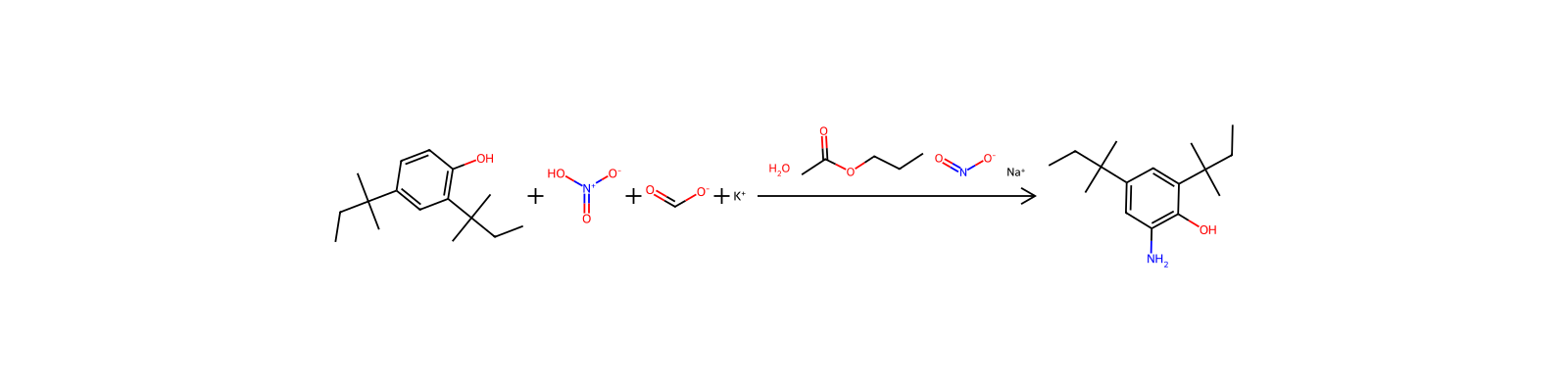
反応記録を作成
HRID 147310 の反応式
HRID 147310反応物としてTraining data from https://doi.org/10.1039/C8SC04228D (9/10)
HRID 413656 の反応式
HRID 413656溶媒としてuspto-grants-2003_05
HRID 565076 の反応式
HRID 565076溶媒としてuspto-grants-2001_01
HRID 707743 の反応式
HRID 707743反応物としてuspto-grants-2015_11
HRID 818918 の反応式
HRID 818918反応物としてTest data from https://doi.org/10.1039/C8SC04228D
HRID 1018792 の反応式
HRID 1018792反応物としてuspto-grants-2002_11
HRID 1058212 の反応式
HRID 1058212溶媒としてuspto-grants-2003_02
HRID 1121132 の反応式
HRID 1121132反応物としてTraining data from https://doi.org/10.1039/C8SC04228D (7/10)
前へ1 / 3 ページ

化合物ノート

このページの内容基本情報概要名称と識別子物性安全と法規制化学と産業関連反応化合物ノート
· 6 件

0.886 at 68 °F (USCG, 1999) - Less dense than water; will float

0.8820 g/cu cm at 25 °C

Bulk density: 7.36 lb/gal

Relative density (water = 1): 0.9

0.880-0.886

0.84

Flavoring AgentsEU Flavoring substances

物理化学的性質

融点
-93 °C · -93 °C
沸点
101.5 °C · 101.5 °C
比重(密度)
0.836 g/cm3 · 0.836 g/cm3
Health Hazards · 2 件

Contact with skin and eyes causes no serious injury. High vapor concentrations will be irritating and will cause nausea, vomiting, and dizziness, with final loss of consciousness. (USCG, 1999)

· May cause toxic effects if inhaled or absorbed through skin.

Hazards Summary · 1 件

Esters may induce narcosis in animals, but workers' exposures are limited by irritating effects. See appendix in: [Dick RB, et al. Chemicals in the workplace: incorporating human neurobehavioral testing into the regulatory process. Am J Ind Med. 1998 May;33(5):439-53.] A skin, eye, and respiratory tract irritant; Inhalation of high concentrations can cause CNS depression; [ICSC]

DOT ID and Guide · 2 件

1276 129

1276 129

FDA Requirements · 1 件

Propyl acetate is a food additive permitted for direct addition to food for human consumption as a synthetic flavoring substance and adjuvant in accordance with the following conditions: a) they are used in the minimum quantity required to produce their intended effect, and otherwise in accordance with all the principles of good manufacturing practice, and 2) they consist of one or more of the following, used alone or in combination with flavoring substances and adjuvants generally recognized as safe in food, prior-sanctioned for such use, or regulated by an appropriate section in this part.

Reactive GroupEsters, Sulfate Esters, Phosphate Esters, Thiophosphate Esters, and Borate Esters
EC ClassificationSymbol: F, Xi; R: 11-36-66-67; S: (2)-16-26-29-33
UN ClassificationUN Hazard Class: 3; UN Pack Group: II

安全と保護具

Fire Fighting · 2 件

Excerpt from ERG Guide 129 [Flammable Liquids (Water-Miscible / Noxious)]:

Use alcohol-resistant foam, foam, powder, carbon dioxide, fine water spray. In case of fire: keep drums, etc., cool by spraying with water.

First Aid Measures · 4 件

Fresh air, rest. Refer for medical attention.

Rinse contaminated clothes (fire hazard) with plenty of water. Remove contaminated clothes. Rinse skin with plenty of water or shower.

First rinse with plenty of water for several minutes (remove contact lenses if easily possible), then refer for medical attention.

Rinse mouth. Refer for medical attention .

Accidental Release Measures · 2 件

· CALL 911. Then call emergency response telephone number on shipping paper. If shipping paper not available or no answer, refer to appropriate telephone number listed on the inside back cover.

· ELIMINATE all ignition sources (no smoking, flares, sparks or flames) from immediate area.

First Aid · 3 件

Excerpt from NIOSH Pocket Guide for n-Propyl acetate:

General First Aid:

(General first aid procedures)

Safe StorageFireproof. Separated from strong oxidants, strong bases and strong acids. Store in an area without drain or sewer access.
Firefighting HazardsVapors may travel long distances to ignition source and flashback. Vapors in confined areas may explode when exposed to fire.
Exposure Control and Personal Protection · 2 件

· Wear positive pressure self-contained breathing apparatus (SCBA).

100.0 [ppm]

Fire Fighting Procedures · 1 件

If material on fire or involved in fire: Do not extinguish fire unless flow can be stopped or safely confined. Use water in flooding quantities of fog. Solid streams of water may be ineffective. Cool all affected containers with flooding quantities of water. Apply water from as far a distance as possible. Use "alcohol foam, dry chemical or carbon dioxide.

Storage ConditionsStore in tightly closed containers in a cool, well ventilated area away from heat. n-Propyl acetate will dissolve some plastics and resins.
Cleanup Methods · 2 件

1. REMOVE ALL IGNITION SOURCES. 2. VENTILATE AREA OF SPILL OR LEAK. 3. FOR SMALL QUANTITIES, ABSORB ON PAPER TOWELS. EVAPORATE IN SAFE PLACE (SUCH AS FUME HOOD). ALLOW SUFFICIENT TIME FOR EVAPORATING VAPORS TO COMPLETELY CLEAR THE HOOD DUCTWORK. BURN PAPER IN SUITABLE LOCATION...

3. LARGE QUANTITES CAN BE COLLECTED & ATOMIZED IN SUITABLE COMBUSTION CHAMBER. N-PROPYL ACETATE SHOULD NOT BE ALLOWED TO ENTER A CONFINED SPACE, SUCH AS SEWER, BECAUSE OF POSSIBILITY OF AN EXPLOSION.

Nonfire Spill ResponseExcerpt from ERG Guide 129 [Flammable Liquids (Water-Miscible / Noxious)]:
Disposal Methods · 5 件

SRP: The most favorable course of action is to use an alternative chemical product with less inherent propensity for occupational harm/injury/toxicity or environmental contamination. Recycle any unused portion of the material for its approved use or return it to the manufacturer or supplier. Ultimate disposal of the chemical must consider: the material's impact on air quality; potential migration in soil or water; effects on animal and plant life; and conformance with environmental and public health regulations.

1. BY ABSORBING IT IN VERMICULITE, DRY SAND, EARTH OR A SIMILAR MATERIAL & DISPOSING IN SECURED SANITARY LANDFILL. 2. BY ATOMIZING IN SUITABLE COMBUSTION CHAMBER.

Propyl acetate is a waste chemical stream constituent which may be subjected to ultimate disposal by controlled incineration.

SRP: Wastewater from contaminant suppression, cleaning of protective clothing/equipment, or contaminated sites should be contained and evaluated for subject chemical or decomposition product concentrations. Concentrations shall be lower than applicable environmental discharge or disposal criteria. Alternatively, pretreatment and/or discharge to a permitted wastewater treatment facility is acceptable only after review by the governing authority and assurance that "pass through" violations will not occur. Due consideration shall be given to remediation worker exposure (inhalation, dermal and ingestion) as well as fate during treatment, transfer and disposal. If it is not practicable to manage the chemical in this fashion, it must be evaluated in accordance with EPA 40 CFR Part 261, specifically Subpart B, in order to determine the appropriate local, state and federal requirements for disposal.

The following wastewater treatment technologies have been investigated for propyl acetate: Concentration process: Activated carbon.

毒性情報

Body Burden · 1 件

n-Propyl acetate was detected in 49.4% of 387 expired air samples obtained from 54 non-smoking volunteers from Chicago, IL, at a mean concentration of 2.4 ng/L(1). n-Propyl acetate was described as a normal component of expired air(2). n-Propyl acetate was detected in 4 out of 10 expired air samples taken from 8 smoking and non-smoking male volunteers from TX, at concentrations ranging from trace to 2.0 ug/hr, averaging 1.39 ug/hr for the positive samples(3).

Target OrgansEyes, skin, respiratory system, central nervous system
Ecotoxicity Values · 5 件

LC50; Species: Chlorococcales (Green Algae Order); Conditions: freshwater, static; Concentration: 1000000 ug/L for 24 hr /formulation/

LC50; Species: Daphnia magna (Water Flea) age < or =24 hr; Conditions: freshwater, static, 20-22 °C; Concentration: 511000 ug/L for 24 hr /formulation/

LC50; Species: Pimephales promelas (fathead minnow); Concentration: 60 mg/L for 96 hr (confidence limit 56-64 mg/L) /Conditions of bioassay not specified/

EC50; Species: Pimephales promelas (fathead minnow); Concentration: 60 mg/L for 96 hr (Confidence limit 56-64 mg/L); Effect: Affected fish lost equilibrium prior to death /Conditions of bioassay not specified/

For more Ecotoxicity Values (Complete) data for N-PROPYL ACETATE (6 total), please visit the HSDB record page.

Environmental Fate · 3 件

TERRESTRIAL FATE: Based on a classification scheme(1), an estimated Koc value of 10(SRC), determined from a structure estimation method(2), indicates that n-propyl acetate is expected to have very high mobility in soil(SRC). Volatilization of n-propyl acetate from moist soil surfaces is expected to be an important fate process(SRC) given a Henry's Law constant of 2.18X10⁻⁴ atm-cu m/mole(3). n-Propyl acetate is expected to volatilize from dry soil surfaces(SRC) based upon a vapor pressure of 35.9 mm Hg at 25 °C(4). A 81.0% of theoretical BOD using activated sludge in the Japanese MITI test(5) suggests that biodegradation is an important environmental fate process in soil(SRC).

AQUATIC FATE: Based on a classification scheme(1), an estimated Koc value of 10(SRC), determined from a structure estimation method(2), indicates that n-propyl acetate is not expected to adsorb to suspended solids and sediment(SRC). Volatilization from water surfaces is expected(3) based upon a Henry's Law constant of 2.18X10⁻⁴(4). Using this Henry's Law constant and an estimation method(3), volatilization half-lives for a model river and model lake are 7 hours and 5.2 days, respectively(SRC). According to a classification scheme(5), an estimated BCF of 3(SRC), from its log Kow of 1.24(6) and a regression-derived equation(7), suggests the potential for bioconcentration in aquatic organisms is low(SRC). n-Propyl acetate gave a 5- and 10-day theoretical BOD of 62% and 80%, respectively, using a settled domestic wastewater seed(8). When the same inoculum was added to sea water, n-propyl acetate 5- and 10-day theoretical BOD was 50% and 70%(8), indicating biodegradation in water is important(SRC). Hydrolysis is expected to occur slowly based on hydrolysis half-lives of about 3 years, 119 days and 12 days at pH 7, 8 and 9, respectively(9).

ATMOSPHERIC FATE: According to a model of gas/particle partitioning of semivolatile organic compounds in the atmosphere(1), n-propyl acetate, which has a vapor pressure of 35.9 mm Hg at 25 °C(2), is expected to exist solely as a vapor in the ambient atmosphere. Vapor-phase n-propyl acetate is degraded in the atmosphere by reaction with photochemically-produced hydroxyl radicals(SRC); the half-life for this reaction in air is estimated to be 4.7 days(SRC), calculated from its rate constant of 3.4X10⁻¹² cu cm/molecule-sec at 25 °C(3). n-Propyl acetate does not contain chromophores that absorb at wavelengths >290 nm(4) and therefore is not expected to be susceptible to direct photolysis by sunlight(SRC).

Food Survey Values · 1 件

n-Propyl acetate was identified, not quantified as a component of concord grape juice essence(1), as a volatile flavor component of Beaufort cheese(2), ripening bananas(3), Kogyoke apples(4) and pork(5). n-Propyl acetate was identified as a volatile component of the blended fruit of nectarines, and also in a head-space analysis of the intact fruit(6). n-Propyl acetate was detected at a concentration of 6.5 ppb in fresh grapefruit juice(7).

Adverse EffectsNeurotoxin - Acute solvent syndrome
Exposure Routes · 2 件

The substance can be absorbed into the body by inhalation of its vapour.

inhalation, ingestion, skin and/or eye contact

Toxicity SummarySafe in the present practices of use and concentration. Ingredient, concentration, and use information are available in documents discoverable at https://cir-reports.cir-safety.org
Signs and Symptoms · 4 件

Cough. Sore throat. Headache. Drowsiness.

Redness. Dry skin.

Redness.

In Animals: irritation eyes, nose, throat; narcosis; dermatitis

Effluent Concentrations · 1 件

n-Propyl acetate was detected as gaseous emission from the production of RDX at the Holston Army Ammunition Plant, TN, (date not provided) at an emission rate of 1,134 lbs/day(1). n-Propyl acetate was detected in the effluent of a printing plant located in the US at a concentration of 226 pounds during a 1 month operating period(2). n-Propyl acetate was identified, not quantified, in the volatile emissions of thinning solvents(3), common garden and household waste(4-5) and a liquid wax(6). UK emissions of n-propyl acetate were reported as 0.0013% by mass distribution in 1990(7).

ICSC Environmental DataThe substance is harmful to aquatic organisms.
Soil Adsorption/Mobility · 1 件

Using a structure estimation method based on molecular connectivity indices(1), the Koc of n-propyl acetate can be estimated to be 10(SRC). According to a classification scheme(2), this estimated Koc value suggests that n-propyl acetate is expected to have very high mobility in soil.

法規制情報

FDA Requirements · 1 件

Propyl acetate is a food additive permitted for direct addition to food for human consumption as a synthetic flavoring substance and adjuvant in accordance with the following conditions: a) they are used in the minimum quantity required to produce their intended effect, and otherwise in accordance with all the principles of good manufacturing practice, and 2) they consist of one or more of the following, used alone or in combination with flavoring substances and adjuvants generally recognized as safe in food, prior-sanctioned for such use, or regulated by an appropriate section in this part.

安全データ

注意喚起語
危険
危険有害性情報
コード 危険有害性情報 危険有害性クラス 区分 注意喚起語 シンボル P コード H225
· 3 件

n-Propyl acetate ... /is/ produced by direct esterification of the corresponding alcohol with acetic acid in the presence of sulfuric acid, ptoluenesulfonic acid, methanesulfonic acid, or a strong cationic resin as catalyst. ... 1-Propanol can also undergo ester interchange with methyl or ethyl acetate in the presence of a strong cationic exchange resin to give n-propyl acetate.

Manufacture from acetic acid and mixture of propene and propane in the presence of zinc chloride catalyst.

Interaction of acetic acid and n-propyl alcohol in the presence of sulfuric acid.

Household ProductsInformation on 17 consumer products that contain Propyl acetate in the following categories is provided:
Use Classification · 6 件

EPA Safer Chemical Functional Use Classes -> Solvents

Safer Chemical Classes -> Yellow triangle - The chemical has met Safer Choice Criteria for its functional ingredient-class, but has some hazard profile issues

Fragrance Ingredients

Flavouring Agent -> FLAVOURING_AGENT -> JECFA Functional Classes

Flavoring Agents -> JECFA Flavorings Index

Cosmetics -> Solvent

General Manufacturing Information · 2 件

Pharmaceutical and Medicine Manufacturing

Acetic acid, propyl ester: ACTIVE