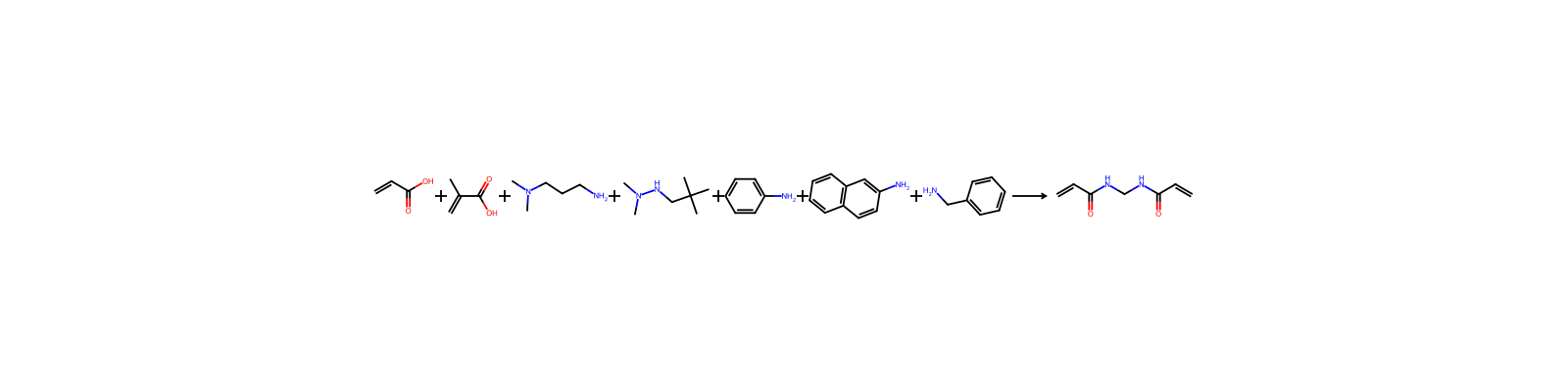

基本情報
- CAS
110-26-9- 標準SMILES
C=CC(=O)NCNC(=O)C=C- InChIKey
ZIUHHBKFKCYYJD-UHFFFAOYSA-N- 分子式
- C7H10N2O2
- 平均分子量
- 154.17 g/mol
- 単同位体質量
- 154.07422757
名称と識別子
- 優先名称
- Methylenebisacrylamide
- IUPAC
- N-[(prop-2-enoylamino)methyl]prop-2-enamide
- 現地名
- N,N'-メチレンビスアクリルアミド
- 英語名
- N,N'-Methylenebisacrylamide
- 分子式
- C7H10N2O2
- 分子量
- 154.17
名称と別名
N,N'-METHYLENEBISACRYLAMIDE110-26-9MethylenebisacrylamideMethylenediacrylamideN,N'-Methylenebis(acrylamide)2-Propenamide, N,N'-methylenebis-N,N'-MethylidenebisacrylamideAcrylamide, N,N'-methylenebis-N,N'-Methylenebis(2-propenamide)DTXSID8025595EDK4RIE19CDTXCID205595
名称をさらに表示
N,N'-メチレンビスアクリルアミドN,N'-メチレンジアクリルアミドN,N'-メチレンビスプロペンアミドメチレンビスアクリルアミドN,N'-メチレンビス(アクリルアミド)N,N'-メチレンビス(プロペンアミド)1,1'-[メチレンビス(イミノカルボニル)]ビスエテンN,N'-(メチレン)ビス(プロペンアミド)N,N'-メチレンビス(2-プロペンアミド)N,N’-メチレンビスアクリルアミドN,N’メチレンビス(アクリルアミド)N,N′-メチレンジアクリルアミドN,N′-メチレンジアクリルアミドHGXN,N′-メチレンビスアクリルアミドN,N′-メチレンビスアクリルアミドHGXN,NVメチレンビスアクリルアミドN,N´-メチレンビスアクリルアミドN,N′‐メチレンビスアクリルアミドN,N′‐メチレンビスアクリルアミドHGXN,N-メチレンビスアクリルアミドMBABISBISACRYLAMIDEN, N-METHYLENE-BIS-ACRYLAMIDEnappN,N-MethylenebisaMFM6
N,N'-Methylenebis[acrylamide]RefChem:161037n,n'-methylene-bis(acrylamide)2-propenamide, N,N'-methyl-enebisN,N'-METHYLENEBIS-2-PROPENAMIDEmethylene bisacrylamideN,N'-Methylenediacrylamiden,n-methylenebisacrylamide
データベース識別子
- CAS
110-26-9- PubChem CID
- 8041
- DTXSID
DTXSID8025595- ChEMBL
CHEMBL1401480- UNII
- EDK4RIE19C
- EC Number
- 203-750-9
- Nikkaji
- J33.815J
物性
構造計算による物性
- XLogP
- 0.1
- 極性表面積
- 58.2 Ų
- 水素結合供与体数
- 2
- 水素結合受容体数
- 2
- 回転可能結合数
- 4
- 重原子数
- 11
- 形式電荷
- 0
- 複雑度
- 167
実験および物理化学的性質
Density
1.235 at 86 °F (NTP, 1992) - Denser than water; will sink
1.235 @ 30°C
Solubility0.1 to 1 mg/mL at 64 °F (NTP, 1992)
Melting Point365 °F (with decomposition) (NTP, 1992)
Vapor Density5.31 (NTP, 1992) - Heavier than air; will sink (Relative to Air)
Physical Description
N,n'-methylenebisacrylamide is a white crystalline powder with a neutral odor. (NTP, 1992)
Dry Powder
White solid; [CAMEO]
Collision Cross Section138.1 Ų [M+Na]+ [CCS Type: DT; Buffer gas: N2; Ionization: ESI+; Dataset: TOXCAST; Source Identifier: DTXSID8025595]
物理化学的性質
- 融点
- 300 °C · >300 °C(lit.)
- 沸点
- 277.52 °C · 277.52°C (rough estimate)
- 比重(密度)
- 1.235 · 1.235
- 蒸気密度
- 5.31 · 5.31 (vs air)
- 蒸気圧
- 0 · 0-0.073Pa at 20-84.85℃
- 屈折率
- 1.488 · 1.4880 (estimate)
- 貯蔵温度
- 2 · 2-8°C
- 溶解性
- 2 O: · H2O: 20mg/mL at20℃ 無色透明
- 外見
- 粉
- 酸解離定数(Pka)
- 13.07 · 13.07±0.46(Predicted)
- 色
- 白い
- 臭い (Odor)
- 無臭
- PH
- 5 · >=5.0 (25g/l, H2O, 20℃)
- 水溶解度
- 18 ℃で0.01~0.1g/100mL · 18℃で0.01~0.1g/100mL
- BRN
- 1706297 · 1706297
- 安定性
- Light Sensitive
- InChI
- 1S/C7H10N2O2/c1-3-6(10)8-5-9-7(11)4-2/h3-4H,1-2,5H2,(H,8,10)(H,9,11)
- InChIKey
- ZIUHHBKFKCYYJD-UHFFFAOYSA-N
- SMILES
- C=CC(=O)NCNC(=O)C=C
- LogP
- -1.52 · -1.52--0.08 at 24-25℃ and pH4-10
- 表面張力
- 70.2 · 70.2-70.3mN/m at 1g/L and 20℃
- CAS データベース
- 110 · 110-26-9(CAS DataBase Reference)
- NISTの化学物質情報
- 2 · 2-Propenamide, n,n'-methylenebis-(110-26-9)
- EPAの化学物質情報
- N,N'-Methylenebisacrylamide (110-26-9)
- Absorption
- 0.2 at · ≤0.2 at 290 at 1%
化学的性質
化学的特性white crystalline powder
安全と法規制
GHS分類
GHS Classification
Danger
H340: May cause genetic defects [Danger Germ cell mutagenicity]
P203, P280, P318, P405, and P501 (click each P-code to see the statement)
Danger
危険有害性情報
Regulatory Information
Chemical: 2-Propenamide, N,N'-methylenebis-
Hazard Traits - Genotoxicity;Authoritative List - EC Annex VI CMRs - Cat. 1B;Report - if used as a fragrance or flavor ingredient
2-Propenamide, N,N'-methylenebis- is listed on the EPA's Chemical Data Reporting (CDR) system. Manufacturers and importers of 2-Propenamide, N,N'-methylenebis- are required to report information about their production and use of this chemical to the EPA under the Toxic Substances Control Act (TSCA). (40 eCFR Part 711)
Status: Active Update: 10-12-2018 https://echa.europa.eu/registration-dossier/-/registered-dossier/21036
2-Propenamide, N,N'-methylenebis: Does not have an individual approval but may be used under an appropriate group standard
Other Safety InformationEvaluation - 2-Propenamide, N,N'-methylenebis- (N,N'-methylenebisacrylamide)
Fire HazardsFlash point data for this chemical are not available; however, it is probably combustible. (NTP, 1992)
Health Hazards
SYMPTOMS: Symptoms of exposure to this type of compound may include irritation and redness of the skin, irritation of the eyes, drowsiness, tingling sensation, fatigue, weakness, stumbling, slurred speech and shaking. Chronic exposure to this type of compound may lead to muscular weakness, incoordination, skin rashes, excessive sweating of the hands and feet, cold hands and peeling of the skin.;ACUTE/CHRONIC HAZARDS: This compound is toxic by ingestion. It may be harmful by inhalation or skin absorption. Solutions may be absorbed through the IMMEDIATELY leave the contaminated area; take deep breaths of fresh air. If symptoms (such as wheezing, coughing, shortness of breath, or burning in the mouth, throat, or chest) develop, call a physician and be prepared to transport the victim to a hospital. Provide proper respiratory protection to rescuers entering an unknown atmosphere. Whenever possible, Self-Contained Breathing Apparatus (SCBA) should be used; if not available, use a level of protection greater than or equal to that advised under Protective Clothing. (NTP, 1992)
Hazards Summary
May cause skin and eye irritation and symptoms indicative of nervous system effects; [NTP] May cause irritation; Harmful by ingestion and inhalation; May cause reproductive disorders, based on animal studies; [Sigma-Aldrich MSDS] See Acrylamide.
Reactive GroupAmides and Imides;Hydrocarbons, Aliphatic Unsaturated
Reactivity ProfileN,N'-METHYLENEBISACRYLAMIDE is incompatible with strong oxidizers, strong acids and strong bases. (NTP, 1992)
Air and Water ReactionsVery slightly water soluble.
Hazard Classes and Categories
Acute Tox. 3 (54.4%);Acute Tox. 4 (45.6%);Acute Tox. 4 (35.3%);Skin Sens. 1 (19.1%);Eye Dam. 1 (19.1%);Acute Tox. 4 (51.1%);Muta. 1B (54.6%);Carc. 1B (35.1%);Carc. 2 (19.3%);Repr. 1B (19.1%);Repr. 2 (31.4%);STOT RE 1 (54.4%)
Acute toxicity (Oral) - Category 3;Germ cell mutagenicity - Category 1B;Reproductive toxicity - Category 1B;Specific target organ toxicity - Single exposure - Category 1 (nervous system, reproductive organs (male))
Muta. 1B
安全と保護具
Fire FightingFires involving this material can be controlled with a dry chemical, carbon dioxide or Halon extinguisher. A water spray may also be used. (NTP, 1992)
First Aid
EYES: First check the victim for contact lenses and remove if present. Flush victim's eyes with water or normal saline solution for 20 to 30 minutes while simultaneously calling a hospital or poison control center. Do not put any ointments, oils, or medication in the victim's eyes without specific instructions from a physician. IMMEDIATELY transport the victim after flushing eyes to a hospital even if no symptoms (such as redness or irritation) develop.;SKIN: IMMEDIATELY flood affected skin with water while removing and isolating all contaminated clothing. Gently wash all affected skin areas thoroughly with soap and water. If symptoms such as redness or irritation develop, IMMEDIATELY call a physician and be prepared to transport the victim to a hospital for treatment.;INHALATION: IMMEDIATELY leave the contaminated area; take deep breaths of fresh air. If symptoms (such as wheezing, coughing, shortness of breath, or burning in the mouth, throat, or chest) develop, call a physician and be prepared to transport the victim to a hospital. Provide proper respiratory protection to rescuers entering an unknown atmosphere. Whenever possible, Self-Contained Breathing Apparatus (SCBA) should be used; if not available, use a level of protection greater than or equal to that advised under Protective Clothing.;INGESTION: DO NOT INDUCE VOMITING. If the victim is conscious and not convulsing, give 1 or 2 glasses of water to dilute the chemical and IMMEDIATELY call a hospital or poison control center. Be prepared to transport the victim to a hospital if advised by a physician. If the victim is convulsing or unconscious, do not give anything by mouth, ensure that the victim's airway is open and lay the victim on his/her side with the head lower than the body. DO NOT INDUCE VOMITING. IMMEDIATELY transport the victim to a hospital. (NTP, 1992)
Nonfire Spill Response
SMALL SPILLS AND LEAKAGE: Should a spill occur while you are handling this chemical, FIRST REMOVE ALL SOURCES OF IGNITION, then you should dampen the solid spill material with 60-70% ethanol and transfer the dampened material to a suitable container. Use absorbent paper dampened with 60-70% ethanol to pick up any remaining material. Seal the absorbent paper, and any of your clothes, which may be contaminated, in a vapor-tight plastic bag for eventual disposal. Solvent wash all contaminated surfaces with 60-70% ethanol followed by washing with a soap and water solution. Do not reenter the contaminated area until the Safety Officer (or other responsible person) has verified that the area has been properly cleaned.;STORAGE PRECAUTIONS: You should store this material under ambient temperatures away from oxidizers, acids and bases. (NTP, 1992)
Protective Action Criteria (PAC)
1.2 [mg/m3]
13 [mg/m3]
77 [mg/m3]
Personal Protective Equipment (PPE)
RECOMMENDED RESPIRATOR: Where the neat test chemical is weighed and diluted, wear a NIOSH-approved half face respirator equipped with an organic vapor/acid gas cartridge (specific for organic vapors, HCl, acid gas and SO2) with a dust/mist filter. (NTP, 1992)
毒性情報
Toxicity DataLC (rat) > 41 ppm/6hr
法規制情報
Regulatory Information
Chemical: 2-Propenamide, N,N'-methylenebis-
Hazard Traits - Genotoxicity;Authoritative List - EC Annex VI CMRs - Cat. 1B;Report - if used as a fragrance or flavor ingredient
2-Propenamide, N,N'-methylenebis- is listed on the EPA's Chemical Data Reporting (CDR) system. Manufacturers and importers of 2-Propenamide, N,N'-methylenebis- are required to report information about their production and use of this chemical to the EPA under the Toxic Substances Control Act (TSCA). (40 eCFR Part 711)
Status: Active Update: 10-12-2018 https://echa.europa.eu/registration-dossier/-/registered-dossier/21036
2-Propenamide, N,N'-methylenebis: Does not have an individual approval but may be used under an appropriate group standard
安全データ
- F
- 8
- wgk
- 2
- tsca
- TSCA listed
- rtecs
- AS3678000
- ridadr
- UN 2811
- 毒性
- LD50 orally in Rabbit: 390 mg/kg
- hs_code
- 29241900
- risk_code
- 20/22-20/21/22-36/37/38
- 化審法
- (2)-1020
- 安衛法
- 変異原性物質
- hazard_code
- Xn,Xi
- safety_code
- 22-36/37-36-26
- hazard_class
- 6.1(b)
- packing_group
- III
- Hazard Classifications
- Acute Tox. 3 OralAcute Tox. 4 DermalCarc. 1BMuta. 1BRepr. 2STOT RE 1 Oral
- ストレージクラス
- 6.1C - Combustible acute toxic Cat.3toxic compounds or compounds which causing chronic effects
化学と産業
用途と製造
UsesUsed as an organic intermediate, cross-linking agent, for making polyacrylamides, and for preparing polyacrylamide gel for electrophoresis, chemical grouting, and other uses; [NTP]
U.S. Production2023: <50,000 lb;2021: 50,000 - <250,000 lb;2020: <50,000 lb
Industry UsesMonomers
General Manufacturing Information
All Other Basic Organic Chemical Manufacturing
2-Propenamide, N,N'-methylenebis-: ACTIVE
応用分野
用途電気泳動用ポリアクリルアミドゲルの作成添加剤。
使用N,N'-Methylenebisacrylamide is used in the preparation of polyacrylamide gels for electrophoretic separation of nucleic acids and proteins. It has also been used as a test compound for studying the biochemical isolation of insoluble Tau in transgenic mouse models of tauopathy by examining the two main isolation methods sarkosyl and formic acid extraction.
一般的な説明White crystalline powder with a neutral odor.
調製方法
純化方法Recrystallise the amide from MeOH (100g dissolved in 500mL boiling MeOH) and filter without suction in a warmed funnel. Allow to stand at room temperature and then at -15oC overnight. The crystals are collected with suction in a cooled funnel and washed with cold MeOH. The crystals are air-dried in a warm oven. [Beilstein 2 IV 1472.] VERY TOXIC (neurotoxic).
上流・下流製品情報
上流原料
下流製品
サプライヤー100 社
国药集团化学试剂有限公司86-21-63210123 · [email protected]
北京华美互利生物化工010-56205725 · [email protected]
梯希爱(上海)化成工业发展有限公司021-67121386 · [email protected]
上海阿拉丁生化科技股份有限公司400-6206333 13167063860 · [email protected]
重庆欣博曜生物科技有限公司19122915778 · [email protected]
杭州品高化工有限公司0571-87658025 · [email protected]
上海如吉生物科技发展有限公司+86-21-65211385-8001 36031160 · [email protected]
济南万多鑫化工有限公司0531-88770993 13905318421 · [email protected]
科瑞迪化学400-821-5857 021-64326257 · [email protected]
Syntechem Co.,Ltd[email protected]
上海迈瑞尔生化科技有限公司4006356688 18621169109 · [email protected]
天津中信凯泰化工有限公司022-66880623 · [email protected]
阿法埃莎(中国)化学有限公司400-6106006 · [email protected]
安耐吉化学&3A(安徽泽升科技股份有限公司)400-0056266 · [email protected]
上海瀚鸿科技股份有限公司021-54306202 13764082696 · [email protected]
上海景颜化工科技有限公司13817811078 · [email protected]
上海泰坦科技股份有限公司400-6009262 15618770481 · [email protected]
合肥天健化工有限公司551-65418679 15856988503;15837135945 · [email protected]
武汉丰泰威远科技有限公司027-87465837 19945049750 · [email protected]
南京美博生物科技有限公司025-58619198 · [email protected]
Beckmann-Kenko GmbH+49 4241 9308 88 · [email protected]
山东西亚化学有限公司13355009207 13355009207 · [email protected]
玛雅试剂+86 (573) 82222445 (0)18006601000 452520369 · [email protected]
四川库利南科技有限公司400-1166-196 18981987031 · [email protected]
天津希恩思生化科技有限公司400 638 7771 · [email protected]
湖南汇百侍生物科技有限公司0731-85526065 13308475853 · [email protected]
斯百全化学(上海)有限公司021-021-021-67601398-809-809-809 15221380277 · [email protected]
上海源叶生物科技有限公司13636370518 · [email protected]
艾科试剂4008-755-333 18080918076 · [email protected]
上海思域化工科技有限公司86-21-34053660 · [email protected]
赛默飞世尔科技(中国)有限公司800-810-5118 · [email protected]
北京伊诺凯科技有限公司400-810-7969 010-59572699 · [email protected]
上海遐瑞医药科技有限公司+86 21 61551611
江苏艾康生物医药研发有限公司025-66113011 13913916777 · [email protected]
TCI AMERICA800-4238616 · [email protected]
TOKYO CHEMICAL INDUSTRY CO., LTD.03-36680489 · [email protected]
TCI Europe320-37350700 · [email protected]
南京杜莱生物技术有限公司025-84699383-8003;025-846993838003-8003 18013301590 · [email protected]
上海倍卓生物科技有限公司021-61119791,13386096464 · [email protected]
北京环宇世纪化学科技有限公司hysj_bj.com
上海将来实业股份有限公司400-0066400 13621662912 · [email protected]
上海将来实业股份有限公司021-61552785 · [email protected]
安徽科迪达化工有限公司0554-2106669 · [email protected]
HBCChem, Inc.+1-510-219-6317 · [email protected]
美岚实业(上海)有限公司021-58958189 · [email protected]
安倍医疗器械贸易(上海)有限公司400-1500-680 021-62402299 · [email protected]
成都零六生物科技有限公司400-1166-196 13458535857 · [email protected]
湖南华腾制药有限公司400-8592883 · [email protected]
上海创赛科技有限公司400-6087598 15021221957 · [email protected]
上海麦克林生化科技股份有限公司15221275939 15221275939 · [email protected]
関連反応
7 件


化合物ノート
読み込み中…