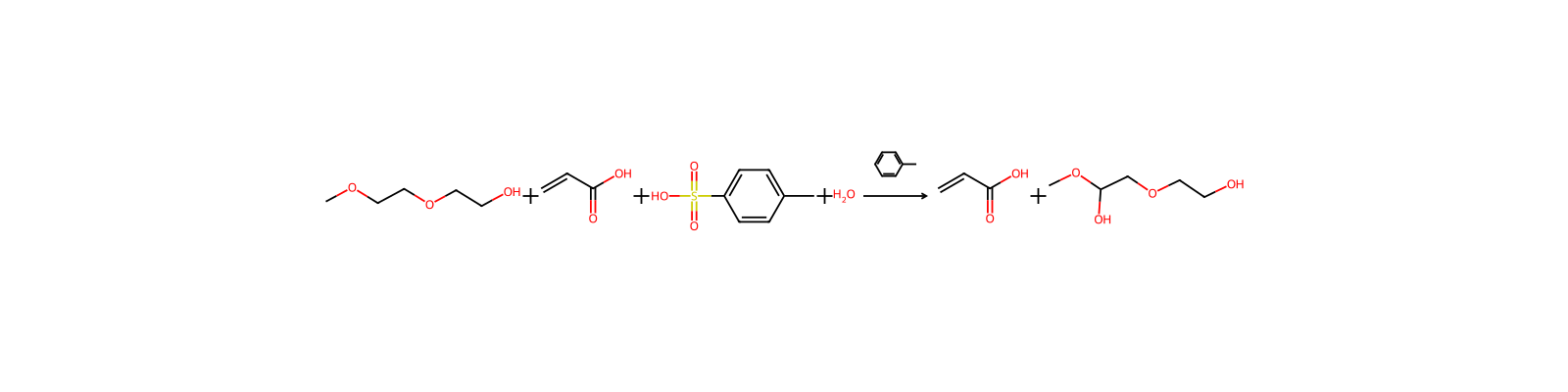

基本情報
- 標準SMILES
COCCOCCO- InChIKey
SBASXUCJHJRPEV-UHFFFAOYSA-N- 分子式
- C5H12O3
- 平均分子量
- 120.15 g/mol
- 単同位体質量
- 120.07864424
概要
Diethylene glycol monomethyl ether is a colorless liquid with a sweet odor. Floats and mixes with water. (USCG, 1999)
名称と識別子
- 優先名称
- Diethylene Glycol Monomethyl Ether
- IUPAC
- 2-(2-methoxyethoxy)ethanol
- 現地名
- ジエチレングリコールモノメチルエーテル
- 英語名
- Diethylene glycol monomethyl ether
- 分子式
- C5H12O3
- 分子量
- 120.15
名称と別名
2-(2-Methoxyethoxy)ethanol111-77-3DIETHYLENE GLYCOL MONOMETHYL ETHERMethyl carbitolMethoxydiglycolMethyl digolDowanol DMDiethylene glycol methyl etherMECB3,6-Dioxa-1-heptanolEthanol, 2-(2-methoxyethoxy)-Methyl dioxitol
名称をさらに表示
ジエチレン グリコール モノメチル エーテル3,6-ジオキサ-1-ヘプタノール2-(2-メトキシエトキシ)エタノールジエチレングリコールモノメチルエーテルジエチレングリコールメチルエーテルメトキシジグリコール3,6-ジオキサヘプタン-1-オールメチルカルビトールポリソルブDMドワノールDM2-(2-メトキシエトキシ)エタノルジエチレングリコ-ルモノメチルエ-テル2(2メトキシエトキシ)エタノルメチルカルビトール(ジエチレングリコールモノメチルエーテル)mPEG2-アルコール2‐(2‐メトキシエトキシ)エタノールジエチレングリコールモノメチルエーテル 2-(2-メトキシエトキシ)エタノールメチルカルビトール2-(2-メトキシエトキシ)エタノール, IN METHANOL (1000ΜG/ML)メチルカルビトール( ジエチレングリコールモノメチルエーテル)ジエチレングリコールモノメチルエーテル, 98%DMMETHYLDIGLYCOLmPEG2-OHMethyl-PEG2-alcoholMETHOXYETHOXYETHANOLEthanol,2-(2-methoxyethoxy)-
Ektasolve DMDiglycol monomethyl etherDEGMEMethyl karbitolJeffersol DMDiethyleneglycol monomethyl etherDowanol 16DTXSID3025049
データベース識別子
- CAS
111-77-3- PubChem CID
- 8134
- DTXSID
DTXSID3025049- ChEMBL
CHEMBL1235250- ChEBI
CHEBI:44836- UNII
- 465DDJ8G8K
- EC Number
- 203-906-6
- Nikkaji
- J5.114D
物性
構造計算による物性
- XLogP
- -0.9
- 極性表面積
- 38.7 Ų
- 水素結合供与体数
- 1
- 水素結合受容体数
- 3
- 回転可能結合数
- 5
- 重原子数
- 8
- 形式電荷
- 0
- 複雑度
- 38.7
実験および物理化学的性質
SolventsSolvents -> Glycol Ethers (E Series)
SpringerMaterials PropertiesBoiling point
FragrancesFragrance Ingredient (Diethylene glycol monomethyl ether) -> IFRA transparency List
LogP-1.14/-0.93 (calculated)
Odor
Slight or pleasant smell /Solvents/
Ether-like odor
TasteBITTER
Density
1.025 at 68 °F (USCG, 1999) - Denser than water; will sink
1.035 g/cu cm at 20 °C
Relative density (water = 1): 1.04
1.025
1.04 @ 20°C
Viscosity3.48 mPa.s (=cPa) at 25 °C
Color/Form
Colorless liquid
Water-white liquid
Light yellow clear liquid
Solubility
greater than or equal to 100 mg/mL at 66 °F (NTP, 1992)
Miscible /1X10+6 mg/L/ with water
Miscible with alcohol, glycerol, ether, acetone, dimethylformamide
Very soluble in ethanol, ethyl ether
SOL IN ALL PROPN IN BENZENE
Solubility in water: very good
Flash Point
200 °F (NTP, 1992)
205 °F (96 °C) (open cup)
93 °C o.c.
200 °F
Animal DrugsPharmaceuticals -> UK Veterinary Medicines Directorate List
物理化学的性質
- 融点
- 70 °C · −70 °C(lit.)
- 沸点
- 194 °C · 194 °C(lit.)
- 比重(密度)
- 1.023 g/mL · 1.023 g/mL at 25 °C(lit.)
- 蒸気密度
- 4.14 · 4.14 (vs air)
- 蒸気圧
- 0.2 mm · 0.2 mm Hg ( 20 °C)
- 屈折率
- 20 · n20/D 1.426
- 闪点
- 183 °F · 183 °F
- 貯蔵温度
- 30 °C · Store below +30°C.
- 外見
- 液体
- 酸解離定数(Pka)
- 14.37 · 14.37±0.10(Predicted)
- 色
- クリア
- PH
- 4 · 4-7 (200g/l, H2O, 20℃)
- 臭い (Odor)
- ほのかな心地よい香り
- 爆発限界(explosive limit)
- 1.38 · 1.38-22.7%
- 水溶解度
- 混和性
- 比熱容量
- 2.26 J/ · Cp(liquid): 2.26 J/(g·K), at 25℃
- Merck
- 14 · 14,6037
- BRN
- 1697812 · 1697812
- Henry's Law Constant
- 6.2 · 6.2×105 mol/(m3Pa) at 25℃, HSDB (2015)
- 安定性
- 安定。強力な酸化剤とは相容れない。吸湿性。窒素下で保管してください。
- 化粧品成分の機能
- 溶媒香料香料粘度制御
- InChI
- 1S/C5H12O3/c1-7-4-5-8-3-2-6/h6H,2-5H2,1H3
- InChIKey
- SBASXUCJHJRPEV-UHFFFAOYSA-N
- SMILES
- COCCOCCO
- LogP
- -0.47 at · -0.47 at 20℃
- CAS データベース
- 111 · 111-77-3(CAS DataBase Reference)
- NISTの化学物質情報
- 2 · Ethanol, 2-(2-methoxyethoxy)-(111-77-3)
- EPAの化学物質情報
- Diethylene glycol monomethyl ether (111-77-3)
化学的性質
化学的特性Diethylene glycol monomethyl ether (DEGME) is a type of glycol ether and is a colorless, stable hygroscopic liquid with an agreeable odor. It is completely miscible with water, ketones, alcohol, ethers, aromatic hydrocarbons and halogenated hydrocarbons. More specifically, it is miscible with acetone, benzene, carbon tetrachloride, ethyl ether, methanol and water. Exposure to diEGBE is unlikely to occur via inhalation unless it is heated. Diethylene glycol monomethyl ether is a solvent for dyes, oils, fats, waxes, many natural and synthetic resins, nitrocellulose and cellulose acetate. It is used as a high-boiling solvent in such formulations as printing inks ond pastes, stamp pad inks, textile dye pastes, lacquers, and synthetic resin coatings. Its presence in lacquers eases brushability and flow-out, and minimizes lifting of undercoats. DEGME is an ethylene-series or E-series glycol ether and is sold by Dow under the tradename Methyl CARBITOL™ solvent. DEGME has a high dilution ratio and a low evaporation rate.It is stable under recommended storage conditions and readily biodegradable.
安全と法規制
GHS分類
GHS Classification
Danger
H360D: May damage the unborn child [Danger Reproductive toxicity]
P203, P280, P318, P405, and P501 (click each P-code to see the statement)
Warning
H312 (11%): Harmful in contact with skin [Warning Acute toxicity, dermal]
P203, P264+P265, P280, P302+P352, P305+P351+P338, P317, P318, P321, P337+P317, P362+P364, P405, and P501 (click each P-code to see the statement)
危険有害性情報
Regulatory Information
Chemical: Ethanol, 2-(2-methoxyethoxy)-
Hazard Traits - Reproductive Toxicity; Respiratory Toxicity
Ethanol, 2-(2-methoxyethoxy)- is listed on the EPA's Chemical Data Reporting (CDR) system. Manufacturers and importers of Ethanol, 2-(2-methoxyethoxy)- are required to report information about their production and use of this chemical to the EPA under the Toxic Substances Control Act (TSCA). (40 eCFR Part 711)
Status: Active Update: 11-10-2022 https://echa.europa.eu/registration-dossier/-/registered-dossier/14383
Restricted substance: 2-(2-methoxyethoxy)ethanol (DEGME)
Diethylene glycol monomethyl ether: Does not have an individual approval but may be used under an appropriate group standard
Other Safety InformationIMAP assessments - Ethanol, 2-(2-methoxyethoxy)-: Human health tier II assessment
DOT LabelPoison
Fire Hazards
This chemical is combustible. (NTP, 1992)
Combustible. Above 93 °C explosive vapour/air mixtures may be formed.
Fire Potential
Combustible
Combustible when exposed to heat or flame; can react with oxidizing materials
Health HazardsLiquid may irritate eyes. (USCG, 1999)
Hazards Summary
Defats the skin; Can be absorbed through the skin; Animal tests show that this substance possibly causes toxicity to human reproduction or development. [ICSC] Labeled as May impair fertility and May cause harm to the unborn child by EU regulations; [Glycol Ethers Online] Readily oxidizes in air forming unstable peroxides that can spontaneously explode; May cause eye irritation; [CAMEO] An irritant; [MSDSonline] See GLYCOL ETHERS.
FDA RequirementsDiethylene glycol monomethyl ether is an indirect food additive for use only as a component of adhesives.
Reactive GroupAlcohols and Polyols
EC ClassificationSymbol: Xn; R: 63; S: (2)-36/37
Special Reports
Miller RR; Metabolism and Disposition of Glycol Ethers; Drug Metab Rev 18 (1): 1-22 (1987).
Johanson G; Aspects of biological monitoring of exposure to glycol ethers; Toxicol Lett 43 (1-3): 5-21 (1988)
European Chemicals Bureau; IUCLID Dataset, 2-(2-Methoxyethoxy)ethanol (111-77-3) (2000 CD-ROM edition).[Available from, as of February 26, 2007: http://esis.jrc.ec.europa.eu/]
TSCA Requirements
Pursuant to section 8(d) of TSCA, EPA promulgated a model Health and Safety Data Reporting Rule. The section 8(d) model rule requires manufacturers, importers, and processors of listed chemical substances and mixtures to submit to EPA copies and lists of unpublished health and safety studies. Diethylene glycol monomethyl ether is included on this list. Effective date: 4/13/89; Sunset date: 12/19/95.
安全と保護具
Fire Fighting
Fire Extinguishing Agents: Water, carbon dioxide, or dry chemical (USCG, 1999)
Use water spray, powder, alcohol-resistant foam, carbon dioxide.
First Aid Measures
Fresh air, rest.
Remove contaminated clothes. Rinse skin with plenty of water or shower.
First rinse with plenty of water for several minutes (remove contact lenses if easily possible), then refer for medical attention.
Rinse mouth.
First Aid
EYES: First check the victim for contact lenses and remove if present. Flush victim's eyes with water or normal saline solution for 20 to 30 minutes while simultaneously calling a hospital or poison control center. Do not put any ointments, oils, or medication in the victim's eyes without specific instructions from a physician. IMMEDIATELY transport the victim after flushing eyes to a hospital even if no symptoms (such as redness or irritation) develop.
Safe StorageSeparated from strong oxidants. Ventilation along the floor.
Exposure Control and Personal Protection50.0 [mg/m3]
Fire Fighting Procedures
Wear self contained breathing apparatus for fire fighting if necessary.
Use water spray, alcohol-resistant foam, dry chemical or carbon dioxide.
Use water spray to cool unopened containers.
Storage Conditions
Keep container tightly closed in a dry and well-ventilated place. Containers which are opened must be carefully resealed and kept upright to prevent leakage. Store under inert gas. Hygroscopic.
STORAGE: Protect from ignition sources. Keep tanker or tote tightly closed. Do not store in a manner that might adversely effect tote or tanker's integrity. /Phillips Fuel Additive 56 MB/
Cleanup Methods
Use personal protective equipment. Avoid breathing vapors, mist or gas. Ensure adequate ventilation. Remove all sources of ignition. Evacuate personnel to safe areas. Beware of vapors accumulating to form explosive concentrations. Vapors can accumulate in low areas.
Contain spillage, and then collect with an electrically protected vacuum cleaner or by wet-brushing and place in container for disposal according to local regulations ... Keep in suitable, closed containers for disposal.
Prevent further leakage or spillage if safe to do so. Do not let product enter drains.
Nonfire Spill Response
SMALL SPILLS AND LEAKAGE: If you should spill this chemical, use absorbent paper to pick up all liquid spill material. Seal the absorbent paper, as well as any of your clothing which may be contaminated, in a vapor-tight plastic bag for eventual disposal. Wash any surfaces you may have contaminated with a soap and water solution. Do not reenter the contaminated area until the Safety Officer (or other responsible person) has verified that the area has been properly cleaned.
Disposal Methods
SRP: The most favorable course of action is to use an alternative chemical product with less inherent propensity for occupational harm/injury/toxicity or environmental contamination. Recycle any unused portion of the material for its approved use or return it to the manufacturer or supplier. Ultimate disposal of the chemical must consider: the material's impact on air quality; potential migration in soil or water; effects on animal and plant life; and conformance with environmental and public health regulations.
Product: This combustible material may be burned in a chemical incinerator equipped with an afterburner and scrubber. Offer surplus and non-recyclable solutions to a licensed disposal company. Contact a licensed professional waste disposal service to dispose of this material.
Contaminated packaging: Dispose of as unused product.
PESTICIDE DISPOSAL: Pesticide wastes are toxic. Improper disposal of excess pesticide, spray mixture, or rinsate is a violation of Federal law. If these wastes cannot be disposed of by use according to label instructions, contact your State Pesticide or Environmental Control Agency, or the Hazardous Waste Representative at the nearest EPA RegionalOffice of guidance. /Phillips Fuel Additive 56MB/
Spillage DisposalCollect leaking liquid in sealable containers. Wash away remainder with plenty of water.
Preventive Measures
SRP: Local exhaust ventilation should be applied wherever there is an incidence of point source emissions or dispersion of regulated contaminants in the work area. Ventilation control of the contaminant as close to its point of generation is both the most economical and safest method to minimize personnel exposure to airborne contaminants. Ensure that the local ventilation moves the contaminant away from the worker.
Gloves must be inspected prior to use. Use proper glove removal technique (without touching glove's outer surface) to avoid skin contact with this product. Dispose of contaminated gloves after use in accordance with applicable laws and good laboratory practices. Wash and dry hands.
Handle in accordance with good industrial hygiene and safety practice. Wash hands before breaks and at the end of workday.
If ... materials are agitated or heated, or if skin contact is extensive and prolonged, it is advisable to protect personnel by enclosing process or providing local exhaust ventilation. Skin and eye protection should also be worn if possibility of such contact exists. /Glycols and deriv/
Avoid contact with skin and eyes. Avoid inhalation of vapor or mist. Keep away from sources of ignition - No smoking. Take measures to prevent the build up of electrostatic charge.
毒性情報
Ecotoxicity Values
LC50; Species: Lepomis macrochirus (bluegill sunfish); Conditions; static bioassay in fresh water at 23 °C, mild aeration applied after 24 hr; Concentration: 7500 ppm for 96 hr
LC50; Species: Lepomis macrochirus (bluegill sunfish); Conditions: /static bioassay/; Concentration: 9000 mg/L for 24 hr
LC50; Species: /Oncorhynchus mykiss/ (rainbow (steelhead) trout); Concentration: 1000 mg/L for 96 hr /conditions of bioassay not specified/
LC50; Species: Pimephales promelas (fathead minnow); Concentration: 5741 mg/L for 96 hr; /Conditions of bioassay not specified in source examined/
For more Ecotoxicity Values (Complete) data for DIETHYLENE GLYCOL MONOMETHYL ETHER (6 total), please visit the HSDB record page.
Environmental Fate
TERRESTRIAL FATE: Based on a classification scheme(1), an estimated Koc value of 1(SRC), determined from a structure estimation method(2), indicates that diethylene glycol monomethyl ether is expected to have very high mobility in soil(SRC). Volatilization of diethylene glycol monomethyl ether from moist soil surfaces is not expected to be an important fate process(SRC) given an estimated Henry's Law constant of 1.6X10⁻¹¹ atm-cu m/mole(SRC), using a fragment constant estimation method(2). Diethylene glycol monomethyl ether is not expected to volatilize from dry soil surfaces(SRC) based upon a vapor pressure of 0.25 mm Hg at 25 °C(3). Aqueous screening test data suggest that biodegradation may be an important removal mechanism of diethylene glycol monomethyl ether in soil: theoretical BOD losses of 0, 21 and 66% when incubated at 20 °C for 5, 10 and 20 days, respectively, were reported(4).
AQUATIC FATE: Based on a classification scheme(1), an estimated Koc value of 1(SRC), determined from a structure estimation method(2), indicates that diethylene glycol monomethyl ether is not expected to adsorb to suspended solids and sediment(SRC). Volatilization from water surfaces is not expected(3) based upon an estimated Henry's Law constant of 1.6X10⁻¹¹ atm-cu m/mole(SRC), developed using a fragment constant estimation method(2). Diethylene glycol monomethyl ether is not expected to undergo hydrolysis in the environment due to the lack of functional groups that hydrolyze under environmental conditions(3). According to a classification scheme(4), an estimated BCF of 3(SRC), from an estimated log Kow of -1.18(2) and a regression-derived equation(2), suggests the potential for bioconcentration in aquatic organisms is low(SRC). Aqueous screening test data suggest that biodegradation may be an important removal mechanism of diethylene glycol monomethyl ether: theoretical BOD losses of 0, 21 and 66% when incubated at 20 °C for 5, 10 and 20 days, respectively, were reported(5).
ATMOSPHERIC FATE: According to a model of gas/particle partitioning of semivolatile organic compounds in the atmosphere(1), diethylene glycol monomethyl ether, which has a vapor pressure of 0.25 mm Hg at 25 °C(2), is expected to exist solely as a vapor in the ambient atmosphere. Vapor-phase diethylene glycol monomethyl ether is degraded in the atmosphere by reaction with photochemically-produced hydroxyl radicals(SRC); the half-life for this reaction in air is estimated to be 13 hours(SRC), calculated from its rate constant of 2.6X10⁻¹¹ cu cm/molecule-sec at 25 °C(SRC) that was derived using a structure estimation method(3). Alcohols and ethers do not contain chromophores that absorb at wavelengths >290 nm(4) and, therefore, diethylene glycol monomethyl ether is not expected to be susceptible to direct photolysis by sunlight(SRC).
Food Survey ValuesDiethylene glycol monomethyl ether was identified but not quantified in roasted and boiled Chinese chestnuts (Castanea molissima)(1).
Adverse EffectsNeurotoxin - Acute solvent syndrome
Exposure RoutesThe substance can be absorbed into the body by inhalation, through the skin and by ingestion.
Signs and SymptomsDry skin.
Ongoing Test Status
EPA has released the first beta version (version 0.5) of the Interactive Chemical Safety for Sustainability (iCSS) Dashboard. The beta version of the iCSS Dashboard provides an interactive tool to explore rapid, automated (or in vitro high-throughput) chemical screening data generated by the Toxicity Forecaster (ToxCast) project and the federal Toxicity Testing in the 21st century (Tox21) collaboration. /The title compound was tested by ToxCast and/or Tox21 assays; See the data in Chemical Explorer/[USEPA; ICSS Dashboard Application; Available from, as of March 28, 2014: http://actor.epa.gov/dashboard/]
The following link will take the user to the National Toxicology Program (NTP) Test Agent Search Results page, which tabulates all of the "Standard Toxicology & Carcinogenesis Studies", "Developmental Studies", and "Genetic Toxicity Studies" performed with this chemical. Clicking on the "Testing Status" link will take the user to the status (i.e., in review, in progress, in preparation, on test, completed, etc.) and results of all the studies that the NTP has done on this chemical.[Available from, as of February 24, 2014: http://ntp-apps.niehs.nih.gov/ntp_tox/index.cfm?fuseaction=ntpsearch.searchresults&searchterm=111-77-3]
Effluent Concentrations
From a National Survey, diethylene glycol monomethyl ether was detected in 1 of 21 industrial categories of wastewater effluents(1). Wastewater from the paint and ink industries contained diethylene glycol monomethyl ether at an average of 3,571 mg/L(1). Diethylene glycol monomethyl ether was listed as a volatile emission of glycol ether production(2). Diethylene glycol monomethyl ether was detected, not quantified, in 2 of 44 emission samples from furniture(3). Diethylene glycol monomethyl ether was found as a volatile given off of paint removers(4-5) and in disperse colorants(5).
Soil Adsorption/Mobility
Using a structure estimation method based on molecular connectivity indices(1), the Koc of diethylene glycol monomethyl ether can be estimated to be 1(SRC). According to a classification scheme(2), this estimated Koc value suggests that diethylene glycol monomethyl ether is expected to have very high mobility in soil.
TSCA Test Submissions
The in vitro absorption of 2-(2-methoxyethoxy)ethanol through human skin was evaluated. The test substance as a neat liquid was left in contact with the skin for approximately 8 hours. Within 1 hour of skin contact a steady rate of penetration was observed. The mean steady rate of absorption for 2-(2-methoxyethoxy)ethanol was 0.21mg/cm(2)/hour. No significant irreversible alterations to the barrier properties of the epidermal /layer/ were observed.
Acute oral toxicity was evaluated in 4 groups of 10 male albino Wistar rats administered single doses of Poly Solv DM (diethylene glycol monomethyl ether) by gavage at dose levels of 5.0, 7.12, 10.14, and 14.43 g/kg. One mortality was observed at the 10.14 g/kg dose level and 3 mortalities were observed at the 14.43 g/kg dose level within 14 days of dosing. The LD50 was calculated to be greater than 14.43 g/kg (95% confidence), using the Litchfield and Wilcoxon method. Clinical observations include piloerection at the 7.12 g/kg dose level and slight lethargy at both higher dose levels. Gross necropsy revealed dark lungs at the 5.0, 7.12 and 10.14 g/kg dose levels; red intestines at the 10.14 and 14.43 g/kg dose levels; mottled liver at the 5.0 and 7.12 g/kg dose levels; dark and enlarged spleen at the 5.0 g/kg dose level.
Acute oral toxicity was evaluated using 5 groups of 5 Charles River COBS male rats administered diethlyene glycol monomethyl ether by gavage (dose levels not reported). Mortality occurred within 14 days after dosing, but the LD50 value was not reported. Clinical observations included inactivity, labored breathing, rapid respiration, anorexia, slight to moderate weakness, tremors and prostration. Gross necropsy of animals dying within 14 days of dosing revealed bloody urine, and blood in the stomach and intestine. These conditions were not observed in animals surviving through 14 days.
Acute oral toxicity was evaluated using 5 groups of 5 Charles River COBS CD-1 male mice administered diethlyene glycol monomethyl ether by gavage (dose levels not reported). Mortality occurred within 14 days after dosing, but the LD50 value was not reported. Clinical observations included inactivity, labored breathing, rapid respiration, anorexia, slight to moderate weakness, tremors and prostration. Gross necropsy of animals dying within 14 days of dosing revealed bloody urine. This condition was not observed in animals surviving through 14 days.
For more TSCA Test Submissions (Complete) data for DIETHYLENE GLYCOL MONOMETHYL ETHER (22 total), please visit the HSDB record page.
Human Toxicity Excerpts
/HUMAN EXPOSURE STUDIES/ ... Diethylene glycol methyl ether at a concentration of 20% in petrolatum when applied as a closed patch test for 48 hours caused no irritation or sensitization in 25 human subjects.
/SIGNS AND SYMPTOMS/ B. 1. Central nervous depression ... 2. No hypocalcemic tetany or metabolic acidosis ... 3. Nausea, vomiting, and sometimes diarrhea. 4. ... Headache. Later abdominal and lumbar pain and costovertebral angle tenderness. 5. Transient polyuria and then oliguria, progressing to anuria. 6. Acute renal failure ... 7. Pathological lesions may appear in brain, lung, liver, meninges and heart. 8. Observations in animals suggest remote possibility of pulmonary edema, intravascular hemolysis and bone marrow depression ... . /Diethylene glycol/
/CASE REPORTS/ Retrocaval ureter is a very rare condition. In light of the experimental studies, one of the etiologic factors seems to be maternal contact with diethylene glycol monomethyl ether or ethylene glycol monomethyl ether. A case of cardiovascular, skeletal, and retrocaval ureter anomalies caused by possible maternal contact while pregnant with these materials at her work in a textile factory is presented.
/SURVEILLANCE/ /The aim is/ to study health effects in hospital cleaners (N = 21) at floor polish removal and application. The cleaners were investigated before exposure (Monday = day 1), after polish removal work (day 2), and after application of floor polish (day 3). Ratings of symptoms, tear-film break-up-time (BUT), nasal patency and biomarkers in nasal lavage were studied. There was a significant increase both day 2 and day 3, as compared to pre-exposure, in ocular, nasal, throat symptoms, solvent smell, dyspnea, and general symptoms such as headache and fatigue. Posterior nasal patency was decreased day 2 (p < 0.01) and day 3 (p < 0.01). No change of nasal biomarkers (eosinophil cationic protein (ECP), myeloperoxidase (MPO), lysozyme, albumin) was seen. BUT was decreased after polish removal (p < 0.01), but not after polish application. Separate test of the weekday effect in non-exposed showed slight improvements, or no change of symptoms or clinical signs from Monday to Wednesday. Air concentrations of ethylene glycol monoethyl ether, ethylene glycol monobutyl ether, diethylene glycol monoethyl ether, dipropylene glycol monomethyl ether, diethylene glycol monoethyl ether and ethylene glycol phenyl ether 103, 666, 13,650, 7,000, 67, and 27 ug/cu m, respectively, at polish application. Glycol ether levels were reduced to 3% after 2 days and 0.3% after 17 days. Emissions from a common water-based polish remover and floor polish system may cause ocular and airway irritation and general symptoms, and reduce tear-film stability and nasal patency. The levels of glycol ethers had a rapid decay.
For more Human Toxicity Excerpts (Complete) data for DIETHYLENE GLYCOL MONOMETHYL ETHER (7 total), please visit the HSDB record page.
Artificial Pollution Sources
Diethylene glycol monomethyl ether's production and use as an additive in jet fuel, diesel fuels, marine fuels, and fuel oils for anti-microbial control of fungi and bacteria found in hydrocarbon fuel systems and/or for anti-icing control(1), a brake fluid component, a solvent used in paints, printing inks, resins, waxes, and dyes(2) may result in its release to the environment through various waste streams(SRC); it's use as a bacteriostat and as an inert ingredient in formulated pesticide products will result in its direct release to the environment(3).
法規制情報
FDA RequirementsDiethylene glycol monomethyl ether is an indirect food additive for use only as a component of adhesives.
TSCA Requirements
Pursuant to section 8(d) of TSCA, EPA promulgated a model Health and Safety Data Reporting Rule. The section 8(d) model rule requires manufacturers, importers, and processors of listed chemical substances and mixtures to submit to EPA copies and lists of unpublished health and safety studies. Diethylene glycol monomethyl ether is included on this list. Effective date: 4/13/89; Sunset date: 12/19/95.
FIFRA Requirements
Residues of diethylene glycol monomethyl ether are exempted from the requirement of a tolerance when used in accordance with good agricultural practice as inert (or occasionally active) ingredients in pesticide formulations applied to growing crops only. Use: Deactivator for formulations used before crop emerges from soil, stabilizer.
Atmospheric Standards
This action promulgates standards of performance for equipment leaks of Volatile Organic Compounds (VOC) in the Synthetic Organic Chemical Manufacturing Industry (SOCMI). The intended effect of these standards is to require all newly constructed, modified, and reconstructed SOCMI process units to use the best demonstrated system of continuous emission reduction for equipment leaks of VOC, considering costs, non air quality health and environmental impact and energy requirements. Diethylene glycol monomethyl ether is produced, as an intermediate or final product, by process units covered under this subpart.
安全データ
- wgk
- 1
- tsca
- TSCA listed
- rtecs
- KL6125000
- 毒性
- LD50 orally in rats: 9.21 g/kg (Smyth)
- hs_code
- 29094200
- risk_code
- 63
- 化審法
- (2)-422, (7)-97
- 消防法
- 危険物第4類第三石油類(水溶性)
- hazard_code
- Xn
- safety_code
- 36/37
- 自然発火温度
- 221 °C
- Hazard Classifications
- Repr. 1B
- ストレージクラス
- 6.1C - Combustible acute toxic Cat.3toxic compounds or compounds which causing chronic effects
- 有毒物質データの
- 111-77-3(Hazardous Substances Data)
化学と産業
薬理情報
Metabolism/Metabolites
...Male Sprague-Dawley rats were given 0.051, or 5.1 mmol/kg (14)C labeled bis(2-methoxyethyl)ether orally. The principal urinary metabolites were (2-methoxyethoxy)acetic acid and methoxyacetic acid which accounted for around 70 and 6% of the doses, respectively. Smaller amounts of N-(methoxyacetyl)glycine, diglycolic acid, 2-methoxyethanol, and 2-(2-methoxyethoxy)ethanol were found. Only unchanged bis(2-methoxyethyl)ether was found in the volatile organic fraction of the expired air. ...Bis(2-methoxyethyl)ether metabolism proceeds primarily through an O-demethylation pathway, followed by oxidation to (2-methoxyethoxy)acetic acid. The lack of toxicity of 2-(2-methoxyethoxy)ethanol and (2-methoxyethoxy)acetic acid suggests that the testicular toxicity of bis(2-methoxyethyl)ether may be due to methoxyacetic acid, a minor metabolite.
Absorption, Distribution and Excretion
... /It is/ absorbed by skin ... .
... Material can be absorbed through skin of rabbits in toxic amounts... .
To assist evaluation of the hazards of skin contact with selected undiluted glycol ethers, their absorption across isolated human abdominal epidermis was measured in vitro. Epidermal membranes were set up in glass diffusion cells and, following an initial determination of permeability to tritiated water, excess undiluted glycol ether was applied to the outer surface for 8 hr. The appearance of glycol ether in an aqueous receptor phase bathing the underside of the epidermis was quantified by a gas chromatographic technique. A final determination of tritiated water permeability was compared with initial values to establish any irreversible alterations in epidermal barrier function induced by contact with the glycol ethers. 2-methoxyethanol (EM) was most readily absorbed (mean steady rate 2.82 mg/sq cm/hr), and a relatively high absorption rate (1.17 mg/sq cm/hr) was also apparent for 1-methoxypropan-2-ol (PM). There was a trend of reducing absorption rate with increasing molecular weight or reducing volatility for monoethylene glycol ethers (EM, 2.82 mg/sq cm/hr; 2-ethoxyethanol, EE, 0.796 mg/sq cm/hr; 2-butoxyethanol, EB, 0.198 mg/sq cm/hr) and also within the diethylene glycol series: 2-(2-methoxyethoxy) ethanol (DM, 0.206 mg/sq cm/hr); 2-(2-ethoxyethoxy) ethanol (DE, 0.125 mg/sq cm/hr) and 2-(2-butoxyethoxy) ethanol (DB, 0.035 mg/sq cm/hr). The rate of absorption of 2-ethoxyethyl acetate (EEAc) was similar to that of the parent alcohol, EE. Absorption rates of diethylene glycol ethers were slower than their corresponding monoethylene glycol equivalents. Combination of intrinsic toxicity and ability to pass across skin contribute to assessment of hazards of contact with undiluted glycol ethers.
The toxicity of bis(2-methoxyethyl)ether was studied in rats. Male Sprague-Dawley rats were given 0.051, or 5.1 mmol/kg (14)C labeled bis(2-methoxyethyl)ether orally. The principal urinary metabolites were (2-methoxyethoxy)acetic acid and methoxyacetic acid which accounted for around 70 and 6% of the doses, respectively. Smaller amounts of N-(methoxyacetyl)glycine, diglycolic acid, 2-methoxyethanol, and 2-(2-methoxyethoxy)ethanol were found. Only unchanged bis(2-methoxyethyl)ether was found in the volatile organic fraction of the expired air. Additionally, rats were given up to 20 daily doses of 5.1 mmol/kg 2-(2-methoxyethoxy)ethanol or (2-methoxyethoxy)acetic acid at on days 3 through 21. 2-(2-Methoxyethoxy)ethanol and (2-methoxyethoxy)acetic acid induced no gross or histopathological testicular changes. Bis(2-methoxyethyl)ether metabolism proceeds primarily through an O-demethylation pathway, followed by oxidation to (2-methoxyethoxy)acetic acid. The lack of toxicity of 2-(2-methoxyethoxy)ethanol and (2-methoxyethoxy)acetic acid suggests that the testicular toxicity of bis(2-methoxyethyl)ether may be due to methoxyacetic acid, a minor metabolite.
用途と製造
Uses
Used as a solvent for wood stains, lacquers, inks, textile dye pastes, paints, waxes, dyes, and nitrocellulose resins; Also used in brake fluid, aviation fuel anti-icing additive, and inert ingredient in pesticides; [HSDB] Used as an intermediate; [Hawley] Not produced commercially in the EU; [Glycol Ethers Online]
Painting (Solvents) [Category: Paint]
For diethylene glycol monomethyl ether (USEPA/OPP Pesticide Code: 042204) ACTIVE products with label matches. /SRP: Registered for use in the U.S. but approved pesticide uses may change periodically and so federal, state and local authorities must be consulted for currently approved uses./
... Inert (or occasionally active) ingredients in pesticide formulations applied to growing crops only. Use: Deactivator for formulations used before crop emerges from soil, stabilizer.
This additive is for use in liquid hydrocarbon fuels including jet fuel, diesel fuels, marine fuels, and fuel oils for anti-microbial control of fungi and bacteria found in hydrocarbon fuel systems and/or for anti-icing control. /Phillips Fuel Additive 56 MB/
De-icing additive for jet fuel. Solvent for paints, coatings and inks. Deactivator and stabilizer for pesticides.
U.S. Imports(1984) 9.43x10+9 G
U.S. Production
2023: 55,000,000 - <70,000,000 lb
(1972) 5.75X10+9 GRAMS
(1975) 7.12X10+9 GRAMS
(1983) 1.59X10+10 g /Diethylene glycol esters, ethers, etc/
(2006) 1,612 million lb annual capacity /Glycol ethers/
For more U.S. Production (Complete) data for DIETHYLENE GLYCOL MONOMETHYL ETHER (8 total), please visit the HSDB record page.
Consumer UsesFuel agents
Industry UsesFuel agents
Methods of Manufacturing
Reaction of ethylene oxide and methanol (epoxidation)
Ethylene glycol monoethers are commercially manufactured by reaction of an alcohol with ethylene oxide. /Ethylene glycol monoethers/
Ethylene glycol monoethers are usually produced by reaction of ethylene oxide with the appropriate alcohol. A mixture of homologues is obtained ... The glycol monoethers can be converted to diethers by alkylation with common alkylating agents, such as dimethyl sulfate or alkyl halides ( Williamson synthesis). /Ethylene glycol monoethers/
Formulations/Preparations
Phillips Fuel Additive 56 MB (Conocophillips Company): Active Ingredient: Diethylene glycol monomethyl ether 99.7%.
Grade: Technical
Household Products
Cosmetics product ingredient: Diethylene glycol monomethyl ether (2-(2-methoxyethoxy)ethanol; Methoxydiglycol)
Information on 78 consumer products that contain Methoxydiglycol in the following categories is provided:
Use ClassificationFragrance Ingredients
General Manufacturing Information
Wholesale and Retail Trade
Ethanol, 2-(2-methoxyethoxy)-: ACTIVE
Temperature, pressure, mole ratios of reactants and catalysts are chosen to yield the desired product mix. High ratios of ethylene oxide to alcohol are used to favor production of monoethers of diethylene glycol. /Glycol ethers/
応用分野
用途染料?塗料の添加剤?溶剤、油圧液の成分、ジェット燃料の凍結防止剤
天然物の起源Has apparently not been reported to occur in nature.
使用Diethylene glycol monomethyl ether is used in textile dye pastes, in lacquer industrial for thinners and quick drying varnishes; solvent for wood stains, hydraulic brake fluid diluent, and as a coupling agent for miscible organic aqueous systems. Diethylene glycol monoethyl ether is used as a solvent in lacquer, varnishes, and enamels. It is also used in cosmetic products and dermatological preparations and as a solvent in some medicine products. It enhances the percutaneous absorption through the skin and mucosal barriers. It is used in some drugs to enhance absorption. Diethylene glycol monobutyl ether is used as a solvent in paints, dyes, inks detergents, and cleaners. Used in the same way as 2-ethoxyethanol where a solvent with a higher boiling point is required.
一般的な説明Colorless liquid with a sweet odor. Floats and mixes with water.
調製方法
製造方法A by-product in the manufacture of ethylene glycol monomethyl ether (Arctander, 1969).
純化方法Purify as for diethylene glycol mono-n-butyl ether. [Beilstein 1 IV 2392.]
上流・下流製品情報
上流原料
下流製品
サプライヤー50 社
国药集团化学试剂有限公司86-21-63210123 · [email protected]
梯希爱(上海)化成工业发展有限公司021-67121386 · [email protected]
衢州润东化工有限公司0570-8789886 18892685668 · [email protected]
上海阿拉丁生化科技股份有限公司400-6206333 13167063860 · [email protected]
韶远科技(上海)有限公司021-50795510 4000665055 · [email protected]
Syntechem Co.,Ltd[email protected]
上海迈瑞尔生化科技有限公司4006356688 18621169109 · [email protected]
山东宇硕化工有限公司18866159232 18866159232 · [email protected]
阿法埃莎(中国)化学有限公司400-6106006 · [email protected]
安耐吉化学&3A(安徽泽升科技股份有限公司)400-0056266 · [email protected]
武汉市恒久化工有限公司17317534732 17671758929 · [email protected]
济南和信化工有限公司18764033565 18764033565 · [email protected]
北京绿百草科技发展有限公司010-61136123 · [email protected]
上海瀚鸿科技股份有限公司021-54306202 13764082696 · [email protected]
上海景颜化工科技有限公司13817811078 · [email protected]
合肥天健化工有限公司551-65418679 15856988503;15837135945 · [email protected]
山东曜明化工有限公司15550028560 · [email protected]
玛雅试剂+86 (573) 82222445 (0)18006601000 452520369 · [email protected]
四川库利南科技有限公司400-1166-196 18981987031 · [email protected]
天津希恩思生化科技有限公司400 638 7771 · [email protected]
上海克森伯格化工科技有限公司13681668984 微信同号 13681668984 · [email protected]
斯百全化学(上海)有限公司021-021-021-67601398-809-809-809 15221380277 · [email protected]
艾科试剂4008-755-333 18080918076 · [email protected]
上海思域化工科技有限公司86-21-34053660 · [email protected]
赛默飞世尔科技(中国)有限公司800-810-5118 · [email protected]
北京伊诺凯科技有限公司400-810-7969 010-59572699 · [email protected]
上海遐瑞医药科技有限公司+86 21 61551611
江苏艾康生物医药研发有限公司025-66113011 13913916777 · [email protected]
上海健超生物科技有限公司150-2103-5486 18017383231 · [email protected]
TCI AMERICA800-4238616 · [email protected]
TOKYO CHEMICAL INDUSTRY CO., LTD.03-36680489 · [email protected]
TCI Europe320-37350700 · [email protected]
越林试剂021-62960152 · [email protected]
北京环宇世纪化学科技有限公司hysj_bj.com
上海湄水化工科技有限公司021-60549325 18616193163
上海将来实业股份有限公司400-0066400 13621662912 · [email protected]
上海将来实业股份有限公司021-61552785 · [email protected]
日照力德士化工有限公司010-51268198 · [email protected]
美岚实业(上海)有限公司021-58958189 · [email protected]
上海石洋化工有限公司021-56795766 · [email protected]
大连瑞闻科技有限公司86-0411-62789512 · [email protected]
上海爱蝶实业有限公司021-58957966 18930537195 · [email protected]
成都零六生物科技有限公司400-1166-196 13458535857 · [email protected]
广拓化学(上海)有限公司021-60899189-8001 18918189673 · [email protected]
上海创赛科技有限公司400-6087598 15021221957 · [email protected]
上海麦克林生化科技股份有限公司15221275939 15221275939 · [email protected]
上海青航化工有限公司021-50840321, 18601625411 · [email protected]
上海有朋化工有限公司021-69005955 13701776567 · [email protected]
北京海力扬化学科技有限公司13718199399 · [email protected]
北京欣赛维化学科技有限公司010-56218822 13717722232 · [email protected]
補足説明
定義本品は、次の化学式で表される脂肪族エーテルアルコールである。
定義ChEBI: A hydroxypolyether that is the monomethyl ether derivative of diethylene glycol.
関連反応
206 件


関連ノート
読み込み中…