ホームMCPワークベンチSkills
ホームワークベンチ通知マイページ
llms.txt · MCPガイドプライバシーポリシー · 利用規約 · サポートv1.8.1
  1. ホーム
  2. /化合物

ラウリン酸 メチル

Methyl Laurate

HCID 8139
反応を作成
印刷

データを補完しています。しばらくしてからページを更新すると最新の内容を表示できます

基本情報概要名称と識別子物性安全と法規制化学と産業関連反応化合物ノート
部分構造検索類似構造を探す

基本情報

CAS
111-82-0
標準SMILES
CCCCCCCCCCCC(=O)OC
InChIKey
UQDUPQYQJKYHQI-UHFFFAOYSA-N
分子式
C13H26O2
平均分子量
214.34 g/mol
単同位体質量
214.19328007

概要

Methyl laurate is a fatty acid methyl ester of lauric acid. It has a role as a metabolite. It is a fatty acid methyl ester and a dodecanoate ester.

名称と識別子

優先名称
Methyl Laurate
IUPAC
methyl dodecanoate
現地名
ラウリン酸 メチル
英語名
Methyl laurate
分子式
C13H26O2
分子量
214.34

名称と別名

Methyl laurateMETHYL DODECANOATE111-82-0Lauric acid methyl esterDodecanoic acid, methyl esterMethyl laurinateMethyl dodecylateMethyl n-dodecanoateUniphat A40Metholene 2296Lauric acid, methyl esterStepan C40
名称をさらに表示
ラウリン酸 メチルラウリン酸メチルメチル=ラウラートドデカン酸メチルラウリン酸メチルエステルラウリン酸メチル [GC用標準物質]メチル=ドデカノアートメチル=ドデカノア?トラウリン酸メチル標準品メチルドデカノアートドデカン酸メチル, 10.0 mg/mL in Hexaneドデカン酸メチル, 99%Lauric acid methyl ester standardドデカン酸メチルエステルドデカン酸メチルエステル標準品ドデカン酸メチル標準品DODECANOIC ACID METHYL ESTERC13H26O2FEMA 2715stepanc40uniphata40Dodecanoic ac
FEMA number 2715FEMA No. 2715DTXSID50268898IPS6BI6KWformyl dodecanoateNSC-5027DTXCID206889CHEBI:87494

データベース識別子

CAS
111-82-0
PubChem CID
8139
DTXSID
DTXSID5026889
ChEMBL
CHEMBL1894365
ChEBI
CHEBI:87494
UNII
8IPS6BI6KW
EC Number
203-911-3
Nikkaji
J374C

物性

構造計算による物性補完中

XLogP
5.8
極性表面積
26.3 Ų
水素結合供与体数
0
水素結合受容体数
2
回転可能結合数
11
重原子数
15
形式電荷
0
複雑度
143

実験および物理化学的性質

Chemical ClassesOther Classes -> Esters, Other
LipidsFatty Acyls [FA] -> Fatty esters [FA07] -> Short fatty esters [FA0710]
CosmeticsEmollient; Skin conditioning
SpringerMaterials PropertiesBoiling point
FragrancesFragrance Ingredient (Methyl laurate) -> IFRA transparency List
LogP · 3 件

log Kow= 5.41

5.41

5.41

Odor · 2 件

FATTY, FLORAL ODOR REMINISCENT OF WINE

OILY, WINEY, FATTY ODOR

TasteFATTY TASTE
Food AdditivesFLAVORING AGENT OR ADJUVANT -> FDA Substance added to food
Density · 2 件

0.8702 @ 20 °C/4 °C

0.863-0.872

Flavoring AgentsEU Flavoring substances

安全と法規制

安全情報は参考情報です。供給元の安全データシート(SDS)、適用法令、専門家による評価に代わるものではありません。

GHS分類

GHS Classification · 6 件

This chemical does not meet GHS hazard criteria for 12.2% (52 of 426) of reports.

Warning

H400 (74.6%): Very toxic to aquatic life [Warning Hazardous to the aquatic environment, acute hazard]

P273, P391, and P501 (click each P-code to see the statement)

Aggregated GHS information provided per 426 reports by companies from 10 notifications to the ECHA C&L Inventory. Each notification may be associated with multiple companies.

Warning

危険有害性情報

Regulatory Information · 4 件

Chemical: Dodecanoic acid, methyl ester

Dodecanoic acid, methyl ester is listed on the EPA's Chemical Data Reporting (CDR) system. Manufacturers and importers of Dodecanoic acid, methyl ester are required to report information about their production and use of this chemical to the EPA under the Toxic Substances Control Act (TSCA). (40 eCFR Part 711)

REACH registered substance: Methyl laurate (EC: 203-911-3)

Methyl laurate: Does not have an individual approval but may be used under an appropriate group standard

Other Safety InformationIMAP assessments - Dodecanoic acid, methyl ester: Human health tier I assessment
Hazards SummaryMay cause irritation; [MSDSonline]
FDA Requirements · 1 件

Methyl laurate is a food additive permitted for direct addition to food for human consumption as a synthetic flavoring substance and adjuvant in accordance with the following conditions: a) they are used in the minimum quantity required to produce their intended effect, and otherwise in accordance with all the principles of good manufacturing practice, and 2) they consist of one or more of the following, used alone or in combination with flavoring substances and adjuvants generally recognized as safe in food, prior-sanctioned for such use, or regulated by an appropriate section in this part.

化学と産業

薬理情報

Cellular LocationsExtracellular

用途と製造

Uses · 4 件

Made from coconut oil; [Hawley] Used as a flavoring agent and as an intermediate for detergents, emulsifiers, wetting agents, stabilizers, lubricants, plasticizers, textiles, alkanolamides, fatty alcohols, and acids; [HSDB]

Intermediate for detergents, emulsifiers, wetting agents, stabilizers, lubricants, plasticizers, textiles, flavoring

CHEM INT-EG, FOR ALKANOLAMIDES, FATTY ALCOHOLS & ACIDS

FLAVORING AGENT, EG, IN BAKED GOODS & ICE CREAM

U.S. Production2023: 40,000,000 - <55,000,000 lb
Consumer UsesBinder
Industry UsesLubricating agent
Methods of ManufacturingBY PROLONGED BOILING OF LAURIC ACID WITH METHANOL IN THE PRESENCE OF SULFURIC ACID.
Formulations/PreparationsGrades: 69%, 74%, 90%, 96%, 99.8%
Use Classification · 6 件

EPA Safer Chemical Functional Use Classes -> Emollients;Skin Conditioning Agents;Solvents

Safer Chemical Classes -> Green circle - The chemical has been verified to be of low concern

Fragrance Ingredients

Flavouring Agent -> FLAVOURING_AGENT -> JECFA Functional Classes

Flavoring Agents -> JECFA Flavorings Index

Cosmetics -> Emollient; Skin conditioning

General Manufacturing Information · 5 件

Pesticide, Fertilizer, and Other Agricultural Chemical Manufacturing

Dodecanoic acid, methyl ester: ACTIVE

Method of purification: vacuum fractional distillation.

関連反応

11 件
反応記録を作成
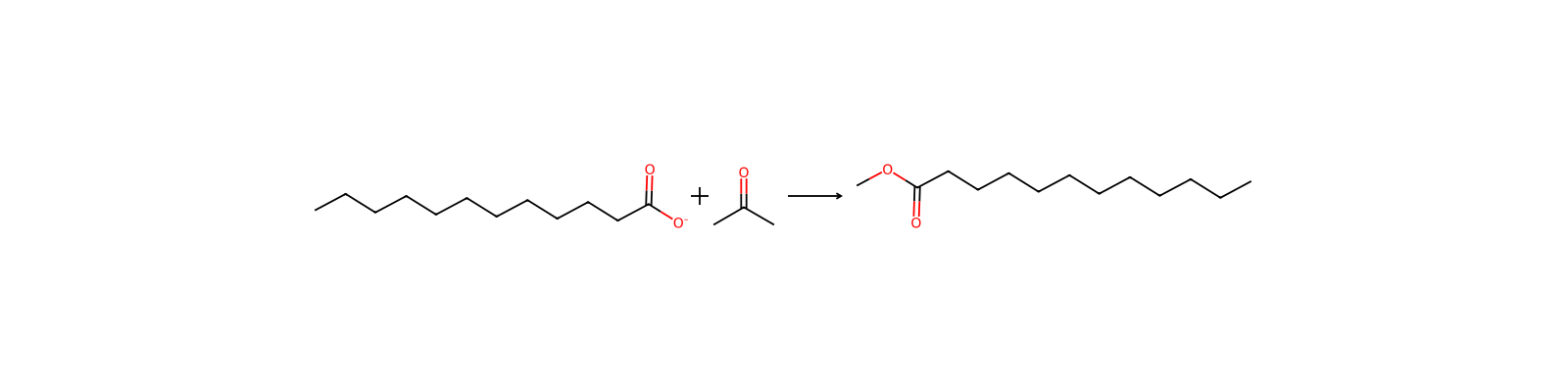
HRID 373192 の反応式
HRID 373192反応物としてuspto-grants-1992_11
HRID 654278 の反応式
HRID 654278反応物としてuspto-grants-1992_07
HRID 871069 の反応式
HRID 871069生成物としてuspto-grants-2015_03
HRID 1048638 の反応式
HRID 1048638反応物としてuspto-grants-2016_07
HRID 1500154 の反応式
HRID 1500154反応物としてuspto-grants-2015_12
HRID 1548402 の反応式
HRID 1548402生成物としてTraining data from https://doi.org/10.1039/C8SC04228D (1/10)
HRID 1656304 の反応式
HRID 1656304生成物としてuspto-grants-1993_10
HRID 2116743 の反応式
HRID 2116743反応物としてuspto-grants-2008_10
前へ1 / 2 ページ

化合物ノート

このページの内容基本情報概要名称と識別子物性安全と法規制化学と産業関連反応化合物ノート
Color/Form · 2 件

COLORLESS LIQUID

Water-white liquid

物理化学的性質

融点
4 · 4-5 °C (lit.)
沸点
262 °C/766 · 262 °C/766 mmHg (lit.)
比重(密度)
0.87 g/mL · 0.87 g/mL at 25 °C (lit.)
蒸気圧
0.55 Pa · 0.55Pa at 25℃
屈折率
20 · n20/D 1.432
FEMA
2715 · 2715 | METHYL LAURATE
闪点
230 °F · >230 °F
貯蔵温度
room temp
溶解性
0.00759 g/L · 水:不溶 0.00759g/L at 25℃(実用上)
外見
液体
色
無色透明~微黄色透明
臭い (Odor)
100 %で。ワックスのような石鹸のようなクリーミーなココナッツ · 100.00%で。ワックスのような石鹸のようなクリーミーなココナッツ マッシュルーム
においのタイプ
ワックスっぽい
由来生物
synthetic
水溶解度
水には混和しません。アルコール、ジプロピレングリコールに可溶。
JECFA Number
180 · 180
BRN
1767780 · 1767780
Henry's Law Constant
8.3 · 8.3×10-3 mol/(m3Pa) at 25℃, Krop and Velzen (1997)
Dielectric constant
3.6 · 3.6000000000000001
主な用途
フレーバーそして香料
化粧品成分の機能
スキンコンディショニング香料皮膚コンディショニング剤 - 保湿剤
InChI
1S/C13H26O2/c1-3-4-5-6-7-8-9-10-11-12-13(14)15-2/h3-12H2,1-2H3
InChIKey
UQDUPQYQJKYHQI-UHFFFAOYSA-N
SMILES
CCCCCCCCCCCC(=O)OC
LogP
5.41 at · 5.41 at 36℃
CAS データベース
111 · 111-82-0(CAS DataBase Reference)
EPAの化学物質情報
Methyl laurate (111-82-0)

化学的性質

化学的特性Methyl laurate has a fatty, floral odor reminiscent of wine.

EPA Safer ChemicalChemical: Methyl laurate
Hazard Classes and Categories · 4 件

Aquatic Acute 1 (74.6%)

Skin corrosion/irritation - Category 2

Hazardous to the aquatic environment (Acute) - Category 1

Specific target organ toxicity - Single exposure - Category 3 (Narcotic effects)

安全と保護具

Disposal Methods · 1 件

SRP: At the time of review, criteria for land treatment or burial (sanitary landfill) disposal practices are subject to significant revision. Prior to implementing land disposal of waste residue (including waste sludge), consult with environmental regulatory agencies for guidance on acceptable disposal practices.

毒性情報

Interactions · 1 件

Linear saturated fatty acid methyl esters were comitogenic with lectins for mouse lymphocytes, the degree of comitogenicity being strongly dependent on the length of the acyl group, and maximal for methyl tetradecanoate. Lesser effects were found for analogs with 10, 12, or 16 acyl carbon atoms, whereas those with fewer than 10 or more than 16 were inactive. /Methyl esters/

Environmental Fate · 3 件

TERRESTRIAL FATE: Based on a classification scheme(1), an estimated Koc value of 1,600(SRC), determined from a structure estimation method(2), indicates that methyl dodecanoate is expected to be immobile in soil(SRC). Volatilization of methyl dodecanoate from moist soil surfaces is expected to be an important fate process(SRC) given an estimated Henry's Law constant of 0.003 atm-cu m/mole(SRC), using a fragment constant estimation method(3). However, adsorption to soil is expected to attenuate volatilization(SRC). Methyl dodecanoate is not expected to volatilize from dry soil surfaces(SRC) based upon a vapor pressure of 0.004 mm Hg(4). Methyl dodecanoate is expected to rapidly biodegrade in aerobic soils by analogy to structurally similar long-chain fatty acid esters(5-7).

AQUATIC FATE: Based on a classification scheme(1), an estimated Koc value of 1,600(SRC), determined from a structure estimation method(2), indicates that methyl dodecanoate is expected to adsorb to suspended solids and sediment in water(SRC). Volatilization from water surfaces is expected(3) based upon an estimated Henry's Law constant of 0.003 atm-cu m/mole(SRC), developed using a fragment constant estimation method(4). Volatilization half-lives for a model river and model lake are 5 hours and 6 days, respectively(SRC), using an estimation method(3). However, volatilization from water surfaces is expected to be attenuated by adsorption to suspended solids and sediment in the water column(SRC). The volatilization half-life from a model pond is estimated to be about 56 hours ignoring adsorption; when considering maximum adsorption the volatilization half-life increases to 14 days(5). According to a classification scheme(6), an estimated BCF of 290(SRC) from its log Kow of 5.41(12) and a regression-derived equation(7), suggests the potential for bioconcentration in aquatic organisms is high although it may be lower than that indicated due to the expected rapid metabolism rate for this compound(9). Methyl dodecanoate is expected to rapidly biodegrade in aerobic soils by analogy to structurally similar long-chain fatty acid esters(8-10). An estimated base-catalyzed second-order hydrolysis rate constant of 0.030 L/mole-sec(9,SRC) corresponds to half-lives of 7.3 years and 270 days at pH values of 7 and 8, respectively(11).

ATMOSPHERIC FATE: According to a model of gas/particle partitioning of semivolatile organic compounds in the atmosphere(1), methyl dodecanoate, which has a vapor pressure of 0.0041 mm Hg at 25 °C(2), will exist in solely as a vapor in the ambient atmosphere. Vapor-phase methyl dodecanoate is degraded in the atmosphere by reaction with photochemically-produced hydroxyl radicals(SRC); the half-life for this reaction in air is estimated to be 29 hours(SRC) from its estimated rate constant of 1.3X10⁻¹¹ cu cm/molecule-sec at 25 °C(3).

Soil Adsorption/Mobility · 1 件

Using a structure estimation method based on molecular connectivity indices(1), the Koc for methyl dodecanoate can be estimated to be about 1600(SRC). According to a classification scheme(2), this estimated Koc value suggests that methyl dodecanoate is expected to have low mobility in soil.

Natural Pollution SourcesREPORTED FOUND IN ORRIS ABSOLUTE.
Artificial Pollution SourcesMethyl dodecanoate's production and use as a synthetic intermediate and flavoring(1) may result in its release to the environment through various waste streams(SRC).
Environmental BiodegradationAEROBIC: By analogy to chemically similar long chain fatty acid esters that were rapidly degraded by mixed sewage sludge(1-3), methyl dodecanoate is expected to rapidly biodegrade under aerobic conditions(SRC).
Sediment/Soil ConcentrationsSOIL: Methyl dodecanoate was qualitatively detected in soil samples from Southern Alberta, Canada, in strata associated with the Mazama volcano eruption which occurred approximately 7000 years ago(1).
Carcinogen ClassificationNo indication of carcinogenicity to humans (not listed by IARC).
Environmental Bioconcentration · 1 件

An estimated BCF of 290 was calculated for methyl dodecanoate(SRC) using a log Kow of 5.41(1) and a regression-derived equation(2). According to a classification scheme(3), the estimated BCF suggests the potential for bioconcentration in aquatic organisms is high. However, bioconcentration studies on compounds which are structurally similar(4,5) suggests that bioconcentration may be lower than that indicated by the regression-derived equation due to the ability of aquatic organisms to readily metabolize this class of compounds(SRC).

Volatilization from Water/Soil · 1 件

The Henry's Law constant for methyl dodecanoate is estimated as 0.003 atm-cu m/mole(SRC) using a fragment constant estimation method(1). This Henry's Law constant indicates that methyl dodecanoate is expected to volatilize from water surfaces(2). Based on this Henry's Law constant, the volatilization half-life from a model river (1 m deep, flowing 1 m/sec, wind velocity of 3 m/sec)(2) is estimated as approximately 5 hours(SRC). The volatilization half-life from a model lake (1 m deep, flowing 0.05 m/sec, wind velocity of 0.5 m/sec)(2) is estimated as approximately 6 days(SRC). The volatilization half-life from a model pond 2 m deep is estimated to be about 56 hours ignoring adsorption; when considering maximum adsorption the volatilization half-life increases to 14 days(3). Methyl dodecanoate's Henry's Law constant(1) indicates that volatilization from moist soil surfaces may occur although adsorption is expected to attenuate this process(SRC). Methyl dodecanoate is not expected to volatilize from dry soil surfaces(SRC) based upon a vapor pressure of 0.0041 mm Hg(4).

Non-Human Toxicity Excerpts · 2 件

USING DEPRESSED GROWTH RESPONSE AS A CRITERION, THE EFFECTS OF METHYL ESTERS OF FATTY ACIDS OF CHAIN LENGTH 4 TO 18 CARBONS ON ESSENTIAL FATTY ACID DEFICIENCY WERE STUDIED. HIGH MORTALITY WAS OBSERVED IN RATS FED METHYL LAURATE. IT ACCENTUATED THE ESSENTIAL FATTY ACID DEFICIENCY BECAUSE SUPPLEMENTATION RESULTED IN AN INCR ACCUMULATION OF HEPATIC CHOLESTEROL ESTERS.

INTRAVENOUS INJECTION OF 1.2 MG METHYL LAURATE PRODUCED IMMEDIATE DEATH IN MICE.

Environmental Abiotic Degradation · 1 件

The rate constant for the vapor-phase reaction of methyl dodecanoate with photochemically-produced hydroxyl radicals has been estimated as 1.3X10⁻¹¹ cu cm/molecule-sec at 25 °C(SRC) using a structure estimation method(1). This corresponds to an atmospheric half-life of about 29 hours at an atmospheric concentration of 5X10+5 hydroxyl radicals per cu cm(1). A base-catalyzed second-order hydrolysis rate constant of 0.030 L/mole-sec(SRC) was estimated using a structure estimation method(2); this corresponds to half-lives of 7.3 years and 270 days at pH values of 7 and 8, respectively(2). Methyl dodecanoate is not expected to directly photolyze due to the lack of absorption in the environmental UV spectrum(3).

法規制情報

FDA Requirements · 1 件

Methyl laurate is a food additive permitted for direct addition to food for human consumption as a synthetic flavoring substance and adjuvant in accordance with the following conditions: a) they are used in the minimum quantity required to produce their intended effect, and otherwise in accordance with all the principles of good manufacturing practice, and 2) they consist of one or more of the following, used alone or in combination with flavoring substances and adjuvants generally recognized as safe in food, prior-sanctioned for such use, or regulated by an appropriate section in this part.

安全データ

wgk
1
tsca
TSCA listed
rtecs
OF0670000
ridadr
UN 3082 9 / PGIII
毒性
LD50 orally in Rabbit: > 2000 mg/kg
hs_code
2915 90 30
risk_code
50
化審法
(2)-798 優先評価化学物質
消防法
危-4-3-III
hazard_code
N
safety_code
24/25-61
環境リスク評価
メチル=ドデカノアート(111-82-0)
Hazard Classifications
Aquatic Acute 1Aquatic Chronic 2
ストレージクラス
10 - Combustible liquids
有毒物質データの
111-82-0(Hazardous Substances Data)

NON-ALCOHOLIC BEVERAGES 0.50-5.0 PPM; ICE CREAM, ICES, ETC 0.50-5.0 PPM; CANDY 0.02-0.50 PPM; BAKED GOODS 1.0 PPM.

USEFUL IN FATTY FLAVORS, COCONUT, NUT.

応用分野 · 5 件

用途食品添加物

説明Methyl laurate has a fatty, floral odor reminiscent of wine. May be prepared by prolonged boiling of lauric acid with methanol in the presence of sulfuric acid. Methyl Laurate is a flavour ketone produced in a reaction biocatalyzed by microencapsulated fungal spores. Also used in production of biodiesel.

天然物の起源Reported found in orris absolute, strawberry, apple, bilberry, rum, coconut, grapes, melon, papaya, pineapple, blackberry, mustard, cheeses, hop oil, cognac, white wine, cocoa, oats, plumcot, elderberry juice, loquat, babaco fruit (Carica pentagona Heilborn), Bourbon vanilla, mountain papaya, Chinese cabbage, mussels, cape gooseberry, pawpaw, banana, berries and blue cheese

使用Methyl laurate has been used in selective synthesis of the secondary amide surfactant, N-methyl lauroylethanolamide.

一般的な説明Hydrogenation of methyl laurate catalyzed by diatomite supported Pd-M (M=Cu, Co, Ni) bimetal nanocatalysts has been reported. IR absorption spectrum of methyl laurate in carbon tetrachloride and carbon disulphide solutions has been compared with the spectra of derivatives deuterated in the ω-methyl group and α-methylene groups.

調製方法

純化方法Pass the ester through alumina before use, and distil it in a vacuum. [Beilstein 2 IV 1090.]

上流・下流製品情報

上流原料

ラウリン酸メタノールラウリン酸エチル

下流製品

1-ドデカノール2-モルホリノエタンスルホン酸ラウリルラウラートCIS‐7,10,13,16,19‐ドコサペンタエン酸メチル標準品

補足説明

定義ChEBI: A fatty acid methyl ester of lauric acid.