
リチウムブロミド
Lithium Bromide
データを補完しています。しばらくしてからページを更新すると最新の内容を表示できます
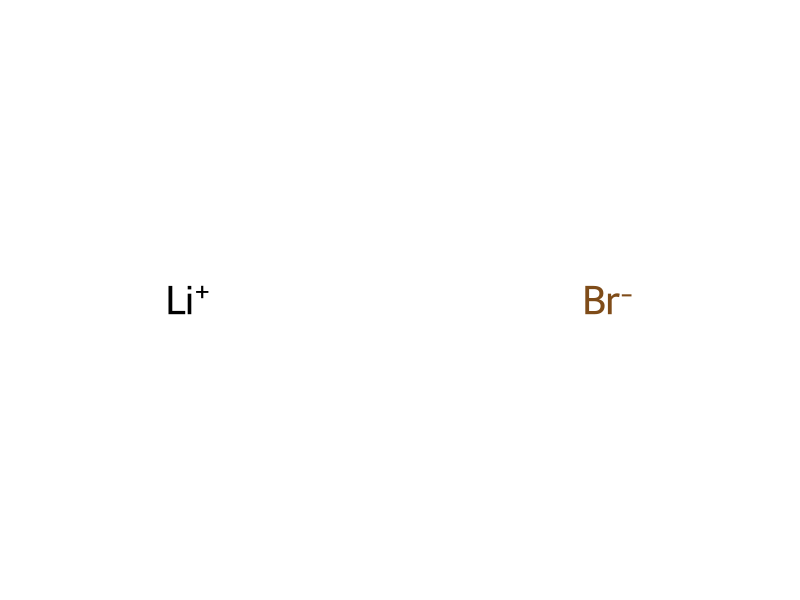
基本情報
- CAS
7550-35-8- 標準SMILES
[Br-].[Li+]- InChIKey
AMXOYNBUYSYVKV-UHFFFAOYSA-M- 分子式
- BrLi
- 平均分子量
- 86.9 g/mol
- 単同位体質量
- 85.93434165
概要
Lithium bromide is a lithium salt in which the counterion is bromide. The anhydrous salt forms cubic crystals similar to common salt. It is a bromide salt and a lithium salt.
名称と識別子
- 優先名称
- Lithium Bromide
- IUPAC
- lithium bromide
- 現地名
- リチウムブロミド
- 英語名
- Lithium bromide
- 分子式
- BrLi
- 分子量
- 86.85
名称と別名
Lithium bromide7550-35-8Lithium monobromideLithium bromide (LiBr)bromolithiumLITHIUM BROMATUM864G646I84CHEBI:63042DTXSID20892222RefChem:55513DTXCID801079305231-439-8
名称をさらに表示
臭化リチウムリチウムブロミド臭化リチウム無水臭化リチウム(無水)臭化リチウム [一般有機合成用]臭化リチウム(無水),3N5臭化リチウム ANHYDROUS,FREE-FLOWING,REDI-DRITM,REAGENTPLUS,≥99%臭化リチウム PURISS. P.A.,≥99.0% (DRIED MATERIAL,AT)臭化リチウム REAGENTPLUS,≥99%臭化リチウム, 無水/ 99+%臭化リチウム/ 99.995+%臭化リチウム 溶液臭化リチウム (99.95%-Li) (0.2% H2O)臭化リチウム, 無水, 99% min臭化リチウム, 無水, 99.99% (metals basis)臭化リチウム, 無水, 99+%臭化リチウム, 無水, 99.995% (metals basis)LITHIUM HALIDEAnhydrous lithiuM broMideithium bromideLithiumbromide,dihydrateLITHIUM BROMIDE ANYDROUSLithium bromide, extra pure, 99.999%Lithium bromide anhydrous, free-flowing, Redi-Dri, ReagentPlus, >=99%
LITHIUMBROMIDELiBrlithium;bromideBrLiLithium bromide anhydrousLITHIUM BROMIDE, ANHYDROUSMFCD00011077LIthium bromide solution
データベース識別子
- CAS
7550-35-8- PubChem CID
- 82050
- DTXSID
DTXSID20892222- ChEBI
CHEBI:63042- UNII
- 864G646I84
- EC Number
- 231-439-8
- Nikkaji
- J43.853G
物性
構造計算による物性補完中
- 極性表面積
- 0 Ų
- 水素結合供与体数
- 0
- 水素結合受容体数
- 1
- 回転可能結合数
- 0
- 重原子数
- 2
- 形式電荷
- 0
- 複雑度
- 2
実験および物理化学的性質
Chemical ClassesMetals -> Metals, Inorganic Compounds
SpringerMaterials Propertiesdielectric constant
Density3.464 @25 °C
Melting Point550 °C
Physical Description
Dry Powder; Wet Solid; Dry Powder
Highly deliquescent white solid; [Merck Index] White powder, crystals, or beads; Hygroscopic; [Alfa Aesar MSDS]
物理化学的性質
- 融点
- 550 °C · 550 °C (lit.)
- 沸点
- 1265 °C · 1265 °C
- 比重(密度)
- 1.57 g/mL · 1.57 g/mL at 25 °C
- 蒸気圧
- 1 hPa · 1 hPa ( 748 °C)
- 闪点
- 1265 °C · 1265°C
- 貯蔵温度
- Inert atmosphere,Room Temperature
- 溶解性
- メタノール(微量、加温)、水(微量)
- 酸解離定数(Pka)
- 2.64 · 2.64[at 20 ℃]
- 外見
- 粉
- 比重
- 3.464 · 3.464
安全と法規制
安全情報は参考情報です。供給元の安全データシート(SDS)、適用法令、専門家による評価に代わるものではありません。
GHS分類
GHS Classification
Warning
H302 (98.2%): Harmful if swallowed [Warning Acute toxicity, oral]
P261, P264, P264+P265, P270, P272, P280, P301+P317, P302+P352, P305+P351+P338, P321, P330, P332+P317, P333+P317, P337+P317, P362+P364, and P501 (click each P-code to see the statement)
Aggregated GHS information provided per 279 reports by companies from 14 notifications to the ECHA C&L Inventory. Each notification may be associated with multiple companies.
Danger
H302: Harmful if swallowed [Warning Acute toxicity, oral]
危険有害性情報
Regulatory Information
Chemical: Lithium bromide (LiBr)
Lithium bromide (LiBr) is listed on the EPA's Chemical Data Reporting (CDR) system. Manufacturers and importers of Lithium bromide (LiBr) are required to report information about their production and use of this chemical to the EPA under the Toxic Substances Control Act (TSCA). (40 eCFR Part 711)
Status: Active Update: 13-03-2019 https://echa.europa.eu/registration-dossier/-/registered-dossier/13642
Lithium bromide: Does not have an individual approval but may be used under an appropriate group standard
Other Safety InformationIMAP assessments - Lithium bromide (LiBr): Human health tier I assessment
Hazards Summary
Causes flaccid paralysis with appropriate anesthesia, tetany, and arrhythmias in oral lethal-dose studies of mice; [RTECS] High doses may cause CNS depression and disturbed blood electrolyte balance; Chronic exposure may cause skin eruptions and adverse CNS effects; [Merck Index] A skin and strong eye irritant; Harmful by ingestion; [Alfa Aesar MSDS] See Lithium and Bromine.
Hazard Classes and Categories
Acute Tox. 4 (98.2%)
Acute toxicity (Oral) - Category 4
Skin sensitization - Category 1B
化学と産業
薬理情報
Metabolism/Metabolites
Bromine is mainly absorbed via inhalation, but may also enter the body through dermal contact. Bromine salts can be ingested. Due to its reactivity, bromine quickly forms bromide and may be deposited in the tissues, displacing other halogens. (L626)
FDA Pharmacological Classification
LITHIUM BROMATUM
Mood Stabilizer [EPC]
用途と製造
UsesUsed as a humectant and sedative/hypnotic; [Merck Index]
U.S. Production2023: 100,000 - <250,000 lb
Consumer UsesNot Known or Reasonably Ascertainable
Industry UsesIntermediate
General Manufacturing Information
Petroleum Refineries
Lithium bromide (LiBr): ACTIVE
応用分野
用途冷媒、脱水剤、乾燥剤、空調機器の加湿剤、鎮静剤や催眠薬などの医薬品
使用As humectant, in air-conditioning systems. An aqueous solution of lithium bromide containing about 50 % lithium bromide is used as an absorbent in large-scale absorption air conditioning equipment. Lithium bromide is also used in limited amounts by the pharmaceutical industry for dehydrobromination of organic compounds to form olefins.
一般的な説明LiBr/Chlorotrimethylsilane reagent participates in the conversion of alcohols to bromides.
調製方法
関連反応
948 件


化合物ノート
読み込み中…