ホームMCPワークベンチSkills
ホームワークベンチ通知マイページ
llms.txt · MCPガイドプライバシーポリシー · 利用規約 · サポートv1.8.0
  1. ホーム
  2. /化合物

テレフタル酸ジメチル

Dimethyl terephthalate

HCID 8441
ノートを作成反応を作成見積依頼を出す
印刷プレビュー

データを補完しています。しばらくしてからページを更新すると最新の内容を表示できます

基本情報概要名称と識別子物性安全と法規制化学と産業関連反応化合物ノート
部分構造検索類似構造を探す

基本情報

CAS
120-61-6
標準SMILES
COC(=O)c1ccc(C(=O)OC)cc1
InChIKey
WOZVHXUHUFLZGK-UHFFFAOYSA-N
分子式
C10H10O4
平均分子量
194.18 g/mol
単同位体質量
194.0579088

概要

Dimethyl terephthalate appears as white solid or heated colorless liquid. Has no odor. Liquid solidifies in cool water. Solid and liquid sink in water. (USCG, 1999)

名称と識別子

優先名称
Dimethyl terephthalate
IUPAC
dimethyl benzene-1,4-dicarboxylate
現地名
テレフタル酸ジメチル
英語名
Dimethyl terephthalate
分子式
C10H10O4
分子量
194.18

名称と別名

DIMETHYL TEREPHTHALATE120-61-6Dimethyl p-phthalate1,4-Benzenedicarboxylic acid, dimethyl esterDimethyl 4-phthalateTerephthalic Acid Dimethyl Esterdimethyl benzene-1,4-dicarboxylateDi-Me terephthalateDimethyl 1,4-benzenedicarboxylateDimethyl p-benzenedicarboxylateTerephthalic acid, dimethyl esterMethyl 4-carbomethoxybenzoate
名称をさらに表示
テレフタル酸ジメチル1,4-ベンゼンジカルボン酸ジメチルp-フタル酸ジメチルテレフタル酸メチルベンゼン-1,4-ジカルボン酸ジメチル1,4-ベンゼンジカルボン酸ジメチルエステルジメチルテレフタレートジメチル=テレフタラートテレフタル酸ジメチル標準品テレフタル酸ジメチル, 99%1,4-ジメチル ベンゼン-1,4-ジカルボキシラートジメチルテレフタラートDMTDMTDMTDMTdimethy1,4-Benzenedicarboxylicacid,dimethylesterdi-meterephthalateTerephthalate, dimethylTerephthalic acid methyl ester
Methyl p-(methoxycarbonyl)benzoatedimethylterephthalateNCI-C50055DTXSID0020498IKZ2470UNVNSC-3503DIMETYHL TEREPHTHALATEDTXCID60498

データベース識別子

CAS
120-61-6
PubChem CID
8441
DTXSID
DTXSID0020498
ChEMBL
CHEMBL1870757
ChEBI
CHEBI:156286
UNII
IKZ2470UNV
EC Number
204-411-8
Nikkaji
J2.003F

物性

構造計算による物性補完中

XLogP
2.2
極性表面積
52.6 Ų
水素結合供与体数
0
水素結合受容体数
4
回転可能結合数
4
重原子数
14
形式電荷
0
複雑度
192

実験および物理化学的性質

Chemical ClassesOther Classes -> Other Aromatic Compounds
SpringerMaterials Properties13C nuclear magnetic resonance spectrum
PesticidesPesticide -> EPA IRIS
LogP · 2 件

log Kow = 2.25

2.35

Density · 3 件

1.2 at 68 °F 1.08 at 145 °C (liquid) (USCG, 1999) - Denser than water; will sink

1.075 g/cu cm at 141 °C

1.2 g/cm³

ViscosityLiquid viscosity = 1.0682X10⁻³ Pa.s
Color/Form · 2 件

Colorlesss crystals

NEEDLES FROM ETHER

Solubility · 6 件

less than 1 mg/mL at 55 °F (NTP, 1992)

Soluble in ether and hot alcohol

Soluble in chloroform; slightly soluble in ethanol. methanol

0.3 G/ML IN HOT WATER

In water, 19 mg/L at 25 °C

Solubility in water at 13 °C: very poor

Flash Point · 5 件

308 °F (NTP, 1992)

141 °C

146 °C OC

安全と法規制

安全情報は参考情報です。供給元の安全データシート(SDS)、適用法令、専門家による評価に代わるものではありません。

GHS分類

GHS Classification · 6 件

This chemical does not meet GHS hazard criteria for 75.8% (405 of 534) of all reports.

Warning

H317 (13.7%): May cause an allergic skin reaction [Warning Sensitization, Skin]

P261, P272, P280, P302+P352, P321, P333+P317, P362+P364, and P501 (click each P-code to see the statement)

Aggregated GHS information provided per 534 reports by companies from 9 notifications to the ECHA C&L Inventory.

Warning

危険有害性情報

Regulatory Information · 4 件

Chemical: 1,4-Benzenedicarboxylic acid, dimethyl ester

1,4-Benzenedicarboxylic acid, 1,4-dimethyl ester is listed on the EPA's Chemical Data Reporting (CDR) system. Manufacturers and importers of 1,4-Benzenedicarboxylic acid, 1,4-dimethyl ester are required to report information about their production and use of this chemical to the EPA under the Toxic Substances Control Act (TSCA). (40 eCFR Part 711)

Status: Active Update: 11-10-2022 https://echa.europa.eu/registration-dossier/-/registered-dossier/15173

1,4-Benzenedicarboxylic acid, dimethyl ester: Does not have an individual approval but may be used as a component in a product covered by a group standard. It is not approved for use as a chemical in its own right.

DOT LabelPoison
Fire Hazards · 2 件

This chemical is combustible. (NTP, 1992)

Combustible. Finely dispersed particles form explosive mixtures in air.

Health HazardsMolten DMT will cause severe burns of skin on contact. (USCG, 1999)
Hazards SummaryAn irritant; [ICSC] May be irritating to the eyes; [HSDB] Causes urinary tract calculi in high-dose animal studies; There are no published reports of human studies; [AIHA] An irritant; [MSDSonline]

化学と産業

薬理情報

Mechanism of Action · 1 件

... The composition of the bladder calculi from the DMT treated /rats/ ... was primarily calcium and terephthalic acid (TPA) with 5-7% protein. Phosphate levels were low, in contrast to bladder calculi from animals treated directly with terephthalic acid. ... An acidic urinary pH was believed to have induced the hypercalciuria, a characteristic of urolithiasis in man. The higher urinary concentrations of TPA from DMT in the diet (when compared to similar dietary concentrations of TPA) explained the higher incidence of urinary calculi from the DMT diets than from comparable levels of TPA in the diet. Urinary phosphate levels were decreased in the animals consuming the DMT diet and explained why phosphate was present only at very low levels in the bladder calculi in those animals. ... Weanling rats are probably more sensitive to the induction of bladder calculi than adults due to their very high feed consumption rates relative to body weight.

Metabolism/Metabolites · 5 件

In rats administered (14)C labeled DMT orally, ... After dosing five times over a 10-day period, ... In the rat, terephthalic acid was the only compound detected in the urine. In mice, urinary metabolites consisted of monomethyl terephthalate (70%), terephthalic acid (30%), and traces of DMT. Similar metabolites were identified in the feces of both species. DMT administration did not lower the concentration of nonprotein sulfydryl groups, demonstrating DMT is not activated to form electrophilic metabolites.

In rats fed diets containing 5% DMT for 5 days, ... The majority was metabolized to terephthalic acid, which was primarily eliminated by the kidney.

Female F-344 rats received 1 or 2% dimethyl terephthalate in diet for 3 weeks. The urine of the rats was collected and examined. The treatment with dimethyl terephthalate resulted in specific changes in urinary ions, including hypercalciuria and urinary acidosis. Terephthalic acid was detected in the urine, whereas the parent compound was not found. The results indicate that metabolism of the substance to terephthalic acid occurs extensively in rats, and accounts for the ion changes observed in this study.

The major metabolite found in the urine of B6C3F1 mice after oral dosing of (l4)C-dimethyl- terephthalate was monomethyl-(14)C-terephthalate, indicating a minor capacity to hydrolyse the test substance.

For more Metabolism/Metabolites (Complete) data for DIMETHYL TEREPHTHALATE (6 total), please visit the HSDB record page.

関連反応

156 件
反応記録を作成
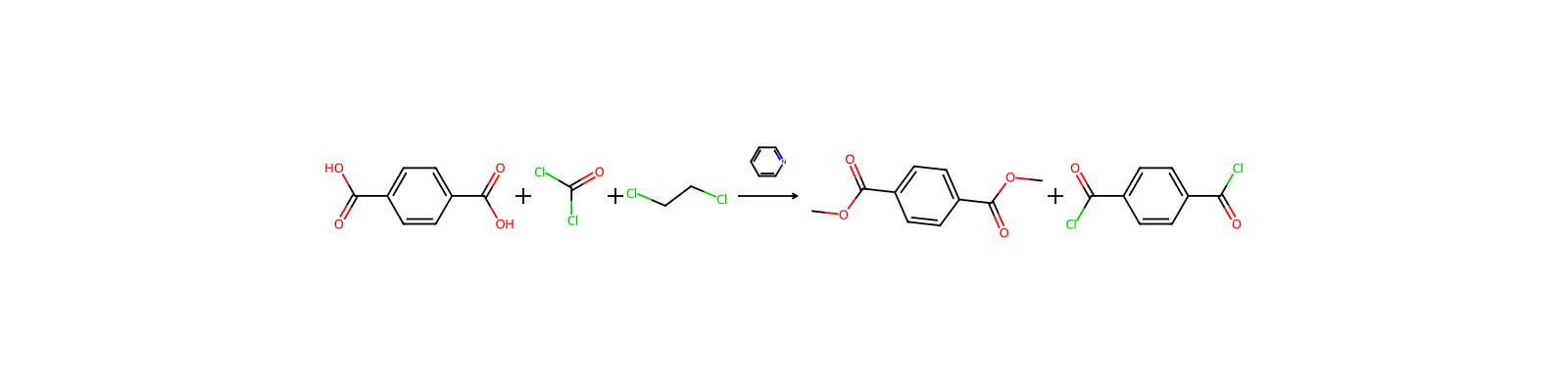
HRID 34889 の反応式
HRID 34889反応物としてuspto-grants-1988_08
HRID 36538 の反応式
HRID 36538反応物としてuspto-grants-1995_05
HRID 46679 の反応式
HRID 46679反応物としてuspto-grants-1979_11
HRID 65883 の反応式
HRID 65883生成物としてuspto-grants-1978_12
HRID 65884 の反応式
HRID 65884反応物としてuspto-grants-1978_12
HRID 65885 の反応式
HRID 65885生成物としてuspto-grants-1978_12
HRID 65886 の反応式
HRID 65886生成物としてuspto-grants-1978_12
HRID 65887 の反応式
HRID 65887生成物としてuspto-grants-1978_12
1 / 20 ページ

化合物ノート

読み込み中…

このページの内容基本情報概要名称と識別子物性安全と法規制化学と産業関連反応化合物ノート
その他の操作
ノートを作成反応を作成見積依頼を出す

308 °F (153 °C) (Open cup)

141 °C c.c.

Boiling Point · 3 件

572 °F at 760 mmHg (sublimes) (NTP, 1992)

288 °C

288 °C

DecompositionWhen heated to decomposition it emits acrid smoke and irritating fumes.
Melting Point · 4 件

284 to 288 °F (NTP, 1992)

141 °C

Heat of fusion at melting point = 3.1630X10+7 J/kmol

140 °C

物理化学的性質

融点
140 °C · 140 °C
沸点
288 °C · 288 °C
比重(密度)
1 · 1,29 g/cm3
蒸気密度
1.04 · 1.04 (vs air)
蒸気圧
1.15 mm · 1.15 mm Hg ( 93 °C)
屈折率
1.4752 · 1.4752
闪点
154 °C · 154 °C
貯蔵温度
30 °C · Store below +30°C.
溶解性
0.0493 g/L · 水:微溶 0.0493g/L at 20℃
外見
フレークまたはペレット
酸解離定数(Pka)
0 · 0[at 20 ℃]
色
白い
爆発限界(explosive limit)
0.8 · 0.8-11.8%(V)
水溶解度
水には溶けにくいが、熱アルコールやエーテルには溶ける。
比熱容量
1.34 J/ · Cp(crystal): 1.34 J/(g·K), at 25℃
Merck
14 · 14,9162
BRN
1107185 · 1107185
Henry's Law Constant
7.4 · 7.4×10-2 mol/(m3Pa) at 25℃, Duchowicz et al. (2020)
安定性
安定。強酸、強塩基、強酸化剤とは相容れない。
InChI
1S/C10H10O4/c1-13-9(11)7-3-5-8(6-4-7)10(12)14-2/h3-6H,1-2H3
InChIKey
WOZVHXUHUFLZGK-UHFFFAOYSA-N
SMILES
COC(=O)c1ccc(cc1)C(=O)OC
LogP
2.25 at · 2.25 at 25℃
CAS データベース
120 · 120-61-6(CAS DataBase Reference)
EPAの化学物質情報
Dimethyl terephthalate (120-61-6)
化学的性質 · 1 件

化学的特性The empirical formula of dimethyl terephthalate (DMT) is C10H10O4. Its structural formula is 1,4-(COOCH3)2C6H4. At room temperature, exists as colorless crystals. DMT is soluble in ether and chloroform, slightly soluble in ethanol, and fairly insoluble in water (

Reactive Group
Esters, Sulfate Esters, Phosphate Esters, Thiophosphate Esters, and Borate Esters
Special ReportsEuropean Chemicals Bureau; IUCLID Dataset, Dimethyl terephthalate (120-61-6), 62 pp. (2000 CD-ROM edition). Available from the Database Query page at: http://ecb.jrc.it/esis/esis.php as of May 13, 2008
Reactivity Profile · 1 件

DIMETHYL TEREPHTHALATE is an ester. Esters react with acids to liberate heat along with alcohols and acids. Strong oxidizing acids may cause a vigorous reaction that is sufficiently exothermic to ignite the reaction products. Heat is also generated by the interaction of esters with caustic solutions. Flammable hydrogen is generated by mixing esters with alkali metals and hydrides. Can generate electrostatic charges. [Handling Chemicals Safely 1980. p. 250]. This compound is sensitive to heat. The molten material reacts with water due to the temperature. This compound is incompatible with strong oxidizers, strong acids and strong bases.

Atmospheric Standards · 1 件

This action promulgates standards of performance for equipment leaks of Volatile Organic Compounds (VOC) in the Synthetic Organic Chemical Manufacturing Industry (SOCMI). The intended effect of these standards is to require all newly constructed, modified, and reconstructed SOCMI process units to use the best demonstrated system of continuous emission reduction for equipment leaks of VOC, considering costs, non air quality health and environmental impact and energy requirements. Dimethyl terephthalate is produced, as an intermediate or a final product, by process units covered under this subpart.

Chemical DangersDecomposes on burning. This produces irritating fumes.
Physical DangersDust explosion possible if in powder or granular form, mixed with air.
Air and Water ReactionsWhen mixed with air, the vapor or dust forms very hazardous and highly reactive mixtures. (NTP, 1992). Insoluble in water.

安全と保護具

Fire Fighting · 2 件

Fire Extinguishing Agents: Water, dry chemical, foam, carbon dioxide (USCG, 1999)

Use water spray, foam, powder, carbon dioxide.

First Aid Measures · 4 件

Fresh air, rest.

Rinse and then wash skin with water and soap.

First rinse with plenty of water for several minutes (remove contact lenses if easily possible), then refer for medical attention.

Rinse mouth.

First Aid · 1 件

EYES: First check the victim for contact lenses and remove if present. Flush victim's eyes with water or normal saline solution for 20 to 30 minutes while simultaneously calling a hospital or poison control center. Do not put any ointments, oils, or medication in the victim's eyes without specific instructions from a physician. IMMEDIATELY transport the victim after flushing eyes to a hospital even if no symptoms (such as redness or irritation) develop.

Safe StorageStore in an area without drain or sewer access.
Firefighting HazardsPoisonous gases are produced in fire.
Fire Fighting Procedures · 3 件

Extinguish with water, dry chemicals, foam, or carbon dioxide.

From a secure, explosion-proof location, use water spray to cool exposed containers. If cooling streams are ineffective (venting sound increases in volume and pitch, tank discolors, or shows any signs of deforming), withdraw immediately to a secure position.

Alcohol foam. Water or foam may cause frothing.

Storage Conditions · 2 件

Dimethyl terephthalate is stored molten in insulated heated tanks, and is perferentially shipped molten in insulated rail tank cars or tank trucks. It is also solidified into briquettes or flakes, and shipped in 1 ton or 25 kg bags.

Store in tightly closed containers in a cool, well-ventilated area away from oxidizers, nitrates, acids and sources of ignition

Nonfire Spill Response · 1 件

SMALL SPILLS AND LEAKAGE: If you spill this chemical, FIRST REMOVE ALL SOURCES OF IGNITION, then dampen the solid spill material with toluene, then transfer the dampened material to a suitable container. Use absorbent paper dampened with toluene to pick up any remaining material. Your contaminated clothing and absorbent paper should be sealed in a vapor-tight plastic bag for eventual disposal. Solvent-wash all contaminated surfaces with toluene followed by washing with a soap and water solution. Do not reenter the contaminated area until the Safety Officer (or other responsible person) has verified that the area has been properly cleaned.

Disposal Methods · 1 件

SRP: The most favorable course of action is to use an alternative chemical product with less inherent propensity for occupational exposure or environmental contamination. Recycle any unused portion of the material for its approved use or return it to the manufacturer or supplier. Ultimate disposal of the chemical must consider: the material's impact on air quality; potential migration in soil or water; effects on animal, aquatic, and plant life; and conformance with environmental and public health regulations.

Spillage Disposal · 1 件

Personal protection: particulate filter respirator adapted to the airborne concentration of the substance. Do NOT let this chemical enter the environment. Sweep spilled substance into covered sealable containers. If appropriate, moisten first to prevent dusting. Carefully collect remainder. Then store and dispose of according to local regulations.

Preventive Measures · 2 件

SRP: Contaminated protective clothing should be segregated in such a manner so that there is no direct personal contact by personnel who handle, dispose, or clean the clothing. Quality assurance to ascertain the completeness of the cleaning procedures should be implemented before the decontaminated protective clothing is returned for reuse by the workers. Contaminated clothing should not be taken home at end of shift, but should remain at employee's place of work for cleaning.

SRP: The scientific literature for the use of contact lenses in industry is conflicting. The benefit or detrimental effects of wearing contact lenses depend not only upon the substance, but also on factors including the form of the substance, characteristics and duration of the exposure, the uses of other eye protection equipment, and the hygiene of the lenses. However, there may be individual substances whose irritating or corrosive properties are such that the wearing of contact lenses would be harmful to the eye. In those specific cases, contact lenses should not be worn. In any event, the usual eye protection equipment should be worn even when contact lenses are in place.

Isolation and EvacuationExcerpt from ERG Guide 154 [Substances - Toxic and/or Corrosive (Non-Combustible)]:

毒性情報

Target OrgansUrinary
Ecotoxicity Values · 5 件

LC50 Pimephales promelas (fathead minnow) 9.6 mg/L/96 hr, static

LC50 Daphnia magna (water flea) 30.4 mg/L/48 hr /Conditions of bioassay not specified in source examined/

LC50 Daphnia magna (water flea) > 100 mg/L/96 hr, static

LC50 Dugesia tigrina (flatworm) > 100 mg/L/96 hr, static

For more Ecotoxicity Values (Complete) data for DIMETHYL TEREPHTHALATE (8 total), please visit the HSDB record page.

Environmental Fate · 3 件

TERRESTRIAL FATE: Based on a classification scheme(1), an estimated Koc value of 400(SRC), determined from a log Kow of 2.25(2) and a regression-derived equation(3), indicates that dimethyl terephthalate is expected to have moderate mobility in soil(SRC). Volatilization of dimethyl terephthalate from moist soil surfaces is expected to be an important fate process(SRC) given a Henry's Law constant of 1.3X10⁻⁴ atm-cu m/mole(SRC), derived from its vapor pressure, 0.01 mm Hg(4), and water solubility, 19 mg/L(5). Dimethyl terephthalate is not expected to volatilize from dry soil surfaces(SRC) based upon its vapor pressure(4). Dimethyl terephthalate, at a concentration of 0.5%, degraded completely in 15 days at 30 °C in soil with a pH of 8.2 and 60% moisture content(6).

AQUATIC FATE: Based on a classification scheme(1), an estimated Koc value of 400(SRC), determined from a log Kow of 2.25(2) and a regression-derived equation(3), indicates that dimethyl terephthalate is expected to adsorb to suspended solids and sediment(SRC). Volatilization from water surfaces is expected(3) based upon a Henry's Law constant of 1.3X10⁻⁴ atm-cu m/mole(SRC), derived from its vapor pressure, 0.01 mm Hg(4), and water solubility, 19 mg/L(5). Using this Henry's Law constant and an estimation method(3), volatilization half-lives for a model river and model lake are 13 hours and 8.3 days, respectively(SRC). According to a classification scheme(6), an estimated BCF of 11(SRC), from its log Kow(2) and a regression-derived equation(7), suggests the potential for bioconcentration in aquatic organisms is low(SRC). A 3 day river die-away test using 50, 40, and 5 ppm dimethyl terephthalate resulted in 100% biodegradation in all three tests of river water, and 27, 38, and 49% biodegradation in the three tests of sea water(8) suggesting dimethyl terephthalate is expected to biodegrade in aquatic environments(SRC).

ATMOSPHERIC FATE: According to a model of gas/particle partitioning of semivolatile organic compounds in the atmosphere(1), dimethyl terephthalate, which has a vapor pressure of 0.01 mm Hg at 25 °C(2), is expected to exist solely as a vapor in the ambient atmosphere. Vapor-phase dimethyl terephthalate is degraded in the atmosphere by reaction with photochemically-produced hydroxyl radicals(SRC); the half-life for this reaction in air is estimated to be 28 days(SRC), calculated from its rate constant of 5.7X10⁻¹³ cu cm/molecule-sec at 25 °C(SRC) that was derived using a structure estimation method(3). Dimethyl terephthalate does contain chromophores that absorb at wavelengths >290 nm(4) and therefore may be susceptible to direct photolysis by sunlight(SRC).

Ecotoxicity Excerpts · 2 件

/PLANTS/ Ryegrass, radish, lettuce /were tested in/ 7-Day germination exposures to /dimethyl terephthalate/ concentrations of 0, 1, 10, 100, or 1000 mg/L. There were 80 seeds used for each exposure test level and 40 seeds for control. ... No Adverse Effect Concn: 10 mg/L (rye grass, radish ), 1 mg/L (lettuce).

/PLANTS/ Corn, marigold, lettuce, radish /seedlings were tested in/ 1-week phytotoxicity /aasays/ to /dimethyl terephthalate/ concentrations of 0, 100, and 1000 mg/L. There were 10 corn seedlings and 20 seedlings for the other species per exposure level. ... No Adverse Effect Concn: >1000 mg/L (radish, marigold, lettuce), >100 mg/L (corn).

Signs and SymptomsRedness.
Ongoing Test Status · 1 件

The following link will take the user to the National Toxicology Program (NTP) Test Agent Search Results page, which tabulates all of the "Standard Toxicology & Carcinogenesis Studies", "Developmental Studies", and "Genetic Toxicity Studies" performed with this chemical. Clicking on the "Testing Status" link will take the user to the status (i.e., in review, in progress, in preparation, on test, completed, etc.) and results of all the studies that the NTP has done on this chemical. [http://ntp-apps.niehs.nih.gov/ntp_tox/index.cfm?fuseaction=ntpsearch.searchresults&searchterm=120-61-6]

Effluent Concentrations · 1 件

The concentration of dimethyl terephthalate in the waste water from a dimethyl terephthalate manufacturing plant was less than 0.5 mg/L whereas its acid was found at 459 mg/L(1). This is due to the hydrolysis of dimethyl terephthalate to the acid(1). Dimethyl terephthalate was identified in an industrial wastewater survey sample extracts at a concentration of 557 ng/uL in the organics industry and 21 ng/uL in the organics and plastics industry(2). Dimethyl terephthalate was identified, not quantified, in advanced waste treatment concentrates in Lake Tahoe, CA and in Pomona, CA(3).

ICSC Environmental DataThe substance is harmful to aquatic organisms.
EPA IRIS Information · 3 件

Dimethyl terephthalate (DMT)

Urinary

1 x 10 ^-1 mg/kg-day

Soil Adsorption/Mobility · 1 件

The Koc of dimethyl terephthalate is estimated as 400(SRC), using a log Kow of 2.25(1) and a regression-derived equation(2). According to a classification scheme(3), this estimated Koc value suggests that dimethyl terephthalate is expected to have moderate mobility in soil.

Atmospheric ConcentrationsRURAL/REMOTE: Dimethyl terephthalate was identified, not quantified, in a forest atmosphere in West Germany(1).
Human Toxicity Excerpts · 2 件

/HUMAN EXPOSURE STUDIES/ An oily paste containing 80% DMT showed no irritant effects 24 hr after 10 applications to human skin.

/OTHER TOXICITY INFORMATION/ ... Calculations based on the solubility of calcium terephthalate indicate that humans would have to absorb at least 2.0 grams per day terephthalic acid or 2.5 grams per day dimethyl terephthalate to develop bladder stones.

法規制情報

Atmospheric Standards · 1 件

This action promulgates standards of performance for equipment leaks of Volatile Organic Compounds (VOC) in the Synthetic Organic Chemical Manufacturing Industry (SOCMI). The intended effect of these standards is to require all newly constructed, modified, and reconstructed SOCMI process units to use the best demonstrated system of continuous emission reduction for equipment leaks of VOC, considering costs, non air quality health and environmental impact and energy requirements. Dimethyl terephthalate is produced, as an intermediate or a final product, by process units covered under this subpart.

安全データ

wgk
1
tsca
TSCA listed
rtecs
WZ1225000
ridadr
3256
毒性
LD50 orally in Rabbit: 3200 mg/kg
PRTR法
第一種指定化学物質
hs_code
2917 37 00
risk_code
36/37/38
化審法
(3)-1328 優先評価化学物質
safety_code
24/25
自然発火温度
520 °C DIN 51794
環境リスク評価
テレフタル酸ジメチル(120-61-6)
ストレージクラス
11 - Combustible Solids
有毒物質データの
120-61-6(Hazardous Substances Data)
MeSH Pharmacological Classification · 2 件

Substances causing insects to turn away from them or reject them as food.

Substances which pollute the soil. Use for soil pollutants in general or for which there is no specific heading.

Absorption, Distribution and Excretion · 5 件

Data from radio tracer study in rabbits and rats indicate rapid absorption and excretion of (14)C-DMT with no evidence of tissue accumulation following single or repeated oral and intratracheal administration.

Radiotracer study. After a single or repeated dermal application of 80 mg/kg of (14)C-DMT, approximately 11% of single dose and 13% of 5 repeated cutaneous doses were recovered from urine and feces of rats.

Radiotracer study. Approximately 33% of a single ocular dose (50 mg) of (14)C-DMT was excreted in urine and feces of rabbits with no evidence of tissue accumulation or ocular damage.

In rats fed diets containing 5% DMT for 5 days, DMT was almost completely absorbed. ... Only a trace amount was found to be excreted unchanged in the urine. About 15% of the unabsorbed ester appeared in the feces.

For more Absorption, Distribution and Excretion (Complete) data for DIMETHYL TEREPHTHALATE (9 total), please visit the HSDB record page.

用途と製造

Uses · 6 件

Used to make polyester resins (polyethylene terephthalate for film and fibers); [Hawley]

Polyester resins for film and fiber production, especially polyethylene terephthalate; intermediate.

For use in polymer fibers, polyethylene terphthalate (PET) solid-state resins, polyester film, polybutylene terephthalate and PET engineering resins, and miscellaneous including cyclohexanedimethanol, terephthaloyl chloride, copolyester-ether elastomers, plasticizers, and liquid crystal polymers.

Dimethyl terephthalate is used as an industrial intermediate to manufacture polyethylene terephthalate (PET) and dioctyl terephthalate. ...

... Used to make saturated polyesters with aliphatic diols as the comonomer.

PRODUCT PROFILE: DMT /dimethyl terephthalate/. Dimethyl terephthalate (DMT) is used mainly to produce polyester resins, fibres, and films as well as engineering resins. The polyesters produced are used in fibres for the textile industry, the manufacture of food and drink containers such as polyethylene terephthalate (PET) bottles, and films used in photography, computers, audio-visual equipment and packaging.

U.S. Exports · 5 件

(1972) 5.25X10+10 GRAMS

(1975) 9.4X10+10 GRAMS

CHEMICAL PROFILE: PTA /purified terephthalic acid/ - DMT /dimethyl terephthalate/: US Exports: 1994: 1,095 million pounds

CHEMICAL PROFILE: PTA /purified terephthalic acid/ - DMT /dimethyl terephthalate/: Dimethyl terephthalate: US Exports: 1999: 13 million pounds; 2000: 10 million pounds

For more U.S. Exports (Complete) data for DIMETHYL TEREPHTHALATE (6 total), please visit the HSDB record page.

U.S. Imports · 4 件

(1975) 9.4X10+10 GRAMS

CHEMICAL PROFILE: PTA /purified terephthalic acid/ - DMT /dimethyl terephthalate/: Dimethyl terephthalate: US Imports: 1999: 6 million pounds; 2000: 9 million pounds

CHEMICAL PROFILE: PTA /purified terephthalic acid/ - DMT /dimethyl terephthalate/: Dimethyl terephthalate: US Imports: 2002: 2 million pounds; 2003: 1 million pounds

CHEMICAL PROFILE: PTA /purified terephthalic acid/ and DMT /dimethyl terephthalate/. Dimethyl terephthalate: US Imports: 2005: 2.3 million pounds; 2006: 4.3 million pounds

U.S. Production · 6 件

2023: 1,000,000,000 - <2,500,000,000 lb

(1972) 1.03X10+12 GRAMS

3.270734X10+9 kg including acid (1976)

2454X10+3 tons including acid (1977)

1,449,828X10+3 kg (1993)

For more U.S. Production (Complete) data for DIMETHYL TEREPHTHALATE (14 total), please visit the HSDB record page.

Consumption Patterns · 5 件

(DIMETHYL TEREPHTHALATE & TEREPHTHALIC ACID) ABOUT 93% AS A MONOMER IN POLYESTER FIBER PRODUCTION; ABOUT 7% AS A MONOMER IN POLYESTER FILM PRODUCTION; LESS THAN 1% AS A MONOMER IN PRODUCTION OF POLYBUTYLENE TEREPHTHALATE & OTHER, SMALL VOLUME RESINS (1973)

CHEMICAL PROFILE: PTA /purified terephthalic acid/ - DMT /dimethyl terephthalate/. End-use pattern for PTA+DMT in 1995

CHEMICAL PROFILE: PTA /purified terephthalic acid/ - DMT /dimethyl terephthalate/: US Demand: 1994: 8,500 million pounds; 1995: 8,755 million pounds; 1999: 9,850 million pounds /projected/

CHEMICAL PROFILE: PTA /purified terephthalic acid/ - DMT /dimethyl terephthalate/. End-use pattern for PTA+DMT in 1998

For more Consumption Patterns (Complete) data for DIMETHYL TEREPHTHALATE (13 total), please visit the HSDB record page.

Consumer UsesNot Known or Reasonably Ascertainable
Industry UsesIntermediate
Methods of Manufacturing · 3 件

... Produced by oxidation of the methyl groups on ... p-xylene ... . After oxidation to a carboxylic acid, reaction with methanol gives the methyl ester, dimethyl terephthalate.

Oxidation of para-xylene or mixed xylene isomers, followed by esterification.

PRODUCT PROFILE: DMT /dimethyl terephthalate/. The traditional process to manufacture /dimethyl terephthalate/ is by esterification of /purified terephthalic acid/ with methanol generated by the catalytic homogeneous oxidation of /paraxylene/. The most widely used technology is based on /paraxylene/ using oxidation and esterification steps. /Paraxylene/ is oxidised in the liquid phase by air in the presence of a cobalt salt catalyst to form an oxidate containing p-toluic acid and monomethyl terephthalate. Esterification is carried out in the presence of methanol to form /dimethyl terephthalate/.

Formulations/PreparationsForm of marketed product: Molten liquid
General Manufacturing Information · 4 件

Synthetic Dye and Pigment Manufacturing

1,4-Benzenedicarboxylic acid, 1,4-dimethyl ester: ACTIVE

/POLYESTER/ FIBERS...ARE FORMED OF POLYETHYLENE TEREPHTHALATE. THIS POLYMER IS PRODUCED FROM DIMETHYL TEREPHTHALATE & ETHYLENE GLYCOL...

1978 capacity = 3.2X10+6 tons/year (includes acid)

応用分野 · 7 件

解説テレフタル酸ジメチル (英: Dimethyl terephthalate) とは、白色結晶または結晶性粉末の有機化合物です。 IUPAC名はDimethyl benzene-1,4-dicarboxylate、別名としてテレフタル酸メチルエステルやジメチルテレフタラート、1,4-ベンゼンジカルボン酸ジメチルエステル (英: 1,4-Benzenedicarboxylic acid dimethyl ester) 、DMTなどが挙げられます。

用途ポリエステル系合成繊維原料、塗料原料

用途テレフタル酸ジメチル(テレフタルさんジメチル、Dimethyl terephthalate, DMT)は、ポリエチレンテレフタラートやポリトリメチレンテレフタラートといったポリエステルの合成に使われる、テレフタル酸とメタノールとのエステルである。ベンゼンのパラ位(1,4位)にメチルエステル基が結合した構造をしている。 高純度テレフタル酸 (Purified Terephthalic Acid, PTA) を生産する際の中間体とされるほか、エチレングリコールとエステル交換反応させることで直接ポリエチレンテレフタラートの生産にも使われる。

説明Dimethyl terephthalate (DMT) is an organic compound with the formula C6H4(CO2CH3)2. It is the diester formed from terephthalic acid and methanol. It is a white solid that melts to give a distillable colourless liquid.

使用Dimethyl terephthalate is used in the production of polyesters, including polyethylene terephthalate (PET) and poly trimethylene terephthalate. It consists of benzene substituted with carboxy methyl groups (CO2CH3) at the 1 and 4 positions. Because DMT is volatile, it is an intermediate in some schemes for the recyclic of PET, e.g. from plastic bottles. Hydrogenation of DMT affords the diol cyclohexanedimethanol, which is a useful monomer.

一般的な説明Dimethyl terephthalate appears as white solid or heated colorless liquid. Has no odor. Liquid solidifies in cool water. Solid and liquid sink in water. (USCG, 1999)

使用用途テレフタル酸ジメチルは、PET () 樹脂やPTT (ポリトリメチレンテレフタレート) 樹脂、PBT () 樹脂の原料として用いられています。 PETは、ポリエステル繊維や、ペットボトルなど幅広く使用されています。PTTは、伸縮性や形状安定性に優れ、やわらかい肌触りなどの特徴を持つ植物由来の繊維です。カーペットやカーシートなどに使用されています。 PBTは、成形性、電気特性、難燃性、着色性などに優れており、として自動車部品や電気・電子部品に利用可能です。

調製方法 · 3 件

製造方法Several processes have been developed for the preparation of dimethyl terephthalate from p-xylene, but the most important proceeds as follows: The oxidation steps are carried out in the liquid phase at about 170C and 1.5 MPa (15 atmospheres) in the presence of a cobalt acetate or naphthenate catalyst whilst the esterifications are conducted at about 150C. Dimethyl terephthalate may also be produced by esterification of terephthalic acid.

Dimethyl terephthalate (DMT) has been produced in a number of ways. Conventionally and still of commercial value is the direct esterification of terephthalic acid. Alternatively, it can be prepared by alternating oxidation and methyl-esterification steps from p-xylene via methyl-p-toluate.

純化方法Purify it by recrystallisation from aqueous EtOH, MeOH or CCl4; or by zone melting. [Beilstein 6 H 843, 6 III 4250, 6 IV 3303.] .

上流・下流製品情報

上流原料

Cobalt manganese saltp-キシレンp-トルイル酸 メチルテレフタル酸モノメチル硫酸銅(II)メタノールEsterification reactorテレフタル酸硫酸水素テレフタル酸1-エチル4-メチル2,5-フラン二カルボン酸ジエチルエステル

下流製品

polyester-based liquid crystalling ionmer containing sulfonate groupPolyester resin paintテレフタル酸モノメチルポリエチレンテレフタレートAntistatic finishing agent1,4-シクロヘキサンジメタノール (cis-, trans-混合物)シクロトリス(テレフタル酸1,4-ブチレン)テレフタル酸 2-ヒドロキシエチル メチルテレフタル酸ビス(2-ヒドロキシエチル)1,4-ジ(2H3)メチルベンゼンtrans-1,4-シクロヘキサンジメタノール
補足説明 · 1 件

定義ChEBI: Dimethyl terephthalate is a diester resulting from the formal condensation of the carboxy groups of terephthalic acid with methanol. It is a primary ingredient widely used in the manufacture of polyesters and industrial plastics. It is a methyl ester, a diester and a phthalate ester. It derives from a terephthalic acid.