

基本情報
- 標準SMILES
NCCN1CCNCC1- InChIKey
IMUDHTPIFIBORV-UHFFFAOYSA-N- 分子式
- C6H15N3
- 平均分子量
- 129.2 g/mol
- 単同位体質量
- 129.12659748
概要
N-aminoethylpiperazine appears as a colorless liquid with a faint fishlike odor. Flash point 199 °F. Corrosive to tissue. Toxic oxides of nitrogen are produced by combustion.
名称と識別子
- 優先名称
- Aminoethylpiperazine
- IUPAC
- 2-piperazin-1-ylethanamine
- 現地名
- N-(2-アミノエチル)ピペラジン
- 英語名
- N-Aminoethylpiperazine
- 分子式
- C6H15N3
- 分子量
- 129.2
名称と別名
Aminoethylpiperazine1-AMINOETHYLPIPERAZINEmonoaminoethylpiperazineRefChem:8290281-MAEP140-31-8N-(2-Aminoethyl)piperazine1-(2-Aminoethyl)piperazineN-Aminoethylpiperazine2-(piperazin-1-yl)ethanamine1-Piperazineethanamine2-piperazin-1-ylethanamine
名称をさらに表示
N-(2-アミノエチル)ピペラジン2-ピペラジノエタンアミン1-ピペラジンエタン-1-アミン1-(2-アミノエチル)ピペラジン1-ピペラジンエタンアミン2-(ピペラジン-1-イル)エタンアミン2-ピペラジノエチルアミンピペラジン-1-エタンアミン2-(1-ピペラジニル)エタンアミンN-アミノエチルピペラジンNアミノエチルピペラジン2-(ピペラジン-1-イル)エチルアミン1-アミノエチルピペラジン1‐(2‐アミノエチル)ピペラジン2-(1-ピペラジニル)エチルアミン2-(ピペラジン-1-イル)エタン-1-アミンAEPN-AEPPRSC1D.E.H. 39usafdo-46
Piperazineethanamine1-PiperazineethylaminePiperazine, 1-(2-aminoethyl)-USAF DO-462-Piperazinylethylamine2-(1-Piperazinyl)ethylamine2-Piperazin-1-ylethylamine2-(piperazin-1-yl)ethan-1-amine
データベース識別子
- CAS
140-31-8、28631-79-0- PubChem CID
- 8795
- DTXSID
DTXSID2021997- ChEMBL
CHEMBL209790- UNII
- I86052F9F6
- EC Number
- 205-411-0、608-228-8
- Nikkaji
- J35.446E
物性
構造計算による物性
- XLogP
- -1.3
- 極性表面積
- 41.3 Ų
- 水素結合供与体数
- 2
- 水素結合受容体数
- 3
- 回転可能結合数
- 2
- 重原子数
- 9
- 形式電荷
- 0
- 複雑度
- 68.7
実験および物理化学的性質
Chemical Classes
Nitrogen Compounds -> Piperazines
Corrosives
SpringerMaterials PropertiesBoiling point
Density
0.9852 at 68 °F (USCG, 1999) - Less dense than water; will float
0.985 g/cu cm at 25 °C
0.985 @25 °C
Color/FormLight-colored liquid
SolubilitySoluble in water
Flash Point
200 °F (USCG, 1999)
93 °C
200 °F (93 °C) open cup
Boiling Point
428 °F at 760 mmHg (USCG, 1999)
220 °C
222 °C @760 [mm Hg]
DecompositionWhen heated to decomposition it emits toxic fumes of /nitric oxides/.
Melting Point
-2 °F (USCG, 1999)
FP: 17.6 °C
-20 °C
Vapor Density4.4 (Air = 1)
Odor ThresholdOdor Threshold Low: 0.1 [ppm]
Vapor Pressure
0.04 [mmHg]
0.04 [mm Hg] @20 °C
物理化学的性質
- 融点
- -19 °C · -19 °C
- 沸点
- 218 · 218-222 °C(lit.)
- 比重(密度)
- 0.985 g/mL · 0.985 g/mL at 25 °C(lit.)
- 蒸気密度
- 4.4 · 4.4 (vs air)
- 蒸気圧
- 0.05 mm · 0.05 mm Hg ( 20 °C)
- 屈折率
- 20 · n20/D 1.500
- 闪点
- 200 °F · 200 °F
- 貯蔵温度
- 30 °C · Store below +30°C.
- 溶解性
- 1000 g/l · >1000g/l
- 外見
- 液体
- 酸解離定数(Pka)
- 10.11 · 10.11±0.10(Predicted)
- 色
- 無色透明~微黄色透明
- PH
- 12 · 12 (100g/l, H2O, 20℃)
- 爆発限界(explosive limit)
- 2.1 · 2.1-10.5%(V)
- 水溶解度
- 溶ける
- BRN
- 104363 · 104363
- Henry's Law Constant
- 1.5 · 1.5×107 mol/(m3Pa) at 25℃, HSDB (2015)
- 安定性
- 安定。可燃性。酸、酸無水物、酸塩化物、強力な酸化剤、クロロホルメートとは混和しません。
- InChI
- 1S/C6H15N3/c7-1-4-9-5-2-8-3-6-9/h8H,1-7H2
- InChIKey
- IMUDHTPIFIBORV-UHFFFAOYSA-N
- SMILES
- NCCN1CCNCC1
- LogP
- -1.48 at · -1.48 at 20℃
- CAS データベース
- 140 · 140-31-8(CAS DataBase Reference)
- NISTの化学物質情報
- N-(2-Aminoethyl)piperazine(140-31-8)
- EPAの化学物質情報
- 1 · 1-Piperazineethanamine (140-31-8)
化学的性質
化学的特性N-Aminoethypiperazine is a combustible and corrosive aliphatic amine. It is a colorless to light yellow viscous liquid.
安全と法規制
GHS分類
GHS Classification
Danger
H302: Harmful if swallowed [Warning Acute toxicity, oral]
P260, P261, P264, P270, P272, P273, P280, P301+P317, P301+P330+P331, P302+P352, P302+P361+P354, P304+P340, P305+P354+P338, P316, P317, P321, P330, P333+P317, P362+P364, P363, P405, and P501 (click each P-code to see the statement)
Danger
H302 (94.3%): Harmful if swallowed [Warning Acute toxicity, oral]
P260, P261, P262, P264, P264+P265, P270, P272, P273, P280, P301+P317, P301+P330+P331, P302+P352, P302+P361+P354, P304+P340, P305+P354+P338, P316, P317, P321, P330, P333+P317, P361+P364, P362+P364, P363, P405, and P501 (click each P-code to see the statement)
危険有害性情報
Regulatory Information
Chemical: 1-Piperazineethanamine
1-Piperazineethanamine is listed on the EPA's Chemical Data Reporting (CDR) system. Manufacturers and importers of 1-Piperazineethanamine are required to report information about their production and use of this chemical to the EPA under the Toxic Substances Control Act (TSCA). (40 eCFR Part 711)
Status: Active Update: 15-12-2021 https://echa.europa.eu/registration-dossier/-/registered-dossier/16054
The New Jersey Worker and Community Right to Know Act requires public and private employers to provide information about hazardous substances at their workplaces. (N.J.S.A. 34:5A-1 et. seq.)
DOT LabelCorrosive Poison
Fire Hazards
Special Hazards of Combustion Products: Toxic fumes of NO x (USCG, 1999)
· Combustible material: may burn but does not ignite readily.
Health Hazards
INHALATION: Burning sensation, coughing, wheezing, laryngitis, shortness of breath, headache, nausea, and vomiting. EYES AND SKIN: Extremely destructive to mucous membranes, upper respiratory tract, eyes and skin. Causes burns on short contact. (USCG, 1999)
· TOXIC and/or CORROSIVE; inhalation, ingestion or skin contact with material may cause severe injury or death.
Hazards SummaryLiquid causes second or third degree burns after short contact. [CHRIS] Pulmonary edema may result from inhalation of high concentrations. [NJ-HSFS] Can cause coughing, wheezing, and shortness of breath if inhaled; [CAMEO]
DOT ID and Guide2815 153
Reactive GroupAmines, Phosphines, and Pyridines
Special Reports
European Commission, ESIS; IUCLID Dataset, 1-Aminoethylpiperazine (140-31-8) (2000 CD-ROM Edition) contains information on use, toxicology, and environmental effects of this chemical as supplied to the European Union by industry.[Available from, as of February 8, 2009: http://esis.jrc.ec.europa.eu/]
Organisation for Economic Cooperation and Development; Screening Information Data Set for Aminoethylpiperazine, CAS No. 140-31-8 (December 2005). This OECD Initial Assessment of HPV Chemicals is part of a series of OECD SIDS documents published by UNEP Chemicals to facilitate the access to information needed for health and environmental risk assessments of chemicals.
Reactivity Profile
N-AMINOETHYLPIPERAZINE neutralizes acids to form salts plus water in exothermic reactions. May be incompatible with isocyanates, halogenated organics, peroxides, phenols (acidic), epoxides, anhydrides, and acid halides. Flammable gaseous hydrogen is generated in combination with strong reducing agents, such as hydrides.
DOT Emergency Guidelines
/GUIDE 153: SUBSTANCES - TOXIC and/or CORROSIVE (Combustible)/ Fire or Explosion: Combustible material: may burn but does not ignite readily. When heated, vapors may form explosive mixtures with air: indoors, outdoors and sewers explosion hazards. Those substances designated with a (P) may polymerize explosively when heated or involved in a fire. Contact with metals may evolve flammable hydrogen gas. Containers may explode when heated. Runoff may pollute waterways. Substance may be transported in a molten form.
/GUIDE 153: SUBSTANCES - TOXIC and/or CORROSIVE (Combustible)/ Health: TOXIC; inhalation, ingestion or skin contact with material may cause severe injury or death. Contact with molten substance may cause severe burns to skin and eyes. Avoid any skin contact. Effects of contact or inhalation may be delayed. Fire may produce irritating, corrosive and/or toxic gases. Runoff from fire control or dilution water may be corrosive and/or toxic and cause pollution.
/GUIDE 153: SUBSTANCES - TOXIC and/or CORROSIVE (Combustible)/ Public Safety: CALL Emergency Response Telephone Number on Shipping Paper first. If Shipping Paper not available or no answer, refer to appropriate telephone number listed on the inside back cover. As an immediate precautionary measure, isolate spill or leak area in all directions for at least 50 meters (150 feet) for liquids and at least 25 meters (75 feet) for solids. Keep unauthorized personnel away. Stay upwind. Keep out of low areas. Ventilate enclosed areas.
/GUIDE 153: SUBSTANCES - TOXIC and/or CORROSIVE (Combustible)/ Protective Clothing: Wear positive pressure self-contained breathing apparatus (SCBA). Wear chemical protective clothing that is specifically recommended by the manufacturer. It may provide little or no thermal protection. Structural firefighters' protective clothing provides limited protection in fire situations ONLY; it is not effective in spill situations where direct contact with the substance is possible.
For more DOT Emergency Guidelines (Complete) data for N-(2-Aminoethyl)piperazine (8 total), please visit the HSDB record page.
DOT Hazard Classification
N-Aminoethylpiperazine
UN2815
Class 8 Corrosive material (49 eCFR § 173.136)
Class 8 Corrosive material (49 eCFR § 173.136)
PG III: the degree of danger presented by the material is minor
Air and Water ReactionsWater soluble.
安全と保護具
Fire FightingExcerpt from ERG Guide 153 [Substances - Toxic and/or Corrosive (Combustible)]:
Accidental Release Measures
· CALL 911. Then call emergency response telephone number on shipping paper. If shipping paper not available or no answer, refer to appropriate telephone number listed on the inside back cover.
· ELIMINATE all ignition sources (no smoking, flares, sparks or flames) from immediate area.
First Aid
INHALATION: Remove to fresh air; if not breathing, give artificial respiration; if breathing difficult, give oxygen.
General First Aid:
Exposure Control and Personal Protection· Wear positive pressure self-contained breathing apparatus (SCBA).
Fire Fighting Procedures
If material on fire or involved in fire: Do not extinguish fire unless flow can be stopped. Use water in flooding quantities as fog. Cool all affected containers with flooding quantities of water. Apply water from as far a distance as possible. Solid streams of water may be ineffective. Use "alcohol" foam, dry chemical, or carbon dioxide.
Wear positive pressure self-contained breathing appartus when fighting fires involving this material.
Storage ConditionsKeep container tightly closed in a dry and well-ventilated place. Containers which are opened must be carefully resealed and kept upright to prevent leakage.
Cleanup Methods
Use personal protective equipment. Avoid breathing vapors, mist or gas. Ensure adequate ventilation. Evacuate personnel to safe areas. Do not let product enter drains. Discharge into the environment must be avoided. Soak up with inert absorbent material and dispose of as hazardous waste. Keep in suitable, closed containers for disposal.
Nonfire Spill ResponseExcerpt from ERG Guide 153 [Substances - Toxic and/or Corrosive (Combustible)]:
Disposal Methods
Disposal of N-aminoethylpiperazine only via incineration at federal approved incinerators.
This combustible material may be burned in a chemical incinerator equipped with an afterburner and scrubber. Observe all federal, state, and local environmental regulations. Contact a licensed professional waste disposal service to dispose of this material.
Preventive Measures
If material not on fire and not involved in fire: Keep sparks, flames, and other sources of ignition away. Keep material out of water sources and sewers. Build dikes to contain flow as necessary.
Personnel protection: Avoid breathing vapors. Keep upwind. Avoid bodily contact with the material ... Do not handle broken packages unless wearing appropriate personal protective equipment. Wash away any material with may have contacted the body with copious amounts of water or soap and water ... If contact with the material anticipated, wear appropriate chemical protective clothing.
Environmental considerations - land spill: Dig a pit, pond, lagoon, holding area to contain liquid or solid material. /SRP: If time permits, pits, ponds, lagoons, soak holes, or holding areas should be sealed with an impermeable flexible membrane liner./ Dike surface flow using soil, sand bags, foamed polyurethane, or foamed concrete. Absorb bulk liquid with fly ash, cement powder, or commercial sorbents.
Avoid contact with skin and eyes. Avoid inhalation of vapor or mist. Keep away from sources of ignition - No smoking. Take measures to prevent the build up of electrostatic charge.
Isolation and Evacuation
Excerpt from ERG Guide 153 [Substances - Toxic and/or Corrosive (Combustible)]:
Immediate precautionary measure
Protective Action Criteria (PAC)
6.3 [mg/m3]
69 [mg/m3]
420 [mg/m3]
毒性情報
Ecotoxicity Values
LC50; Species: Pimephales promelas (Fathead minnow, age 31 days, mean length 21.0 mm, mean weight 0.147 g); Conditions: flow through, 25.1 °C, pH 7.66, hardness 37.8 mg/L CaCO3, alkalinity 92.0 mg/L CaCO3, dissolved oxygen 6.1 mg/L; Concentration: 2190 mg/L for 96 hr (95% confidence limit: 1950-2460 mg/L) /97% purity/
Environmental Fate
TERRESTRIAL FATE: Based on a classification scheme(1), an estimated Koc value of 43(SRC), determined from a structure estimation method(2), indicates that N-(2-aminoethyl)piperazine is expected to have very high mobility in soil(SRC). However, N-(2-aminoethyl)piperazine will exist primarily as a cation in the environment, and cations are expected to adsorb more strongly to soils containing organic carbon and clay than their neutral counterparts(3), suggesting that mobility may be much lower in some soils(SRC). Volatilization of N-(2-aminoethyl)piperazine from moist soil surfaces is not expected to be an important fate process(SRC) given an estimated Henry's Law constant of 6.6X10⁻¹³ atm-cu m/mole(SRC), using a fragment constant estimation method(4). N-(2-Aminoethyl)piperazine is not expected to volatilize from dry soil surfaces(SRC) based upon an estimated vapor pressure of 6.6X10⁻² mm Hg at 25 °C(SRC), determined from a fragment constant method(5). Utilizing the Japanese MITI test, 0-1% of the theoretical BOD was reached in 4 weeks(6) indicating that biodegradation is not an important environmental fate process in soil(SRC).
AQUATIC FATE: Based on a classification scheme(1), an estimated Koc value of 43(SRC), determined from a structure estimation method(2), indicates that N-(2-aminoethyl)piperazine is not expected to adsorb to suspended solids and sediment(SRC). However, N-(2-aminoethyl)piperazine will exist primarily as a cation in the environment, and cations are expected to adsorb more strongly to soils containing organic carbon and clay than their neutral counterparts(3), suggesting that mobility may be much lower in some soils(SRC). Volatilization from water surfaces is not expected(4) based upon an estimated Henry's Law constant of 6.6X10⁻¹³ atm-cu m/mole(SRC), developed using a fragment constant estimation method(5). According to a classification scheme(6), an estimated BCF of 3(SRC), from an estimated log Kow of -1.6(7) and a regression-derived equation(8), suggests the potential for bioconcentration in aquatic organisms is low(SRC). Utilizing the Japanese MITI test, 0-1% of the theoretical BOD was reached in 4 weeks(9) indicating that biodegradation is not an important environmental fate process in water(SRC).
ATMOSPHERIC FATE: According to a model of gas/particle partitioning of semivolatile organic compounds in the atmosphere(1), N-(2-aminoethyl)piperazine, which has an estimated vapor pressure of 6.6X10⁻² mm Hg at 25 °C(SRC), determined from a fragment constant method(2), is expected to exist solely as a vapor in the ambient atmosphere. Vapor-phase N-(2-aminoethyl)piperazine is degraded in the atmosphere by reaction with photochemically-produced hydroxyl radicals(SRC); the half-life for this reaction in air is estimated to be 1.8 hrs(SRC), calculated from its rate constant of 2.1X10⁻¹⁰ cu cm/molecule-sec at 25 °C(SRC) that was derived using a structure estimation method(3). N-(2-Aminoethyl)piperazine does not contain chromophores that absorb at wavelengths >290 nm(4) and therefore is not expected to be susceptible to direct photolysis by sunlight(SRC).
Adverse EffectsDermatotoxin - Skin burns.
Soil Adsorption/Mobility
Using a structure estimation method based on molecular connectivity indices(1), the Koc of N-(2-aminoethyl)piperazine can be estimated to be 43(SRC). According to a classification scheme(2), this estimated Koc value suggests that N-(2-aminoethyl)piperazine is expected to have very high mobility in soil. However, N-(2-aminoethyl)piperazine will exist primarily as a cation in the environment, and cations are expected to adsorb more strongly to soils containing organic carbon and clay than their neutral counterparts(3), suggesting that mobility may be much lower in some soils(SRC).
Human Toxicity Excerpts
/SIGNS AND SYMPTOMS/ Strong irritant to tissue.[Lewis RJ Sr; Hawley's Condensed Chemical Dictionary 15th ed Wiley (2007)
/SIGNS AND SYMPTOMS/ Inhalation: May be harmful if inhaled. Material is extremely destructive to the tissue of the mucous membranes and upper respiratory tract. Skin: Toxic if absorbed through skin. Causes skin burns. Eyes: Causes eye burns. Ingestion: May be harmful if swallowed. Causes burns.
/GENOTOXICITY/ Clastogenic activity /d-1-aminoethylpiperazine/ in cultured human lymphocytes was measured without S-9 mix at 100, 200, 300, and 400 ug/mL; and with S-9 mix (24 and 48 hr sampling times) at 200, 400, 800, and 900 ug/m. Results were negative.
Artificial Pollution Sources
N-(2-Aminoethyl)piperazine's production and use as an epoxy curing agent, intermediate for pharmaceuticals, anthelmintics, surface-active agents, and synthetic fibers(1) may result in its release to the environment through various waste streams(SRC).
Environmental Biodegradation
AEROBIC: N-(2-Aminoethyl)piperazine, present at 100 mg/L, reached 0-1% of its theoretical BOD (one test result resulted in -1% theoretical BOD indicating toxicity) in 4 weeks using an activated sludge inoculum at 30 mg/L in the Japanese MITI test(1).
Environmental Bioconcentration
An estimated BCF of 3 was calculated in fish for N-(2-aminoethyl)piperazine(SRC), using an estimated log Kow of -1.6(1) and a regression-derived equation(2). According to a classification scheme(3), this BCF suggests the potential for bioconcentration in aquatic organisms is low(SRC).
Volatilization from Water/Soil
The Henry's Law constant for N-(2-aminoethyl)piperazine is estimated as 6.6X10⁻¹³ atm-cu m/mole(SRC) using a fragment constant estimation method(1). This Henry's Law constant indicates that N-(2-aminoethyl)piperazine is expected to be essentially nonvolatile from water surfaces(2). N-(2-Aminoethyl)piperazine is not expected to volatilize from dry soil surfaces(SRC) based upon an estimated vapor pressure of 6.6X10⁻² mm Hg(SRC), determined from a fragment constant method(3).
Non-Human Toxicity Excerpts
/LABORATORY ANIMALS: Acute Exposure/ Draize test /in rabbits (strain unidentified),/ 24 hour exposure time. Skin necrosis observed. Draize score 8.0/8.0 obtained using original Draize classification.
/LABORATORY ANIMALS: Acute Exposure/ 5 mg, 24 hour dermal exposure in rabbits (strain unidentified). Results: severe irritation.
/LABORATORY ANIMALS: Acute Exposure/ 100 ug open application to rabbit skin, 24 hour exposure. Results: Necrosis observed.
/LABORATORY ANIMALS: Acute Exposure/ Moderately irritating to rabbit eyes (strain not identified).
For more Non-Human Toxicity Excerpts (Complete) data for N-(2-Aminoethyl)piperazine (12 total), please visit the HSDB record page.
Environmental Abiotic Degradation
The rate constant for the vapor-phase reaction of N-(2-aminoethyl)piperazine with photochemically-produced hydroxyl radicals has been estimated as 2.1X10⁻¹⁰ cu cm/molecule-sec at 25 °C(SRC) using a structure estimation method(1). This corresponds to an atmospheric half-life of about 1.8 hours at an atmospheric concentration of 5X10+5 hydroxyl radicals per cu cm(1). N-(2-Aminoethyl)piperazine is not expected to undergo hydrolysis in the environment due to the lack of functional groups that hydrolyze under environmental conditions(2). N-(2-Aminoethyl)piperazine does not contain chromophores that absorb at wavelengths >290 nm(2) and therefore is not expected to be susceptible to direct photolysis by sunlight(SRC).
Probable Routes of Human Exposure
According to the 2006 TSCA Inventory Update Report, the number of persons reasonably likely to be exposed in the industrial manufacturing, processing, and use persons for N-(2-aminoethyl)piperazine is 100 to 999; the data may be greatly underestimated(1).
NIOSH (NOES Survey 1981-1983) has statistically estimated that 60,625 workers (12,978 of these were female) were potentially exposed to N-(2-aminoethyl)piperazine in the US(1). Occupational exposure to N-(2-aminoethyl)piperazine may occur through inhalation and dermal contact with this compound at workplaces where N-(2-aminoethyl)piperazine is produced or used. Use data indicate that the general population may be exposed to N-(2-aminoethyl)piperazine via dermal contact with consumer products containing N-(2-aminoethyl)piperazine(SRC).
安全データ
- wgk
- 2
- tsca
- TSCA listed
- rtecs
- TK8050000
- ridadr
- UN 2815
- 毒性
- LD50 orally in Rabbit: 1470 mg/kg
- hs_code
- 29335995
- risk_code
- 21/22-34-43-52/53
- 化審法
- (5)-961
- 消防法
- 危-4-3-III
- hazard_code
- C
- safety_code
- 26-36/37/39-45-61
- hazard_class
- 8
- packing_group
- III
- 自然発火温度
- 315 °C
- Hazard Classifications
- Acute Tox. 3 DermalAcute Tox. 4 OralAquatic Chronic 3Skin Corr. 1BSkin Sens. 1
- ストレージクラス
- 6.1C - Combustible acute toxic Cat.3toxic compounds or compounds which causing chronic effects
- 有毒物質データの
- 140-31-8(Hazardous Substances Data)
化学と産業
用途と製造
Uses
Used as an epoxy curing agent and chemical intermediate for pharmaceuticals, anthelmintics, and surface-active agents; [HSDB] Used as an epoxy resin hardener; [Sullivan, p. 473]
Plastic Composites Manufacturing [Category: Industry]
Epoxy curing agent; intermediate for pharmaceuticals; anthelmintics, surface-active agents; synthetic fibers
Has been used in past as corrosion inhibitor and as an asphalt additive.
Main use as epoxy resin curing agent, where expected to be incorporated into resin, with very low concentrations of unreacted product.
U.S. Production
2023: 8,500,000 - <10,000,000 lb
1-Piperazineethanamine is listed as a High Production Volume (HPV) chemical (65FR81686). Chemicals listed as HPV were produced in or imported into the U.S. in >1 million pounds in 1990 and/or 1994. The HPV list is based on the 1990 Inventory Update Rule. (IUR) (40 CFR part 710 subpart B; 51FR21438).
Production volumes for non-confidential chemicals reported under the Inventory Update Rule. [Table#5472]
Production volume for non-confidential chemicals reported under the 2006 Inventory Update Rule. Chemical: 1-Piperazineethanamine. Aggreated National Production Volume: 10 to < 50 million lbs.
Industry UsesCBI
Methods of ManufacturingReaction of ethylene dichloride with NH3, neutralization with NaOH and salt removal. Separation of N-aminoethylpiperazine by fractionated distillation. Manufacturing process completely closed.
Household ProductsInformation on 16 consumer products that contain Aminoethylpiperazine in the following categories is provided:
General Manufacturing Information
CBI
1-Piperazineethanamine: ACTIVE
Alkyl mercury compounds have been used as seed disinfectants and for fungicides. They have also been used in organic synthesis. /Mercury alkyl compounds/
応用分野
用途エポキシ硬化剤、腐食防止剤、合成中間体(染料、界面活性剤、各種医薬品)
使用Used for studying corrosion inhibition
一般的な説明N-aminoethylpiperazine appears as a colorless liquid with a faint fishlike odor. Flash point 199 °F. Corrosive to tissue. Toxic oxides of nitrogen are produced by combustion.
調製方法
製造方法he synthesis of N-(2-aminoethyl) piperazine from PZ and MEA in the presence of CO2 was conducted using a method similar to that of thermal degradation experiments. 7 m PZ/2 m MEA with 0.3 mol CO2 /mol alkalinity was placed in -inch OD 316 stainless steel thermal cylinders , which were then sealed and placed in a convection oven held at 150 °C. Cylinders were removed periodically and samples were analyzed using ion chromatography.
上流・下流製品情報
上流原料
下流製品
サプライヤー50 社
国药集团化学试剂有限公司86-21-63210123 · [email protected]
梯希爱(上海)化成工业发展有限公司021-67121386 · [email protected]
阿诺西(上海)生物技术有限公司400-1107768 15058188853 · [email protected]
上海阿拉丁生化科技股份有限公司400-6206333 13167063860 · [email protected]
Shandong chuangyingchemical Co., Ltd.18853181302 · [email protected]
Career Henan Chemica Co+86-0371-86658258 +86-13203830695 · [email protected]
广州纳珑化工有限公司13192879270; 13192879270 · [email protected]
湖北成丰化工有限公司13125175253 · [email protected]
武汉欣扬瑞和化学科技有限公司153-07155313 15307155313 · [email protected]
上海泰矶林实业有限公司02150630626 17717886015 · [email protected]
河北创海生物科技有限公司+86-86-13131129325 · [email protected]
河北展药生物科技有限公司15369953316 +8615369953316 · [email protected]
爱斯特(成都)生物制药股份有限公司+86-28-85122536 85324413 · [email protected]
山东前元高分子材料有限公司18678041314 18765609661 · [email protected]
Dayang Chem (Hangzhou) Co.,Ltd.+86-0571-88938639 17705817739 · [email protected]
淮安嘉目生物科技有限公司0517-83187139 18205232085 · [email protected]
Syntechem Co.,Ltd[email protected]
上海迈瑞尔生化科技有限公司4006356688 18621169109 · [email protected]
武汉易泰科技有限公司上海分公司18930552037 · [email protected]
武汉市聚舜化工有限公司027-02783261126 18971318572 · [email protected]
阿法埃莎(中国)化学有限公司400-6106006 · [email protected]
安耐吉化学&3A(安徽泽升科技股份有限公司)400-0056266 · [email protected]
武汉凯威斯科技有限公司86-027-67849912 · [email protected]
广东云星生物技术有限公司0751-18902340975/189023400307 18902340307 · [email protected]
上海瀚鸿科技股份有限公司021-54306202 13764082696 · [email protected]
山东洛克化工有限公司17653113209 13065062079 · [email protected]
玛雅试剂+86 (573) 82222445 (0)18006601000 452520369 · [email protected]
四川库利南科技有限公司400-1166-196 18981987031 · [email protected]
艾科试剂4008-755-333 18080918076 · [email protected]
上海思域化工科技有限公司86-21-34053660 · [email protected]
赛默飞世尔科技(中国)有限公司800-810-5118 · [email protected]
北京伊诺凯科技有限公司400-810-7969 010-59572699 · [email protected]
TCI AMERICA800-4238616 · [email protected]
TOKYO CHEMICAL INDUSTRY CO., LTD.03-36680489 · [email protected]
TCI Europe320-37350700 · [email protected]
成都麦卡希化工有限公司028-85632863 18108198598 · [email protected]
安徽科迪达化工有限公司0554-2106669 · [email protected]
成都零六生物科技有限公司400-1166-196 13458535857 · [email protected]
上海御略医药科技有限公司021-60345187 13671753212 · [email protected]
上海麦克林生化科技股份有限公司15221275939 15221275939 · [email protected]
杭州杰恒化工有限公司0571-87396432 · [email protected]
康迪斯化工(湖北)有限公司13125172151 · [email protected]
Sigma-Aldrich西格玛奥德里奇(上海)贸易有限公司021-61415566 800-8193336 · [email protected]
深圳振强药物研发有限公司+86-0755-66853366 +86-13670046396 · [email protected]
九鼎化学(上海)科技有限公司4009209199 · [email protected]
德信化学(山东)有限公司15853369661
广东翁江化学试剂有限公司0751-2815987 13927875076 · [email protected]
武汉峰耀同辉化学制品有限公司027-87466205 15377579727 · [email protected]
厦门志信化学有限公司+86-5922680277 +86-13806087780 · [email protected]
昆山中莱特贸易有限公司0512-55170668 13913095008;13770601296 · [email protected]
補足説明
定義An amine combining a primary, secondary, and ter- tiary amine in one molecule.
関連反応
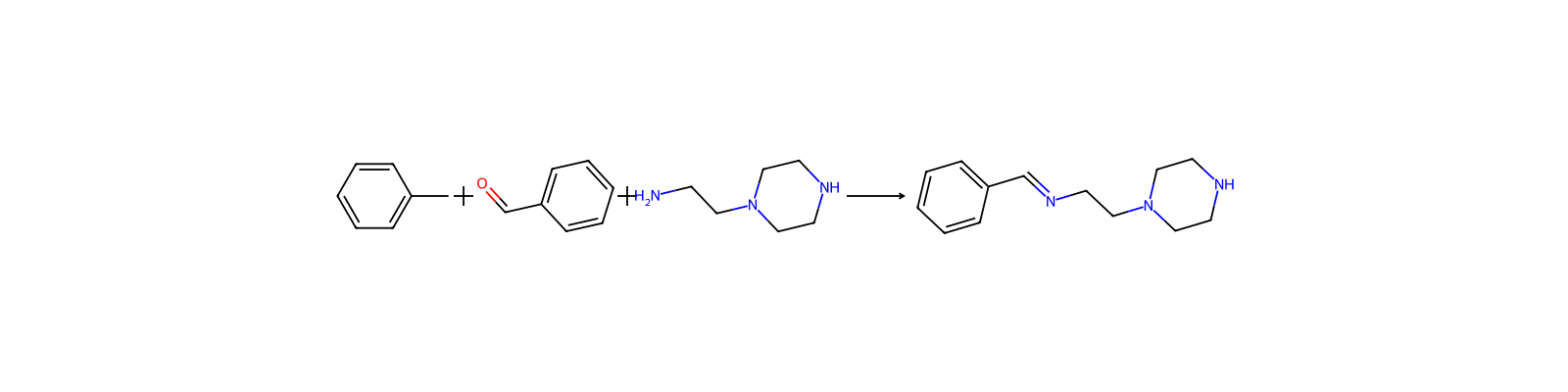
59 件




関連ノート
読み込み中…