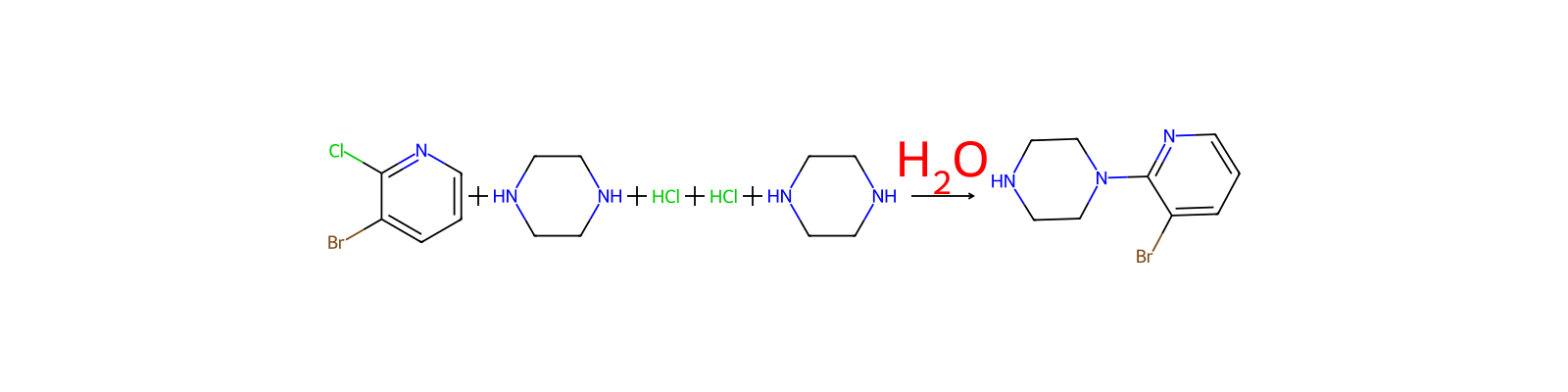
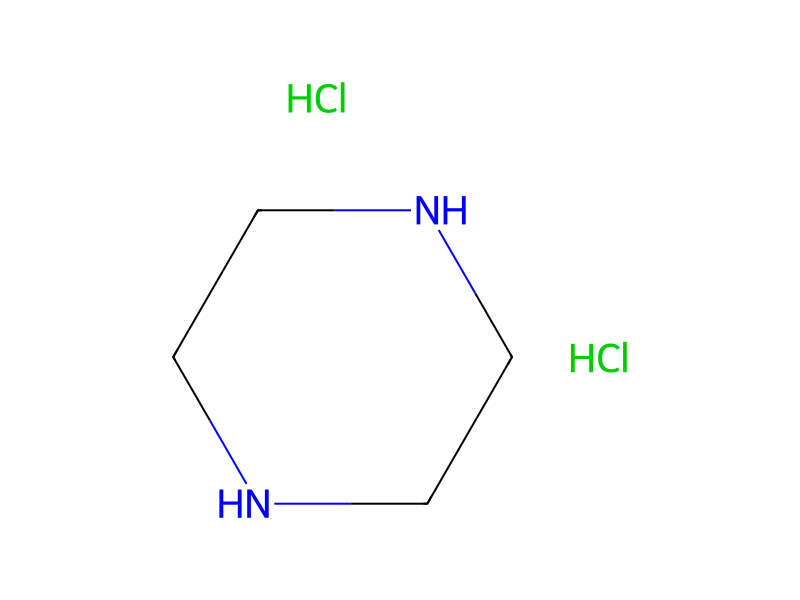
基本情報
- 標準SMILES
C1CNCCN1.Cl.Cl- InChIKey
CVVIJWRCGSYCMB-UHFFFAOYSA-N- 分子式
- C4H12Cl2N2
- 平均分子量
- 159.05 g/mol
- 単同位体質量
- 158.0377538
名称と識別子
- 優先名称
- Piperazine Dihydrochloride
- IUPAC
- piperazine;dihydrochloride
- 現地名
- ピペラジン二塩酸塩一水和物
- 英語名
- PIPERAZINE DIHYDROCHLORIDE
- 分子式
- C4H12Cl2N2
- 分子量
- 159.06
名称と別名
Piperazine dihydrochloride142-64-3Dowzene DHCPiperazine, dihydrochloridePiperazine wormer premixDihydro Pip WormerDiethylenediamine dihydrochlorideDTXSID4047096Ascarex DDihydrochloride salt of diethylenediamine17VU4Z4W88DTXCID2027096
名称をさらに表示
ピペラジン二塩酸塩一水和物ピペラジンジヒドロクロリドピペラジン二塩酸塩塩酸ピペラジン一水和物ピペラジン二塩酸塩水和物ピペラジン・塩酸塩Piperazine 2HClPipDCldowzenedhcdihydropipwormerPIPERAZINE DI HCLpiperazinewormerpremixPiperazine hydrate CRSpiperazinehydrochloridePiperazinium Dichloride
Piperazine, hydrochloride (1:2)RefChem:58255205-551-2piperazine;dihydrochlorideMFCD00012754Piperazine dihydrochloride [USP]Piperazinium chlorideCaswell No. 668
データベース識別子
- CAS
142-64-3、7542-23-6- PubChem CID
- 8893
- DTXSID
DTXSID4047096- ChEMBL
CHEMBL3188015- UNII
- 17VU4Z4W88
- EC Number
- 205-551-2、231-422-5
物性
構造計算による物性
- 極性表面積
- 24.1 Ų
- 水素結合供与体数
- 4
- 水素結合受容体数
- 2
- 回転可能結合数
- 0
- 重原子数
- 8
- 形式電荷
- 0
- 複雑度
- 26
実験および物理化学的性質
Color/Form
CREAM COLORED CRYSTALLINE POWDER
WHITE NEEDLES
White to creamy colored needles or powder.
Solubility
41 % (NIOSH, 2024)
SOLUBILITY IN WATER: 35% @ 0 °C, 41% @ 20 °C, 48% @ 50 °C; INSOL IN ORGANIC SOLVENTS
41%
DecompositionWhen heated to decomposition it emits very toxic fumes of nitrous oxide and hydrogen chloride.
Melting Point
635 °F (NIOSH, 2024)
635 °F
635 °F
Physical Description
Piperazine dihydrochloride appears as white to cream-colored needles or powder. Mp: 318-20 °C (with decomposition).
White to cream-colored needles or powder; [NIOSH]
White to cream-colored needles or powder.
White to cream-colored needles or powder.
Stability/Shelf Life
STABLE @ TEMP TO 270 °C & IN NEUTRAL OR ACID MEDIA
Stability of piperazine can be accomplished by use of its simple salts, /including hydrochloride/, which are more stable than the piperazine base.
Other Experimental Properties
SLIGHTLY HYGROSCOPIC
82-83 °C /Monohydrate/
物理化学的性質
- 融点
- 320 °C · 320°C(dec.)(lit.)
- 沸点
- 262.01 °C · 262.01°C (rough estimate)
- 比重(密度)
- 1.3011 · 1.3011 (rough estimate)
- 屈折率
- 1.63 · 1.6300 (estimate)
- 貯蔵温度
- Inert atmosphere,Room Temperature
- 溶解性
- 水
- 外見
- 白色結晶性固体
- 色
- ホワイトからオフホワイト
- 主な用途
- 医薬品(低分子化合物)
- InChI
- InChI=1S/C4H10N2.2ClH/c1-2-6-4-3-5-1;;/h5-6H,1-4H2;2*1H
- InChIKey
- CVVIJWRCGSYCMB-UHFFFAOYSA-N
- SMILES
- C1NCCNC1.Cl.Cl
- LogP
- -1.171 · -1.171 (est)
- CAS データベース
- 142 · 142-64-3(CAS DataBase Reference)
- EPAの化学物質情報
- Piperazine dihydrochloride (142-64-3)
安全と法規制
GHS分類
GHS Classification
Danger
H315: Causes skin irritation [Warning Skin corrosion/irritation];H317: May cause an allergic skin reaction [Warning Sensitization, Skin];H319: Causes serious eye irritation [Warning Serious eye damage/eye irritation];H334: May cause allergy or asthma symptoms or breathing difficulties if inhaled [Danger Sensitization, respiratory];H361fd: Suspected of damaging fertility; Suspected of damaging the unborn child [Warning Reproductive toxicity];H412: Harmful to aquatic life with long lasting effects [Hazardous to the aquatic environment, long-term hazard]
P203, P233, P260, P261, P264, P264+P265, P271, P272, P273, P280, P284, P302+P352, P304+P340, P305+P351+P338, P318, P321, P332+P317, P333+P317, P337+P317, P342+P316, P362+P364, P403, P405, and P501 (click each P-code to see the statement)
Danger
危険有害性情報
Regulatory Information
Chemical: Piperazine, dihydrochloride
Hazard Traits - Respiratory Toxicity;Authoritative List - EC Annex VI Resp. Sens. - Cat. 1;Report - if used as a fragrance or flavor ingredient
Piperazine dihydrochloride: Does not have an individual approval but may be used as a component in a product covered by a group standard. It is not approved for use as a chemical in its own right.
Other Safety InformationIMAP assessments - Piperazine salts: Human health tier II assessment
Health Hazards
Excerpt from NIOSH Pocket Guide for Piperazine dihydrochloride:;Exposure Routes: Inhalation, skin absorption, ingestion, skin and/or eye contact;Symptoms: Irritation eyes, skin, respiratory system; skin burns, sensitization; asthma; gastrointestinal upset, headache, nausea, vomiting, incoordination, muscle weak;Target Organs: Eyes, skin, respiratory system, central nervous system (NIOSH, 2024)
Hazards Summary
Piperazine dihydrochloride is well tolerated as an oral medication at a dose of 150 mg/kg for several days. Skin burns, allergic contact dermatitis, and asthma have been reported after occupational exposures to piperazine dust. [ACGIH] Piperazine, CAS # 110-85-0, is corrosive to skin. [Quick CPC] Asthma reported in pharmaceutical and chemical production workers; [Malo] Allergic contact dermatitis reported in pharmaceutical, laboratory, healthcare, and veterinary workers; [Kanerva, p. 1827] See Piperazine and salts.
FDA Requirements
Manufacturers, packers, and distributors of drug and drug products for human use are responsible for complying with the labeling, certification, and usage requirements as prescribed by the Federal Food, Drug, and Cosmetic Act, as amended (secs 201-902, 52 Stat. 1040 et seq., as amended; 21 U.S.C. 321-392).
Reactive GroupSalts, Acidic
Reactivity ProfileThis compound is incompatible with the following: Water, HEAT, flames, oxidizers. It absorbs moisture from air. It may create flammable condition upon contact with HEAT, FLAMES and OXIDIZERS.
Flammable LimitsCombustible Solid, but does not ignite easily.
Air and Water ReactionsNo rapid reaction with air. No rapid reaction with water. Soluble in water.
NIOSH RecommendationsRecommended Exposure Limit: 10 Hr Time-Weighted Avg: 5 mg/cu m.
Hazard Classes and Categories
Skin Irrit. 2 (100%);Skin Sens. 1 (97.6%);Eye Irrit. 2 (100%);Resp. Sens. 1 (97.6%);Repr. 2 (92.9%);Aquatic Chronic 3 (95.2%)
Eye irritation - category 2A;Skin irritation - category 2;Specific target organ toxicity (single exposure) - category 1;Specific target organ toxicity (repeated exposure) - category 2;Respiratory sensitisation - category 1;Skin sensitisation - category 1;Hazardous to the aquatic environment (chronic) - category 3;Reproductive toxicity - category 2
Acute toxicity (Oral) - Category 5;Skin corrosion/irritation - Category 2;Serious eye damage/eye irritation - Category 2A-2B
Repr. 2;Skin Irrit. 2;Eye Irrit. 2;Resp. Sens. 1;Skin Sens. 1;Aquatic Chronic 3
Hazardous Reactivities and Incompatibilities
Water [Note: Slightly hygroscopic (i.e., absorbs moisture from the air)].
Water [Note: Slightly hygroscopic (i.e., absorbs moisture from the air).]
安全と保護具
First Aid
Excerpt from NIOSH Pocket Guide for Piperazine dihydrochloride:;Eye: IRRIGATE IMMEDIATELY - If this chemical contacts the eyes, immediately wash (irrigate) the eyes with large amounts of water, occasionally lifting the lower and upper lids. Get medical attention immediately.;Skin: WATER FLUSH IMMEDIATELY - If this chemical contacts the skin, immediately flush the contaminated skin with water. If this chemical penetrates the clothing, immediately remove the clothing and flush the skin with water. Get medical attention promptly.;Breathing: RESPIRATORY SUPPORT - If a person breathes large amounts of this chemical, move the exposed person to fresh air at once. If breathing has stopped, perform artificial respiration. Keep the affected person warm and at rest. Get medical attention as soon as possible.;Swallow: MEDICAL ATTENTION IMMEDIATELY - If this chemical has been swallowed, get medical attention immediately. (NIOSH, 2024)
(General first aid procedures);Eye: Irrigate immediately - If this chemical contacts the eyes, immediately wash (irrigate) the eyes with large amounts of water, occasionally lifting the lower and upper lids. Get medical attention immediately.;Skin: Water flush immediately - If this chemical contacts the skin, immediately flush the contaminated skin with water. If this chemical penetrates the clothing, immediately remove the clothing and flush the skin with water. Get medical attention promptly.;Breathing: Respiratory support;Swallow: Medical attention immediately - If this chemical has been swallowed, get medical attention immediately.
Disposal Methods
SRP: At the time of review, criteria for land treatment or burial (sanitary landfill) disposal practices are subject to significant revision. Prior to implementing land disposal of waste residue (including waste sludge), consult with environmental regulatory agencies for guidance on acceptable disposal practices.
Preventive Measures
If material not on fire and not involved in fire: Keep sparks, flames, and othersources of ignition away. Keep material out of water sources and sewers. Build dikes to contain flow as necessary. /Piperazine/
Personnel protection: Avoid breathing vapors. Keep upwind. ... Avoid bodily contact with the material. ... Do not handle broken packages unless wearing appropriate personal protective equipment. Wash away any material which may have contacted the body with copious amounts of water or soap and water. If contact with the material anticipated, wear appropriate chemical protective clothing. /Piperazine/
The worker should immediately wash the skin when it becomes contaminated.
Work clothing that becomes wet or significantly contaminated should be removed and replaced.
Workers whose clothing may have become contaminated should change into uncontaminated clothing before leaving the work premises.
Respirator RecommendationsImportant additional information about respirator selection
Threshold Limit Values (TLV)
8 hr Time Weighted Avg (TWA): 5 mg/cu m.
Excursion Limit Recommendation: Excursions in worker exposure levels may exceed 3 times the TLV-TWA for no more than a total of 30 minutes during a work day, and under no circumstances should they exceed 5 times the TLV-TWA, provided that the TLV-TWA is not exceeded.
0.03 ppm (inhalable fraction and vapor) [2011]
Permissible Exposure Limit (PEL)none See Appendix G
Recommended Exposure Limit (REL)
5 mg/m³
TWA 5 mg/m3
Personal Protective Equipment (PPE)
Excerpt from NIOSH Pocket Guide for Piperazine dihydrochloride:;Skin: PREVENT SKIN CONTACT - Wear appropriate personal protective clothing to prevent skin contact.;Eyes: PREVENT EYE CONTACT - Wear appropriate eye protection to prevent eye contact.;Wash skin: WHEN CONTAMINATED - The worker should immediately wash the skin when it becomes contaminated.;Remove: WHEN WET OR CONTAMINATED - Work clothing that becomes wet or significantly contaminated should be removed and replaced.;Change: DAILY - Workers whose clothing may have become contaminated should change into uncontaminated clothing before leaving the work premises.;Provide:;⢠EYEWASH - Eyewash fountains should be provided in areas where there is any possibility that workers could be exposed to the substances; this is irrespective of the recommendation involving the wearing of eye protection.;⢠QUICK DRENCH - Facilities for quickly drenching the body should be provided within the immediate work area for emergency use where there is a possibility of exposure. [Note: It is intended that these facilities provide a sufficient quantity or flow of water to quickly remove the substance from any body areas likely to be exposed. The actual determination of what constitutes an adequate quick drench facility depends on the specific circumstances. In certain instances, a deluge shower should be readily available, whereas in others, the availability of water from a sink or hose could be considered adequate.] (NIOSH, 2024)
Wear appropriate personal protective clothing to prevent skin contact.
Wear appropriate eye protection to prevent eye contact.
Eyewash fountains should be provided in areas where there is any possibility that workers could be exposed to the substance; this is irrespective of the recommendation involving the wearing of eye protection.
Facilities for quickly drenching the body should be provided within the immediate work area for emergency use where there is a possibility of exposure. [Note: It is intended that these facilities provide a sufficient quantity or flow of water to quickly remove the substance from any body areas likely to be exposed. The actual determination of what constitutes an adequate quick drench facility depends on the specific circumstances. In certain instances, a deluge shower should be readily available, whereas in others, the availability of water from a sink or hose could be considered adequate.]
Immediately Dangerous to Life or Health (IDLH)N.D.;See: IDLH INDEX
毒性情報
Interactions
IN ISOLATED FROG & RABBIT HEARTS PIPERAZINE PRODUCED BIPHASIC EFFECT WITH INITIAL NEG INOTROPIC ACTION FOLLOWED BY POS INOTROPIC ACTION. FORMER PHASE WAS ANTAGONIZED BY ATROPINE, HEXAMETHONIUM & DIGOXIN. DIRECT ACTION ON THE HEART IS SUGGESTED. /PIPERAZINE HYDROGEN CHLORIDE/
Target OrgansEyes, skin, respiratory system, central nervous system
Adverse EffectsDermatotoxin - Skin burns.;Skin Sensitizer - An agent that can induce an allergic reaction in the skin.;Asthma - Reversible bronchoconstriction (narrowing of bronchioles) initiated by the inhalation of irritating or allergenic agents.
Exposure Routesinhalation, skin absorption, ingestion, skin and/or eye contact
Signs and Symptomsirritation eyes, skin, respiratory system; skin burns, sensitization; asthma; gastrointestinal upset, headache, nausea, vomiting, incoordination, muscle weak
Human Toxicity Excerpts
... SIDE EFFECTS ... INCL HEADACHES, NAUSEA, VOMITING, DIARRHEA, LETHARGY, TREMOR, INCOORDINATION, MUSCULAR WEAKNESS ... & VAGUE OCULAR DISTURBANCES. /PIPERAZINE SALTS/
LOSS OF CONSCIOUSNESS, DYSARTHRIA, APRAXIA, CLONIC SPASMS, TREMOR, MUSCULAR WEAKNESS, DROPPING OF OBJECTS, INABILITY TO THINK CLEARLY &/OR HALLUCINATIONS SEEN IN 35 YR OLD PT WITH TERMINAL RENAL FAILURE TAKING 30 MG PIPERAZINE HEXAHYDRATE/KG BODY WT/DAY FOR 10 DAYS. /PIPERAZINE HEXAHYDRATE/
SEVERE ILLNESS OCCURRED IN A 25 YR OLD WOMAN AFTER ADMIN OF PIPERAZINE ON 2 SEPARATE OCCASIONS. EVIDENCE FAVORS A HYPERSENSITIVITY MECHANISM RATHER THAN A DIRECT TOXIC EFFECT OF DRUG OR ITS METABOLITES. /PIPERAZINE/
ACUTE HUMAN EXPOSURES HAVE RESULTED IN MILD TO MODERATE SKIN BURNS & SENSITIZATION. MILD TO MODERATE ASTHMA HAS BEEN ASSOCIATED WITH INHALATION OF DUST.
Non-Human Toxicity Excerpts
EYE CONTACT, MARKED PAIN AND MODERATE EYE IRRITATION WHICH HEALS IN 2 DAYS WITH NO CORNEAL INJURY. SKIN CONTACT VERY SLIGHT IRRITATION.
VOMITING & DIARRHEA IS OCCASIONALLY REPORTED IN CATS & DOGS ESPECIALLY IF OVERDOSED. /ORAL ADMIN/
IN ISOLATED FROG & RABBIT HEARTS PIPERAZINE PRODUCED BIPHASIC EFFECT WITH INITIAL NEG INOTROPIC ACTION FOLLOWED BY POS INOTROPIC ACTION. FORMER PHASE WAS ANTAGONIZED BY ATROPINE, HEXAMETHONIUM & DIGOXIN. DIRECT ACTION ON HEART IS SUGGESTED. /PIPERAZINE/
Non-Human Toxicity ValuesLD50 Rat oral 4,900 mg/kg
法規制情報
Regulatory Information
Chemical: Piperazine, dihydrochloride
Hazard Traits - Respiratory Toxicity;Authoritative List - EC Annex VI Resp. Sens. - Cat. 1;Report - if used as a fragrance or flavor ingredient
Piperazine dihydrochloride: Does not have an individual approval but may be used as a component in a product covered by a group standard. It is not approved for use as a chemical in its own right.
FDA Requirements
Manufacturers, packers, and distributors of drug and drug products for human use are responsible for complying with the labeling, certification, and usage requirements as prescribed by the Federal Food, Drug, and Cosmetic Act, as amended (secs 201-902, 52 Stat. 1040 et seq., as amended; 21 U.S.C. 321-392).
安全データ
- F
- 3-10
- OEB
- B
- OEL
- TWA: 5 mg/m3
- wgk
- WGK 2
- tsca
- TSCA listed
- rtecs
- TL4025000
- 毒性
- mouse,LD50,intraperitoneal,1970mg/kg (1970mg/kg),LUNGS, THORAX, OR RESPIRATION: RESPIRATORY STIMULATION,Japanese Journal of Pharmacology. Vol. 17, Pg. 475, 1967.
- hs_code
- 2933599550
- risk_code
- 36/37/38-42/43
- hazard_code
- Xn
- safety_code
- 22-26-36/37
- Hazard Classifications
- Aquatic Chronic 3Eye Irrit. 2Repr. 2Resp. Sens. 1Skin Irrit. 2Skin Sens. 1
- ストレージクラス
- 11 - Combustible Solids
- 有毒物質データの
- 142-64-3(Hazardous Substances Data)
化学と産業
薬理情報
Mechanism of ActionANTHELMINTIC ACTION IS BY NARCOTIZING AND IMMOBILIZING INTERNAL PARASITES.
Metabolism/MetabolitesPIPERAZINE IS PARTLY METABOLIZED IN AN UNKNOWN MANNER IN MAN, SINCE ONLY 15% OF 2 G DOSES ARE EXCRETED UNCHANGED. /PIPERAZINE/
MeSH Pharmacological ClassificationSubstances used in the treatment or control of nematode infestations. They are used also in veterinary practice.
Absorption, Distribution and ExcretionNOT ABSORBED THROUGH SKIN IN ACUTE TOXIC AMT.
用途と製造
Uses
Used to manufacture fibers, pharmaceuticals, and insecticides; [ACGIH] Used as a veterinary anthelmintic medication and a curing agent for polychloroprene; [HSDB]
Plastic Composites Manufacturing [Category: Industry]
MEDICATION (VET)
MEDICATION
CHEM INT FOR ANTIHISTAMINES
USED IN MAKING INSECTICIDES & FIBERS
U.S. Production
(1972) 8.3X10+8 GRAMS
(1975) 7.14X10+8 GRAMS
Consumption PatternsESSENTIALLY 100% FOR ANTHELMINTIC USE (1976)
Methods of ManufacturingCYCLIZATION OF ETHYLENEDIAMINE IN THE PRESENCE OF A METALLIC HYDROGENATION CATALYST, FOLLOWED BY REACTION WITH HYDROCHLORIC ACID
Formulations/Preparations
PIPERAZINE DIHYDROCHLORIDE 53% BASE /IS/ POPULAR IN DRY FEED OR DRINKING WATER /ANTHELMINTIC/ MEDICATION.
PIPERTAB 2: COMPOSITION: EACH TABLET CONTAINS: PIPERAZINE DIHYDROCHLORIDE EQUIVALENT TO 50 MG PIPERAZINE BASE. ... AVAILABLE IN 500 TABLET BOTTLES. PIPERTAB 10: COMPOSITION: EACH TABLET CONTAINS: PIPERAZINE DIHYDROCHLORIDE EQUIVALENT TO 250 MG PIPERAZINE BASE.
52% piperazine base grades
Use ClassificationAnimal Drugs -> FDA Approved Animal Drug Products (Green Book) -> Active Ingredients
General Manufacturing Information
Piperazine, hydrochloride (1:2): ACTIVE
INTRODUCED IN 1956 BY THE DOW CHEMICAL COMPANY AS A LIVESTOCK AND POULTRY ANTHELMINTIC.
応用分野
用途有機合成原料、駆虫剤。
使用Piperazine Dihydrochloride is an anthelmintic agent used in the treatment of parasitic worms in animals.
一般的な説明White to cream-colored needles or powder. Mp: 318-20°C (with decomposition).
調製方法
純化方法Crystallise the salt from aqueous EtOH and dry it at 110o. [Beilstein 23 III/IV 17, 23/1 V 30.]
上流・下流製品情報
上流原料
下流製品
サプライヤー50 社
国药集团化学试剂有限公司86-21-63210123 · [email protected]
梯希爱(上海)化成工业发展有限公司021-67121386 · [email protected]
衢州润东化工有限公司0570-8789886 18892685668 · [email protected]
上海阿拉丁生化科技股份有限公司400-6206333 13167063860 · [email protected]
南京凯美西化工有限公司02558748998 18951874644 · [email protected]
盐城通铭生物科技有限公司15195160625 · [email protected]
上海麦克林生化科技股份有限公司021-50706066 15221275939 · [email protected]
杭州品高化工有限公司0571-87658025 · [email protected]
上海腾准生物科技有限公司19821570922 · [email protected]
杭州摩库生物医药科技有限公司+86-057181025280; +8617767106207 · [email protected]
普善实业(陕西)有限公司029-81310890 18165209495 · [email protected]
Suzhou ARTK Medchem Co., Ltd.+86-18168183658 · [email protected]
Dayang Chem (Hangzhou) Co.,Ltd.+86-0571-88938639 17705817739 · [email protected]
山东中图化工有限公司17864755731 · [email protected]
Jai Radhe Sales+(91)-(79)-26431096/65255722 · [email protected]
LGM Pharma1-(800)-881-8210 · [email protected]
南通萧畅医药贸易有限公司0513-82104991 18862997351 · [email protected]
北京华威锐科化工有限公司0757-86329057 18934348241 · [email protected]
北京索莱宝科技有限公司010-50973130 17801761073 · [email protected]
武汉市聚舜化工有限公司027-02783261126 18971318572 · [email protected]
安耐吉化学&3A(安徽泽升科技股份有限公司)400-0056266 · [email protected]
广东元丰化学试剂有限公司0751-2829979 13318593351 · [email protected]
烟台正信新材料科技有限公司13854547682 13854547682 · [email protected]
常州布克化工有限公司13606129753 13775119556 · [email protected]
上海稳同科技有限公司02151600108 13062666369 · [email protected]
吉林中科研伸科技有限公司18143011203 · [email protected]
玛雅试剂+86 (573) 82222445 (0)18006601000 452520369 · [email protected]
天津希恩思生化科技有限公司400 638 7771 · [email protected]
ZHEJIANG JIUZHOU CHEM CO., LTD+86-0576225566889 +86-13454675544 · [email protected];[email protected];[email protected]
斯百全化学(上海)有限公司021-021-021-67601398-809-809-809 15221380277 · [email protected]
TCI AMERICA800-4238616 · [email protected]
TOKYO CHEMICAL INDUSTRY CO., LTD.03-36680489 · [email protected]
TCI Europe320-37350700 · [email protected]
武汉卡诺斯科技有限公司153-37111468 15337111468 · [email protected]
西安浴日光能科技有限公司029-81101199 +86-15702951000 · [email protected]
上海湄水化工科技有限公司021-60549325 18616193163
湖南华腾制药有限公司400-8592883 · [email protected]
江苏艾康生物医药研发有限公司025-66028182 17714375163 · [email protected]
池州凯隆进出口贸易有限公司[email protected]
Sigma-Aldrich西格玛奥德里奇(上海)贸易有限公司021-61415566 800-8193336 · [email protected]
九鼎化学(上海)科技有限公司4009209199 · [email protected]
上海谱振生物科技有限公司4001650900 13817534909 · [email protected]
Alfa Chemistry+1-5166625404 · [email protected]
安阳鸿蒙新材料有限公司19588588067 · [email protected]
艾吉析科技(上海)有限公司17721401538;17717235263 17721401538 · [email protected]
sgtlifesciences pvt ltd+91-8790379245 · [email protected]
陕西缔都医药化工有限公司029-029-81120477 17792793610 · [email protected]
上海源叶生物科技有限公司13636370518 · [email protected]
上海煜柯化学品有限公司13391486464 · [email protected]
深圳市祥根生物医药有限公司0755-28967200 13631290199 · [email protected]
関連反応
6 件





関連ノート
読み込み中…