
ホームMCPワークベンチSkills
ホームワークベンチ通知マイページ
llms.txt · MCPガイドプライバシーポリシー · 利用規約 · サポートv1.8.0
  1. ホーム
  2. /化合物

メチルアルソン酸二ナトリウム

Disodium methylarsonate
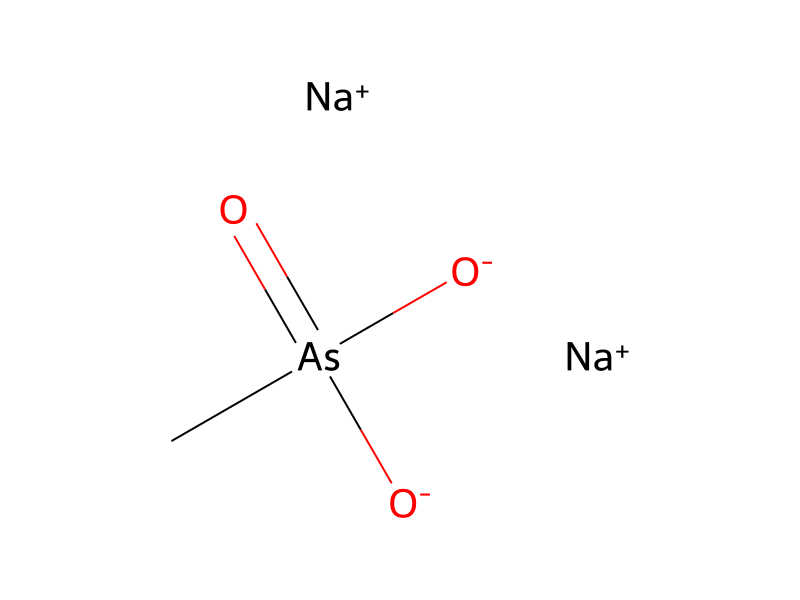
HCID 8947
ノートを作成反応を作成見積依頼を出す
印刷プレビュー
基本情報概要名称と識別子物性安全と法規制化学と産業関連反応化合物ノート
部分構造検索類似構造を探す

基本情報

CAS
144-21-8
標準SMILES
C[As](=O)([O-])[O-].[Na+].[Na+]
InChIKey
SDIXRDNYIMOKSG-UHFFFAOYSA-L
分子式
CH3AsNa2O3
平均分子量
183.934 g/mol
単同位体質量
183.909352

概要

Methylarsonic acid, disodium salt is an organoarsenic compound formed from the methylation of inorganic arsenic by living organisms. Arsenic is a chemical element that has the symbol As and atomic number 33. It is a poisonous metalloid that has many allotropic forms: yellow (molecular non-metallic) and several black and grey forms (metalloids) are a few that are seen. Three metalloidal forms of arsenic with different crystal structures are found free in nature (the minerals arsenopyrite and the much rarer arsenolamprite and pararsenolamprite), but it is more commonly found as a compound with other elements. (T3, L389)

名称と識別子

優先名称
Disodium methylarsonate
IUPAC
disodium;methyl-dioxido-oxo-λ5-arsane
現地名
メチルアルソン酸二ナトリウム
英語名
Disodium methylarsonate
分子式
CH3AsO3·2Na
分子量
183.94

名称と別名

144-21-8Disodium methylarsonateDISODIUM METHANEARSONATEDisomearDSMAArsynalDiarsenMetharsanStenosineTonarsanTonarsinMethar
名称をさらに表示
メチルアルソン酸二ナトリウムココジルニューステノシンアンサル184メサールメサルサンアルシニルソダールアルシナールアレナールネオアシコジルメチルアルソン酸ジナトリウムアンサル8100クラロE-radメサルシナートジソメアルメチルオキソビス(ソジオオキシ)ひ素(V)ジアルセントナルシンソマールdimetsodardinatedi-tacdma100arsinyl
NamateSomarNeo-AsycodileWeed broomCacodyl NewMaa sodium saltJon-TrolWeed-Hoe

物性

構造計算による物性

極性表面積
63.2 Ų
水素結合供与体数
0
水素結合受容体数
3
回転可能結合数
0
重原子数
7
形式電荷
0
複雑度
49.8

実験および物理化学的性質

Chemical Classes · 2 件

Metals -> Arsenic Compounds, Organic

Carcinogens

LogPKow = <10
TastePleasant acid taste
Density1.04 g/ml
Color/Form · 3 件

Hydrated crystals containing 5H2O or 6H2O

Monoclinic spear-shaped plates from absolute alcohol

White crystalline solid

Solubility · 3 件

Soluble in methanol; practically insoluble in most organic solvents

Soluble in water (300 g/l at 25 °C)

In water, 4.32X10+5 mg/l @ 25 °C

Corrosivity · 2 件

NON-CORROSIVE TO IRON, RUBBER AND MOST PLASTICS

Mildly corrosive

Decomposition · 2 件

When heated to decomposition it emits toxic fumes of /arsenic & sodium oxide/.

DECOMPOSED BY STRONG OXIDIZING & REDUCING AGENTS.

Melting Point · 2 件

>355 °C

Melting point 132-139 °C /Disodium methanearsonate hexahydrate/

Vapor Pressure · 2 件

安全と法規制

安全情報は参考情報です。供給元の安全データシート(SDS)、適用法令、専門家による評価に代わるものではありません。

GHS分類

GHS Classification · 4 件

Danger

H301 (95%): Toxic if swallowed [Danger Acute toxicity, oral]

P261, P264, P270, P271, P273, P301+P316, P304+P340, P316, P321, P330, P391, P403+P233, P405, and P501 (click each P-code to see the statement)

Aggregated GHS information provided per 40 reports by companies from 3 notifications to the ECHA C&L Inventory. Each notification may be associated with multiple companies.

危険有害性情報

Regulatory Information · 3 件

Disodium methanearsonate is listed in the dataset of EPA Human Health Benchmarks for Pesticides under the Safe Drinking Water Act (40 eCFR 141)

Restricted substance: Disodium methylarsonate

The New Jersey Worker and Community Right to Know Act requires public and private employers to provide information about hazardous substances at their workplaces. (N.J.S.A. 34:5A-1 et. seq.)

Other Safety InformationIMAP assessments - Arsonic acid, methyl-, disodium salt: Environment tier I assessment
Fire Potential · 2 件

NOT FLAMMABLE

Dangerous fire hazard by spontaneous chemical reaction. Ignites spontaneously in dry air. Can react vigorously with oxidizing materials; e.g. air, /chloride/.

Hazards Summary · 1 件

A mild skin and eye irritant; [HSDB] May cause irritation; [MSDSonline] Most excreted unchanged; [Rosenstock, p. 947] For MSMA and DSMA, developmental studies of rats and rabbits along with a two-generation reproductive study show no indication of increased susceptibility; No evidence of carcinogenicity; Target organs are large intestines and kidneys; [Reference #1] See Dimethylarsenic acid.

FIFRA Requirements · 4 件

As the federal pesticide law FIFRA directs, EPA is conducting a comprehensive review of older pesticides to consider their health and environmental effects and make decisions about their future use. Under this pesticide reregistration program, EPA examines health and safety data for pesticide active ingredients initially registered before November 1, 1984, and determines whether they are eligible for reregistration. In addition, all pesticides must meet the new safety standard of the Food Quality Protection Act of 1996. Pesticides for which EPA had not issued Registration Standards prior to the effective date of FIFRA, as amended in 1988, were divided into three lists based upon their potential for human exposure and other factors, with List B containing pesticides of greater concern and List D pesticides of less concern. Disodium methanearsonate is found on List B. Case No: 2395; Pesticide type: insecticide, herbicide, rodenticide; Case Status: OPP is reviewing data from the pesticide's producers regarding its human health and/or environmental effects, or OPP is determining the pesticide's eligibility for reregistration and developing the Reregistration Eligibility Decision (RED) document.; Active ingredient (AI): Disodium methanearsonate; Data Call-in (DCI) Date(s): 06/14/91, 03/03/95, 10/13/95; AI Status: The producers of the pesticide has made commitments to conduct the studies and pay the fees required for reregistration, and are meeting those commitments in a timely manner.

化学と産業

薬理情報

Mechanism of Action · 1 件

ARSONIC ACID HERBICIDES ARE NOT GROWTH REGULATORS IN SENSE OF PLANT HORMONES. THEY ... ACT THROUGH ENZYME SYSTEMS TO INHIBIT GROWTH. THEY KILL ... SLOWLY; FIRST SYMPTOMS ARE ... CHLOROSIS, CESSATION OF GROWTH, & GRADUAL YELLOWING, THEN BROWNING FOLLOWED BY DEHYDRATION & DEATH. /ORGANOARSENICAL HERBICIDES/

Metabolism/Metabolites · 6 件

... EXAMINED REACTION PRODUCTS OF DSMA ... IN PURPLE NUTSEDGE (CYPERUS ROTUNDUS L). ... RADIOACTIVITY WAS ... DETECTED IN RESPIRATORY CARBON DIOXIDE FROM (14)C DSMA-TREATED PLANTS, INDICATING C-AS BOND DEGRADATION.

... TREATED ... BERMUDA GRASS (CYNODON DACTYLON LEGUMINOSAE PERS) WITH (14)C DSMA. MOLECULE REMAINED INTACT, BUT ... COMPLEXED. 80% HOT ETHANOL EXTRACT CONTAINED UNKNOWN ... LITTLE (14)C CARBON DIOXIDE (0.1%) ... FOUND IN RESPIRATORY CARBON DIOXIDE 10 DAYS AFTER TREATMENT.

Evolution of gaseous arsenic from DSMA-treated soil was a function of organic matter and moisture content. Greatest loss of arsenic was from soil containing 11% added organic matter and maintained under reduced conditions. The sorbed arsenic was predominantly in the form of iron arsenate. Aluminum arsenate was the next most abundant form.

Studies have identified the compound evolved from cultures of Penicillium brevicaule containing DSMA as trimethylarsine.

VOLUNTEERS INGESTED A SINGLE ORAL DOSE OF 500 MG ARSENIC AS DISODIUM METHANEARSONATE. AFTER 4 DAYS, 78% OF INGESTED ARSENIC WAS EXCRETED IN URINE. METHANEARSONATE IS 13% METHYLATED INTO DIMETHYLARSINATE.

Arsenic is absorbed mainly by inhalation or ingestion, as to a lesser extent, dermal exposure. It is then distributed throughout the body, where it is reduced into arsenite if necessary, then methylated into monomethylarsenic (MMA) and dimethylarsenic acid (DMA) by arsenite methyltransferase. Arsenic and its metabolites are primarily excreted in the urine. Arsenic is known to induce the metal-binding protein metallothionein, which decreases the toxic effects of arsenic and other metals by binding them and making them biologically inactive, as well as acting as an antioxidant. (L20)

Absorption, Distribution and Excretion · 5 件

USING (14)C LABELED DSMA, STUDIES SHOWED THAT DSMA .. READILY TAKEN UP BY BERMUDAGRASS FROM ... NUTRIENT SOLN BUT... SLOWLY FROM SOIL. ... ABOUT 25% ... TRANSLOCATED TO ROOTS & RHIZOMES WITHIN 5 DAYS. SMALL AMT OF CARBON DIOXIDE ... DETECTED. ... C-AS BOND REMAINED LARGELY INTACT ... .

関連反応

3 件

反応記録を作成
HRID 3625 の反応式
HRID 3625反応物としてuspto-grants-1998_03
HRID 488342 の反応式
HRID 488342反応物としてuspto-grants-1994_03
HRID 1608880 の反応式
HRID 1608880反応物としてuspto-grants-1995_03

化合物ノート

読み込み中…

このページの内容基本情報概要名称と識別子物性安全と法規制化学と産業関連反応化合物ノート
その他の操作
ノートを作成反応を作成見積依頼を出す

データベース識別子

CAS
144-21-8
PubChem CID
8947
DTXSID
DTXSID4032665
ChEMBL
CHEMBL2289061
UNII
7NK4BV40VN
EC Number
205-620-7
Nikkaji
J815J

0.0000001 [mmHg]

10-7 mm Hg @ 25 °C

Physical DescriptionColorless hygroscopic solid; [Hawley]
Stability/Shelf Life · 2 件

DECOMPOSED BY STRONG OXIDIZING & REDUCING AGENTS.

/Decomposes/ slowly at elevated temperatures. Stable to hydrolysis.

物理化学的性質

融点
355 °C · >355 °C
沸点
165 °C · 165°C
比重(密度)
1.15 · 1.1500
溶解性
Water (Sparingly)
外見
Solid
色
White to Off-White
安定性
Hygroscopic
EPAの化学物質情報
Disodium methanearsonate (144-21-8)

化学的性質

化学的特性White Solid

Tolerances are established for residues of the herbicide methanearsonic acid (calculated as As2O3) from application of the disodium and monosodium salts of methanearsonic acid in or on raw agricultural commodities as follows: citrus fruit; cottonseed; and cottonseed hulls.

If material involved in fire: Extinguish fire using agent suitable for type of surrounding fire. (Material itself does not burn or burns with difficulty.) Use water in flooding quantities as fog. Use foam, dry chemical, or carbon dioxide. /Arsenical cmpd, liquid, NOS/

If material involved in fire: Extinguish fire using agent suitable for type of surrounding fire. (Material itself does not burn or burns with difficulty.) Use water in flooding quantities as fog. Use foam, dry chemical, or carbon dioxide. /Arsenical cmpd, solid, NOS/

OSHA StandardsPermissible Exposure Limit: Table Z-1 8-Hr Time Weighted Avg: 0.5 mg/cu m. /Arsenic, organic cmpd (as As)/
Atmospheric Standards · 4 件

Listed as a hazardous air pollutant (HAP) generally known or suspected to cause serious health problems. The Clean Air Act, as amended in 1990, directs EPA to set standards requiring major sources to sharply reduce routine emissions of toxic pollutants. EPA is required to establish and phase in specific performance based standards for all air emission sources that emit one or more of the listed pollutants. Disodium methanearsonate is included on this list.

(a) The owner or operator of an existing glass melting furnace subject to the provisions of this subpart shall comply with either paragraph (a)(1) or (a)(2) of this section ... (1) Uncontrolled total arsenic emissions from the glass melting furnace shall be less than 2.5 Mg (2.7 ton) per year, or ... (2) Total arsenic emissions from glass melting furnace shall be conveyed to a control device and reduced by at least 85%. /Total arsenic/

(b) The owner or operator of a new or modified glass melting furnace subject to the provisions of this subpart shall comply with either paragraph (b)(1) or (b)(2) of this section ... (1) Uncontrolled total arsenic emissions from the glass melting furnace shall be less than 0.4 Mg (0.44 ton) per year, or ... (2) Total arsenic emissions from glass melting furnace shall be conveyed to a control device and reduced by at least 85%. /Total arsenic/

The owner or operator of each copper converter subject to the provisions of this subpart shall reduce inorganic arsenic emissions to the atmosphere by meeting the following design, equipment, work practice, and operational requirements: (1) Install, operate, and maintain a secondary hood system on each copper converter. Each secondary hood system shall consist of a hood enclosure, air curtain fan(s), exhaust system fan(s), and ductwork that conveys the captured emission to a control device ... (2) Optimize the capture of secondary inorganic arsenic emission by operating the copper converter and secondary hood systems at all times ... . /Inorganic arsenic/

EPA Hazardous Waste Number · 1 件

D004; A waste containing arsenic may or may not be characterized as a hazardous waste following testing by the Toxicity Characteristic Leaching Procedure as prescribed by the Resource Conservation and Recovery Act (RCRA) regulations. /Arsenic/

Other Hazardous ReactionsPoisonous gases are produced when heated
Clean Water Act Requirements · 3 件

Toxic pollutant designated pursuant to section 307(a)(1) of the Federal Water Pollution Control Act and is subject to effluent limitations. /Arsenic & cmpd/

For the maximum protection of human health from the potential carcinogenic effects due to exposure of arsenic through ingestion of contaminated water & contaminated aquatic organisms, the ambient water concn should be zero based on the nonthreshold assumption for this chemical. However, zero level may not be attainable at the present time. Therefore, the levels which may result in incremental increase of cancer risk over the lifetime are estimated at 1X10⁻⁵, 1X10⁻⁶, & 1X10⁻⁷. The corresponding criteria are 22 ng/l, 2.2 ng/l, & .22 ng/l, respectively .... For consumption of aquatic organisms only, excluding consumption of water, the levels are 175 ng/ml, 17.5 ng/l, & 1.75 ng/l, respectively. /Arsenic/

D004; A solid waste containing arsenic may or may not become characterized as a hazardous waste when subjected to the Toxicity Characteristic Leaching Procedure listed in 40 CFR 261.24, and if so characterized, must be managed as a hazardous waste.

Hazard Classes and Categories · 2 件

Acute Tox. 3 (95%)

Carcinogens

Standard Transportation Number · 2 件

49 232 11; Arsenical compound nos, solid, (or) arsenical mixture, NOS, solid

49 232 10; Arsenical cmpd, NOS, liquid (or) arsenical mixture, NOS, liquid

安全と保護具

Fire Fighting Procedures · 2 件

Wear goggles and self contained breathing apparatus

Fire extinguishing media: Dry chemical, carbon dioxide.

Storage ConditionsDo not store near feed, food.
Disposal Methods · 2 件

Generators of waste (equal to or greater than 100 kg/mo) containing this contaminant, EPA hazardous waste number D004, must conform with USEPA regulations in storage, transportation, treatment and disposal of waste.

Arsenic or organo-arsenic containing wastewater treatment sludges from production of veterinary pharmaceuticals are poor candidates for incineration.

Preventive Measures · 3 件

SRP: The scientific literature for the use of contact lenses in industry is conflicting. The benefit or detrimental effects of wearing contact lenses depend not only upon the substance, but also on factors including the form of the substance, characteristics and duration of the exposure, the uses of other eye protection equipment, and the hygiene of the lenses. However, there may be individual substances whose irritating or corrosive properties are such that the wearing of contact lenses would be harmful to the eye. In those specific cases, contact lenses should not be worn. In any event, the usual eye protection equipment should be worn even when contact lenses are in place.

Protective clothing to prevent contact with skin; chemical goggles.

Avoid skin contact or breathing spray mist. ... Keep children, domestic animals off treated areas until material washes into soil.

Minimum Risk LevelAcute Oral: 0.005 mg/kg/day (L134) Chronic Oral: 0.0003 mg/kg/day (L134) Chronic Inhalation: 0.01 mg/m3 (L134)
Allowable Tolerances · 2 件

Tolerances are established for residues of the herbicide methanearsonic acid (calculated as As2O3) from application of the disodium and monosodium salts of methanearsonic acid in or on raw agricultural commodities as follows: citrus fruit, 0.35 ppm; cottonseed, 0.7 ppm; and cottonseed hulls, 0.9 ppm.

Tolerances for total residues of combined arsenic (calculated as As) in food are established as follows: (a) In edible tissues & in eggs of chickens & turkeys: 0.5 ppm in uncooked muscle tissue; 2 ppm in uncooked edible by-products; & 0.5 ppm in eggs. (b) In edible tissues of swine: 2 ppm in uncooked liver & kidney; 0.5 ppm in uncooked muscle tissue & by-products other than liver & kidney. /Arsenic/

Permissible Exposure Limit (PEL)0.5 [mg/m3], as As
Personal Protective Equipment (PPE)Goggles or face shield, rubber or neoprene gloves, rubber apron.
Other Standards Regulations and Guidelines · 1 件

... The following countries had adopted the ... TLV of 0.5 mg/cu m: Austria, Belgium, Finland, Japan, and Holland. Czechoslavakia, East Germany, Hungary and Poland ... USSR ... 0.3 mg/cu m; Romania and Switzerland, 0.2 mg/cu m; Sweden 0.05 mg/cu m; and Italy 0.25 mg/cu m. /Arsenic and sol cmpd/

毒性情報

Treatment · 1 件

Arsenic poisoning can be treated by chelation therapy, using chelating agents such as dimercaprol, EDTA or DMSA. Charcoal tablets may also be used for less severe cases. In addition, maintaining a diet high in sulfur helps eliminate arsenic from the body. (L20)

Health EffectsArsenic poisoning can lead to death from multi-system organ failure, probably from necrotic cell death, not apoptosis. Arsenic is also a known carcinogen, esepcially in skin, liver, bladder and lung cancers. (T1, L20)
Ecotoxicity ValuesLC50 BLUEGILL SUNFISH (LEPOMIS MACROCHIRUS) > 1000 PPM/48 HR/FRESH WATER /CONDITIONS OF BIOASSAY NOT SPECIFIED/
Environmental Fate · 3 件

... FOUND RAPID LOSS OF HERBICIDAL ACTIVITY FROM DSMA APPLIED TO BOSKET SILT LOAM. MOST MARKED REDUCTION IN TOXIC RESIDUES OCCURRED BETWEEN INITIAL PLANTING DATE AND 16-WEEK REPLANTING DATE.

TERRESTRIAL FATE: Organoarsenicals, such as dimethylarsinic acid, methanearsonic acid, monosodium and disodium salts, and sodium cacodylate are adsorbed by clay soils. After rapid initial adsorption, changes occur which result in the redistribution of dimethylarsinic acid into a less soluble form associated with aluminium in the soil. Downward leaching of the methanearsonic acid salts has also been reported. The methanearsonic acid salts and dimethylarsinic acid are fixed by iron and aluminium in the soil, although not as strongly as inorganic arsenate.

REACTION OF ... DSMA ... EXAMINED IN ... PLANTS ... SINGLE RADIOACTIVE CMPD ... FOUND /IN PURPLE NUTSEDGE (CYPERUS ROTUNDUS LEGUMINOSAE)/ IN HOT 80% ETHANOL EXTRACT. RF WAS 0.59 COMPARED TO 0.66 FOR STANDARD DSMA. CHEM ANALYSIS REVEALED THAT C-AS BOND REMAINED INTACT.

Exposure RoutesOral (L2) ; inhalation (L2); dermal (L2)
Toxicity Summary · 1 件

Arsenic and its metabolites disrupt ATP production through several mechanisms. At the level of the citric acid cycle, arsenic inhibits pyruvate dehydrogenase and by competing with phosphate it uncouples oxidative phosphorylation, thus inhibiting energy-linked reduction of NAD+, mitochondrial respiration, and ATP synthesis. Hydrogen peroxide production is also increased, which might form reactive oxygen species and oxidative stress. Arsenic's carginogenicity is influenced by the arsenical binding of tubulin, which results in aneuploidy, polyploidy and mitotic arrests. The binding of other arsenic protein targets may also cause altered DNA repair enzyme activity, altered DNA methylation patterns and cell proliferation. (T1, A17)

Signs and SymptomsExposure to lower levels of arsenic can cause nausea and vomiting, decreased production of red and white blood cells, abnormal heart rhythm, damage to blood vessels, and a sensation of burn (T1).
Soil Adsorption/Mobility · 3 件

TYPE OF CLAY MINERAL MAY BE RESPONSIBLE FOR DIFFERENT FIXATION TENDENCIES ... KAOLINITE REMOVED MUCH MORE DSMA FROM SOLN THAN DID VERMICULITE. SMALLER SIZE FRACTIONS OF AUGUSTA SILT LOAM ... ABSORBED LARGER PERCENTAGES OF MAA /METHANEARSONIC ACID/ PRESENT IN SOLUTION.

PHYTOTOXICITY IS ... AFFECTED BY LEACHING OF DSMA. IF ARSONATE IS APPLIED WITHIN 2 HR OF RAIN, LITTLE ABSORPTION WILL OCCUR AND LEACHING OF MAA /METHANEARSONIC ACID/ PROCEEDS.

... FOUND NO LEACHING OF DSMA IN DECATUR CLAY LOAM, WHILE 52% ... RECOVERED IN THE TWENTY 1 IN INCREMENTS OF LEACHATE FROM NORFOLK LOAMY SAND. MOVEMENT THROUGH NORFOLK LOAMY SAND OCCURRED AS BAND OF HIGH FRONTAL CONCN WHICH ... DECREASED IN DIRECTION OF ZONE OF APPLICATION.

Human Toxicity Excerpts · 3 件

COMPOUNDS INCLUDED METHANEARSONIC ACID & ITS SODIUM SALTS; 9/34 CASES SHOWED SYSTEMIC SYMPTOMS & REMAINDER HAD EYE & SKIN IRRITATION.

ORGANIC ARSENICALS INCLUDE DISODIUM METHYLARSONATE ... AND AMINE METHYLARSONATE. TOXICITY OF THESE CMPD TO HUMANS IS CONSIDERABLY LESS THAN ... INORGANIC ARSENICALS; HOWEVER THEY ARE HARMFUL IF INHALED, SWALLOWED, OR IF THEY COME IN CONTACT WITH EYES OR SKIN.

Toxic by ingestion and inhalation.

Environmental Biodegradation · 1 件

... NORFOLK LOAMY SAND SAMPLES (WITH AND WITHOUT ORGANIC MATTER ADDED) SHOWED INCREASED DSMA DECOMPOSITION RELATIVE TO SOIL ORGANIC MATTER. THIS SUGGESTS ADAPTATION OF MICROBIAL POPULATION TO METABOLIZE METHYL CARBON OF MAA /METHANEARSONIC ACID/.

Sediment/Soil Concentrations · 1 件

The sorption of arsenic, phosphate, disodium methanearsonate, and the sodium salt of cacodylic acid by 16 Mississippi river alluvial flood plain soils is measured in a slurry experiment in which initial pH and molar solution concn for all four solutes are identical. Sorption of the two organoarsenical herbicides is strongly correlated with arsenate and phophate sorption, and sorption of all four species is strongly correlated with clay and iron oxide contents of the soils.

Carcinogen Classification3, not classifiable as to its carcinogenicity to humans. (L135)

法規制情報

FIFRA Requirements · 4 件

As the federal pesticide law FIFRA directs, EPA is conducting a comprehensive review of older pesticides to consider their health and environmental effects and make decisions about their future use. Under this pesticide reregistration program, EPA examines health and safety data for pesticide active ingredients initially registered before November 1, 1984, and determines whether they are eligible for reregistration. In addition, all pesticides must meet the new safety standard of the Food Quality Protection Act of 1996. Pesticides for which EPA had not issued Registration Standards prior to the effective date of FIFRA, as amended in 1988, were divided into three lists based upon their potential for human exposure and other factors, with List B containing pesticides of greater concern and List D pesticides of less concern. Disodium methanearsonate is found on List B. Case No: 2395; Pesticide type: insecticide, herbicide, rodenticide; Case Status: OPP is reviewing data from the pesticide's producers regarding its human health and/or environmental effects, or OPP is determining the pesticide's eligibility for reregistration and developing the Reregistration Eligibility Decision (RED) document.; Active ingredient (AI): Disodium methanearsonate; Data Call-in (DCI) Date(s): 06/14/91, 03/03/95, 10/13/95; AI Status: The producers of the pesticide has made commitments to conduct the studies and pay the fees required for reregistration, and are meeting those commitments in a timely manner.

Tolerances are established for residues of the herbicide methanearsonic acid (calculated as As2O3) from application of the disodium and monosodium salts of methanearsonic acid in or on raw agricultural commodities as follows: citrus fruit; cottonseed; and cottonseed hulls.

If material involved in fire: Extinguish fire using agent suitable for type of surrounding fire. (Material itself does not burn or burns with difficulty.) Use water in flooding quantities as fog. Use foam, dry chemical, or carbon dioxide. /Arsenical cmpd, liquid, NOS/

If material involved in fire: Extinguish fire using agent suitable for type of surrounding fire. (Material itself does not burn or burns with difficulty.) Use water in flooding quantities as fog. Use foam, dry chemical, or carbon dioxide. /Arsenical cmpd, solid, NOS/

Atmospheric Standards · 4 件

Listed as a hazardous air pollutant (HAP) generally known or suspected to cause serious health problems. The Clean Air Act, as amended in 1990, directs EPA to set standards requiring major sources to sharply reduce routine emissions of toxic pollutants. EPA is required to establish and phase in specific performance based standards for all air emission sources that emit one or more of the listed pollutants. Disodium methanearsonate is included on this list.

(a) The owner or operator of an existing glass melting furnace subject to the provisions of this subpart shall comply with either paragraph (a)(1) or (a)(2) of this section ... (1) Uncontrolled total arsenic emissions from the glass melting furnace shall be less than 2.5 Mg (2.7 ton) per year, or ... (2) Total arsenic emissions from glass melting furnace shall be conveyed to a control device and reduced by at least 85%. /Total arsenic/

(b) The owner or operator of a new or modified glass melting furnace subject to the provisions of this subpart shall comply with either paragraph (b)(1) or (b)(2) of this section ... (1) Uncontrolled total arsenic emissions from the glass melting furnace shall be less than 0.4 Mg (0.44 ton) per year, or ... (2) Total arsenic emissions from glass melting furnace shall be conveyed to a control device and reduced by at least 85%. /Total arsenic/

The owner or operator of each copper converter subject to the provisions of this subpart shall reduce inorganic arsenic emissions to the atmosphere by meeting the following design, equipment, work practice, and operational requirements: (1) Install, operate, and maintain a secondary hood system on each copper converter. Each secondary hood system shall consist of a hood enclosure, air curtain fan(s), exhaust system fan(s), and ductwork that conveys the captured emission to a control device ... (2) Optimize the capture of secondary inorganic arsenic emission by operating the copper converter and secondary hood systems at all times ... . /Inorganic arsenic/

Clean Water Act Requirements · 3 件

Toxic pollutant designated pursuant to section 307(a)(1) of the Federal Water Pollution Control Act and is subject to effluent limitations. /Arsenic & cmpd/

For the maximum protection of human health from the potential carcinogenic effects due to exposure of arsenic through ingestion of contaminated water & contaminated aquatic organisms, the ambient water concn should be zero based on the nonthreshold assumption for this chemical. However, zero level may not be attainable at the present time. Therefore, the levels which may result in incremental increase of cancer risk over the lifetime are estimated at 1X10⁻⁵, 1X10⁻⁶, & 1X10⁻⁷. The corresponding criteria are 22 ng/l, 2.2 ng/l, & .22 ng/l, respectively .... For consumption of aquatic organisms only, excluding consumption of water, the levels are 175 ng/ml, 17.5 ng/l, & 1.75 ng/l, respectively. /Arsenic/

D004; A solid waste containing arsenic may or may not become characterized as a hazardous waste when subjected to the Toxicity Characteristic Leaching Procedure listed in 40 CFR 261.24, and if so characterized, must be managed as a hazardous waste.

State Drinking Water Guidelines · 2 件

(AZ) ARIZONA 10 ug/L /Arsenic/

(CT) CONNECTICUT 10 ug/l /Arsenic/

Federal Drinking Water Standards10 ug/l /Arsenic/

安全データ

rtecs
PA2275000
ridadr
2759
risk_code
22-50/53-23/25
hazard_code
Xn,N,T
safety_code
26-61-60-45-28-20/21
hazard_class
6.1(b)
packing_group
III
有毒物質データの
144-21-8(Hazardous Substances Data)

EARLY REPORTS INDICATED ... DSMA ... NOT TRANSLOCATED IN PLANTS ... HOWEVER ... EXAMINED TRANSLOCATION OF AMMONIUM METHYLARSONATE TO SHOOTS OF SINGLE NUTSEDGE TUBERS & TO TERMINAL TUBER SHOOTS. ARSENIC WAS TRANSLOCATED ... LATERALLY TO TUBERS SEPARATED BY AT LEAST FOUR TUBERS FROM TUBER'S SHOOT ... . /AMMONIUM METHYLARSONATE/

... STUDIED TRANSLOCATION OF DSMA ... IN PURPLE NUTSEDGE FOLLOWING FOLIAR APPLICATION. ... STUDIES INDICATED ... APOPLASTIC & SYMPLASTIC MOVEMENT ... DSMA MOVED IN ... ACROPETAL & BASIPETAL DIRECTIONS ... ARSENIC ... ACCUMULATED IN TERMINAL TUBERS AFTER REPEATED APPLICATIONS.

... FOUND MOVEMENT OF ARSENIC INTO RHIZOMES AND FOLIAR REGROWTH OF JOHNSONGRASS FOLLOWING FOLIAR APPLICATION OF DSMA. ... FOUND ACROPETAL AND BASIPETAL TRANSLOCATION ... IN COASTAL BERMUDA GRASS. APPROXIMATELY 25% OF ARSENIC INTERCEPTED BY LEAVES ... TRANSLOCATED TO ROOTS AND RHIZOMES ... .

For more Absorption, Distribution and Excretion (Complete) data for DISODIUM METHANEARSONATE (12 total), please visit the HSDB record page.

用途と製造

Uses · 6 件

Used as herbicide for control of grass weeds in turf, cotton, and non-crop areas; Also used in pharmaceuticals; [HSDB]

Farming (Pesticides) [Category: Industry]

For Disodium methanearsonate (USEPA/OPP Pesticide Code: 013802) ACTIVE products with label matches. /SRP: Registered for use in the U.S. but approved pesticide uses may change periodically and so federal, state and local authorities must be consulted for currently approved uses./

Herbicide; pharmaceuticals

Recommended to control grass weeds on non-crop areas; directed spray under trees.

USEFUL AS DIRECTED APPLICATION ... FOR POST-EMERGENT CONTROL OF WEEDS AND GRASSES, IN ZOYSIA, BLUEGRASS, AND BERMUDA GRASS LAWNS, GENERAL NON-CROP WEED CONTROL ... .

Methods of Manufacturing · 4 件

Reaction of methyl chloride with sodium arsenate.

Prepared from sodium arsenite and methyl iodide.

Prepared by the reaction of dimethyl sulfate with a solution of arsenic trioxidein sodium hydroxide.

Methanearsonic acid, disodium salt is prepared commercially by the reaction of sodium arsenate with methyl chloride.

Formulations/Preparations · 5 件

USEPA/OPP Pesticide Code 013802; Trade Names: Ansar 8100; Arrhenal; Ansar DSMA Liquid; Dinate; Crab-E-Rad; Chipco Crab Kleen; Arsinyl; Sodar; Methar; Drexel DSMA Liquid; Di-Tac; Ansar 184; Weed-E-Rad; Versar DSMA-LQ; Calar-E-Rad; Dal-E-Rad; Jon-Trol; Namate.

DISODIUM METHYLARSONATE COMBINED WITH EQUIMOLAR AMT OF MERCURY SALICYLATE IS CALLED ENESOL, WHITE POWDER, SOLUBLE IN WATER.

ANSAR 8100--WATER SOLUBLE POWDER 81% ACTIVE INGREDIENT; ANSAR DSMA LIQUID--AQ SOLN 21% ACTIVE INGREDIENT ... .

THE PENTAHYDRATE CONTAINS ABOUT 28% ARSENIC, BUT THE COMMERCIAL MATERIAL USUALLY HAS A PURITY OF ONLY 50% (14% ARSENIC).

For more Formulations/Preparations (Complete) data for DISODIUM METHANEARSONATE (6 total), please visit the HSDB record page.

General Manufacturing Information · 5 件

MSMA and DSMA were introduced by Ansul Chemical Co (which no longer exists) ... under US patent as trade mark 'Ansar' ... .

... MAA /METHANEARSONIC ACID/ AND DSMA WERE NOT GOOD SOIL STERILIZERS. ... DSMA CONTROLLED DALLIS GRASS (PASPALUM DILATATUM ... AND GOOSEGRASS (ELEUSINE INDICA (L) GAERTN). ... DSMA GREATLY ENHANCED WEED CONTROL ACTIVITY OF ... DICRYL.

WEEDS CONTROLLED BY ... DSMA: AGERATUM, TROPIC; ANGELTONGRASS; BAMBOO GRASS; BARNYARDGRASS; BINDWEED, FIELD; BLACKSEEDGRASS; BUFFELGRASS; BULRUSH; CARELESS WEED; CHEATGRASS; CHICKWEED, FIELD; CHICKWEED, MOUSEEAR; CHICKWEED, STICKY; CHOMPIPE; COCKLEBUR, COMMON; CRABGRASS, HAIRY ... .

WEEDS CONTROLLED BY ... DSMA: ... CRABGRASS, LARGE; CRABGRASS, SMALL; CRABGRASS,SMOOTH; DALLISGRASS; DROPSEED, INDIAN; FIDDLENECK; FINGERGRASS, SWOLLEN; FOXTAIL, GIANT; FOXTAIL, GREEN; FOXTAIL, YELLOW; GERMAN WEED; GROMWELL;GROUNDCHERRY, LONGLEAF; HEMPWEED, CLIMBING; HENBIT ... .

For more General Manufacturing Information (Complete) data for DISODIUM METHANEARSONATE (12 total), please visit the HSDB record page.

応用分野

使用Methylarsonic acid is used as herbicide.