王水
Aqua regia
HCID 90477010
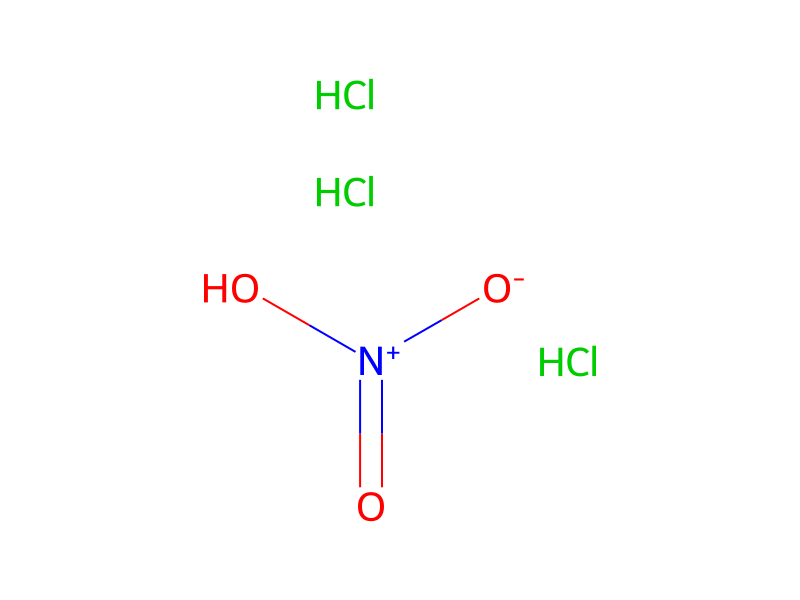
基本情報
- CAS
8007-56-5- 標準SMILES
Cl.Cl.Cl.O=[N+]([O-])O- InChIKey
NICDRCVJGXLKSF-UHFFFAOYSA-N- 分子式
- Cl3H4NO3
- 平均分子量
- 172.39 g/mol
- 単同位体質量
- 170.92567603
概要
Aqua regia appears as a yellow liquid with a pungent odor prepared by mixing nitric acid and hydrochloric acid, usually in a ratio of one part of nitric acid to three or four parts of hydrochloric acid. Fumes are irritating to the eyes and mucous membranes. Corrosive to metals and to tissue.
名称と識別子
- 優先名称
- Aqua regia
- IUPAC
- nitric acid;trihydrochloride
- 現地名
- 王水
- 英語名
- Nitrohydrochloric acid
- 分子式
- ClHNO2
- 分子量
- 82.46644
名称と別名
AQUA REGIANitrohydrochloric acidnitromuriatic acidX3TT5X989E8007-56-5MET-ETCHCHLOROAZOTIC ACIDCHLORONITROUS ACIDDTXSID50893666RefChem:558453DTXCID501323698UNII-X3TT5X989E
名称をさらに表示
王水王酸おうすい塩酸/硝酸,(3:1)KnigswasserAqua regia (Nitrohydrochloric acid)Aqua regia (75% hydrochloric + 25% nitric acid)
UN1798WANGSHUIAQUA REGISNITROMURIATICUM ACIDUMNITRO-HYDROCHLORIC ACIDSCHEMBL29351365NICDRCVJGXLKSF-UHFFFAOYSA-NNITROHYDROCHLORIC ACID [MI]
データベース識別子
- CAS
8007-56-5- PubChem CID
- 90477010
- DTXSID
DTXSID50893666- UNII
- X3TT5X989E
- EC Number
- 690-364-2
物性
構造計算による物性
- 極性表面積
- 66.1 Ų
- 水素結合供与体数
- 4
- 水素結合受容体数
- 3
- 回転可能結合数
- 0
- 重原子数
- 7
- 形式電荷
- 0
- 複雑度
- 24.8
実験および物理化学的性質
Chemical Classes
Toxic Gases & Vapors -> Acids, Inorganic
Corrosives
Physical Description
Aqua regia appears as a yellow liquid with a pungent odor prepared by mixing nitric acid and hydrochloric acid, usually in a ratio of one part of nitric acid to three or four parts of hydrochloric acid. Fumes are irritating to the eyes and mucous membranes. Corrosive to metals and to tissue.
Yellow fuming liquid with a suffocating odor; [Merck Index] Red, yellow, or gold fuming liquid; [University of Oxford MSDS]
物理化学的性質
- 安定性
- 密封されたボトル内で圧力が高まります。金属、酸化剤、還元剤、可燃性物質を含む多くの物質と相容れない (そして激しく反応する可能性がある)。
- CAS データベース
- 8007 · 8007-56-5
- EPAの化学物質情報
- Aqua regia (8007-56-5)
化学的性質
化学的特性Aqua regia, also known as nitrohydrochloric acid and chloroazoatic acid, is a fuming,volatile liquid that is made by mixing three parts concentrated hydrochloric acid with one part concentrated nitric acid.It is very corrosive with a suffocating odor and reacts with all metals. Aqua regia typically reacts by oxidizing the metal to a metallicion and reducing the nitric acid to nitric oxide.Its reaction with silver produces silver chloride. Aquaregia dissolves the common metallic oxides and hydroxides, the ignited oxides of tin, aluminum,chromium, and iron, and the higher oxides of lead, cobalt,nickel,and manganese. It is used for testing gold and platinum.
安全と法規制
安全情報は参考情報です。供給元の安全データシート(SDS)、適用法令、専門家による評価に代わるものではありません。
GHS分類
GHS Classification
This chemical does not meet GHS hazard criteria for 100% (3 of 3) of all reports.
Not Classified
Aggregated GHS information provided per 3 reports by companies from 1 notifications to the ECHA C&L Inventory.
危険有害性情報
Regulatory InformationThe New Jersey Worker and Community Right to Know Act requires public and private employers to provide information about hazardous substances at their workplaces. (N.J.S.A. 34:5A-1 et. seq.)
DOT LabelCorrosive
Fire Hazards
Excerpt from ERG Guide 157 [Substances - Toxic and/or Corrosive (Non-Combustible / Water-Sensitive)]:
· Non-combustible, substance itself does not burn but may decompose upon heating to produce corrosive and/or toxic fumes.
· Non-combustible, substance itself does not burn but may decompose upon heating to produce corrosive and/or toxic fumes.
Health Hazards
Excerpt from ERG Guide 157 [Substances - Toxic and/or Corrosive (Non-Combustible / Water-Sensitive)]:
· TOXIC and/or CORROSIVE; inhalation, ingestion or contact (skin, eyes) with vapors, dusts or substance may cause severe injury, burns or death.
· TOXIC and/or CORROSIVE; inhalation, ingestion or contact (skin, eyes) with vapors, dusts or substance may cause severe injury, burns or death.
Hazards Summary
Contains nitrosyl chloride and free chlorine; Corrosive; [Merck Index] A strong oxidizing agent with known catalytic activity; Reacts with air; Causes burns; [CAMEO] Causes burns and severe respiratory tract irritation; Highly toxic by ingestion and inhalation; [University of Oxford MSDS] See Nitric acid and Hydrogen chloride.
DOT ID and Guide
化学と産業
用途と製造
UsesMixture of hydrochloric & nitric acids. [ChemIDplus]
応用分野
解説王水,濃塩酸と濃硝酸とを体積比で3:1にまぜたもの.混合液中には,HNO3 + 3HCl = Cl2 + NOCl + 2H2OによってNOClと Cl2 を生じ,強い酸化剤となる.塩酸や硝酸のみでは溶けない金や白金も溶かす.塩酸と硝酸との体積比を1:3とした混合液は逆王水といわれ,黄鉄鉱中の硫黄分を硫酸に酸化する作用がある.王水はあまり安定でないので,使用時に調整する.森北出版「化学辞典(第2版)
使用Metallurgy, testing metals, dissolving metals.
一般的な説明A yellow liquid with a pungent odor prepared by mixing nitric acid and hydrochloric acid, usually in a ratio of one part of nitric acid to three or four parts of hydrochloric acid. Fumes are irritating to the eyes and mucous membranes. Corrosive to metals and to tissue. Density 14.7 lb /gal.
上流・下流製品情報
下流製品
補足説明
定義A mixture of concentrated nitric acid and three to four parts of hydrochloric acid. It dissolves all metals including gold, hence the name. The mixture contains chlorine and NOCl (nitrosyl chloride).
関連反応
0 件
関連する反応はまだありません