ホームMCPワークベンチSkills
ホームワークベンチ通知マイページ
llms.txt · MCPガイドプライバシーポリシー · 利用規約 · サポートv1.8.0
  1. ホーム
  2. /化合物

1,4-ジアザビシクロ[2.2.2]オクタン

Dabco

HCID 9237
ノートを作成反応を作成見積依頼を出す
印刷プレビュー

データを補完しています。しばらくしてからページを更新すると最新の内容を表示できます

基本情報名称と識別子物性安全と法規制化学と産業関連反応化合物ノート
部分構造検索類似構造を探す

基本情報

CAS
280-57-9
標準SMILES
C1CN2CCN1CC2
InChIKey
IMNIMPAHZVJRPE-UHFFFAOYSA-N
分子式
C6H12N2
平均分子量
112.17 g/mol
単同位体質量
112.10004839

名称と識別子

優先名称
Dabco
IUPAC
1,4-diazabicyclo[2.2.2]octane
現地名
1,4-ジアザビシクロ[2.2.2]オクタン
英語名
Triethylenediamine
分子式
C6H12N2
分子量
112.17

名称と別名

1,4-Diazabicyclo[2.2.2]octaneTriethylenediamine280-57-9Dabco1,4-DIAZABICYCLO(2.2.2)OCTANEDabco 33LVDabco crystal1,4-EthylenepiperazineTEDATexacat TD 100Dabco EGN,N'-endo-Ethylenepiperazine
名称をさらに表示
1,4-ジアザビシクロ[2.2.2]オクタンダブコ33LVタンカットTD-33ダブコEGダブコクリスタルダブコR-8020ダブコS-251,4-エタノピペラジントリエチレンジアミンテキサカットTD-100ダブコ1,4‐ジアザビシクロ[2.2.2]オクタン1,4-ジアザビシクロ〔2.2.2〕オクタン1,4-ジアザビシクロ-[2.2.2]オクタン, 結晶DABCO® 33-LV1,4-ジアザビシクロ[2.2.2]オクタン, 98%DBACOTEDBACO1,4-diazobicyclo[2.2.2]octane1,4-diazabicyclooctaneDiazabicyclooctane
1,4-Diazabicyclo-octaneD 33LVThancat TD 33DTXSID0022016X8M57R0JS5NSC-56362DTXCID902016CHEBI:151129

データベース識別子

CAS
280-57-9
PubChem CID
9237
DTXSID
DTXSID0022016
ChEMBL
CHEMBL3183414
ChEBI
CHEBI:151129
UNII
X8M57R0JS5
EC Number
205-999-9
Nikkaji
J5.451H

物性

構造計算による物性補完中

XLogP
-0.2
極性表面積
6.5 Ų
水素結合供与体数
0
水素結合受容体数
2
回転可能結合数
0
重原子数
8
形式電荷
0
複雑度
61

実験および物理化学的性質

Density1.14 at 28 °C (Water = 1)[NITE; Chemical Risk Information Platform (CHRIP). Biodegradation and Bioconcentration. Ver 2006.01.30 Updated. National Institute of Technology and Evaluation. Tokyo, Japan. Thiodiethylene glycolBicyclo
Color/FormColorless hygroscopic crystals
Solubility · 3 件

13 g/100 g acetone at 25 °C; 51 g/100 g benzene at 25 °C; 77 g/100 g ethanol at 25 °C; 26.1 g/100 g methyl ethyl ketone at 25 °C

Soluble in chloroform

45 g/100 g water at 25 °C

Flash Point62 °C
Boiling Point · 2 件

174 °C

174 °C @760 [mm Hg]

DecompositionWhen heated to decomposition it emits toxic fumes of /nitrogen oxides/.
Melting Point158 °C
Vapor Pressure0.74 [mmHg]
Heat of Vaporization61.9 kJ/mol (heat of sublimation below 75 °C)
Physical Description · 2 件

安全と法規制

安全情報は参考情報です。供給元の安全データシート(SDS)、適用法令、専門家による評価に代わるものではありません。

GHS分類

GHS Classification · 6 件

This chemical does not meet GHS hazard criteria for 0.7% (6 of 801) of reports.

Danger

H228 (82.6%): Flammable solid [Danger Flammable solids];H302 (96.5%): Harmful if swallowed [Warning Acute toxicity, oral];H315 (97.3%): Causes skin irritation [Warning Skin corrosion/irritation];H318 (50.7%): Causes serious eye damage [Danger Serious eye damage/eye irritation];H319 (44.2%): Causes serious eye irritation [Warning Serious eye damage/eye irritation];H335 (16.4%): May cause respiratory irritation [Warning Specific target organ toxicity, single exposure; Respiratory tract irritation];H412 (14.5%): Harmful to aquatic life with long lasting effects [Hazardous to the aquatic environment, long-term hazard]

P210, P240, P241, P261, P264, P264+P265, P270, P271, P273, P280, P301+P317, P302+P352, P304+P340, P305+P351+P338, P305+P354+P338, P317, P319, P321, P330, P332+P317, P337+P317, P362+P364, P370+P378, P403+P233, P405, and P501 (click each P-code to see the statement)

Aggregated GHS information provided per 801 reports by companies from 42 notifications to the ECHA C&L Inventory. Each notification may be associated with multiple companies.;Reported as not meeting GHS hazard criteria per 6 of 801 reports by companies.;There are 41 notifications provided by 795 of 801 reports by companies with hazard statement code(s).;Information may vary between notifications depending on impurities, additives, and other factors. The percentage value in parenthesis indicates the notified classification ratio from companies that provide hazard codes. Only hazard codes with percentage values above 10% are shown. For more detailed information, please visit ECHA C&L website.

危険有害性情報

Regulatory Information · 4 件

Chemical: 1,4-Diazabicyclo[2.2.2]octane

1,4-Diazabicyclo[2.2.2]octane is listed on the EPA's Chemical Data Reporting (CDR) system. Manufacturers and importers of 1,4-Diazabicyclo[2.2.2]octane are required to report information about their production and use of this chemical to the EPA under the Toxic Substances Control Act (TSCA). (40 eCFR Part 711)

Status: Active Update: 07-03-2023 https://echa.europa.eu/registration-dossier/-/registered-dossier/13591;Status: Active Update: 03-05-2018 https://echa.europa.eu/registration-dossier/-/registered-dossier/24495

化学と産業

薬理情報

MeSH Pharmacological ClassificationDrugs used to protect against ionizing radiation. They are usually of interest for use in radiation therapy but have been considered for other purposes, e.g. military.

用途と製造

Uses · 6 件

Used as curing agent for urethane foams; used as a singlet oxygen trap and a radioiodine trap; [HSDB]

Plastic Composites Manufacturing [Category: Industry]

Catalyst in making urethane foams

The only important industrial use of triethylenediamine is as a hardener for polyurethane foams.

Anti-fade reagent that scavenges free-radicals produced by excitation of fluorochromes. Added to the mounting medium in fluorescence microscopy to retard photobleaching of fluorescein and other fluorescent dyes.[Sigma-Aldrich; D2522 Sigma 1,4-Diazabicyclo

Singlet oxygen trap used as diagnostic for singlet oxygen; trap for radioiodine

U.S. Production · 3 件

2023: 1,000,000 - <2,500,000 lb;2022: 1,000,000 - <2,500,000 lb;2021: 1,000,000 - <2,500,000 lb;2020: 850,000 - <1,000,000 lb

This chemical is listed as a High Production Volume (HPV) (65FR81686). Chemicals listed as HPV were produced in or imported into the U.S. in >1 million pounds in 1990 and/or 1994. The HPV list is based on the 1990 Inventory Update Rule. (IUR) (40 CFR part 710 subpart B; 51FR21438).

Production volumes for non-confidential chemicals reported under the Inventory Update Rule. [Table#5434]

Consumer UsesCatalyst
Industry UsesAbsorbent;Filler;Catalyst;Intermediate
Methods of Manufacturing · 2 件

KRAUSE ET AL, BRITISH PATENT 871,754 (1958 TO HOUDRY PROCESS).

Triethylenediamine can be produced from ethylenediamine or ethanolamine, diethanolamine, or diethylenetriamine with a variety of different catalysts.

関連反応

3,135 件
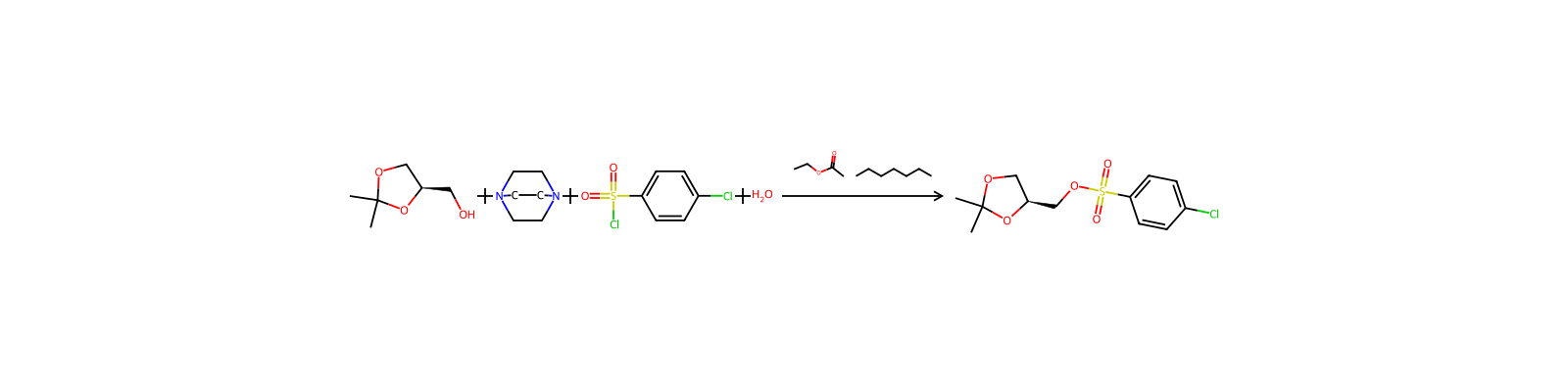
反応記録を作成
HRID 1317 の反応式
HRID 1317反応物としてuspto-grants-1998_03
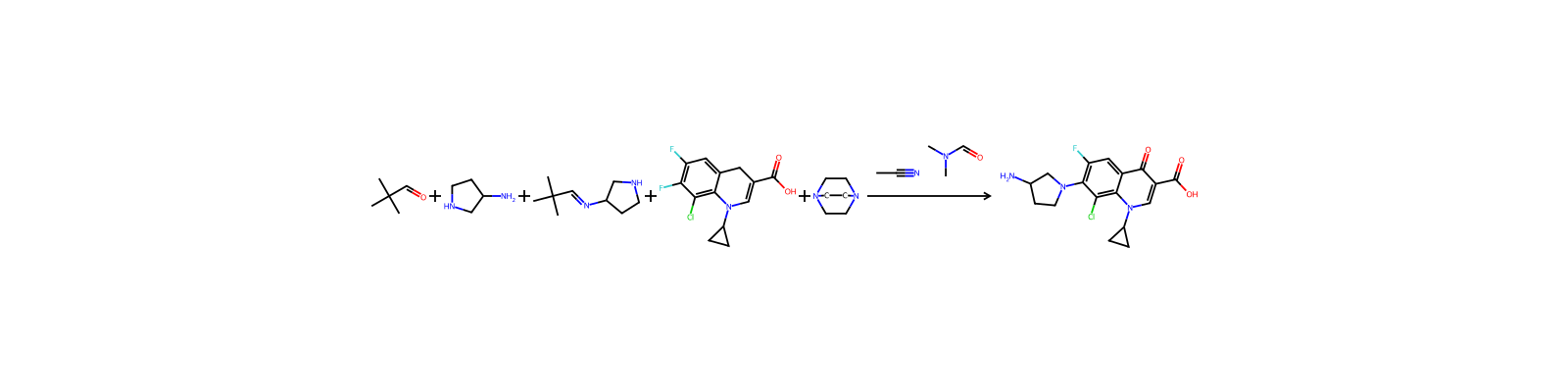
HRID 4133 の反応式
HRID 4133反応物としてuspto-grants-1988_02
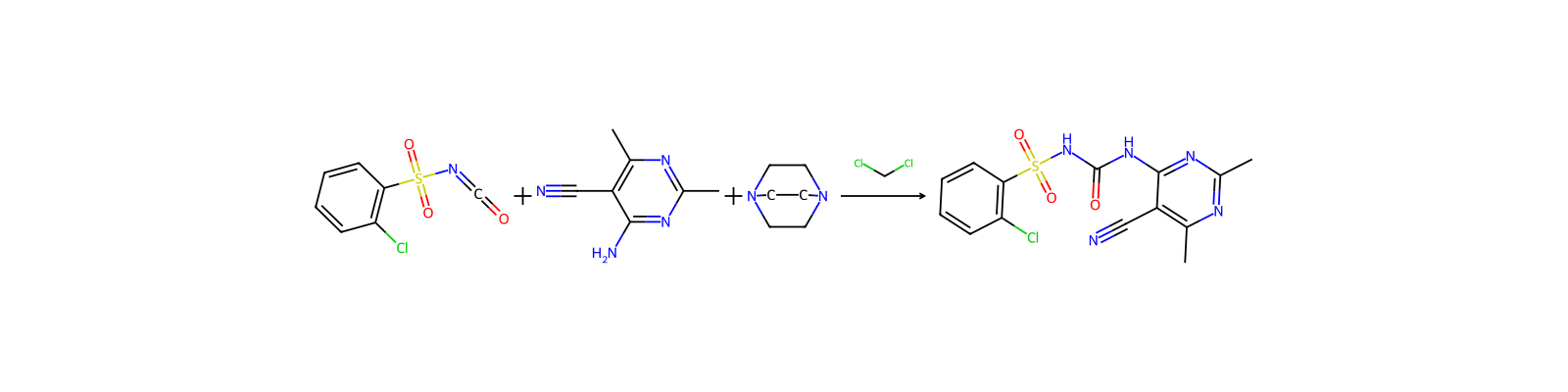
HRID 13229 の反応式
HRID 13229反応物としてuspto-grants-2010_06
HRID 14420 の反応式
HRID 14420触媒としてuspto-grants-2010_06
HRID 19000 の反応式
HRID 19000反応物としてuspto-grants-2010_06
HRID 20958 の反応式
HRID 20958反応物としてuspto-grants-2010_06
HRID 26391 の反応式
HRID 26391反応物としてuspto-grants-1979_04
HRID 26711 の反応式
HRID 26711反応物としてuspto-grants-1979_04
1 / 392 ページ

化合物ノート

読み込み中…

このページの内容基本情報名称と識別子物性安全と法規制化学と産業関連反応化合物ノート
その他の操作
ノートを作成反応を作成見積依頼を出す

Liquid; Large Crystals

White crystals with an ammonia-like odour; Sublimes (goes directly from solid to vapour) readily at room temperature; Extremely hygroscopic (absorbs moisture from the air); [CHEMINFO]

Dissociation ConstantspKa1 = 3.0; pKa2 = 8.7
Kovats Retention Index · 2 件

1018;1023;1040

1520;1531;1535;1548;1548

物理化学的性質

融点
156 · 156-159 °C(lit.)
沸点
174 °C · 174 °C
比重(密度)
1.02 g/mL · 1.02 g/mL
蒸気圧
2.9 mm · 2.9 mm Hg ( 50 °C)
屈折率
20 · n20/D 1.4634(lit.)
闪点
198 °F · 198 °F
貯蔵温度
30 °C · Store below +30°C.
溶解性
400 g/リットル · 400g/リットル
外見
吸湿性結晶
酸解離定数(Pka)
3 · 3.0, 8.7(at 25℃)
色
白色~淡黄色
水溶解度
46 g/100mL · 46g/100mL(26℃)
Merck
14 · 14,9669
BRN
103618 · 103618
Henry's Law Constant
3.1 · 3.1×103 mol/(m3Pa) at 25℃, Du et al. (2017)
安定性
安定で吸湿性に優れています。強力な酸化剤、強酸とは相容れない。とても燃えやすい。
InChI
1S/C6H12N2/c1-2-8-5-3-7(1)4-6-8/h1-6H2
InChIKey
IMNIMPAHZVJRPE-UHFFFAOYSA-N
SMILES
N12CCN(CC2)CC1
LogP
-0.49 at · -0.49 at 20℃
CAS データベース
280 · 280-57-9(CAS DataBase Reference)
NISTの化学物質情報
Triethylenediamine(280-57-9)
EPAの化学物質情報
1 · 1,4-Diazabicyclo[2.2.2]octane (280-57-9)
化学的性質 · 1 件

化学的特性Triethylenediamine also known as DABCO or TEDA, is a highly symmetrical molecule with a cage structure. The colorless extremely hygroscopic crystals is a highly nucleophilic tertiary amine base, which is used as a catalyst and reagent in polymerization and organic synthesis.

1,4-Diazabicyclo[2.2.2]octane: Does not have an individual approval but may be used under an appropriate group standard

Hazards SummaryWorkers have reported visual disturbances--haloes around lights; [ACGIH] Corrosive to skin; [Quick CPC] Corrosive to skin and eyes; [CHEMINFO]
DOT Emergency Guidelines · 5 件

/GUIDE 133: FLAMMABLE SOLIDS/ Fire or Explosion: Flammable/combustible material. May be ignited by friction, heat, sparks or flames. Some may burn rapidly with flare burning effect. Powders, dusts, shavings, borings, turnings or cuttings may explode or burn with explosive violence. Substance may be transported in a molten form at a temperature that may be above its flash point. May re-ignite after fire is extinguished. /Flammable solid, organic, NOS (1,4-Diazabicyclo(2.2.2)octane)/

/GUIDE 133: FLAMMABLE SOLIDS/ Health: Fire may produce irritating and/or toxic gases. Contact may cause burns to skin and eyes. Contact with molten substance may cause severe burns to skin and eyes. Runoff from fire control may cause pollution. /Flammable solid, organic, NOS (1,4-Diazabicyclo(2.2.2)octane)/

/GUIDE 133: FLAMMABLE SOLIDS/ Public Safety: CALL Emergency Response Telephone Number ... . As an immediate precautionary measure, isolate spill or leak area for at least 25 meters (75 feet) in all directions. Keep unauthorized personnel away. Stay upwind. Keep out of low areas. /Flammable solid, organic, NOS (1,4-Diazabicyclo(2.2.2)octane)/

/GUIDE 133: FLAMMABLE SOLIDS/ Protection Clothing: Wear positive pressure self-contained breathing apparatus (SCBA). Structural firefighters' protective clothing will only provide limited protection. /Flammable solid, organic, NOS (1,4-Diazabicyclo(2.2.2)octane)/

For more DOT Emergency Guidelines (Complete) data for 1,4-DIAZABICYCLO(2.2.2)OCTANE (8 total), please visit the HSDB record page.

Hazard Classes and Categories · 2 件

Flam. Sol. 1 (82.6%);Acute Tox. 4 (96.5%);Skin Irrit. 2 (97.3%);Eye Dam. 1 (50.7%);Eye Irrit. 2 (44.2%);STOT SE 3 (16.4%);Aquatic Chronic 3 (14.5%)

Acute toxicity (Oral) - Category 4;Skin corrosion/irritation - Category 2;Serious eye damage/eye irritation - Category 2;Reproductive toxicity - Category 2;Specific target organ toxicity - Single exposure - Category 2 (central nervous system);Specific target organ toxicity - Repeated exposure - Category 1 (upper respiratory tract)

Hazardous Reactivities and Incompatibilities · 3 件

... In paint manufacture, preliminary small-scale (12 g) tests in which ethyl acetate soln of cellulose nitrate and the other components were mixed in a lagged boiling tube showed large exotherms (which boiled the solvent off) with 1,4-diazabicyclo(2.2.2)octane ... Subsequent test in which small portions of ... undiluted /1,4-diazabicyclo(2.2.2.)octane/ and dried cellulose nitrate linters were contacted (with a little added butyl acetate for the solid phenol) under various condition ... ignition /occurred/ ...

Activated carbon showed an auto-ignition temp in flowing air of 452 to 518 °C. Presence of 5% of ... triethylenediamine adsorbed on the carbon reduced the autoignition temp (AIT) to 230 to 260 °C. At high air flow rates an exotherm was seen at 230 to 260 °C but ignition did not then occur until 500 °C.

A sample of the 1:1 complex /of 1.4-diazabicyclo(2.2.2)octane and hydrogen peroxide/exploded while being dried overnight in a desiccator.

安全と保護具

Disposal Methods · 1 件

SRP: The most favorable course of action is to use an alternative chemical product with less inherent propensity for occupational exposure or environmental contamination. Recycle any unused portion of the material for its approved use or return it to the manufacturer or supplier. Ultimate disposal of the chemical must consider: the material's impact on air quality; potential migration in soil or water; effects on animal, aquatic, and plant life; and conformance with environmental and public health regulations.

Protective Action Criteria (PAC) · 3 件

14 [mg/m3]

23 [mg/m3]

140 [mg/m3]

毒性情報

Ecotoxicity ValuesLC50; Species: Pimephales promelas (Fathead minnow, size 17.5 mm, wt 0.085 g); Conditions: freshwater; flow-through; Concentration: 1730000 ug/L (95% confidence limit: 1510000 to 1980000 ug/L) for 4 days /active ingredient/
Environmental Fate · 3 件

TERRESTRIAL FATE: Based on a classification scheme(1), an estimated Koc value of 3.4(SRC), determined from a water solubility of 450 g/L(2) and a regression-derived equation(3), indicates that triethylenediamine is expected to have very high mobility in soil(SRC). The pKa1 and pKa2 of triethylenediamine are 3.0 and 8.7, respectively(2), indicating that this compound will primarily exist in cation form in the environment and cations generally have lower mobility in soils than their neutral counterparts(4). Volatilization of triethylenediamine from moist soil surfaces is not expected to be an important fate process, since this compound is expected to primarily exist in the cation form in the environment(SRC). Triethylenediamine is expected to volatilize slowly from dry soil surfaces(SRC) based upon a vapor pressure of 0.742 mm Hg(5). A 0% theoretical BOD in 4 weeks using the Japanese MITI test(6) suggests that biodegradation is not an important environmental fate process in soil(SRC).[(1) Swann RL et al; Res Rev 85: 17-28 (1983) (2) O'Neil MJ, ed; The Merck Index. 13th ed, Whitehouse Station, NJ: Merck and Co., Inc., p. 1723 (2001) (3) Lyman WJ et al; Handbook of Chemical Property Estimation Methods. Washington, DC: Amer Chem Soc pp. 4-9 (1990) (4) Doucette WJ; pp. 141-188 in Handbook of Property Estimation Methods for Chemicals. Boethling RS, Mackay D, eds. Boca Raton, FL: Lewis Publ (2000) (5) Yaws CL; Handbook of Vapor Pressure. Volume 2 - C5 to C7 Compounds. Gulf Publishing Co.: Houston, TX, p. 190 (1994) (6) NITE; Chemical Risk Information Platform (CHRIP). Biodegradation and Bioconcentration. Ver 2006.01.30 Updated. National Institute of Technology and Evaluation. Tokyo, Japan. Thiodiethylene glycolbicyclo

AQUATIC FATE: Based on a classification scheme(1), an estimated Koc value of 3.4(SRC), determined from a water solubility of 450 g/L(2) and a regression-derived equation(3), indicates that triethylenediamine is not expected to adsorb to suspended solids and sediment(SRC). The pKa1 and pKa2 of triethylenediamine are 3.0 and 8.7, respectively(2), which indicate triethylenediamine will exist almost entirely in the cation form at pH values of 5 to 9 and therefore volatilization from water surfaces is not expected to be an important fate process(SRC). According to a classification scheme(4), a BCF values of <1.3 and <13(5), suggests the potential for bioconcentration in aquatic organisms is low(SRC). A 0% theoretical BOD in 4 weeks using the Japanese MITI test(6) suggests that biodegradation is not an important environmental fate process in water(SRC).[(1) Swann RL et al; Res Rev 85: 17-28 (1983) (2) O'Neil MJ, ed; The Merck Index. 13th ed, Whitehouse Station, NJ: Merck and Co., Inc., p. 1723 (2001) (3) Lyman WJ et al; Handbook of Chemical Property Estimation Methods. Washington, DC: Amer Chem Soc pp. 4-9, 15-1 to 15-29 (1990) (4) Franke C et al; Chemosphere 29: 1501-14 (1994) (5) NITE; Chemical Risk Information Platform (CHRIP). Biodegradation and Bioconcentration. Ver 2006.01.30 Updated. National Institute of Technology and Evaluation. Tokyo, Japan. Thiodiethylene glycolbicyclo

ATMOSPHERIC FATE: According to a model of gas/particle partitioning of semivolatile organic compounds in the atmosphere(1), triethylenediamine, which has a vapor pressure of 0.742 mm Hg at 25 °C(2), is expected to exist solely as a vapor in the ambient atmosphere. Vapor-phase triethylenediamine is degraded in the atmosphere by reaction with photochemically-produced hydroxyl radicals(SRC); the half-life for this reaction in air is estimated to be 18 hours(SRC), calculated from its rate constant of 2.2X10⁻¹¹ cu cm/molecule-sec at 25 °C(3). Triethylenediamine does not contain chromophores that absorb at wavelengths >290 nm and therefore is not expected to be susceptible to direct photolysis by sunlight(4).

Adverse EffectsDermatotoxin - Skin burns.
Soil Adsorption/Mobility · 1 件

The Koc of triethylenediamine is estimated as 3.4(SRC), using a water solubility of 450 g/L(1) and a regression-derived equation(2). According to a classification scheme(3), this estimated Koc value suggests that triethylenediamine is expected to have very high mobility in soil(SRC). The pKa1 and pKa2 values of triethylenediamine are 3.0 and 8.7(1), respectively, indicating that this compound will primarily exist in the cation form in the environment and cations generally have lower mobility in soils than their neutral counterparts(4).

Human Toxicity Excerpts/SIGNS AND SYMPTOMS/ ...Can cause corneal disturbance in workers exposed to the vapor. It is reported to have induced fine corneal epithelial edema & to have caused people to see haloes around lights several hours after exposure.
Artificial Pollution SourcesTriethylenediamine's production and use as a catalyst in the manufacture of urethane foams(1,2) may result in its release to the environment through various waste streams(SRC).
Environmental Biodegradation · 1 件

AEROBIC: Triethylenediamine, present at 100 mg/L, reached 0% of its theoretical BOD in 4 weeks using an activated sludge inoculum at 30 mg/L and the Japanese MITI test(1).[(1) NITE; Chemical Risk Information Platform (CHRIP). Biodegradation and Bioconcentration. Ver 2006.01.30 Updated. National Institute of Technology and Evaluation. Tokyo, Japan. Thiodiethylene glycolbicyclo

Environmental Bioconcentration · 1 件

BCF values of <1.3 and <13 were measured using carp (Cyprinus carpio) which were exposed over an 6-week period(1). According to a classification scheme(2), these BCF values suggest the potential for bioconcentration in aquatic organisms is low(SRC).[(1) NITE; Chemical Risk Information Platform (CHRIP). Biodegradation and Bioconcentration. Ver 2006.01.30 Updated. National Institute of Technology and Evaluation. Tokyo, Japan. Thiodiethylene glycolbicyclo

Volatilization from Water/Soil · 1 件

Volatilization from water and moist soil surfaces is not expected to occur since triethylenediamine will exist primarily in the cation form in the environment(SRC), based on its pKa1 and pKa2 values of 3.0 and 8.7, respectively(1). Triethylenediamine is expected to volatilize slowly from dry soil surfaces(SRC) based upon a vapor pressure of 0.742 mm Hg(2).

Non-Human Toxicity Excerpts · 2 件

/LABORATORY ANIMALS: Acute Exposure/ The acute toxicologic and pharmacologic effects of two foam catalyst amines have been determined. This work has been undertaken with the view of elucidating the possible ocular hazard which may exist after excessive inhalation of vapor in industry. By several routes of administration, tetramethylbutanediamine (TMBDA) appears to be more toxic and irritating than triethylenediamine (TED). Exposure to concentrated vapor of each amine has indicated that TMBDA will produce marked pupillary dilation and loss of accommodation after inhalation periods as short as 15 minutes, whereas a 5-hour vapor inhalation of TED is without such effects. The two amines possess marked physiological properties at intravenous doses considerably lower than those considered fatal by any route of administration. In pentobarbitalized dogs and cats, TMBDA has been shown to exhibit a selective blockade of autonomic ganglia without an accompanying effect on more peripheral sites. Ganglion blockade after TMBDA was somewhat shorter than that observed with clinically useful blocking agents. Attempts have been made to correlate these animal findings with human experiences resulting in ocular disturbances after exposure to TMBDA vapor. The pharmacologic properties of TED have been described. This agent produced in appropriate doses an initial transient depressor effect followed by a sharp and more prolonged pressor response in anesthetized animals. Depressor activity was selectively eliminated by atropine. Pressor activity was abolished by hexamethonium or tolazoline, and diminished by adrenalectomy. A partial depletion of catechol amines by reserpine caused an apparent exaggeration of pressor activity of TED. Enhancement of activity was also observed in dogs treated with dichloroisoproterenol. Adrenalectomy of dogs partially depleted of catechol amines by reserpine or a more prolonged reserpine-pretreatment stage abolished pressor response entirely while apparent

/OTHER TOXICITY INFORMATION/ When tested on mice the vapor /SRP: aerosol/ appears to have had no effect on the pupils or accommodation.

Environmental Abiotic Degradation · 1 件

The rate constant for the vapor-phase reaction of triethylenediamine with photochemically-produced hydroxyl radicals has been reported to be 2.2X10⁻¹¹ cu cm/molecule-sec at 25 °C(1). This corresponds to an atmospheric half-life of about 18 hours at an atmospheric concentration of 5X10+5 hydroxyl radicals per cu cm(2). Triethylenediamine is not expected to undergo hydrolysis in the environment due to the lack of functional groups that hydrolyze under environmental conditions(3). Triethylenediamine does not contain chromophores that absorb at wavelengths >290 nm and therefore is not expected to be susceptible to direct photolysis by sunlight(3).

Probable Routes of Human Exposure · 1 件

Occupational exposure to triethylenediamine may occur through inhalation and dermal contact with this compound at workplaces where triethylenediamine is produced or used(SRC). Triethylenediamine concentrations in air in a polyurethane factory ranged from 0.017 to 0.110 ppm(1).

法規制情報

Regulatory Information · 4 件

Chemical: 1,4-Diazabicyclo[2.2.2]octane

1,4-Diazabicyclo[2.2.2]octane is listed on the EPA's Chemical Data Reporting (CDR) system. Manufacturers and importers of 1,4-Diazabicyclo[2.2.2]octane are required to report information about their production and use of this chemical to the EPA under the Toxic Substances Control Act (TSCA). (40 eCFR Part 711)

Status: Active Update: 07-03-2023 https://echa.europa.eu/registration-dossier/-/registered-dossier/13591;Status: Active Update: 03-05-2018 https://echa.europa.eu/registration-dossier/-/registered-dossier/24495

1,4-Diazabicyclo[2.2.2]octane: Does not have an individual approval but may be used under an appropriate group standard

安全データ

F
3
wgk
1
tsca
TSCA listed
rtecs
HM0354200
ridadr
UN 1325 4.1/PG 2
毒性
LD50 orally in Rabbit: 700 mg/kg
hs_code
29335920
risk_code
22-36/37/38-52/53-41-36/38-11
化審法
(5)-1141
hazard_code
Xn,F
safety_code
26-60-37/39-3-16-36/37-61
hazard_class
8
packing_group
III
自然発火温度
350 °C
Hazard Classifications
Acute Tox. 4 OralEye Dam. 1Flam. Sol. 1Skin Irrit. 2
ストレージクラス
4.1B - Flammable solid hazardous materials
有毒物質データの
280-57-9(Hazardous Substances Data)
General Manufacturing Information · 4 件

Transportation Equipment Manufacturing;Oil and Gas Drilling, Extraction, and Support activities;Utilities;All Other Basic Organic Chemical Manufacturing;All Other Chemical Product and Preparation Manufacturing;Construction

1,4-Diazabicyclo[2.2.2]octane: ACTIVE

Triethylenediamine is used to impregnate the activated carbon found in respiratory protection against chemical weapon agents.

Certain low-molecular chemical weapon agents such as hydrogen cyanide and cyanogen chloride are poorly absorbed by active carbon. In order to improve protection against these substances, the carbon is impregnated with metallic salts of copper, chromium and sometimes silver. Further impregnation with organic substances also occurs, the most common additive being triethylenediamine.

応用分野 · 6 件

解説1,4-ジアザビシクロ[2.2.2]オクタン腐食性,吸湿性の結晶.融点155~157 ℃,沸点174 ℃.pKa1 3.0,pKa2 8.7.室温でも昇華する.水,ベンゼンに可溶.リチウム,マグネシウムなどの金属イオンと錯体を形成する.脱ハロゲン化水素剤,ウレタンフォーム形成などに触媒として用いられる.森北出版「化学辞典(第2版)

用途ウレタンフォームを作る触媒

用途有機合成原料。

使用An anti-fade reagent shown to scavenge free-radicals due to flurochrome excitation.

一般的な説明Dabco33-LV (Db) is a gelling catalyst and a bidentate ligand that forms a self-assembled monolayer (SAM) on a variety of substrates. It functionalizes the surface and immobilizes the surface atoms.

使用用途1. ポリウレタンフォームの発泡触媒 トリエチレンジアミンは、ポリウレタン化反応の触媒として主に利用されています。結晶のままあるいはジプロビレングリコールなどで溶解して、重付加反応と泡化反応をバランスよく進行させます。軟質、硬質、半硬質、塗料、ウレタンエラストマーなどが製造可能です。 2. 低分子有機合成反応 トリエチレンジアミンは、嵩高い塩基として低分子有機合成化学反応に用いられます。有名な使用例として、森田・ベイリス・ヒルマン反応が挙げられます。トリエチレンジアミンは、同反応における求核触媒です。 アルデヒドまたはイミンと電子吸引基が置換したアルケンをトリエチレンジアミン存在下反応させると、新たな炭素‐炭素結合が形成できます。反応は、マイケルアルドール様の機構で進行します。 そのほか、金属錯塩の形成や脱ハロゲン化剤、シアノエチル化触媒、エステル交換触媒、エポキシ樹脂の硬化触媒として用いられています。

調製方法 · 2 件

製造方法Triethylenediamine can be produced from ethylenediamine or ethanolamine, diethanolamine, or diethylenetriamine with a variety of different catalysts.

純化方法DABCO crystallises from 95% EtOH, pet ether or MeOH/diethyl ether (1:1). Dry it under vacuum over CaCl2 and BaO. It can be sublimed in vacuo, and readily at room temperature. It has also been purified by removal of water during azeotropic distillation of a *benzene solution. It is then recrystallised twice from anhydrous diethyl ether under argon, and stored under argon [Blackstock et al. J Org Chem 52 1451 1987]. [Beilstein 23/3 V 487.]

上流・下流製品情報

上流原料

エチレンジアミン (無水)ピペラジン 六水和物ジエチレントリアミンクロロエタンPolyethylene-polyaminesトリエチレンテトラミンテトラエチレンペンタミン1-ピペラジンエタノールナトリウムメトキシド

下流製品

デヒドロ酢酸(S)-(-)-TolBINAP2-(ブロモメチル)アクリル酸エチル3-フルオロ-2-ピリジンカルボン酸(R)-(+)-2,2'-ビス(ジフェニルホスフィノ)-1,1'-ビナフチル5-ブロモピリミジン-2-カルボニトリル 臭化物(±)-2,2'-ビス(ジフェニルホスフィノ)-1,1'-ビナフチル(S)-(-)-2,2'-ビス(ジフェニルホスフィノ)-1,1'-ビナフチル2-[[[[(4-メトキシ-6-メチル-1,3,5-トリアジン-2-イル)(メチル)アミノ]カルボニル]アミノ]スルホニル]安息香酸メチル2‐クロロ‐3‐フルオロ‐4‐ピリジンカルボン酸5-ブロモピリミジン-2-カルボン酸(R)-(+)-TolBINAPピペラジン(1,4-diazabicyclo[2.2.2]octan-1-ium-1-ylsulfonyl)(tert-butoxycarbonyl)amide1-(chloromethyl)-4-aza-1-azonia bicyclo[2.2.2]octane chloride
補足説明 · 1 件

定義ChEBI: Triethylenediamine is an organic heterobicylic compound that is piperazine with an ethane-1,2-diyl group forming a bridge between N1 and N4. It is typically used as a catalyst in polymerization reactions. It has a role as a catalyst, a reagent and an antioxidant. It is a bridged compound, a tertiary amino compound, a saturated organic heterobicyclic parent and a diamine.