ジ(2-エチルヘキサン酸)すず(II)
2-ethylhexanoic acid tin(II) salt
データを補完しています。しばらくしてからページを更新すると最新の内容を表示できます

基本情報
- CAS
301-10-0- 標準SMILES
CCCCC(CC)C(=O)[O-].CCCCC(CC)C(=O)[O-].[Sn+2]- InChIKey
KSBAEPSJVUENNK-UHFFFAOYSA-L- 分子式
- C16.H30.O4.Sn
- 平均分子量
- 405.1 g/mol
- 単同位体質量
- 406.11660414
概要
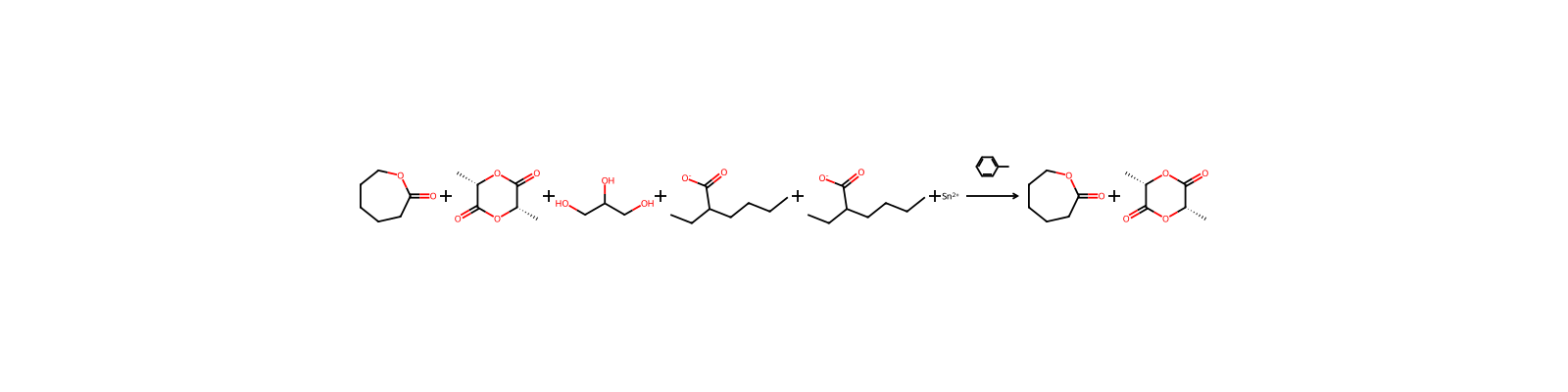
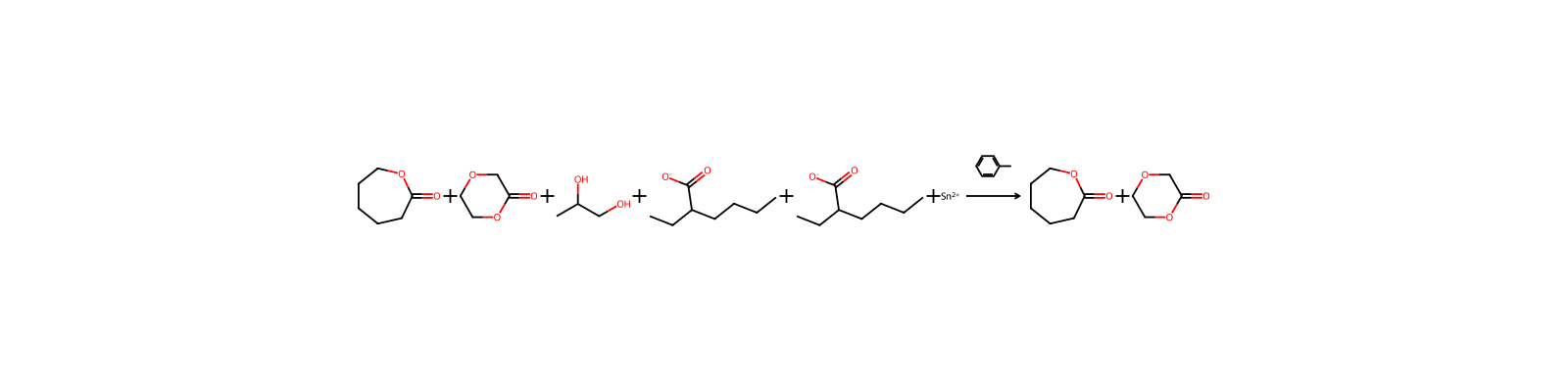
used as a catalyst for ring-opening polymerization to make D,L-lactide and epsilon-caprolactone copolymers
名称と識別子
- 優先名称
- 2-ethylhexanoic acid tin(II) salt
- IUPAC
- bis(2-ethylhexanoate);tin(2+)
- 現地名
- ジ(2-エチルヘキサン酸)すず(II)
- 英語名
- Stannous octoate
- 分子式
- C16H30O4Sn
- 分子量
- 405.12
名称と別名
2-Ethylhexanoic acid tin(II) saltSn(Oct)2RefChem:58487STANNOUS OCTOATE301-10-0Tin(II) 2-ethylhexanoateTin dioctoateStannous 2-ethylhexanoateTin octoateTin bis(2-ethylhexanoate)Tin ethylhexanoateTin(II) bis(2-ethylhexanoate)
名称をさらに表示
ジ(2-エチルヘキサン酸)すず(II)オクチル酸すず(II)ビス(2-エチルヘキサン酸)すず(II)2-エチルヘキサン酸第一すずオクチル酸錫(Ⅱ)ビス(2エチルヘキサン酸)スズ2-エチルヘキサン酸スズ有機スズ化合物(ジブチル、ジオクチル、トリブチル、トリフェニル以外)2-エチルヘキサン酸すず(II)オクタン酸第一すずスズ=ビス(2-エタン-1-イルヘキサノアート)TIN(II) 2-ETHYLHEXANOATE, 〜90% IN 2-ETHYLHEXANOIC ACID (〜28% SN)2-エチルヘキサン酸すず(II), 96%2-エチルヘキサン酸すず(II), tech.2-エチルヘキサン酸すず(II), 〜90% in 2-ethylhexanoic acid (〜28% Sn)Stannous octanoateTIB KAT 129Stannous Octoate T-9Tin(Ⅱ) 2-ethylhexanoateBIS(2-ETHYLHEXANOATE)TIN
Nuocure 28Tin 2-ethylhexanoateStannous 2-ethylhexoateTin(II) 2-ethylhexylate2-ethylhexanoate;tin(2+)Tin(2+) 2-ethylhexanoateHexanoic acid, 2-ethyl-, tin(2+) saltUNII-519A78R12Y
データベース識別子
- CAS
301-10-0- PubChem CID
- 9318
- DTXSID
DTXSID1027138- UNII
- 519A78R12Y
- EC Number
- 206-108-6
- Nikkaji
- J193.708A
物性
構造計算による物性補完中
- 極性表面積
- 80.3 Ų
- 水素結合供与体数
- 0
- 水素結合受容体数
- 4
- 回転可能結合数
- 8
- 重原子数
- 21
- 形式電荷
- 0
- 複雑度
- 93.9
実験および物理化学的性質
Chemical ClassesMetals -> Organic Acids, Metal Salts
Density1.251 @25 °C
Vapor Pressure0.00000001 [mmHg]
Food Contact SubstancesFCS -> FDA Inventory of Food Contact Substances Listed in 21 CFR
Physical Description
CBI
Liquid; [Sigma-Aldrich MSDS]
物理化学的性質
- 融点
- -20 °C · <-20°C
- 沸点
- 200 °C · >200°C
- 比重(密度)
- 1.251 g/mL · 1.251 g/mL at 25 °C(lit.)
- 蒸気圧
- 0.3 Pa · 0.3Pa at 20℃
- 屈折率
- 20 · n20/D 1.493(lit.)
- 闪点
- 110 °C · >110°C
- 酸解離定数(Pka)
- 5.09 · 5.09[at 20 ℃]
- 外見
- 液体
- 比重
- 1.251 · 1.251
- 色
- 透明
- 水溶解度
- 水と混和します。
- InChI
- 1S/2C8H16O2.Sn/c2*1-3-5-6-7(4-2)8(9)10;/h2*7H,3-6H2,1-2H3,(H,9,10);/q;;+2/p-2
- InChIKey
- KSBAEPSJVUENNK-UHFFFAOYSA-L
- SMILES
- CCCCC(CC)C(=O)O[SnH2]OC(=O)C(CC)CCCC
- LogP
- 2.64 at · 2.64 at 25℃
- CAS データベース
- 301 · 301-10-0(CAS DataBase Reference)
- EPAの化学物質情報
- 2 · Stannous 2-ethylhexanoate (301-10-0)
化学的性質
化学的特性White or light yellowish brown paste. Soluble in petroleum ether, insoluble in water. low toxicity of Stannous octoate, oral acute poisoning data of rats LD50=3400mg/kg. acute percutaneous poisoning data of rabbits LD50>2000mg/kg.
安全と法規制
安全情報は参考情報です。供給元の安全データシート(SDS)、適用法令、専門家による評価に代わるものではありません。
GHS分類
GHS Classification
This chemical does not meet GHS hazard criteria for 0.2% (2 of 972) of reports.
Danger
H315 (26.1%): Causes skin irritation [Warning Skin corrosion/irritation]
P203, P261, P264, P264+P265, P272, P273, P280, P302+P352, P305+P351+P338, P305+P354+P338, P317, P318, P321, P332+P317, P333+P317, P337+P317, P362+P364, P391, P405, and P501 (click each P-code to see the statement)
Aggregated GHS information provided per 972 reports by companies from 30 notifications to the ECHA C&L Inventory. Each notification may be associated with multiple companies.
Danger
危険有害性情報
Regulatory Information
Chemical: Hexanoic acid, 2-ethyl-, tin(2+) salt
Hexanoic acid, 2-ethyl-, tin(2+) salt (2:1) is listed on the EPA's Chemical Data Reporting (CDR) system. Manufacturers and importers of Hexanoic acid, 2-ethyl-, tin(2+) salt (2:1) are required to report information about their production and use of this chemical to the EPA under the Toxic Substances Control Act (TSCA). (40 eCFR Part 711)
Status: Active Update: 19-12-2022 https://echa.europa.eu/registration-dossier/-/registered-dossier/2082
Other Safety InformationIMAP assessments - Hexanoic acid, 2-ethyl-, tin(2+) salt: Human health tier II assessment
Hazards Summary
Oral LD50 (rat) = 3,400-5,870 mg/kg; Causes mild skin and moderate eye irritation in rabbits; [EPA ChAMP: Submissions - Final Summaries] Metal carboxylates readily dissociate in water into the free metal and free acid; [EPA ChAMP: Submission] A skin and strong eye irritant; [Sigma-Aldrich MSDS] See Tin and inorganic compounds. See 2-Ethylhexanoic acid.
Hazard Classes and Categories
Skin Irrit. 2 (26.1%)
Eye damage - category 1
安全と保護具
Threshold Limit Values (TLV)2.0 [mg/m3], as Sn
Permissible Exposure Limit (PEL)2.0 [mg/m3], as Sn
Protective Action Criteria (PAC)
0.68 [mg/m3]
190 [mg/m3]
1200 [mg/m3]
安全データ
- wgk
- 1
- tsca
- TSCA listed
- rtecs
- MO7870000
- PRTR法
- 第一種指定化学物質
- hs_code
- 29159000
- risk_code
- 36/37/38-62-52/53-43-41-63
- 化審法
- (2)-615
- 消防法
- 危-4-3-III
- hazard_code
- Xi,Xn
- safety_code
- 26-36/37/39-61
- packing_group
- III
- Hazard Classifications
- Aquatic Chronic 3Eye Dam. 1Repr. 1BSkin Sens. 1
- ストレージクラス
- 6.1C - Combustible acute toxic Cat.3toxic compounds or compounds which causing chronic effects
化学と産業
用途と製造
Uses
Used as a crosslinking agent for flexible polyurethane foams and catalyst for polymer production; [EPA ChAMP: Submissions - Final Summaries]
Plastic Composites Manufacturing [Category: Industry]
U.S. Production2023: 5,500,000 - <7,000,000 lb
Consumer UsesCatalyst
Industry UsesCatalyst
General Manufacturing Information
Other (requires additional information)
Hexanoic acid, 2-ethyl-, tin(2+) salt (2:1): ACTIVE
応用分野
用途スタノクト(オクチル酸第一錫)は樹脂添加剤、樹脂用薬剤として、次の用途に使用されます。 ウレタンフォーム用触媒 エステル化触媒
用途樹脂硬化促進剤。
用途ウレタン発泡用触媒、シリコーン樹脂・エポキシ樹脂硬化触媒等。
使用Stannous octoate is susceptible to hydrolysis and oxidation and cannot be used in combination polyethers (premixes). Its catalytic activity is higher than that of dibutyltin dilaurate.Stannous octoate can be used as a catalyst for polyurethane, mainly in the production of soft block polyether type polyurethane foam, but also as a catalyst for polyurethane coatings, elastomers, room temperature curing silicone rubber, etc. As it is a divalent tin compound, it may be oxidized to tetravalent tin compound itself after foaming, and it remains in the foam body to play the role of an antioxidant, which stays in the foam after foaming and has no adverse effect on the foam performance.
調製方法
製造方法Stannous octoate is produced by reacting 2-ethylhexanoic acid with sodium hydroxide to form sodium 2-ethylhexanoate, which then undergoes a complex decomposition reaction with stannous chloride by heating in an inert solvent.
上流・下流製品情報
上流原料
下流製品
関連反応
86 件





化合物ノート
読み込み中…