
基本情報
- 標準SMILES
O=C(OC(Cl)(Cl)Cl)OC(Cl)(Cl)Cl- InChIKey
UCPYLLCMEDAXFR-UHFFFAOYSA-N- 分子式
- C3Cl6O3
- 平均分子量
- 296.7 g/mol
- 単同位体質量
- 293.79785994
名称と識別子
- 優先名称
- Triphosgene
- IUPAC
- bis(trichloromethyl) carbonate
- 現地名
- トリホスゲン
- 英語名
- Triphosgene
- 分子式
- C3Cl6O3
- 分子量
- 296.73
名称と別名
Triphosgene32315-10-9Bis(trichloromethyl) carbonateMethanol, trichloro-, carbonate (2:1)2C0677Q3B2DTXSID00865631RefChem:120279DTXCID40814022250-986-3bis(trichloromethyl)carbonateditrichloromethyl carbonateC3Cl6O3
名称をさらに表示
トリホスゲン炭酸ビス(トリクロロメチル)トリクロロメトキシぎ酸トリクロロメチルビス(トリクロロメチル)カーボネートPHOSGENE トリホスゲン ホスゲン 塩化物ビストリクロロエチルカーボネートトリホスゲン (TECHNICAL GRADE)ジトリクロロメチル カルボナートTriphosgTriphosgene, BTCBIS(TRICHLOROMETHYL) CARBONATE FOR SYNTHTriphosgene, 98% [Bis-(trichloromethyl)-carbonat]triphosqeneTriphosgene98+%Triphosgene,99%
Triphosgene (Technical grade)MFCD00062848bis-(trichloromethyl)carbonatetriphosgentri phosgenetri-PhosgeneUNII-2C0677Q3B2EINECS 250-986-3
データベース識別子
- CAS
32315-10-9- PubChem CID
- 94429
- DTXSID
DTXSID00865631- UNII
- 2C0677Q3B2
- EC Number
- 250-986-3
- Nikkaji
- J24.122I
物性
構造計算による物性
- XLogP
- 4.4
- 極性表面積
- 35.5 Ų
- 水素結合供与体数
- 0
- 水素結合受容体数
- 3
- 回転可能結合数
- 2
- 重原子数
- 12
- 形式電荷
- 0
- 複雑度
- 150
実験および物理化学的性質
SpringerMaterials PropertiesCrystal structure
物理化学的性質
- 融点
- 79 · 79-83 °C (lit.)
- 沸点
- 203 · 203-206 °C (lit.)
- 比重(密度)
- 1.78 · 1.78
- 蒸気圧
- 16 hPa · 16 hPa (90 °C)
- 闪点
- 203 · 203-206°C
- 貯蔵温度
- 2 · 2-8°C
- 溶解性
- Soluble in Chloroform,Dichloromethane,Ethyl Acetate,DMSO,Acetone,etc.
- 外見
- 結晶性粉末、結晶および/またはチャンク
- 色
- ホワイトからオフホワイト
- 水溶解度
- 実質的に不溶
- BRN
- 1787583 · 1787583
- InChI
- 1S/C3Cl6O3/c4-2(5,6)11-1(10)12-3(7,8)9
- InChIKey
- UCPYLLCMEDAXFR-UHFFFAOYSA-N
- SMILES
- ClC(Cl)(Cl)OC(=O)OC(Cl)(Cl)Cl
- CAS データベース
- 32315 · 32315-10-9(CAS DataBase Reference)
- EPAの化学物質情報
- Methanol, trichloro-, carbonate (2:1) (32315-10-9)
化学的性質
化学的特性White solid
安全と法規制
GHS分類
GHS Classification
Danger
H314 (93.3%): Causes severe skin burns and eye damage [Danger Skin corrosion/irritation]
P260, P264, P271, P280, P284, P301+P330+P331, P302+P361+P354, P304+P340, P305+P354+P338, P316, P320, P321, P363, P403+P233, P405, and P501 (click each P-code to see the statement)
Aggregated GHS information provided per 60 reports by companies from 9 notifications to the ECHA C&L Inventory. Each notification may be associated with multiple companies.
危険有害性情報
Regulatory Information
PMN - indicates a commenced PMN (Pre-Manufacture Notices) substance.
Status: Active Update: 21-03-2023 https://echa.europa.eu/registration-dossier/-/registered-dossier/34621
Bis(trichloromethyl) carbonate: Does not have an individual approval but may be used under an appropriate group standard
Hazard Classes and CategoriesSkin Corr. 1B (93.3%)
安全データ
- F
- 10-19-21
- wgk
- 2
- tsca
- TSCA listed
- ridadr
- UN 2928 6.1/PG 2
- hs_code
- 29209010
- risk_code
- 26-34-29-36/37/38-20/21/22-23/24/25
- hazard_code
- T+,Xn,T
- safety_code
- 36/37/39-45-9-26-36-7/9
- hazard_class
- 6.1
- packing_group
- II
- Hazard Classifications
- Acute Tox. 1 InhalationSkin Corr. 1B
- ストレージクラス
- 6.1A - Combustible acute toxic Cat. 1 and 2very toxic hazardous materials
化学と産業
用途と製造
General Manufacturing InformationMethanol, 1,1,1-trichloro-, 1,1'-carbonate: ACTIVE
応用分野
用途有機合成においてホスゲンの代替として、塩素化、脱水縮合などの用途に用いられる。トリエチルアミンなどの作用で分解し、ホスゲン3分子を発生する。ホスゲンの代替として脱水縮合、塩素化などに利用される。ホスゲンは気体であるがトリホスゲンは個体であることから、工業的にも運搬等でメリットがある。ホスゲンへの変換として活性炭を加える方法があるが、反応速度が非常に早く制御が困難である。しかし、高級芳香族系のイミン、フェナントリジン、フタロシアニン(H2Pc)および金属フタロシアニン(MePc)などを用いた場合、分解速度が遅いため制御が容易となる。
用途有機合成用試薬。
説明Triphosgene is also known as solid phosgene. Its chemical name is bis (Trichloromethyl) carbonate, and its English name is bisgriehloromethyl) carbonate or triphosgene, abbreviated as BTC. Triphosgene is a white crystal, similar to the smell of phosgene. It is mainly used to synthesize chloroformate, isocyanate, polycarbonate and acyl chloride. It is widely used as an intermediate in plastics, medicine, herbicides and pesticides.
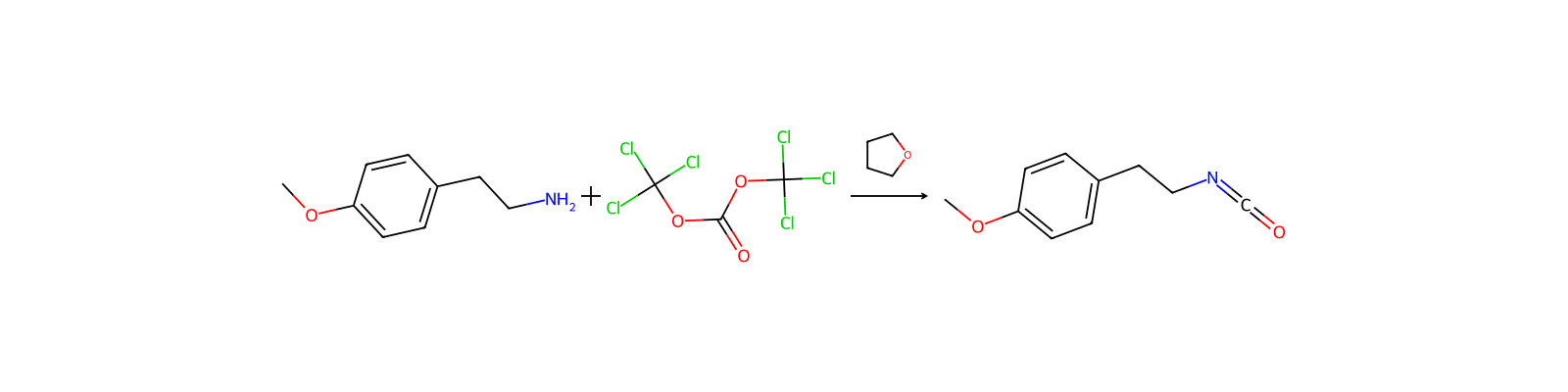
使用Triphosgene is used as a carbonylating agent for aza-peptide synthesis. It reacts with several alfa-amino acids to give the corresponding N-carboxyanhydrides. It is involved in the preparation of the esterification coupling reagent, di-2-thienyl carbonate from 2(5H)-thiophenone. Further, it is used as a reagent in organic synthesis and converts an amino group into isocyanate. In addition to this, it is employed in the preparation of 2-chloronicotinaldehydes through cyclization of the corresponding enamides. It is considered as a useful substitute for phosgene.
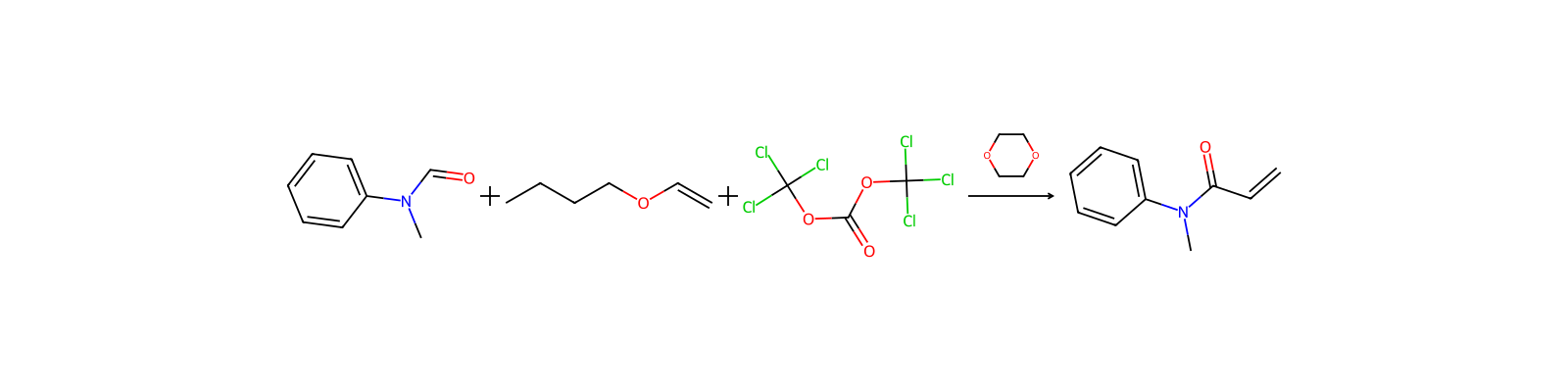
一般的な説明Triphosgene [Bis(trichloromethyl)carbonate] is a versatile organic reagent used in organic synthesis alternative to phosgene. A catalytic amount of triphosgene is particularly used in chloroformylations, carbonylations, chlorinations, and dehydration reactions.
調製方法
合成方法a) 発表当時の合成方法b) 工業的な合成方法
純化方法It is a good solid substitute for phosgene (using a third mol per mol). Crystallise it from pet ether (b 60-80o), wash it with anhydrous cold Et2O, de-gas it at 200mm then dry at 0.1mm (over H2SO4). It has IR: max 900 and 1900 cm-1 . It is a lachrymator, is TOXIC and should be handled with gloves and in an efficient fume hood. [Hales et al. J Chem Soc 620 1957, Eckert & Forster Angew Chem, Int Ed Engl 26 894 1987, Aldrichimica Acta 21 47 1988, Beilstein 3 H 17, 3 I 8, 3 II 16, 3 III 36, 3 IV 33.]
上流・下流製品情報
上流原料
下流製品
サプライヤー50 社
国药集团化学试剂有限公司86-21-63210123 · [email protected]
梯希爱(上海)化成工业发展有限公司021-67121386 · [email protected]
衢州润东化工有限公司0570-8789886 18892685668 · [email protected]
聊城信立新材料有限公司18963527911 18006357927 · [email protected]
爱斯特(成都)生物制药股份有限公司+86-28-85122536 85324413 · [email protected]
科瑞迪化学400-821-5857 021-64326257 · [email protected]
Syntechem Co.,Ltd[email protected]
上海迈瑞尔生化科技有限公司4006356688 18621169109 · [email protected]
宁波亿诺化学品有限公司86-574-27787657 · [email protected]
阿法埃莎(中国)化学有限公司400-6106006 · [email protected]
太原市瑞和丰科贸有限公司+86 351 7031519 · [email protected]
安耐吉化学&3A(安徽泽升科技股份有限公司)400-0056266 · [email protected]
武汉凯威斯科技有限公司86-027-67849912 · [email protected]
上海瀚鸿科技股份有限公司021-54306202 13764082696 · [email protected]
山东昱轩化工产品有限公司15315790065 15315790065 · [email protected]
上海景颜化工科技有限公司13817811078 · [email protected]
嘉兴市艾森化工有限公司0573-85285100 18627885956 · [email protected]
Pure Chemistry Scientific Inc.001-857-928-2050 or 1-888-588-9418 · [email protected]
上海泰坦科技股份有限公司400-6009262 15618770481 · [email protected]
上海隆盛化工有限公司58099637 13585536065 · [email protected]
山东西亚化学有限公司13355009207 13355009207 · [email protected]
玛雅试剂+86 (573) 82222445 (0)18006601000 452520369 · [email protected]
四川库利南科技有限公司400-1166-196 18981987031 · [email protected]
天津希恩思生化科技有限公司400 638 7771 · [email protected]
河南萬象化工有限公司(优势生产供应!)0371-56669001 13949088811 · [email protected]
南京维奥化工有限公司Please Send Email 18652950785 · [email protected]
斯百全化学(上海)有限公司021-021-021-67601398-809-809-809 15221380277 · [email protected]
艾科试剂4008-755-333 18080918076 · [email protected]
上海思域化工科技有限公司86-21-34053660 · [email protected]
赛默飞世尔科技(中国)有限公司800-810-5118 · [email protected]
北京伊诺凯科技有限公司400-810-7969 010-59572699 · [email protected]
上海遐瑞医药科技有限公司+86 21 61551611
江苏艾康生物医药研发有限公司025-66113011 13913916777 · [email protected]
TOKYO CHEMICAL INDUSTRY CO., LTD.03-36680489 · [email protected]
上海贤鼎生物科技有限公司4009209199 · [email protected]
深圳康特腾科技有限公司86-0755-86635001 · [email protected]
越林试剂021-62960152 · [email protected]
无锡中坤生化科技有限公司+86 0510-85629785
Xunteng International Trading Co.,Limited—
上海湄水化工科技有限公司021-60549325 18616193163
HBCChem, Inc.+1-510-219-6317 · [email protected]
日照力德士化工有限公司010-51268198 · [email protected]
美岚实业(上海)有限公司021-58958189 · [email protected]
上海爱蝶实业有限公司021-58957966 18930537195 · [email protected]
成都零六生物科技有限公司400-1166-196 13458535857 · [email protected]
广拓化学(上海)有限公司021-60899189-8001 18918189673 · [email protected]
雷丁试剂0510-85629785 18013409632 · [email protected]
上海麦克林生化科技股份有限公司15221275939 15221275939 · [email protected]
杭州杰恒化工有限公司0571-87396432 · [email protected]
上海嵩爰化工科技有限公司010-1234567 18521000990 · [email protected]
関連反応
4,204 件



関連ノート
読み込み中…