
2,4-ジフルオロアニリン
2,4-Difluoroaniline
データを補完しています。しばらくしてからページを更新すると最新の内容を表示できます

基本情報
- CAS
367-25-9- 標準SMILES
Nc1ccc(F)cc1F- InChIKey
CEPCPXLLFXPZGW-UHFFFAOYSA-N- 分子式
- C6H5F2N
- 平均分子量
- 129.11 g/mol
- 単同位体質量
- 129.0390056
概要
2,4-difluoroaniline is a dark reddish-purple liquid. (NTP, 1992)
名称と識別子
- 優先名称
- 2,4-Difluoroaniline
- IUPAC
- 2,4-difluoroaniline
- 現地名
- 2,4-ジフルオロアニリン
- 英語名
- 2,4-Difluoroaniline
- 分子式
- C6H5F2N
- 分子量
- 129.11
名称と別名
2,4-DIFLUOROANILINE367-25-92,4-DifluorobenzenamineBenzenamine, 2,4-difluoro-Aniline, 2,4-difluoro-DTXSID602506440P93L7KWDNSC-10297DTXCID905064RefChem:82418206-687-52,4-Difluroaniline
名称をさらに表示
2,4-ジフルオロアニリン2,4-ジフルオロベンゼンアミン4,6-ジフルオロフェニルアミン2,4ジフルオロアニリン2,4‐ジフルオロアニリン2,4-ジフルオロアニリン, 99%Difluoroaniline4-Difluoroaniline2,4-difluoro-anilinAKOS 911272,4-Difluoranilin2,4-DIFLOUROANILINE
2,4-DifluorophenylamineMFCD000076482.4-difluoroaniline2,?4-?difluoro-BenzenamineFlurbiprofen Impurity 53CCRIS 46212,4-Difluoro AnilineEINECS 206-687-5
データベース識別子
- CAS
367-25-9- PubChem CID
- 9709
- DTXSID
DTXSID6025064- ChEMBL
CHEMBL1423658- UNII
- 40P93L7KWD
- EC Number
- 206-687-5
- Nikkaji
- J193.875D
物性
構造計算による物性補完中
- XLogP
- 1.5
- 極性表面積
- 26 Ų
- 水素結合供与体数
- 1
- 水素結合受容体数
- 3
- 回転可能結合数
- 0
- 重原子数
- 9
- 形式電荷
- 0
- 複雑度
- 97.1
実験および物理化学的性質
Density1.268 (NTP, 1992) - Denser than water; will sink
Solubility10 to 50 mg/mL at 68.9 °F (NTP, 1992)
Flash Point145 °F (NTP, 1992)
Boiling Point338 °F at 753 mmHg (NTP, 1992)
Melting Point18.5 °F (NTP, 1992)
Physical Description2,4-difluoroaniline is a dark reddish-purple liquid. (NTP, 1992)
物理化学的性質
- 融点
- -7.5 °C · -7.5 °C (lit.)
- 沸点
- 170 °C/753 · 170 °C/753 mmHg (lit.)
- 比重(密度)
- 1.268 g/mL · 1.268 g/mL at 25 °C (lit.)
- 屈折率
- 20 · n20/D 1.506(lit.)
- 闪点
- 145 °F · 145 °F
- 貯蔵温度
- 2 · Keep in dark place,Inert atmosphere,2-8°C
- 溶解性
- 混和しないか、混合しにくい。
- 外見
- 液体
- 酸解離定数(Pka)
- 3.26 · 3.26±0.10(Predicted)
安全と法規制
安全情報は参考情報です。供給元の安全データシート(SDS)、適用法令、専門家による評価に代わるものではありません。
GHS分類
GHS Classification
Danger
H302 (99.4%): Harmful if swallowed [Warning Acute toxicity, oral]
P261, P262, P264, P264+P265, P270, P271, P273, P280, P301+P317, P302+P352, P304+P340, P305+P351+P338, P316, P319, P321, P330, P332+P317, P337+P317, P361+P364, P362+P364, P391, P403+P233, P405, and P501 (click each P-code to see the statement)
Aggregated GHS information provided per 157 reports by companies from 10 notifications to the ECHA C&L Inventory. Each notification may be associated with multiple companies.
危険有害性情報
Regulatory Information
Chemical: Benzenamine, 2,4-difluoro-
Status: Active Update: 19-02-2019 https://echa.europa.eu/registration-dossier/-/registered-dossier/24338
Benzenamine, 2,4-difluoro-: Does not have an individual approval but may be used under an appropriate group standard
DOT LabelPoison
Fire HazardsThis compound is combustible. (NTP, 1992)
Health HazardsACUTE/CHRONIC HAZARDS: This compound may be irritating to tissues. (NTP, 1992)
Reactive GroupAryl Halides
Reactivity Profile
Anilines are chemical bases. They neutralize acids to form salts plus water. These acid-base reactions are exothermic. The amount of heat that is evolved per mole of amine in a neutralization is largely independent of the strength of the amine as a base. Amines may be incompatible with isocyanates, halogenated organics, peroxides, phenols (acidic), epoxides, anhydrides, and acid halides. Flammable gaseous hydrogen is generated by amines in combination with strong reducing agents, such as hydrides.
Air and Water Reactions
化学と産業
用途と製造
General Manufacturing InformationBenzenamine, 2,4-difluoro-: ACTIVE
応用分野
使用2,4-Difluoroaniline is an important raw material and intermediate used in organic synthesis, pharmaceuticals agrochemicals and dyestuff fields.
一般的な説明Dark reddish-purple liquid.
上流・下流製品情報
上流原料
下流製品
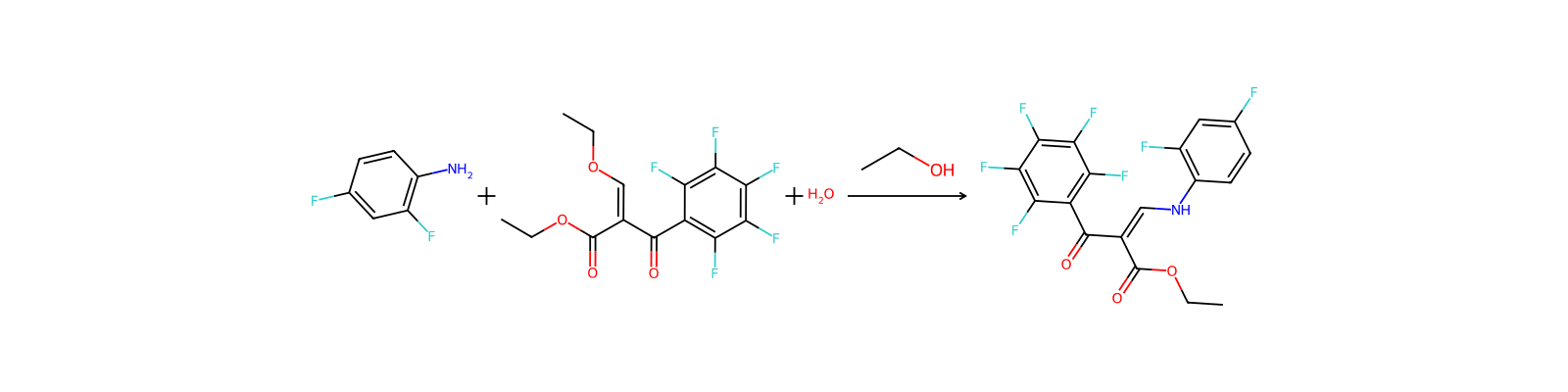
関連反応
373 件


化合物ノート
読み込み中…