ホームMCPワークベンチSkills
ホームワークベンチ通知マイページ
llms.txt · MCPガイドプライバシーポリシー · 利用規約 · サポートv1.8.0
  1. ホーム
  2. /化合物

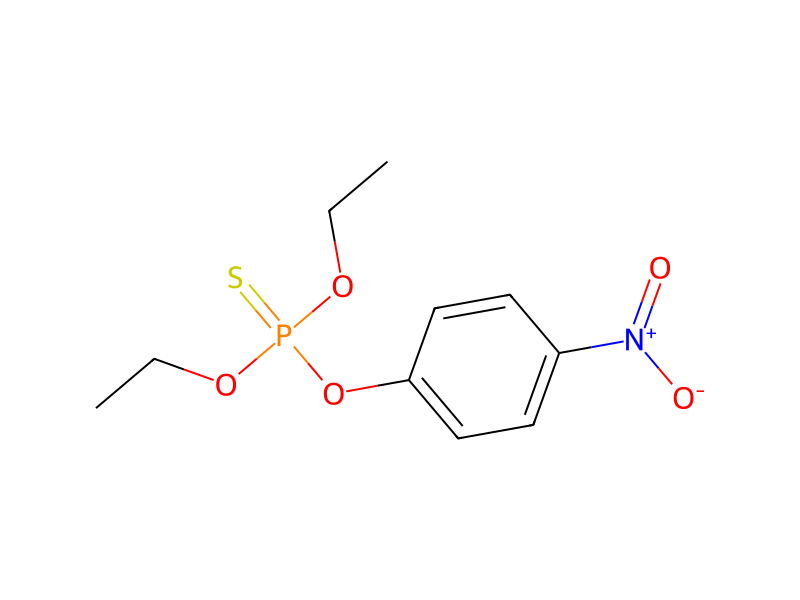
チオりん酸ジエチル4-ニトロフェニル

Parathion

HCID 991
ノートを作成反応を作成見積依頼を出す
印刷プレビュー

データを補完しています。しばらくしてからページを更新すると最新の内容を表示できます
基本情報概要名称と識別子物性安全と法規制化学と産業関連反応化合物ノート
部分構造検索類似構造を探す

基本情報

CAS
56-38-2
標準SMILES
CCOP(=S)(OCC)Oc1ccc([N+](=O)[O-])cc1
InChIKey
LCCNCVORNKJIRZ-UHFFFAOYSA-N
分子式
C10H14NO5PS
平均分子量
291.26 g/mol
単同位体質量
291.03303072

概要

parathion is a yellow-to-brown liquid with an odor of garlic. It is often dissolved in a hydrocarbon solvent before use. Parathion itself is not volatile. It is almost insoluble in water, slightly soluble in petroleum oils, and miscible with many organic solvents.

名称と識別子

優先名称
Parathion
IUPAC
diethoxy-(4-nitrophenoxy)-sulfanylidene-λ5-phosphane
現地名
チオりん酸ジエチル4-ニトロフェニル
英語名
Parathion
分子式
C10H14NO5PS
分子量
291.26

名称と別名

parathionethyl parathionParathion-ethylThiophos56-38-2alkronParaphosdanthionphosphostigminestathionAphamiteFosferno
名称をさらに表示
ホスフェルノニトロスチグミンスタチオンパラチオンエチルパラチオンアルクロンロジアトクスチオりん酸ジエチル4-ニトロフェニルパラウェットアレロンチオりん酸O,O-ジエチルO-(4-ニトロフェニル)チオホスホリドールホスホロチオ酸O,O-ジエチルO-(4-ニトロフェニル)パラチオン-エチルパラチオンエチルダンチオンジエチルp-ニトロフェニルモノチオホスファートエチロンホスキルDNTPAAT1605ETHYLPARATHIONEe605SulphosPARATIONDNTP MIXTURE
RhodiatoxAlleronEtilonFolidolParawetPhoskilNirancorothion

データベース識別子

CAS
56-38-2
PubChem CID
991
DTXSID
DTXSID7021100
ChEMBL
CHEMBL261919
ChEBI
CHEBI:27928
UNII
61G466064D
EC Number
200-271-7
Nikkaji
J2.318C

物性

構造計算による物性補完中

XLogP
3.8
極性表面積
106 Ų
水素結合供与体数
0
水素結合受容体数
6
回転可能結合数
6
重原子数
18
形式電荷
0
複雑度
304

実験および物理化学的性質

Chemical Classes · 2 件

Hazardous Air Pollutants (HAPs)

Carcinogens

SpringerMaterials PropertiesBoiling point
Pesticides · 6 件

Pesticide -> EPA IRIS

Acaricides, Insecticides

Active substance -> EU Pesticides database: Not approved

Pesticides -> Organophosphate Insecticides

Acaricides, Insecticides

Pesticide (Parathion ethyl) -> USDA PDB

LogP · 4 件

Log Kow= 3.83

3.83

3.8

3.45

Odor · 3 件

Usually has a faint odor

... Garlic-like odor ...

Phenol-like odor

Density · 6 件

1.26 (EPA, 1998) - Denser than water; will sink

1.26 AT 25 °C/4 °C

Relative density (water = 1): 1.26

1.27

1.2681 @ 20°C

1.27

Viscosity15.30 CENTIPOISE AT 25 °C
Color/Form · 4 件

The pure material is a yellowish liquid at temperatures above 6 °C

Pale-yellow to dark-brown liquid ... [Note: A solid below 43 degrees F. Pesticide that may be absorbed on a dry carrier].

安全と法規制

安全情報は参考情報です。供給元の安全データシート(SDS)、適用法令、専門家による評価に代わるものではありません。

GHS分類

GHS Classification · 6 件

Danger

H300: Fatal if swallowed [Danger Acute toxicity, oral]

P260, P262, P264, P270, P271, P273, P280, P284, P301+P316, P302+P352, P304+P340, P316, P319, P320, P321, P330, P361+P364, P391, P403+P233, P405, and P501 (click each P-code to see the statement)

Danger

H300 (100%): Fatal if swallowed [Danger Acute toxicity, oral]

P260, P262, P264, P270, P271, P273, P280, P284, P301+P316, P302+P352, P304+P340, P316, P319, P320, P321, P330, P361+P364, P391, P403+P233, P405, and P501 (click each P-code to see the statement)

危険有害性情報

Regulatory Information · 5 件

Hazard Traits - Carcinogenicity; Developmental Toxicity; Environmental tox; Neurotoxicity; Other Toxicological Hazard Traits

Regulation (EC) No 1107/2009 (amended)

Ethyl Parathion is listed in the dataset of EPA Human Health Benchmarks for Pesticides under the Safe Drinking Water Act (40 eCFR 141)

01/520/EC

The New Jersey Worker and Community Right to Know Act requires public and private employers to provide information about hazardous substances at their workplaces. (N.J.S.A. 34:5A-1 et. seq.)

Other Safety InformationIMAP assessments - Phosphorothioic acid, O,O-diethyl O-(4-nitrophenyl) ester: Environment tier I assessment
DOT LabelPoison
Fire Hazards · 2 件

When heated to decomposition, it can emit toxic fumes of oxides of nitrogen, phosphorus, and sulfur. High pressure hoses may scatter material from broken containers. Containers may explode when heated. Stable in distilled water and in acid solution. Store below 77-86F. It slowly decomposes in air and hydrolyzes in the presence of alkaline material. Containers may explode when heated. (EPA, 1998)

Combustible. Gives off irritating or toxic fumes (or gases) in a fire. Liquid formulations containing organic solvents may be flammable.

化学と産業

薬理情報

Mechanism of Action · 5 件

Parathion is converted in the body in part to paraoxon, a strong inhibitor of the enzyme acetyl cholinesterase. Upon inhibition of this enzyme in the tissues, acetylcholine, the substance responsible for transmission of nerve impulses in much of the nervous system, accumulates, producing an initial overstimulation, and subsequent blockage of nerve stimuli.

... PARATHION & METHYL PARATHION ... DEPEND ON OXIDATIVE ACTIVATION BY REPLACEMENT OF THIONO-SULFUR WITH OXYGEN FOR ... TOXICITY.

The toxic effects of thiono-sulfur containing compounds appear to be partially the result of metabolism to reactive intermediates by cytochrome p450 containing monooxygenase enzyme systems. Covalent binding of (atomic) sulfur released in the cytochrome p450 monooxygenase catalyzed metabolism of certain thiono-sulfur compounds appears to be responsible for inhibition of monooxygenase activity & the loss of cytochrome p450 seen on admin of these compounds in vivo & incubation with cytochrome p450 monooxygenase enzymes in vitro. Liver necrosis & perhaps the induction of lung edema & neoplasia, as well as other effects of thiono-sulfur containing compounds are more likely the result of the covalent binding of electrophilic S-oxides or S-dioxides or carbene derivatives to tissue macromolecules. The rationale for implicating metabolites of thiono-sulfur compounds other than sulfur in these effects derives from the experiments with thioacetamide & the fact that atomic sulfur is highly reactive & appears to bind predominantly or exclusively to cytochrome p450.

Organophosphorus derivatives act by combining with and inactivating the enzyme acetylcholinesterase (AChE). ... The inactivation of cholinesterase by cholinesterase inhibitor pesticides allows the accumulation of large amounts of acetylcholine, with resultant widespread effects that may be ... separated into 4 categories: (1) Potentiation of postganglionic parasympathetic activity. ... (2) Persistent depolarization of skeletal muscle ... (3) Initial stimulation following depression of cells of central nervous system ... (4) Variable ganglionic stimulation or blockade ... /Cholinesterase inhibitor pesticides/

For more Mechanism of Action (Complete) data for PARATHION (9 total), please visit the HSDB record page.

Biological Half-LifeElimination half-life of about 8 hours after inhalation; After dermal exposure, only 9.7% of dose eliminated in urine as p-nitrophenol within 5 days; [ACGIH]

関連反応

1 件
反応記録を作成
HRID 1252272 の反応式
HRID 1252272反応物としてuspto-grants-1988_05

化合物ノート

読み込み中…

このページの内容基本情報概要名称と識別子物性安全と法規制化学と産業関連反応化合物ノート
その他の操作
ノートを作成反応を作成見積依頼を出す

Pale yellow liquid

Deep brown to yellow liquid

Solubility · 6 件

less than 1 mg/mL at 73 °F (NTP, 1992)

PRACTICALLY INSOL IN PETROLEUM ETHER, KEROSENE, & USUAL SPRAY OILS

COMPLETELY SOL IN ALCOHOLS, ESTERS, ETHERS, KETONES, AROMATIC HYDROCARBONS, ANIMAL & VEGETABLE OILS

SOL IN CHLOROFORM

Water solubility = 11 mg/l @ 20 °C

Completely miscible with most organic solvents, e.g. dichloromethane >200, isopropanol, toluene, hexane 50 to 100 (all in g/l at 20 °C).

Flash Point · 5 件

248 to 320 °F (EPA, 1998)

FLASH POINT AT 120-160 °C UNTIL FLAMMABLE IMPURITIES OF TECHNICAL MATERIALS ARE REMOVED ...

120 °C

248-320F

(oc) 392 °F

Endocrine DisruptorsPotential endocrine disrupting compound
Boiling Point · 6 件

707 °F at 760 mmHg (EPA, 1998)

375 °C AT 760 MM HG

375 °C

707 °F

375 °C @760 [mm Hg]

707 °F

物理化学的性質

融点
6.1 °C · 6.1°C
沸点
375 °C · 375°C
比重(密度)
1.26 · 1.26
蒸気圧
0.47 at · 0.470 at 20 °C, 0.942 at 25 °C, 1.84 at 30 °C, 3.53 at 35 °C, 6.62 at 40 °C, 12.18 at 45 °C (gassaturation method, Spencer et al., 1979)
屈折率
25 · nD25 1.5370
闪点
120 °C · 120 °C
貯蔵温度
4 °C · APPROX 4°C
溶解性
2 · 石油エーテルおよびヘプタン中、それぞれ 2,900 および 2,700 g/kg (Williams, 1951)
外見
液体
色
淡黄色の液体
水溶解度
わずかに溶ける
Merck
13 · 13,7105
BRN
8912188 · 8912188
Henry's Law Constant
8.56 at · 8.56 at 25 °C (wetted-wall column, Fendinger and Glotfelty, 1990)
安定性
Hygroscopic, Moisture Sensitive
InChI
1S/C10H14NO5PS/c1-3-14-17(18,15-4-2)16-10-7-5-9(6-8-10)11(12)13/h5-8H,3-4H2,1-2H3
InChIKey
LCCNCVORNKJIRZ-UHFFFAOYSA-N
SMILES
CCOP(=S)(OCC)Oc1ccc(cc1)[N+]([O-])=O
CAS データベース
56 · 56-38-2(CAS DataBase Reference)
NISTの化学物質情報
Ethyl parathion (o,o-diethyl-o-p-nitrophenylthiophosphate)(56-38-2)
EPAの化学物質情報
Parathion (56-38-2)
化学的性質 · 1 件

化学的特性Pure parathion is a pale yellow liquid with a faint odor of garlic, while technical parathion is a deep brown to yellow liquid. It is sparingly soluble in water, but soluble in alcohols, aromatic hydrocarbons, esters, ethers, n-hexane, dichloromethane, 2-propanol, toluene,and ketones. Parathion is one of the most acutely toxic pesticides and the US EPA has classifi ed parathion as an RUP, meaning it should only be handled by qualifi ed, trained, and certifi ed workers. In January 1992, the US EPA announced the cancellation of parathion for all uses on fruit, nut, and vegetable crops. Parathion was used for the control of pests of fruits, nuts, and vegetable crops. The only uses retained are those on alfalfa, barley, corn, cotton, sorghum, soybeans, sunfl owers, and wheat. Further, to reduce exposure of agricultural workers, parathion may only be applied to these crops by commercially certifi ed aerial applicators and treated crops may not be harvested by hand. Parathion is a broad spectrum, organophosphate pesticide used to control many insects and mites.

Fire Potential · 4 件

... NOT HIGHLY FLAMMABLE

... RESIDUE SUPPORT COMBUSTION WHEN TEMPERATURE REACHES 221 °C.

Material itself does not burn or burns with difficulty.

Combustible when exposed to heat or flame.

Health Hazards · 1 件

This material is extremely toxic; the probable oral lethal dose is 5-50 mg/kg, or between 7 drops and 1 teaspoonful for a 150-lb. person. As little as 1 drop can endanger life if splashed in the eye. Toxicity is highest by inhalation. People at special risk are those with a history of glaucoma, cardiovascular disease, hepatic disease, renal disease, or central nervous system abnormalities. (EPA, 1998)

Hazards Summary · 3 件

parathion is a yellow-to-brown liquid with an odor of garlic. It is often dissolved in a hydrocarbon solvent before use. Parathion itself is not volatile. It is almost insoluble in water, slightly soluble in petroleum oils, and miscible with many organic solvents.

Exposure may occur from the use of parathion as an insecticide on agricultural crops. Parathion is extremely toxic from acute (short-term) inhalation, oral, and dermal exposures. The central nervous system, blood, respiratory system, eyes, and skin are the organs most affected by acute exposure of humans to parathion. Chronic (long-term) inhalation and oral exposure of humans and animals to parathion have been observed to result in depressed red blood cell cholinesterase activity, nausea, and headache. No information is available on reproductive, developmental, or carcinogenic effects of parathion in humans. Limited data on animals are available; increased adrenal cortical tumors were observed in rats orally exposed to parathion. EPA has classified parathion as a Group C, possible human carcinogen.

Classified as highly toxic, parathion has an LD50 in rats of 2 to 30 mg/kg; [EXTOXNET] A small number of the organophosphates (OPs) can Induce Delayed Neuropathy (OPIDN). OPIDN usually occurs after ingestion and is usually nonoccupational. [Levy, p. 431] Toxic inhalation of parathion vapor is unlikely at ordinary temperatures because of its low volatility, but toxic effects can occur after inhalation of parathion sprays or dusts. [ATSDR Medical Management] The average of two baseline respective cholinesterase activity determinations three days apart, with no exposures to enzyme inhibiting pesticides for at least 30 days, is recommended for each worker prior to exposure to cholinesterase inhibitors because of large inter-individual differences in published baseline values. To be established at least once a year. Removal from workplace exposures is recommended until the cholinesterase activity returns to within 20% of baseline. [TLVs and BEIs]

DOT ID and Guide2783 152
Reactive GroupNitro, Nitroso, Nitrate, and Nitrite Compounds, Organic
EC ClassificationSymbol: T+, N; R: 24-26/28-48/25-50/53; S: (1/2)-28-36/37-45-60-61
UN ClassificationUN Hazard Class: 6.1; UN Pack Group: I
Special Reports · 5 件

Review: Mulla MS, Mian LS; Biological and Environmental Impacts of the Insecticides Malathion and Parathion on Nontarget Biota in Aquatic Ecosystems. Residue Rev 78: 101-35 (1981). In this review most of the avail information on the impact of parathion on non target flora and fauna in aquatic ecosystems & its persistence & distribution in aquatic habitats is collected & interpreted.

NIOSH; Criteria Document: Parathion (1976) DHEW Pub. NIOSH 76-190

USEPA; Ambient Water Quality Criteria Doc: Parathion (1986) EPA 440/5-86-007

Willems JL et al; Naunyn-Schmiedemberg's Arch Pharmacol 330 (Suppl) (1985)

Bioassay of Parathion for Possible Carcinogenicity (1979) Technical Rpt Series No. 70 DHEW Pub No. (NIH) 79-1320, U.S. Department of Health Education and Welfare, National Cancer Institute, Bethesda, MD 20014

安全と保護具

Fire Fighting · 2 件

Use water spray to keep fire-exposed containers cool. If a leak or spill has not ignited, use water spray to disperse vapors and to provide protection for firefighters. Water spray may be used to flush spills away from exposures. Fight advanced or massive fires from a safe distance or from a protected location. Special protective clothing should be worn; normal protective clothing may be penetrated.

Use water spray, dry powder, carbon dioxide. In case of fire: keep drums, etc., cool by spraying with water.

First Aid Measures · 4 件

Fresh air, rest. Artificial respiration may be needed. Refer for medical attention.

Remove contaminated clothes. Rinse and then wash skin with water and soap. Refer for medical attention .

First rinse with plenty of water for several minutes (remove contact lenses if easily possible), then refer for medical attention.

Give a slurry of activated charcoal in water to drink. Refer for medical attention .

First Aid · 2 件

CAUTION: Parathion is a cholinestorase inhibitor. It has been reported that as little as one drop of parathion can endanger life if splashed in the eye. Toxicity is highest by inhalation.

(General first aid procedures)

Safe StorageProvision to contain effluent from fire extinguishing. Separated from strong oxidants and food and feedstuffs. Well closed. Keep in a well-ventilated room.
Firefighting HazardsHigh pressure water hoses may scatter parathion from broken containers, increasing the contamination hazard.
Exposure Control and Personal Protection · 2 件

Biological Exposure Indices (BEI) [ACGIH] - Acetylcholinesterase activity in red blood cells = 70% of individual's baseline; Total p-nitrophenol in urine = 0.5 mg/g' Sample at end of shift; [ACGIH, 2020]]

0.1 [mg/m3], inhalable fraction[German Research Foundation (DFG)]

Fire Fighting Procedures · 5 件

Do not extinguish fire unless flow can be stopped. Use water in flooding quantities as fog. Solid streams of water may be ineffective.

Self contained breathing apparatus with a full facepiece operated in pressure demand, or other positive pressure mode /should be used in firefighting/.

If material /is/ on fire or /is/ involved in fire, extinguish fire using agent suitable for type of surrounding fire. ... Use water in flooding quantities as fog. Cool all affected containers with flooding quantities of water. Apply water from as far a distance as possible. Use foam, dry chemical, or carbon dioxide. /Parathion and compressed gas mixture/

If material /is/ on fire or involved in fire, extinguish fire using agent suitable for type of surrounding fire. ... Use water in flooding quantities as fog. Use "alcohol" foam, dry chemical or carbon dioxide. /Parathion mixture, dry/

If material /is/ on fire or involved in fire, do not extinguish fire unless flow can be stopped. Use water in flooding quantities as fog. Cool all affected containers with flooding quantities of water. Apply water from as far a distance as possible. Solid streams of water may be ineffective. Use "alcohol" foam, dry chemical or carbon dioxide. /Parathion mixture, liquid/

Storage Conditions · 2 件

All parathion containers shall be protected from ... corrosion, mechanical damage, and sources of ignition. ... Outdoor storage facilities shall be located at least 20 feet from any dwellings, or a populated area and shall be equipped with a sprinkler system, where feasible.

Pesticides containers must be provided with labels indicating the degree of toxicity of the product they contain. The labels must not only give a short description of how to use the prepn, but also state basic precautions to be taken when applying it. /Organophosphorus pesticides/

Cleanup Methods · 5 件

1. VENTILATE AREA OF SPILL OR LEAK. 2. COLLECT FOR RECLAMATION, OR ABSORB IN VERMICULITE, DRY SAND, EARTH, OR A SIMILAR MATERIAL.

If material is not on fire & is not involved in fire ... build dikes to contain flow as necessary. Attempt to stop leak if ... /it can be done/ without hazard. ... If material leaking (not on fire) consider evacuation from downwind area based on amount of material spilled, location & weather conditions.

Air spill: Apply water spray to knock down vapors.

Spills of parathion on floors ... absorbed with an absorbing clay. Sweeping compound ... facilitate the removal of all visible traces of parathion contaminated clay.

For more Cleanup Methods (Complete) data for PARATHION (9 total), please visit the HSDB record page.

Nonfire Spill Response · 1 件

In case of leaks or spills, special protective clothing should be worn. Use water spray to disperse vapors and flush spills away. Ventilate area of spill or leak. Spills may be absorbed in vermiculite, dry sand, earth, or a similar material. (EPA, 1998)

Disposal Methods · 3 件

Generators of waste (equal to or greater than 100 kg/mo) containing this contaminant, EPA hazardous waste number P089, must conform with USEPA regulations in storage, transportation, treatment and disposal of waste.

Potential candidate for rotary kiln incineration, with a temperature range of 820 to 1,600 °C and a residence time of seconds. Also, a potential candidate for fluidized bed incineration, with a temperature range of 450 to 980 °C, and a residence time of seconds. Also, a potential candidate for liquid injection incineration with a temperature range of 650 to 1,600 °C, and a residence time of 0.1 to 2 seconds.

The following wastewater treatment technologies have been investigated for parathion: Reverse osmosis.

Spillage Disposal · 1 件

Evacuate danger area! Consult an expert! Personal protection: chemical protection suit including self-contained breathing apparatus. Do NOT let this chemical enter the environment. Collect leaking liquid in sealable containers. Treat remaining liquid with an alkaline substance. Absorb remaining liquid in sand or inert absorbent. Then store and dispose of according to local regulations.

毒性情報

Toxicological Information · 2 件

ATSDR Toxicological Profile for Parathion - Succinctly characterizes the toxicologic and adverse health effects information.

Ranking: 279 (total points: 756.95)

Body Burden · 1 件

Blood of victims of parathion poisoning (caused by dermal contact during harvesting of tobacco less than 24 hr after application of parathion) contained 34 ng/l of parathion(1). Range of serum parathion levels in 5 workers 3, 7, and 24 hr after a 5 hr exposure to parathion in a cotton field 24 hr after treatment were 3 to 13, 3 to 12, and 1 to 8 ppb, respectively(2). Orchard workers dermally absorbed an avg of 2 mg parathion per each application, in addition to an inhalation exposure of 0.020 mg/hr(3).

Treatment · 1 件

If the compound has been ingested, rapid gastric lavage should be performed using 5% sodium bicarbonate. For skin contact, the skin should be washed with soap and water. If the compound has entered the eyes, they should be washed with large quantities of isotonic saline or water. In serious cases, atropine and/or pralidoxime should be administered. Anti-cholinergic drugs work to counteract the effects of excess acetylcholine and reactivate AChE. Atropine can be used as an antidote in conjunction with pralidoxime or other pyridinium oximes (such as trimedoxime or obidoxime), though the use of '-oximes' has been found to be of no benefit, or possibly harmful, in at least two meta-analyses. Atropine is a muscarinic antagonist, and thus blocks the action of acetylcholine peripherally.

Interactions · 5 件

COMBINED EFFECTS OF TWO ORGANOPHOSPHATES CAN ... BE ... ANTAGONISTIC ... /MALATHION/ PLUS PARATHION & DRUGS THAT COMPETE WITH ORGANOPHOSPHATES FOR TARGET ESTERASES MAY ENHANCE ORGANOPHOSPHATE TOXICITY OR VICE VERSA. ... METHYLMERCURY ENHANCES ANTICHOLINESTERASE ACTIVITY OF PARATHION IN QUAIL ...

... TREATMENT OF RATS WITH DDT, /PHENOBARBITAL, OR BENZO(A)PYRENE/ ... LESSENED TOXICITY OF PARATHION, BUT ... /OTHERS/ DEMONSTRATED THAT ALTHOUGH TREATMENT OF MICE WITH CHLORDANE AFFORDED PROTECTION, DDT DID NOT.

Incubation of both parathion and chlorpyrifos at various concn with mouse hepatic microsomes resulted in the inhibition of prodn of paraoxon, p-nitrophenol, chlorpyrifos oxon, and 3,5,6-trichloro-2-pyridinol, which was characteristic of mixed-type inhibition. This kinetic behavior could arise as a result of competitive interactions of one and two with multiple forms of microsomal cytochrome p450.

Single pass perfusion of mouse livers in situ with parathion resulted in formation of the cholinesterase inhibitor paraoxon, p-nitrophenol, p-nitrophenyl sulfate, and p-nitrophenyl glucuronide. Daily pretreatment of mice with phenobarbital (80 mg/kg, ip) for 4 days induced hepatic cytochrome p450 content, as well as oxidative activation and oxidative detoxification of parathion, as measured in vitro. Phenobarbital pretreatment did not alter production of paraoxon from parathion in mouse livers perfused in situ, although it increased production of p-nitrophenol, p-nitrophenyl sulfate, and p-nitrophenyl glucuronide. Additionally, phenobarbital pretreatment antagonized the acute toxicity of parathion in mice. These results indicate that phenobarbital pretreatment clearly induces that form(s) of cytochrome p450 catalyzing conversion of parathion to paraoxon. Increased amounts of catalyzed conversion of parathion to paraoxon. Increased amounts of paraoxon do not exit perfused livers from phenobarbital pretreated mice, but the enhanced detoxification of parathion to p-nitrophenol, p-nitrophenyl sulfate, and p-nitrophenyl glucuronide likely results in the observed antagonism of parathion's acute toxicity.

For more Interactions (Complete) data for PARATHION (9 total), please visit the HSDB record page.

Target Organs · 2 件

Endocrine (Glands and Hormones), Immunological (Immune System), Neurological (Nervous System)

Eyes, skin, respiratory system, central nervous system, cardiovascular system, blood cholinesterase

Health Effects · 1 件

Acute exposure to cholinesterase inhibitors can cause a cholinergic crisis characterized by severe nausea/vomiting, salivation, sweating, bradycardia, hypotension, collapse, and convulsions. Increasing muscle weakness is a possibility and may result in death if respiratory muscles are involved. Accumulation of ACh at motor nerves causes overstimulation of nicotinic expression at the neuromuscular junction. When this occurs symptoms such as muscle weakness, fatigue, muscle cramps, fasciculation, and paralysis can be seen. When there is an accumulation of ACh at autonomic ganglia this causes overstimulation of nicotinic expression in the sympathetic system. Symptoms associated with this are hypertension, and hypoglycemia. Overstimulation of nicotinic acetylcholine receptors in the central nervous system, due to accumulation of ACh, results in anxiety, headache, convulsions, ataxia, depression of respiration and circulation, tremor, general weakness, and potentially coma. When there is expression of muscarinic overstimulation due to excess acetylcholine at muscarinic acetylcholine receptors symptoms of visual disturbances, tightness in chest, wheezing due to bronchoconstriction, increased bronchial secretions, increased salivation, lacrimation, sweating, peristalsis, and urination can occur. Certain reproductive effects in fertility, growth, and development for males and females have been linked specifically to organophosphate pesticide exposure. Most of the research on reproductive effects has been conducted on farmers working with pesticides and insecticdes in rural areas. In females menstrual cycle disturbances, longer pregnancies, spontaneous abortions, stillbirths, and some developmental effects in offspring have been linked to organophosphate pesticide exposure. Prenatal exposure has been linked to impaired fetal growth and development. Neurotoxic effects have also been linked to poisoning with OP pesticides causing four neurotoxic effects in humans: cholinergic syndrome, intermediate syndrome, organophosphate-induced delayed polyneuropathy (OPIDP), and chronic organophosphate-induced neuropsychiatric disorder (COPIND). These syndromes result after acute and chronic exposure to OP pesticides.

Ecotoxicity Values · 5 件

LD50 DENDROCYGNA BICOLOR (FULVOUS WHISTLING-DUCK) ORAL 0.125-0.250 MG/KG /SAMPLE PURITY, 98.76%/

LD50 MALLARD ORAL 2.13 MG/KG (95% CONFIDENCE LIMIT 1.54-2.96 MG/KG), 3-4 MO OLD MALES /98.76% TECHNICAL GRADE/

LD50 ANAS PLATYRHYNCHOS (MALLARD) ORAL 1.90 MG/KG (95% CONFIDENCE LIMIT 1.37-2.64 MG/KG), 2-3 MO OLD FEMALES /SAMPLE PURITY, 98.76%/

LD50 PHASIANUS COLCHICUS (PHEASANT) ORAL 12.4 MG/KG, 2-3 MO OLD MALES /SAMPLE PURITY, 98.76%

For more Ecotoxicity Values (Complete) data for PARATHION (43 total), please visit the HSDB record page.

Environmental Fate · 5 件

AQUATIC FATE: ... PARATHION ... SHOWN TO BE 2-3 TIMES MORE PERSISTENT THAN METHYL PARATHION IN NATURAL WATER SYSTEMS.

TERRESTRIAL FATE: PERSISTENCE OF PARATHION WAS PARTIALLY DEPENDENT ON SOIL TYPE. IN SOME SOILS DEGRADATION WAS RAPID & PROBABLY THROUGH COMBINATION OF HYDROLYSIS & STRONG MICROBIAL ACTIVITY. IN OTHER SOILS ... LOSS WAS SLOW & ATTRIBUTABLE TO HYDROLYSIS.

TERRESTRIAL FATE: Based on a classification scheme(1), Koc values ranging from 314 to 15,860(2) indicate that parathion is expected to have moderate to no mobility in soil(SRC). Volatilization of parathion from moist soil surfaces is not expected to be an important fate process(SRC) given a Henry's Law constant of 2.98X10⁻⁷ atm-cu m/mole(4). Parathion is not expected to volatilize from dry soil surfaces based upon a vapor pressure of 6.68X10⁻⁶ mm Hg at 20 °C(4). The half-life for photodecomposition of parathion on 3 soils with various water contents ranged from 31 to 70 hr(5). After 8 weeks of incubation in an organic and a mineral soil, <2 and 6%, respectively, of the 1 ppm parathion applied remained; in sterilized controls 80 and 95% remained(6). Prior exposure of soils to p-nitrophenol resulted in increased mineralization of parathion to carbon dioxide(7). Metabolic pathways involve both oxidative and reductive reactions(8). The primary oxidative pathway involves an initial hydrolysis to p-nitrophenol and diethylthiophosphoric acid; a second oxidative pathway involves oxidation to paraoxon(8). Under low oxygen conditions reduction to aminoparathion occurs(8).

AQUATIC FATE: Based on a classification scheme(1), sediment Koc values ranging from 3,086 to 38,000(2) indicate that some adsorption of parathion to suspended solids and sediment in the water column is expected(SRC). Parathion is not expected to volatilize from water surfaces(3) based upon a Henry's Law constant of 2.98X10⁻⁷ atm-cu m/mole(4). According to a classification scheme(5), BCFs ranging from 63 to 462(6), suggest bioconcentration in aquatic organisms is moderate to high(SRC). Irradiation of parathion for 10 hr in aerated distilled water resulted in 88% degradation(7). 20% of parathion was lost by photolysis in 2 hr in Okeefenokee Swamp water(8). Reported hydrolysis half-lives at 20 °C at environmentally relevant pHs range from 3 weeks at pH 9(9) to 43 weeks at pH 5(10); the half-life for hydrolysis in sterile sea water has been reported to be approximately 1 yr at 4 °C(11). It is thought that divalent cations catalyze hydrolysis(11). Parathion biodegrades in acclimated natural waters within several weeks(12,13). Parathion, 5 ppm, completely degraded within 2 weeks in acclimated water from Holland Marsh, Ontario, being almost quantitatively converted to aminoparathion; only 10% degradation occurred in 16 weeks when the water was sterilized(12). After 30 days incubation in non-sterile (sterile) coastal river water, only 21, 14, and 6% (64, 57, and 49%) of parathion remained at pH values of 6,7, and 8.16, respectively(14).

Food Survey Values · 3 件

Results for parathion from the US FDA's Total Diet studies of pesticides and other chemicals in Infant and Toddler Total Diet samples in which typical 14-day diet samples are collected from urban areas throughout the US (Fiscal Year - average intake (ug/kg body weight/day)) are: Infants FY77 0.011, FY78 0.005, FY79 0.002, FY80 0.003, FY81/82 0.003; Toddlers FY77 <0.001, FY78 0.003, FY79 0.002, FY80 ND, FY81/82 0.002(1,2). For FY81/82 this represented an average daily intake of 0.021 ug and 0.0227 ug for infants and toddlers, respectively(1). The food classes contributing to this input were vegetables and fruit/fruit juices where the average concentrations were 0.1 and 0.2 ppb, respectively(1). Results from the US FDA's Adult Total Diet Study in which the typical 14-day diet of a 16-19 yr male was collected from market basket composite samples in 12 food groups through the US (Fiscal Year-average intake (ug/kg body wt/day)) are: FY65-70 average 0.01(4), FY71-76 average 0.001(3), FY77 0.002, FY78 0.004, FY79 0.002(5), FY80 0.001, FY81/82 0.002(6). For FY81/82, 27 cities were sampled. There were 17 positive samples out of the 27 composite samples from each of the 12 food groups, containing trace to 0.0010 ppm of parathion(6). The average 70 kg man would have an intake of 0.166 ug/day(6). The food classes which contained parathion are (class, average concn, (ppm), (no positive)): leafy vegetables 0 vegetable 0.0001(2), root vegetable 0.0001(6), and fruits 0.0003(4). Dairy products, meat/fish/poultry, sugar and adjuncts, and beverages (including drinking water) were negative in all surveys(3-6). In a Canadian total diet study which took winter and summer composite samples of 11 food classes in 5 Canadian cities, parathion was identified in leafy vegetable composites from Montreal (summer) and Vancouver (winter) and winter fruit composites from Montreal at contributions of 0.04, 0.02, and 3.3 ug/day(7). Parathion has been recommended for application to lettuce at the rate of 0.5 lb/acre not less than 7 days before harvest(8). Head lettuce sprayed with an emulsifiable concentrate at this rate contained a parathion residue of 59 ppb on the field lettuce head 7 days after spraying and 1010 ppb on the trimmed head(8). The harvested sample contained 152 ppb on the trimmed head(8). Parathion applications have been recommended for the control of insects on spinach at the rate of 0.5 lb/acre not less than 14 days before harvest(7). When parathion was applied at this rate as in emulsifiable concentrate formulation, the field spinach contained 206 ppb 14 days after spraying(9).

Parathion was detected in 4 composite samples of carrots with an average concn of 0.06 ng/kg(1). Parathion was detected in 2 composite samples of peaches with an avg concn of 0.05 ng/kg(2). Parathion was detected by the FDA Los Angeles District on 119 various agricultural commodities at concn ranging from 0.05 to 2 ppm(3). Parathion was found in 1 of 20 grain and cereal samples for adults at a mean concentration of 0.0001 ppm, with a range from 0 to 0.001 ppm, and in 3 of 20 leafy vegetable samples at a mean concn of 0.0004 ppm, with a range from trace amounts to 0.006 ppm, and in 1 of 20 legume vegetable samples at a mean concentration of 0.0001 ppm, with a range from 0 to 006 ppm, (FDA: Total Diet Study)(4). Parathion was detected in 30% of rice, 80% of avocados, 70% of strawberries, 70% of tomatoes, and 20% of lettuce sampled in Mexico(5). Parathion was detected in unspecified fruits in China at concns ranging from 0.0 to 5.7 ug/kg, avg 2.0 ug/kg(6). During a total diet study conducted between April 1991 and March 1993 in Belgium, parathion was detected in the following fresh food commodities (% positive samples, max value, mean value): endive (2.7%, 0.1, 0.005), celery leaves (9.0%, 0.8 ppm, 0.029 ppm), lettuce (0.9%, 0.026 ppm, 0.005 ppm), spinach (7.3%, 2.65 ppm, 0.067 ppm), parsley (6.0%, 0.22 ppm, and 0.012 ppm), leeks (1.8%, 0.04 ppm, 0.006 ppm), lamb's lettuce (1.0%, 0.06 ppm, 0.003 ppm), carrots (3.8%, 0.23 ppm, 0.009 ppm), currants (2.3%, 0.02 ppm, 0.006), oranges (1.8%, 0.02 ppm, 0.002 ppm), lemons (3.6%, 0.11 ppm, 0.005 ppm), and grapes (3.7%, 0.2 ppm, 0.007 ppm)(7). Parathion was detected in unspecified foods during the 1994 regulatory monitoring by the U.S. FDA(8). Parathion was detected in 39 Total Diet study foods between 1984 to 1986; it occurred in 2% of foods between 1984 and 1986 and 3% between 1982 and 1984(9). Parathion was detected in 8% of 556 food samples collected from retail markets in the urban area of Rome(10). During fiscal year 1988 (1989), parathion was detected in 0.264% of 13,980 (0.236% of 13,085) food samples in the US(11).

Adverse EffectsNeurotoxin - Predominantly motor
Exposure Routes · 3 件

The substance can be absorbed into the body by inhalation of its aerosol, through the skin, by ingestion and through the eyes.

inhalation, skin absorption, ingestion, skin and/or eye contact

Oral(L633) ; inhalation (L633) ; dermal (L633).

Milk ConcentrationsParathion was detected in 1 out of 2,739 samples of milk during fiscal years 1985 to 1991 at a concn of 0.06 ppm(1).

法規制情報

RCRA Requirements · 1 件

P089; As stipulated in 40 CFR 261.33, when parathion, as a commercial chemical product or manufacturing chemical intermediate or an off-specification commercial chemical product or a manufacturing chemical intermediate, becomes a waste, it must be managed according to federal and/or state hazardous waste regulations. Also defined as a hazardous waste is any container or inner liner used to hold this waste or any residue, contaminated soil, water, or other debris resulting from the cleanup of a spill, into water or on dry land, of this waste. Generators of small quantities of this waste may qualify for partial exclusion from hazardous waste regulations (40 CFR 261.5(e)).

FIFRA Requirements · 3 件

Tolerances are established for residues of the insecticide parathion or its methyl homolog in or on the following raw agricultural commodities: alfalfa (fresh); alfalfa hay; almonds; almond hulls; apples; apricots; artichokes; avocados; barley; beans; beet greens (alone); beets (with or without tops); beets, sugar; beets, sugar (tops); blackberries; blueberries (huckleberries); boysenberries; broccoli; brussels sprouts; cabbage; carrots; cauliflower; celery; cherries; citrus fruits; clover; collards; corn; corn, forage; cottonseed; cranberries; cucumbers; currants; dates; dewberries; eggplants; endive (escarole); figs; filberts; garlic; gooseberries; grapes; grass (forage); guavas; hops; kale; kohlrabi; lettuce; loganberries; mangoes; melons; mustard greens; mustard seed; nectarines; oats; okra; olives; onions; parsnips (with or without tops); parsnip greens (alone); peaches; peanuts; pears; peas; peas, forage; pecans; peppers; pineapples; plums (fresh prunes); potatoes; pumpkins; quinces; radishes (with or without tops); radish, tops; rape seed; raspberries; rice; rutabagas (with or without tops); rutabaga tops; safflower seed; sorghum; sorghum fodder; sorghum forage; soybeans; soybean hay; spinach; squash; strawberries; summer squash; sugarcane; sugarcane fodder; sugarcane forage; sunflower seed; sweet potatoes; Swiss chard; tomatoes; turnips (with or without tops); turnips greens; vetch; walnuts; wheat; and youngberries.

While petitions for tolerances for negligible residues are pending and until action is completed onthese petitions, interim tolerances are established for residues of the listed pesticide chemicals in or on raw agricultural commodities as follows: parathion or its methyl homolog, herbicide /SRP: Insecticide/, rye.

As the federal pesticide law FIFRA directs, EPA is conducting a comprehensive review of older pesticides to consider their health and environmental effects and make decisions about their future use. Under this pesticide reregistration program, EPA examines health and safety data for pesticide active ingredients initially registered before November 1, 1984, and determines whether they are eligible for reregistration. In addition, all pesticides must meet the new safety standard of the Food Quality Protection Act of 1996. Parathion is found on List A, which contains most food use pesticides and consists of the 194 chemical cases (or 350 individual active ingredients) for which EPA issued registration standards prior to FIFRA, as amended in 1988. Case No: 0155; Pesticide type: insecticide; Registration Standard Date: 09/03/86; Case Status: OPP is reviewing data from the pesticide's producers regarding its human health and/or environmental effects, or OPP is determining the pesticide's eligibility for reregistration and developing the Reregistration Eligibility Decision (RED) document.; Active ingredient (AI): Parathion; Data Call-in (DCI) Date(s): 10/19/92, 11/23/93, 10/13/95, 03/14/96; AI Status: The producers of the pesticide has made commitments to conduct the studies and pay the fees required for reregistration, and are meeting those commitments in a timely manner.

Atmospheric Standards · 1 件

Listed as a hazardous air pollutant (HAP) generally known or suspected to cause serious health problems. The Clean Air Act, as amended in 1990, directs EPA to set standards requiring major sources to sharply reduce routine emissions of toxic pollutants. EPA is required to establish and phase in specific performance based standards for all air emission sources that emit one or more of the listed pollutants. Parathion is included on this list.

CERCLA Reportable Quantities · 2 件

Persons in charge of vessels or facilities are required to notify the National Response Center (NRC) immediately, when there is a release of this designated hazardous substance, in an amount equal to or greater than its reportable quantity of 10 lb or 4.54 kg. The toll free number of the NRC is (800) 424-8802; In the Washington D.C. metropolitan area (202) 426-2675. The rule for determining when notification is required is stated in 40 CFR 302.4 (section IV. D.3.b).

Releases of CERCLA hazardous substances are subject to the release reporting requirement of CERCLA section 103, codified at 40 CFR part 302, in addition to the requirements of 40 CFR part 355. Parathion is an extremely hazardous substance (EHS) subject to reporting requirements when stored in amounts in excess of its threshold planning quantity (TPQ) of 100 lbs.

Clean Water Act Requirements · 2 件

Freshwater aquatic organisms and their uses should not be affected unacceptably if the four day average concn of parathion does not exceed 0.013 ug/l more than once every three years on the average and if the one hour average concn does not exceed 0.065 ug/l more than once every three years on the average.

Designated as a hazardous substance under section 311(b)(2)(A) of the Federal Water Pollution Control Act and further regulated by the Clean Water Act Amendments of 1977 and 1978. These regulations apply to discharges of this substance.

State Drinking Water Guidelines · 4 件

(AZ) ARIZONA 30 ug/l

(CA) CALIFORNIA 40 ug/l

(FL) FLORIDA 42 ug/l

(ME) MAINE 0.2 ug/l

安全データ

OEB
D
OEL
TWA: 0.05 mg/m3 [skin]
wgk
3
IDLA
10 mg/m3
rtecs
TF4550000
ridadr
UN 3278
毒性
LD50 in female, male rats (mg/kg): 3.6, 13 orally; 6.8, 21 dermally (Gaines)
hs_code
29201100
risk_code
24-26/28-48/25-50/53-67-65-38-11
安衛法
57,57-2
消防法
危-4-3-III
hazard_code
T+;N,N,T+,Xn,F
safety_code
28-36/37-45-60-61-62-16
hazard_class
6.1(a)
packing_group
I
毒劇物取締法
I(特定物)
Hazard Classifications
Acute Tox. 1 DermalAcute Tox. 1 InhalationAcute Tox. 1 OralAquatic Acute 1Aquatic Chronic 1STOT RE 1
ストレージクラス
6.1A - Combustible acute toxic Cat. 1 and 2very toxic hazardous materials
有毒物質データの
56-38-2(Hazardous Substances Data)
Metabolism/Metabolites · 6 件

THE METABOLISM OF ... PARATHION ... HAS BEEN EXTENSIVELY STUDIED IN A WIDE VARIETY OF ORGANISMS, INCL MICROORGANISMS, PLANTS, INSECTS & MAMMALS. ... /ITS BIOTRANSFORMATION/ DEPENDS ON OXIDATIVE ACTIVATION BY REPLACEMENT OF THIONO SULFUR WITH OXYGEN FOR ... TOXICITY. COMPETING WITH THIS INTOXICATION REACTION ARE HYDROLYSIS REACTIONS THAT RESULT IN DETOXIFICATION. THE RING NITRO GROUP CAN ALSO BE REDUCED, PARTICULARLY IN BOVINE RUMEN FLUID, TO AMINO GROUP; THIS RESULTS IN AMINO PARATHION ... OXIDATIVE ACTIVATION TAKES PLACE PRIMARILY IN LIVER. A NUMBER OF ... /STUDIES/ HAVE SHOWN THAT, IN LIVER MICROSOMAL MIXED FUNCTION OXIDASE SYSTEMS, PRESENCE OF REDUCED NICOTINAMIDE ADENINE DINUCLEOTIDE PHOSPHATE & OXYGEN ARE RESPONSIBE FOR THIS REACTION. THE CONVERSION OF PARATHION TO PARAOXON HAS BEEN DEMONSTRATED ... IN VIVO & IN VITRO. DEGRADATIVE REACTIONS THAT RESULT IN DETOXIFICATION OF PARATHION ... INVOLVE ... DEARYLATION. THE RESULTING ... DIMETHYL PHOSPHORIC ACIDS ARE ESSENTIALLY NONTOXIC.

Although the main degradation reaction of parathion is preceded by oxidation to oxon and by hydrolysis to p-nitrophenol, reduction to aminoparathion and oxidation to aminoparaoxon have been observed in microsomes /from female albino S-D rat liver cells; rat liver mitochondrial subfraction/. Parathion is also reduced to aminoparathion through nitrosoparathion, and hydroxyamino parathion successively in plants /such as spinach/.

MAJOR METABOLIC PRODUCTS /OF PARATHION METABOLISM IN ANIMALS/ INCL 4-NITROPHENYL PHOSPHATE, DIETHYL HYDROGEN PHOSPHOROTHIONATE, DIETHYL HYDROGEN PHOSPHATE & P-NITROPHENOL. ... THE REACTION RESULTING IN THE FORMATION OF DIETHYL HYDROGEN PHOSPHOROTHIONATE & P-NITROPHENOL REQUIRES THE SAME COFACTORS ... /SUCH AS/, OXYGEN & REDUCED NICOTINAMIDE ADENINE DICUCLEOTIDE , AS THE BIOTRANSFORMATION OF PARATHION INTO 4-NITROPHENYL PHOSPHATE.

WEANLING HOLTZMAN RATS, MALE & FEMALE, WERE INJECTED WITH PARATHION. COCHROMATOGRAPHY WAS USED TO IDENTIFY TISSUE RESIDUES /WHICH CONSISTED/ ... OF DIETHYLPHOSPHORATE, DIETHYL PHOSPHOROTHIOATE, PARAOXON & PARATHION. WHEREAS LIVER, KIDNEY, SKELETAL MUSCLE & PLASMA CONTAINED RESIDUES OF ALL FOUR COMPOUNDS, ONLY PARATHION & PARAOXON WERE FOUND IN BRAIN & FAT TISSUES. DEPA & DEPTA OCCURRED AS THE MAJOR METABOLITES IN URINE WITH PARATHION & PAROXON PRESENT AS TRACES ONLY. ... IN VITO STUDIES WITH LIVER HOMOGENATES SHOWED THAT ADULT MALE RATS POSSESS HIGHER ACTIVITY THAN WEANLINGS OR ADULT FEMALES FOR BOTH THE OXIDATIVE & HYDROLYTIC PATHWAYS OF PARATHION.

For more Metabolism/Metabolites (Complete) data for PARATHION (12 total), please visit the HSDB record page.

Parathion has known human metabolites that include Paraoxon.

MeSH Pharmacological Classification · 2 件

Drugs that inhibit cholinesterases. The neurotransmitter ACETYLCHOLINE is rapidly hydrolyzed, and thereby inactivated, by cholinesterases. When cholinesterases are inhibited, the action of endogenously released acetylcholine at cholinergic synapses is potentiated. Cholinesterase inhibitors are widely used clinically for their potentiation of cholinergic inputs to the gastrointestinal tract and urinary bladder, the eye, and skeletal muscles; they are also used for their effects on the heart and the central nervous system.

Pesticides designed to control insects that are harmful to man. The insects may be directly harmful, as those acting as disease vectors, or indirectly harmful, as destroyers of crops, food products, or textile fabrics.

Absorption, Distribution and Excretion · 5 件

... RAPIDLY TRANSPORTED THROUGHOUT SYSTEM /OF ANIMALS/ AFTER ABSORPTION. ... ONLY TISSUE ACCUMULATION OF PARATHION ... THAT HAS BEEN OBSERVED IS IRREVERSIBLE BINDING TO ESTERASE ENZYMES.

PARATHION IS ABSORBED THROUGH SKIN, THE GUT, & BY INHALATION. IN MICE, PARATHION IS ABSORBED TWICE AS RAPIDLY THROUGH THE GUT AS THROUGH THE SKIN. AFTER SC INJECTIONS OF (32)P PARATHION TO MICE, AUTORADIOGRAPHY SHOWED IT TO BE VERY SLOWLY ABSORBED, WITH LOW LEVEL OF RADIOACTIVITY IN THE BLOOD. HIGHEST ACTIVITY APPEARED IN SALIVARY GLANDS & CERVICAL FAT, FOLLOWED BY LIVER, KIDNEY, GASTRIC WALL, THYROID, SPLEEN, & LUNG. LESS ACTIVITY WAS NOTED IN CNS, MUSCULATURE & BONE MARROW. PERCUTANEOUS ABSORPTION RATES OF PARATHION & ITS METABOLITE PARAOXON WERE USED TO COMPARE IV INFUSION & DERMAL ABSORPTION IN RABBITS: PARAOXON WAS ABSORBED ABOUT 5 TIMES MORE RAPIDLY ...

... THE FACT THAT PARATHION HAS BEEN IDENTIFIED IN DEAD FETUSES OF MOTHERS POISONED WITH OVERDOSE IS STRONG EVIDENCE FOR ... PLACENTAL TRANSFER ...

PARATHION & PARATHION METABOLITES COULD NOT BE DETECTED IN MILK OF COWS CHRONICALLY TREATED ... @ ... LEVELS UP TO 32 MG/KG BODY WT/DAY.

For more Absorption, Distribution and Excretion (Complete) data for PARATHION (21 total), please visit the HSDB record page.

Cellular LocationsMembrane

用途と製造

Uses · 6 件

Parathion is primarily used as an insecticide on fruit, cotton, wheat, vegetables, and nut crops.

In the U.S. parathion may be used only by licensed applicators on alfalfa, barley, corn, cotton, sorghum, soybeans, sunflowers, and wheat. [EXTOXNET]

Use on fruit, nut and vegetable crops cancelled by EPA in 1992; [EXTOXNET]

Farming (Pesticides) [Category: Industry]

... Parathion controls a variety of insects such as aphids, mites, beetles, Lepidoptera, leaf hoppers, leafminers, and other pests found on fruits, cotton, vegetables, and forage crops. It also controls several soil insects such as wireworms, rootworms, and symphilids.

Used for control of nematodes in beet & ornamentals

Impurities · 2 件

The following impurities were identified in one sample of technical-grade parathion: O,O-diethyl thiophosphoryl chloride; O,O,O-triethyl thiophosphate; O,O-diethyl S-ethyl thiophosphate; O,O-diethyl S-ethyl dithiophosphate; nitrophenetole; nitrophenol; parathion isomers; & the dithio analogue of parathion.

The analysis of technical organophosphorus insecticides by (31)P nuclear magnetic resonance showed the major known toxic contaminants to be simple trialkyl phosphorothio- and -dithioic acid esters and the S-alkyl insecticide isomers. Small amt of the bis derivatives & the dithiopyrophosphate were also detected. These contaminants included both byproducts from the synthesis as well as degradation products. This procedure was used to analyze the following technical grade products: ronnel, sulfotepp, methyl parathion, dimethoate, malathion, methidathion, ethion, phosalone, & fenitrothion. /Organophosphorous insecticides/

U.S. Production1970; Approximately 15,259,000 lb of parathion were produced.
Consumption Patterns · 3 件

INSECTICIDE FOR WHEAT, 49%; DECIDUOUS FRUITS & NUTS, 14%; VEGETABLES, 14%; SORGHUM, 11%; COTTON, 4%; CITRUS, 1%; OTHER FIELD CROPS EG, BARLEY & OATS, 7% (1982 AGRICULTURAL CROP USE)

(1978) 3.27X10+9 G (CONSUMPTION)

(1982) 3.90X10+9 G (CONSUMPTION)

Methods of Manufacturing · 4 件

PARATHION ... /IS/ PREPARED BY THE REACTION OF DIETHYL ... PHOSPHOROCHLORIDOTHIOATE WITH SODIUM P-NITROPHENATE.

In the 1st step, ethyl dithiophiosphone acid ... /is/ prepared by reacting ... anhydrous ethyl alcohol with ... phosphorous pentasulfide. ... The chlorination step follows & may use elemental chlorine, sulfur monochloride or sulfur dichloride. ... A production & waste schematic for the overall process of parathion manufacture /for a typical plant producing 20,000 tons per year/ is. ... /described by/ Gruber GI (TRW Systems Group); Report EPA/530/SW-118c, Washington, DC, USEPA (April 1975). To ... thiophosphoryl chloride ... an approx 20% soln of sodium ethylate in ethyl alcohol /is added/. ... To this mixture ... p-nitrophenol ... /was added/ & to this resulting solution was added. ... Approx 20% soln of sodium ethylate in ethyl alcohol ... water /is added to the reaction mixture/ in order to dissolve sodium chloride & to separate the O,O-diethyl O-p-nitrophenyl thiophosphate from the residual alcohol.

Original prepn: Thurston, FIAT Report 949 (1946); Coates, Topley, BIOS Final Report 1808 (1947). See also Fletcher et al., J Am Chem Soc 70, 3943 (1948).

From sodium ethylate, thiophosphoryl chloride, and sodium p-nitrophenate.

Formulations/Preparations · 4 件

Technical parathion is available as a dark brown liquid containing 98.5% active ingredient & 1.5% inert ingredients.

... Granules, ULV liquid ...

Wettable powder; emulsifiable concentrate; granule; dispersible powder; capsule suspension; aerosol.

Mixtures (parathion +) endosulfan; ethion; lindane; oxydemeton-methyl; petroleum oil; tetradifon; malathion; malathion + methoxychlor; parathion-methyl; thiometon; methamidophos.

Use Classification · 2 件

Acaricides, Insecticides

INSECTICIDES

General Manufacturing Information · 5 件

The WHO Recommended Classification of Pesticides by Hazard identifies Parathion (technical grade) as Class IA: extremely hazardous; Main Use: insecticide. According to the PIC /Prior Informed Consent/ Convention, export of /Parathion/ can only take place with the prior informed consent of the importing Party. ...(further information can be found at: http://www.pic.int/).

A restricted use pesticide in the USA.

Discontinued formulations include parathion plus chlorbenside.

Compatible with other insecticides & fungicides.

For more General Manufacturing Information (Complete) data for PARATHION (7 total), please visit the HSDB record page.

応用分野 · 6 件

解説パラチオン 。殺虫剤。沸点 157~162℃/0.6mmHg の黄色液体。三塩化リン,硫黄,アルコール,ナトリウム,ニトロフェノールを原料として合成。リンを含み多くの有機溶媒に可溶な化合物。多くの昆虫 (特に二化めい虫) ,だになどに対して強力な殺虫効果があるが,定温動物に対しても強い毒性を示し,急性毒性があまりにも強いので,製造および使用を禁止された。日本ではメイチュウなどイネの害虫防除に大きく貢献したが,人畜毒性が強大で危険なため,1969年で生産中止,1971年で使用禁止。特定毒物であり,環境庁が1997年に公表した〈外因性内分泌攪乱化学物質問題に関する研究班〉の中間報告書で環境ホルモンの候補としてあげられている。ホリドールは商品名。

用途殺虫剤(販売禁止農薬) (NITE CHRIP)

説明After exposure to parathion ethyl, one case of a bullous contact dermatitis was reported.

使用Parathion is an organophosphate insecticide used on cotton, rice and fruit trees.

一般的な説明Light-yellow liquid, Parathion turn solid at 6° C, a deadly poison by all routes. Organic phosphate insecticide, acts as an inhibitor of cholinesterase.

使用用途パラチオンは、主に農薬として使用されていた有機化合物です。0.05%~0.1%程度の低濃度溶液として稲、小麦、野菜、果樹、綿等に散布して使用されていました。 ニカメイチュウやシンクイムシ類などの害虫に対して、高い殺虫効果を有します。本剤が害虫体内に吸収されるとコリンエステラーゼ活性が阻害され、神経伝達物質であるアセチルコリンが蓄積し、その結果殺虫効果が発現します。 しかし、パラチオンは人体およびその他の哺乳類・鳥類・水棲生物・昆虫に対して非常に毒性が高いことから、現在では農薬としての使用は禁止です。日本、アメリカ、ヨーロッパ等にて、主要な農作物に対してパラチオンの残留基準が設定されています。 現在、試薬メーカーから販売されているパラチオンは、農薬用途ではなく、残留農薬の試験用試薬用途です。残留農薬試験用試薬としてパラチオンを購入し使用する際には、「毒物劇物取締法に基づく特定毒物研究者指定証」が必要です。

上流・下流製品情報

上流原料

キシレンエタノール塩素五硫化リン4-ニトロフェノールナトリウム二水和物トリメチルアミン水溶液 3 0 %クロロチオりん酸 ジエチルEMULSIFIER4-NITROPHENYL PHOSPHORODICHLORIDOTHIOATE1-アセチルピペラジン4-(4-ニトロフェノキシ)ブタン酸

ATMOSPHERIC FATE: According to a model of gas/particle partitioning of semivolatile organic compounds in the atmosphere(1), parathion, which has a vapor pressure of 6.68X10⁻⁶ mm Hg at 20 °C(2), will exist in both the vapor and particulate phases in the ambient atmosphere. Vapor-phase parathion is degraded in the atmosphere by reaction with photochemically-produced hydroxyl radicals(SRC); the half-life for this reaction in air is estimated to be 4.2 hours(SRC) from the estimated rate constant(3). Particulate-phase parathion may be removed from the air by wet and dry deposition(SRC). Parathion absorbs radiation with wavelengths shorter than 320 nm(4), suggesting a potential for direct photolysis(SRC).

Parathion was detected in the following domestic agricultural commodities in Canada sampled between Jan 1992 and March 1994: fresh carrots, fresh celery, fresh head lettuce, and fresh tomatoes(1). It was detected in the following imported agricultural commodities in Canada sampled between Jan 1992 and March 1994: fresh apples, fresh beans, fresh celery, fresh grapes, fresh limes, fresh oranges, fresh pears, and fresh sweet peppers(1). Parathion was detected in the following domestic agricultural commodities in Canada sampled between April 1989 and Dec 1991: fresh carrots, fresh lettuce, fresh peaches, and fresh potatoes(2). It was detected in the following imported agricultural commodities in Canada sampled between Jan 1992 and March 1994: fresh apples, fresh celery, fresh cranberries, fresh grapes, fresh oranges, fresh peppers, and fresh tomatoes(2). Parathion was detected in the following California crops: grapefruit, navel oranges, grapes, nectarines, peaches, plums, and prunes(3). Parathion was detected in 53 of 234 ready-to-eat foods tested repetitively for 10 years, 1982 to 1991, through the US FDA's Revised Market Basket Survey at an average concentration of 0.0043 ug/g(4). In an FDA survey of domestic and imported pears (tomatoes) conducted between 1992 and 1993, parathion was detected in 1 out of 710 domestic pears (2 out of 1,219 domestic tomatoes at a maximum concentration of 0.01 ppm)at a concentration of 0.02 ppm and in 2 out of 949 imported pears at a maximum concentration of 0.04 ppm(5). In an FDA survey of domestic and imported apples conducted between 1993 and 1994, parathion was detected in 1 out of 769 samples of domestic apples at a concentration of 0.02 ppm; it was not detected in imported apples(6). In a survey of US produce conducted from 1989 to 1991, parathion was detected in 13 of 6,970 produce samples, including apples, grapefruit, lemons, limes, oranges, peaches, and strawberries(7).