Triethylamine → 3-Butenoic acid, 2-oxo-4-phenyl-, ethyl ester
HRID 1032041
反応式

[CH:1](=[CH:8][C:9](=[O:13])[C:10]([OH:12])=[O:11])[C:2]1[CH:7]=[CH:6][CH:5]=[CH:4][CH:3]=1.[CH2:14](N(CC)CC)[CH3:15].ClC(OCC)=O>O>[CH:1](=[CH:8][C:9](=[O:13])[C:10]([O:12][CH2:14][CH3:15])=[O:11])[C:2]1[CH:7]=[CH:6][CH:5]=[CH:4][CH:3]=1参加物
5




実験手順
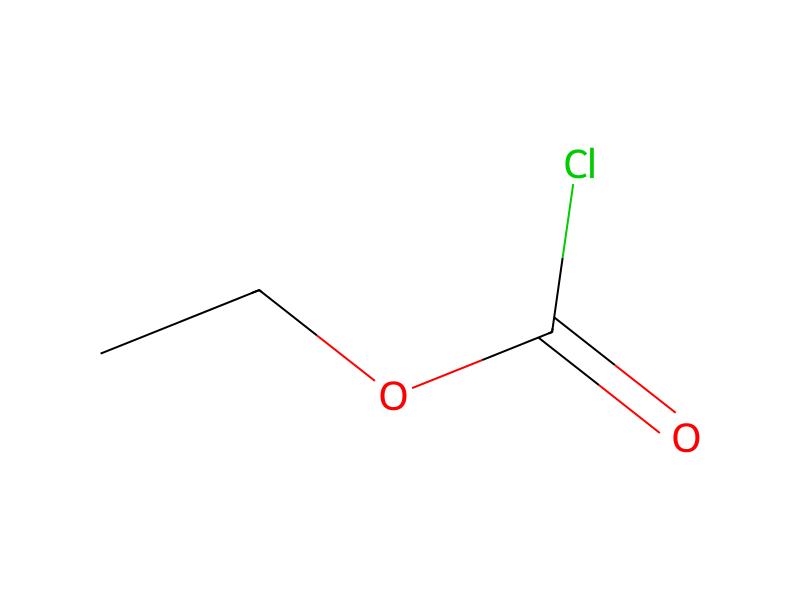
To the benzalpyruvic acid of step A in water-saturated ethyl acetate there was added triethylamine (56.2 g, 0.55 mol) at a rate less than 0.5 ml/min with good agitation. Water was then azeotropically removed by vacuum distillation and the benzalpyruvic acid concentration readjusted to 120 g/l with dry ethyl acetate. Ethyl chloroformate (59.7 g, 0.55 mol) was then added over a one hour period at 20°-25° C. followed by a one hour age. The mixture was cooled to 0°-5° C. and quenched with 350 ml of cold water. The aqueous layer was discarded and the organic layer was washed with cold (0°-5° C.) 5% sodium bicarbonate solution (350 ml) followed by cold (0°-5° C.) 5% sodium chloride (350 ml). The ethyl acetate was removed by vacuum concentration affording crude ethyl benzalpyruvate in a yield of 95-97%. The ester was subsequently purified by distillation using a short-path wiped film evaporator (WFE) apparatus (150° C., 0.1 mm Hg).