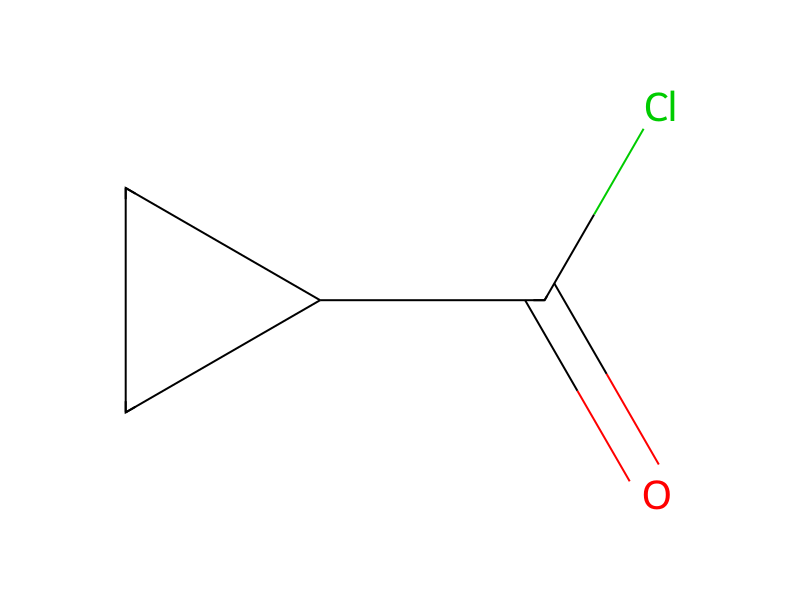
A 1000-mL round bottomed flask fitted with a nitrogen inlet, overhead stirrer, addition funnel, and thermocouple, was charged with (S)-2-methyl-1,2,3,4-tetrahydroquinolin-5-ol hydrobromide (20 g, 82 mmol), followed by anhydrous DMF (109 mL), and pyridine (19.8 mL, 246 mmol). Cyclopropanecarbonyl chloride (7.43 mL, 82 mmol) was added dropwise over 30 minutes while holding temperature below 20° C. with a cool water bath. Following completion of the addition, the reaction mixture was stirred for 1.5 h at ambient temperature. The pot was cooled to 0° C. in an ice bath and 0.29 M aqueous HCl solution (315 mL) was added dropwise over 15 minutes. The slurry was stirred for 90 minutes in the ice bath before being filtered. The pot and filter cake were washed with 25 mL of ice water. The filter cake was dried under nitrogen on a Buchner funnel to afford (2S)-1-cyclopropanecarbonyl-2-methyl-1,2,3,4-tetrahydroquinolin-5-ol (17.16 g, 91%) as an off-white powder. MS (ES, m/z): 232 [M+H]+