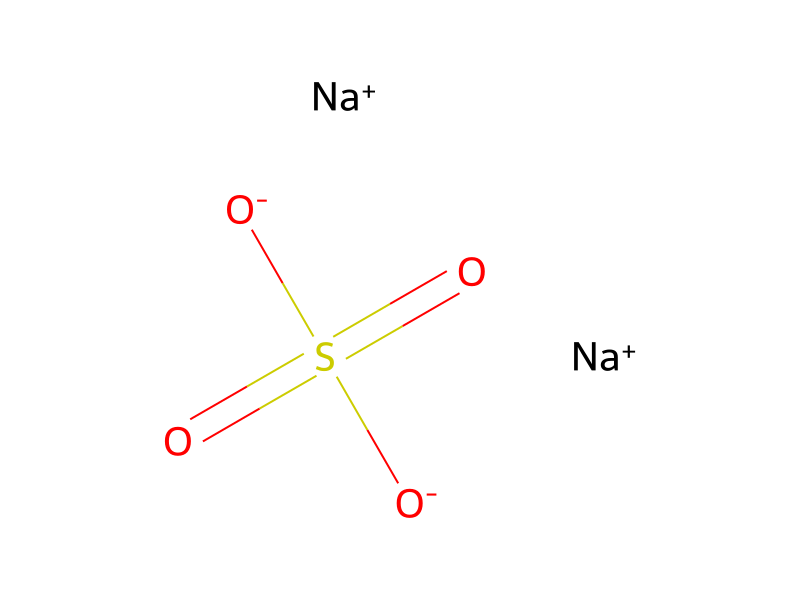
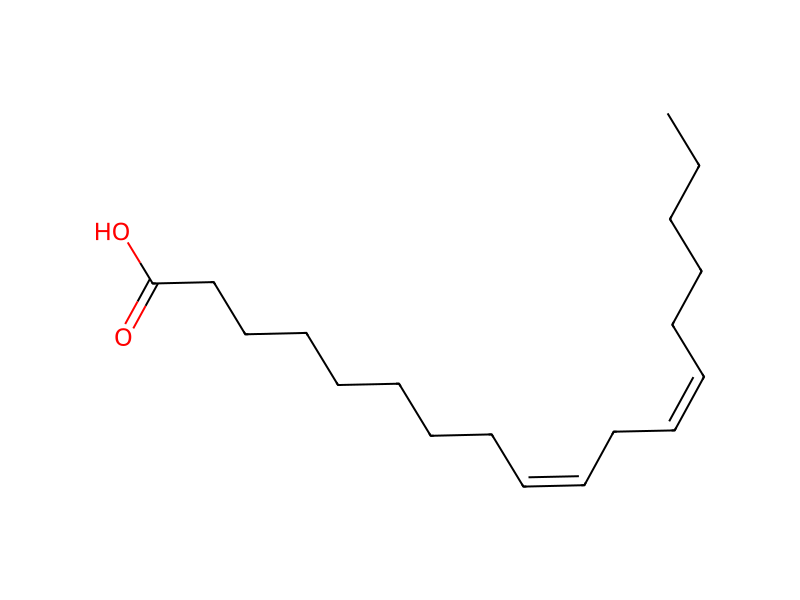
A clean, dry 200 L glass reactor fitted with an argon inlet and thermowell was charged with 60 L of THF and 5.73 Kg (20.4 mol) of linoleic acid. The contents of the reactor were cooled below 0° C. using an acetone-dry ice bath. To this cold solution 13.8 L of Vitride (60% wt/vol) in toluene was added slowly maintaining the internal temperature of the reaction mixture below 0° C. (Note: Initial addition of vitride was exothermic and frothing was observed. The frothing ceased after 15 minutes of addition). The addition of vitride took 3 hr and 45 minutes. After completion of the addition, the reaction mixture was stirred at ambient temperature for 2 hr. An aliquot was taken and quenched with sat. Na2SO4 and the thus obtained crude product was analyzed by TLC for the presence of the starting acid. The TLC showed completion of the reaction and the reaction mixture was again cooled below 0° C. in about 45 minutes. A saturated solution of sodium sulfate (prepared by dissolving 1.1 Kg of sodium sulfate in 1.5 L of water) was slowly added to the reaction mixture over 45 min. After completion of the addition, 25 L of ethyl acetate was added over a period of 30 min with stirring. The obtained reaction mixture was filtered through a celite bed over a period of 45 min and the celite bed was washed with an additional 17 L of ethyl acetate to remove all product from the residue. The combined organics were concentrated under reduced pressure. The residue was dissolved in 15 L of ethyl acetate and the organic layer was washed with water (2×7 L) and dried over sodium sulfate (1.1 Kg). After filtration the organic layer was concentrated under reduced pressure and dried under high vacuum to obtain the product linoleyl alcohol as an oil. Crude yield=5.5 Kg (theoretical yield=5.43 Kg). This product was used without further purification in the next step. Process for Preparing Linoleyl Mesylate 3 A clean, dry 200 L all glass reactor fitted with argon inlet and thermowell was charged with 45 L of DCM and 5.5 Kg of the crude product from step 1. To this solution 11.5 L triethylamine was added followed by 0.252 Kg (2.0 mol) of DMAP. The solution was cooled to −10° C. using a dry-ice acetone mixture and to this cold reaction mass, a solution of mesyl chloride (3.2 L, 41.3 mol) in DCM (10 L) was added drop wise over a period of 3 hrs while maintaining the temperature below 0° C. After completion of the addition, the reaction mixture was stirred at 0° C. for 1 h after which the TLC (5% EtOAc in DCM; PMA stain) of the reaction mixture showed complete disappearance of starting alcohol. To the reaction mixture, 17 L of ice-cold water was added and the layers were separated. The top aqueous layer was again washed with 10 L of DCM and the layers were separated. The combined organic layers were washed with 2×10 L of dilute hydrochloric acid (prepared by mixing 2 L of Con. HCl with 18 L of RO water), 2×7.5 L of water and 10 L of brine (prepared by dissolving 11 Kg of NaCl in 10 L of RO water). The organic layer was separated, dried over Na2SO4 (2.75 Kg) and filtered. The organic layer was evaporated under reduced pressure and vacuum dried to obtain the crude mesylate as a light yellow oil. Crude yield=7.1 Kg (theoretical yield=7.1 Kg). This material was used without further purification in the next step. 1H NMR (CDCl3, 400 MHz) δ=5.42-5.21 (m, 4H), 4.20 (t, 2H), 3.06 (s, 3H), 2.79 (t, 2H), 2.19-2.00 (m, 4H), 1.90-1.70 (m, 2H), 1.06-1.18 (m, 18H), 0.88 (t, 3H). 13C NMR (CDCl3) δ=130.76, 130.54, 128.6, 128.4, 70.67, 37.9, 32.05, 30.12, 29.87, 29.85, 29.68, 29.65, 29.53, 27.72, 27.71, 26.15, 25.94, 23.09, 14.60. MS. Molecular weight calculated for C19H36O3S, Cal. 344.53. Found 343.52 (M-H−).