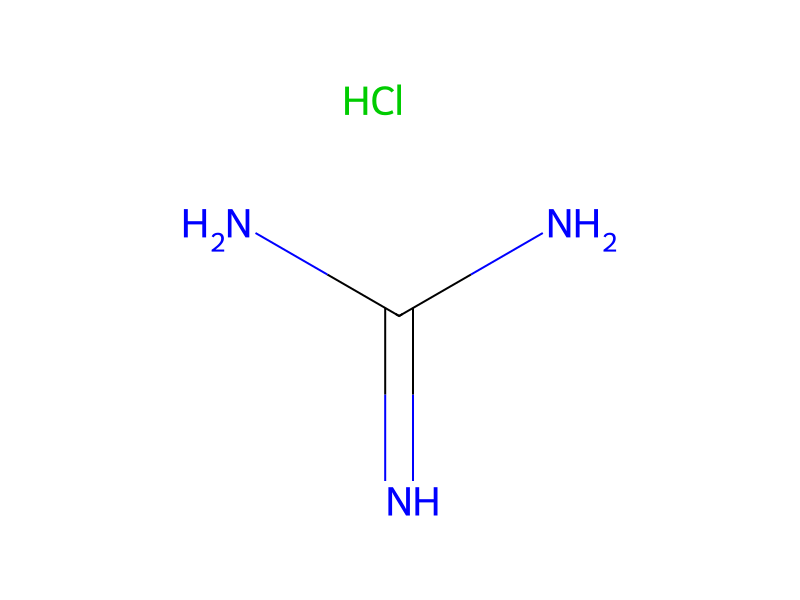
Guanidine Hydrochloride → HCID 178485148、化合物
反応式

Cl.[NH2:2][C:3]([NH2:5])=[NH:4].[CH3:6][O-].[Na+].[Cl:9][C:10]1[CH:18]=[C:17]([O:19][C:20]2[CH:25]=[CH:24][CH:23]=[CH:22][C:21]=2[N+:26]([O-:28])=[O:27])[CH:16]=[C:15]2[C:11]=1[CH:12]=[C:13]([C:30](OCC)=[O:31])[N:14]2C>CO>[Cl:9][C:10]1[CH:18]=[C:17]([O:19][C:20]2[CH:25]=[CH:24][CH:23]=[CH:22][C:21]=2[N+:26]([O-:28])=[O:27])[CH:16]=[C:15]2[C:11]=1[CH:12]=[C:13]([C:30]([N:4]=[C:3]([NH2:5])[NH:2][CH3:6])=[O:31])[NH:14]2参加物
5




実験手順
After 2.87 g (30.0 mmol) of guanidine hydrochloride was added to 25 ml of a methanol solution of 1.62 g (30.0 mmol) of sodium methoxide, the mixture was stirred at room temperature for 30 minutes. The precipitated sodium chloride was filtered off. To the obtained solution was added 0.51 g (1.50 mmol) of ethyl 4-chloro-1-methyl-6-(2-nitrophenoxy)-2-indolecarboxylate. Subsequently methanol was distilled off under reduced pressure. The resulting residue was heated at 130° C. for 5 minutes and then allowed to stand at room temperature for an hour. Thereafter water was poured onto the reaction solution and the mixture was extracted three times with ethyl acetate. The combined extracts were washed with water. After drying over anhydrous magnesium sulfate, the solvent was distilled off under reduced pressure. The resulting residue was isolated and purified by silica gel column chromatography to give 0.23 g (40.1%) of 4-chloro-1-methyl-6-(2-nitrophenoxy)-2-indoloylguanidine.