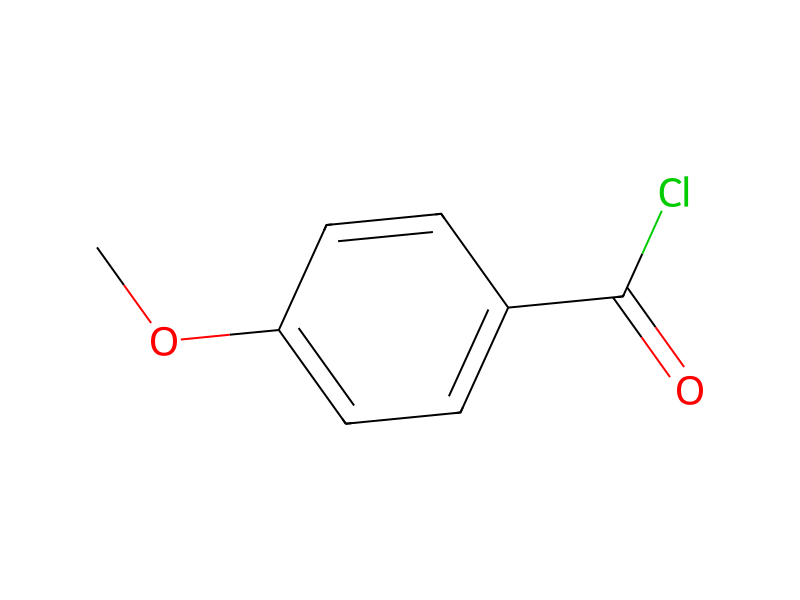
A solution of 529.8 g (3.505 mole) methyl anthranilate and 294.4 g 50 weight percent NaOH (3.68 mole) in 3.6 L CH2Cl2 and 1.8 L H2O was stirred in an ice-bath as 627.8 g (3.680 mole) p-anisoyl chloride was added at such rate that the temperature did not exceed 10° C. (time required was 1.25 hr). The mixture was allowed to warm to 23° C. Acetic acid (50 mL) was added to adjust the pH to 5. The layers were separated and the organic layer was washed with 10% aqueous NaHCO3 (1×0.8 L) and brine (1×0.8 L). The residual white solid was recrystallized from 7.0 L boiling material. The product (III) was dried in vacuo at 70° C. for 24 hr to yield 959.7 g (96.0%) white crystalline solid, m.p. 122.5°-124.5° C.