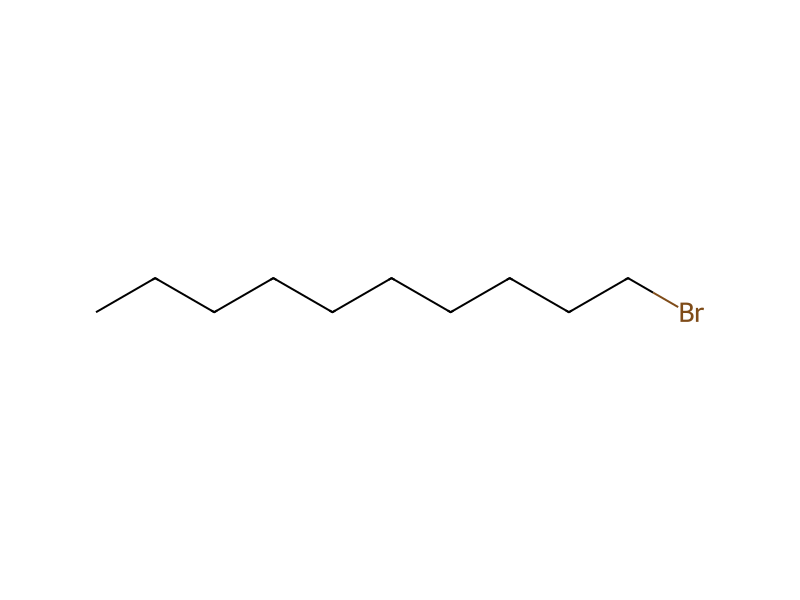
[F:1][C:2]1[CH:3]=[C:4]([C:9]2[CH:14]=[CH:13][C:12]([C:15]([OH:17])=[O:16])=[CH:11][CH:10]=2)[CH:5]=[CH:6][C:7]=1[OH:8].[CH2:18](Br)[CH2:19][CH2:20][CH2:21][CH2:22][CH2:23][CH2:24][CH2:25][CH2:26][CH3:27].[OH-].[Na+].Cl>C(O)C>[CH2:18]([O:8][C:7]1[CH:6]=[CH:5][C:4]([C:9]2[CH:14]=[CH:13][C:12]([C:15]([OH:17])=[O:16])=[CH:11][CH:10]=2)=[CH:3][C:2]=1[F:1])[CH2:19][CH2:20][CH2:21][CH2:22][CH2:23][CH2:24][CH2:25][CH2:26][CH3:27]The resulting 3'-fluoro-4'-hydroxybiphenyl-4-carboxylic acid was heated under reflux for 10 hours in hydrous ethanol together with 1.2 moles, per mole of the carboxylic acid, of decyl bromide and 1.95 moles, per mole of the carboxylic acid, of sodium hydroxide. Then, 10% hydrochloric acid was added to adjust the pH of the solution to 2 to 3. The solution was then heated under reflux for 1 hour. After cooling, the organic materials were extracted with chloroform. The chloroform layer was washed with water and dried over anhydrous sodium sulfate. The chloroform layer was concentrated to obtain crude crystals. Recrystallization from ethanol gave the desired 4'-decyloxy-3'-fluorobiphenyl-4-carboxylic acid. The yield in this alkoxylation reaction slightly varies depending upon the type of the alkyl bromide used, but it is generally 60 to 80%.