Sodium hydride → HCID 19860794、化合物
反応式

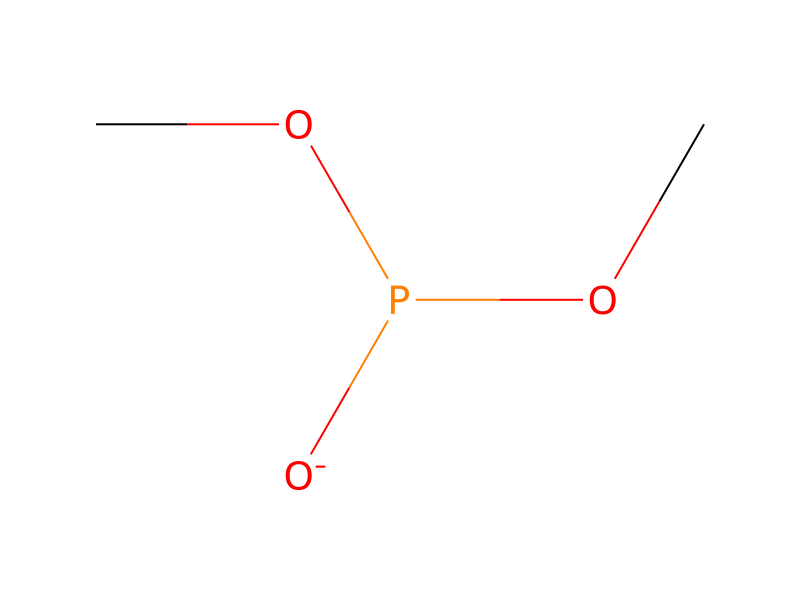
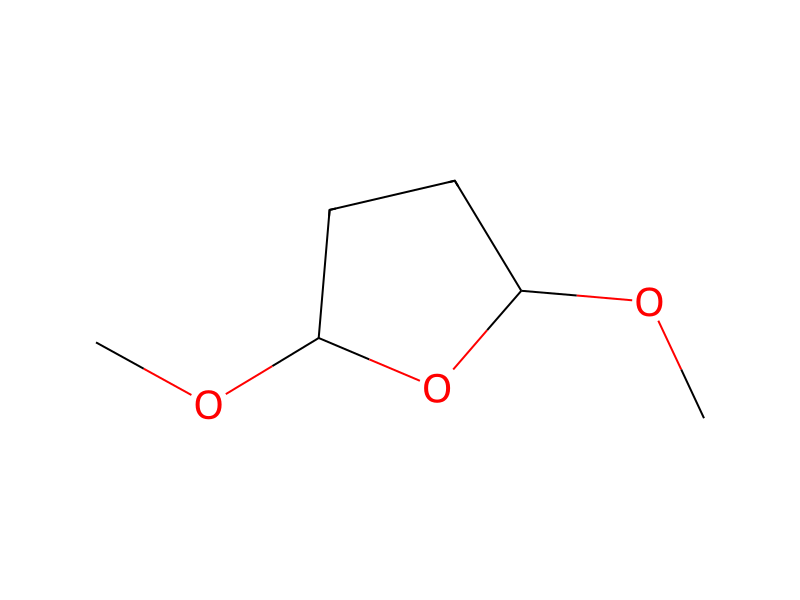
[P:1]([CH:5]1[CH2:9][CH2:8][CH:7](P(O)(O)=O)[O:6]1)([OH:4])([OH:3])=[O:2].P([O-])(OC)[O:15][CH3:16].[H-].[Na+]>COC1CCC(OC)O1>[P:1]([CH:5]1[CH2:9][CH2:8][CH:7]([O:15][CH3:16])[O:6]1)([OH:4])([OH:3])=[O:2]参加物



実験手順
To make 2,5-diphosphonotetrahydrofuran (i.e. n is 2), step (a) is suitably accomplished by adding dimethyl phosphite to a cool slurry of sodium hydride in 2,5-dimethoxytetrahydrofuran under an inert atmosphere such as nitrogen or argon and heating the resulting reaction mixture to form 2-phosphono-5-methoxytetrahydrofuran as a first intermediate. Step (b) is suitably accomplished by adding bromotrimethyl silane to said first intermediate and stirring the resulting mixture under an inert atmosphere such as nitrogen or argon, thereby forming di-(trimethylsilyl)2-phosphono-5-bromotetrahydrofuran as a second intermediate. Step (c) is suitably accomplished by adding triisopropyl phosphite to said second intermediate and heating the mixture under an inert atmosphere such as nitrogen or argon, thereby forming 2-(di-(trimethyl silyl)phosphono)-5-(diisopropylphosphono)-tetrahydrofuran. Diphosphonotetrahydrofuran may be produced by adding a concentrated acid, such as hydrochloric acid to the 2-(di-(trimethyl silyl)phosphono)-5-(diisopropylphosphono)-tetrahydrofuran and refluxing the acid solution. 2,6-Diphosphonotetrahydropyran (i.e. n is 3) and 2,7-Diphosphonooxepane (i.e. n is 4) may be produced in similar fashion, respectively using 2,6-dimethoxytetrahydropyran and 2,7-dimethoxyoxepane rather than 2,5-dimethoxytetrahydrofuran as a starting material.
後処理
- temperatureheating
- customthe resulting reaction mixture
出典と根拠
- ORDレコード
- ord-96d8e8262de9448db68813441b04f9b6
- 出典データセット
- uspto-grants-1990_03
- 特許番号
- US04911887
反応ノート
読み込み中…