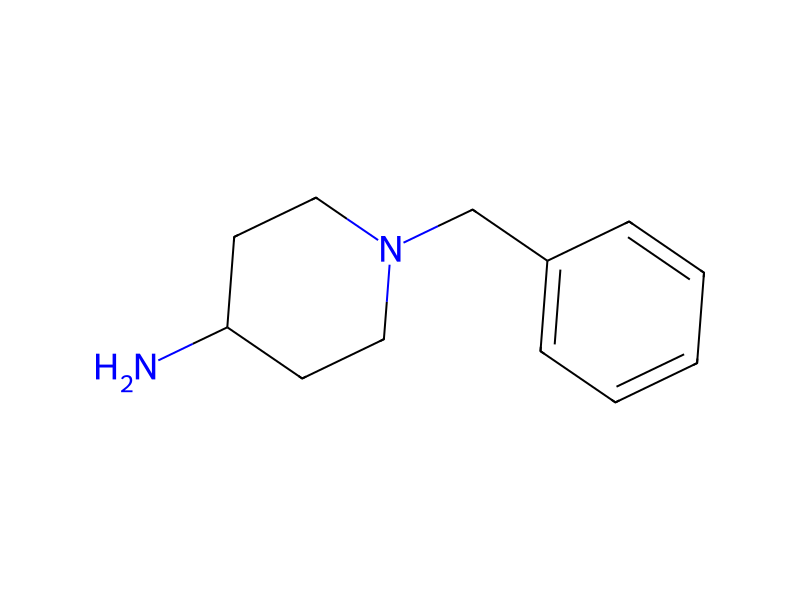
[N+:1]([C:4]1[CH:11]=[CH:10][CH:9]=[CH:8][C:5]=1[CH:6]=O)([O-:3])=[O:2].[NH2:12][CH:13]1[CH2:18][CH2:17][N:16]([CH2:19][C:20]2[CH:25]=[CH:24][CH:23]=[CH:22][CH:21]=2)[CH2:15][CH2:14]1.[BH4-].[Na+].[Cl-].[NH4+]>C(O)C>[CH2:19]([N:16]1[CH2:17][CH2:18][CH:13]([NH:12][CH2:6][C:5]2[CH:8]=[CH:9][CH:10]=[CH:11][C:4]=2[N+:1]([O-:3])=[O:2])[CH2:14][CH2:15]1)[C:20]1[CH:21]=[CH:22][CH:23]=[CH:24][CH:25]=12-Nitrobenzaldehyde (1 g, 6.61 mmol) and 4-amino-1-benzylpiperidine (1.35 mL, 6.61 mmol) were combined in ethanol (20 mL). The resulting suspension was stirred at room temperature for 20 min before a solution of sodium borohydride (0.25 g, 6.61 mmol) in ethanol (5 mL) was added dropwise over 10 min. After the addition was complete, the reaction was stirred for 1 h, cooled to 0° C. and concentrated ammonium chloride was added to the reaction mixture until no bubbling was observed. The solvents were evaporated in vacuo and the resultant crude mixture was dissolved in water (10 mL) and methylene chloride (10 mL). The layers were separated and the organic layer washed with water (2×) and brine (2×), dried over sodium sulfate, filtered, and concentrated to afford 1.5 g (70%) of the desired product. LC/MS: tR=0.7 min, 326.18 (MH)+.