反応式

O.[NH2:2][NH2:3].C([O:8][C:9](=[O:12])[CH2:10]Br)(C)(C)C.NN.N(C(O[CH2:36][C:37]1[CH:42]=CC=C[CH:38]=1)=O)[C@H](C(N[C@H](C(ON1C(=O)CCC1=O)=O)C)=O)C>>[C:37]([CH:10]([NH:2][NH2:3])[C:9]([OH:8])=[O:12])([CH3:42])([CH3:38])[CH3:36]参加物




実験手順
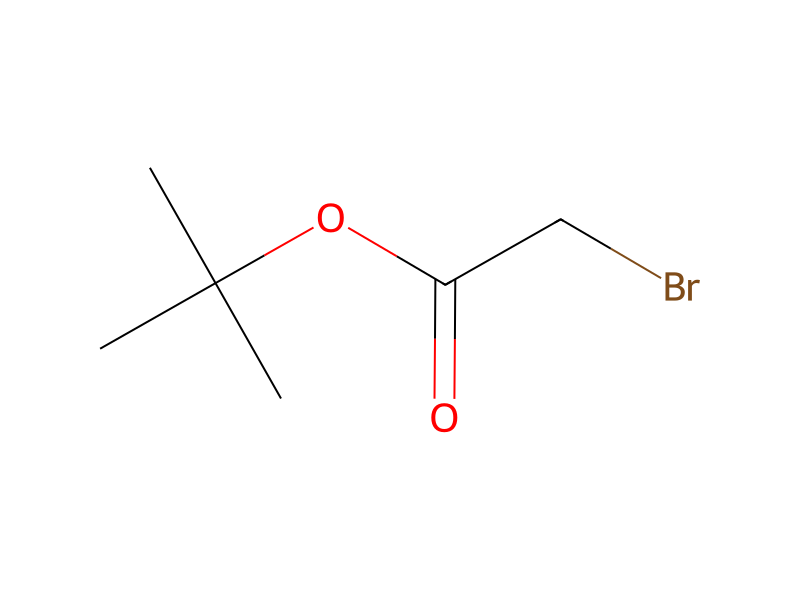
The inhibitors 18, 22 and 24 were prepared as described in Scheme 2. The compound tert.-Butyl 2-(hydrazino)acetic acid was prepared from 80% hydrazine hydrate and t-butylbromoacetate according to the procedure of Niedrich, 1969. The hydrazine was coupled with Z-Ala-Ala-OSu 1 (prepared as described in Experimentals, Starting Material) to obtain the compound 14. Treatment of the t-butyl ester with TFA in dichloromethane provided the compound 15, which was converted into the compound 16 via coupling reaction with HATU, HOAt and triphenylmethylamine. Acylation with chloroacetyl chloride or bromoacetyl bromide gave the corresponding chloroacetyl and bromoacetyl derivative 17 and 21. The trityl protecting group was removed by TFA in the presence of triisopropylsilane to give the inhibitor 2-[2-(Cbz-L-Ala-L-Ala)-1-chloroacetyl)hydrazino]acetamide 18 and 22 (Method D). Treatment of 21 with benzoic acid in the presence of potassium fluoride was followed by treatment with trifluoroacetic acid (Method D) generated the benzoyloxymethylketone 24. The asparagine analogues were recognised by the protease resulting in potent inhibition. The second-order rate constant for the inactivation of legumain by the chloromethylketone (18), 139088 M−1s−1 is approximately 200 fold higher than that of the Michael acceptor inhibitors (Table 3). Whereas the bromomethylketone (22) is another potent inhibitor, the benzoyloxymethylketone (24) displays only moderate inhibition. Neither papain nor cathepsin B is inhibited by these inhibitors.
後処理
- customThe inhibitors 18, 22 and 24 were prepared
出典と根拠
- ORDレコード
- ord-78bf758b3d364abaa361c117c30b8f46
- 出典データセット
- uspto-grants-2007_10
- 特許番号
- US07279550B2
関連ノート
読み込み中…