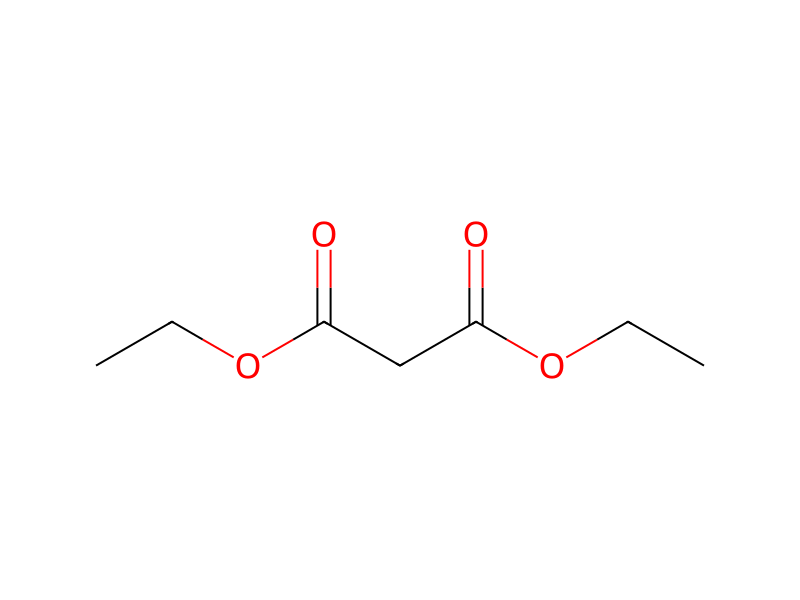
[C:1]([O:9][CH2:10][CH3:11])(=[O:8])[CH2:2][C:3]([O:5][CH2:6][CH3:7])=[O:4].C(=O)([O-])[O-].[K+].[K+].Cl[CH2:19][C:20]1[C:28]([CH2:29][CH2:30][CH3:31])=[CH:27][C:23]2[O:24][CH2:25][O:26][C:22]=2[CH:21]=1>[Br-].C([N+](CCCC)(CCCC)CCCC)CCC.CC(C)=O>[CH2:29]([C:28]1[C:20]([CH2:19][CH:2]([C:3]([O:5][CH2:6][CH3:7])=[O:4])[C:1]([O:9][CH2:10][CH3:11])=[O:8])=[CH:21][C:22]2[O:26][CH2:25][O:24][C:23]=2[CH:27]=1)[CH2:30][CH3:31]24.3 g of diethyl malonate, 42 g of potassium carbonate, 300 ml of acetone and a catalytic amount of tetrabutylammonium bromide were added to 16.1 g of crude 5-chloromethyl-6-propyl-1,3-benzodioxole and the mixture was heated under reflux for 25 h. The reaction mixture was filtered and the residue was washed with acetone. The washing was combined with the filtrate. The solvent was distilled off. 500 ml of ethyl acetate and 500 ml of water were added thereto and the layers thus formed were separated. The ethyl acetate layer was washed with water three times and dried over anhydrous sodium sulfate. The solvent was distilled off to obtain 16.5 g of the crude intended compound in the form of a colorless oil.