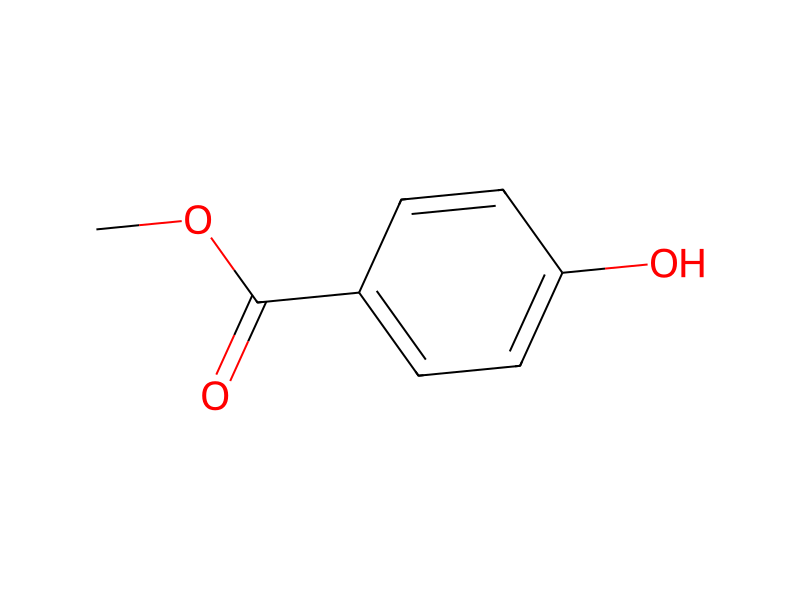
In this example, 348.9 g of sodium salt of methyl p-hydroxybenzoate, 402.4 g of phthalide and 200 g of sodium chloride are mixed with one another and stirred at 150° C. for 6 hours. After completion of the reaction, the mixture is cooled until the temperature is brought back to room temperature, 4 l of aqueous 10% acetic acid solution is added thereto and the mixture is allowed to stand at room temperature overnight. After stirring the mixture at room temperature for 3 hours, deposited crystals are separated by filtration, and 6 l of water is added thereto. After stirring the mixture at room temperature for 30 minutes, the deposited crystals are separated by filtration. After the addition of 3 l of toluene to the crystals, the mixture is stirred at room temperature for one hour. The crystals are separated by filtration and dried over heating under reduced pressure to yield 393.9 g of 2-(4-methoxycarbonylphenoxy) methyl benzoic acid.