反応式

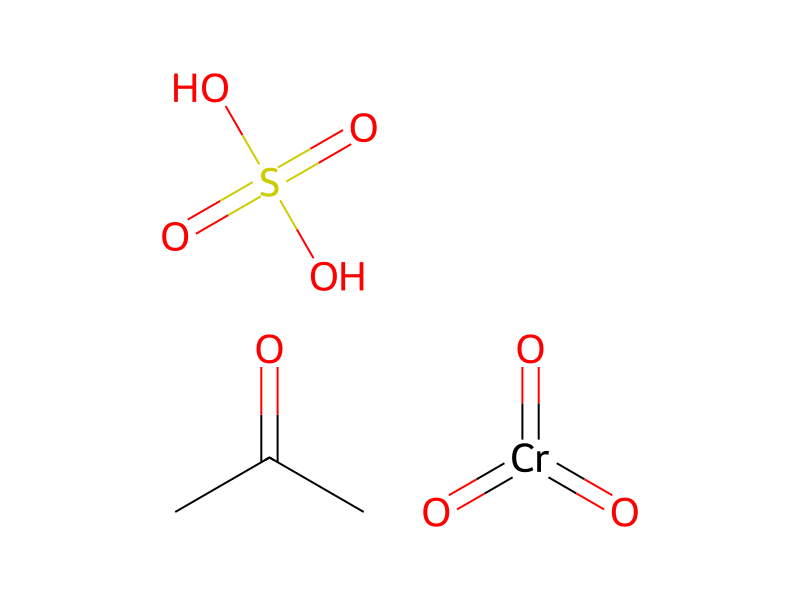
[CH3:1][C:2](=[CH:4][CH2:5][CH2:6][CH:7]([CH2:9][CH2:10][OH:11])[CH3:8])[CH3:3].[Cr]([O-])([O-])(=O)=[O:13].CC(C)=O.OS(O)(=O)=O.O=[Cr](=O)=O>>[C:10]([OH:13])(=[O:11])[CH2:9][CH:7]([CH2:6][CH2:5][CH:4]=[C:2]([CH3:3])[CH3:1])[CH3:8]参加物



実験手順
Citronellol is oxidized with a chromate-type oxidizing agent (e.g., Jones reagent) to the carboxylic acid which is then esterified to give an ester of citronellic acid. The double bond is converted into an epoxide by a peroxide as described in Step 4. And then, the epoxide is oxidatively cleaved with a periodate to give an aldehyde, which is converted into the olefinic compound by convention Wittig reaction using trimethylphosphonium bromide and a base. The compound thus prepared is condensed with dimethyl methylphosphonate in the presence of base to give the desired compound. When an optically active compound such as (S)-(-)-citronellol is used as a starting material and allowed to react in the same manner, (S)-dimethyl 2-oxo-4-methyl-7-octenylphosphonate is prepared.
出典と根拠
- ORDレコード
- ord-9e0ed45a894f4dbea7d722ec0e471e4b
- 出典データセット
- uspto-grants-1990_02
- 特許番号
- US04902811
関連ノート
読み込み中…