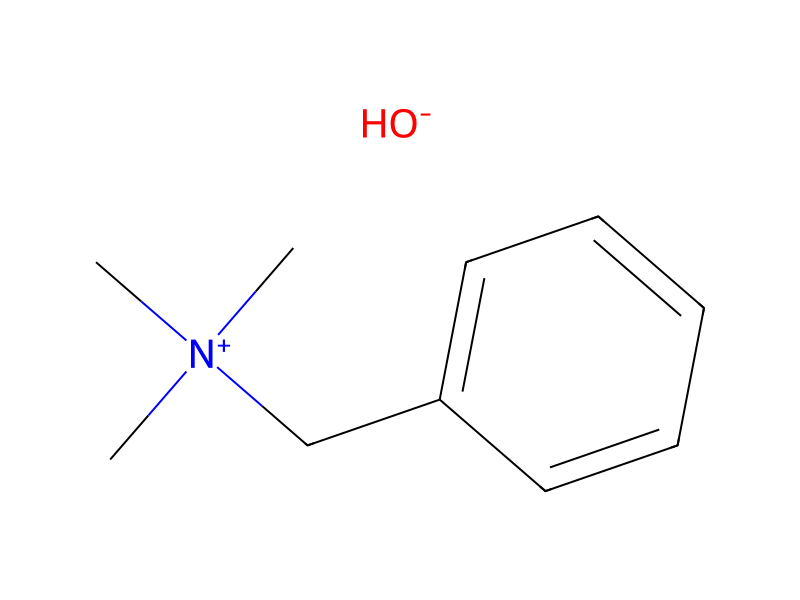
[C:1]([CH2:3][C:4]1[CH:9]=[CH:8][C:7]([O:10][CH3:11])=[C:6]([O:12][CH:13]2[CH2:17][CH2:16][CH2:15][CH2:14]2)[CH:5]=1)#[N:2].[C:18]([O:22][CH3:23])(=[O:21])[CH:19]=[CH2:20].[OH-:24].[CH2:25]([N+](C)(C)C)[C:26]1[CH:31]=CC=CC=1.[CH3:36][OH:37]>C(#N)C>[CH3:23][O:22][C:18](=[O:21])[CH2:19][CH2:20][C:3]([C:1]#[N:2])([C:4]1[CH:9]=[CH:8][C:7]([O:10][CH3:11])=[C:6]([O:12][CH:13]2[CH2:17][CH2:16][CH2:15][CH2:14]2)[CH:5]=1)[CH2:25][CH2:26][C:31]([O:37][CH3:36])=[O:24]A 12 liter round bottom flask equipped with an overhead stirrer, internal thermometer, and a reflux condensor equipped with a nitrogen inlet was flushed with nitrogen. The flask was charged with a solution of 4-cyanomethyl-2-cyclopentyloxy-1-methoxybenzene (460 g, 1.99 mol, 1.0 equivalent) in acetonitrile, and methyl acrylate (520 g, 6.0 mol, 3.0 equivalents). The contents of the flask was cooled to −10° C. A pressure equalizing addition funnel was charged with acetonitrile (1.1 L) and benzyltrimethyl ammonium hydroxide (a 40% w/w solution in methanol, 25 g, 0.06 mol, 0.03 equivalents). The contents of the addition funnel was added to the flask. An exotherm was observed, and after stirring for 30 minutes the contents of the flask were cooled to 20° C. The reaction was concentrated under reduced pressure to a residue. To the residue was added toluene (2.6 L). This solution of dimethyl-4-cyano-4-(3-cyclopentyloxy-4-methoxy-phenyl)pimelate(90% solution yield) was used directly in the next step.