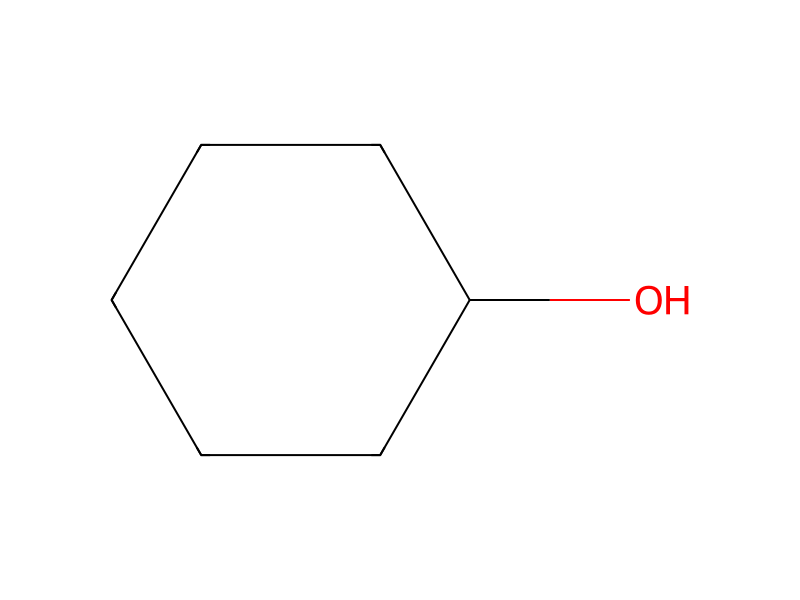
In the case of hydrogenating phenol through a phenol hydrogenation process of prior art, for example by using an alumina-supported palladium catalyst, and introducing a mixed solution of phenol and cyclohexane with a phenol/cyclohexane molar ratio of ½ at a phenol flow rate of 0.0135 mol/hr into a hydrogen gas stream (hydrogen/phenol molar ratio=5.4) and carrying out reaction at 230° C., at the start of the flow reaction 98% cyclohexanone and 2% cyclohexanol were produced at a phenol conversion ratio of 77%. However, with this method, there is a drawback that a drop in activity and hence a drop in the conversion ratio occurs due to carbonaceous matter accumulating on the catalyst, and hence the conversion ratio became 63% thirty minutes after the start of the reaction, 55% after 1 hour, 44% after 2 hours, and 42% after 8 hours. Moreover, with this method, experimental operation using only phenol was difficult, and hence the phenol had to be used with harmful cyclohexane as a solvent (N. Mahata and V. Vishwanathan, Journal of Catalysis, 196, 262-270 (2000)).