Ethyl benzoylacetate → 6-Bromo-2-phenylquinolin-4(1H)-one
反応式

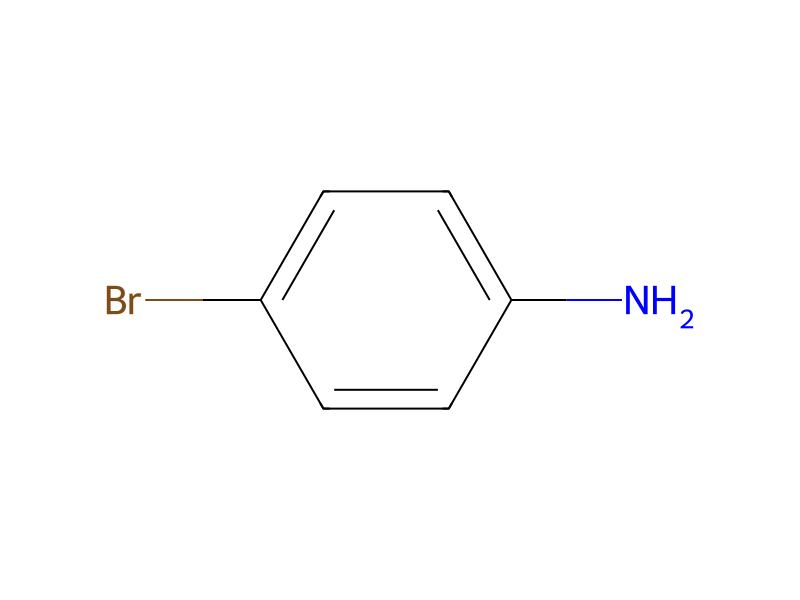
[Br:1][C:2]1[CH:8]=[CH:7][C:5]([NH2:6])=[CH:4][CH:3]=1.[C:9]([CH2:17][C:18](OCC)=[O:19])(=O)[C:10]1[CH:15]=[CH:14][CH:13]=[CH:12][CH:11]=1>>[Br:1][C:2]1[CH:8]=[C:7]2[C:5](=[CH:4][CH:3]=1)[NH:6][C:9]([C:10]1[CH:15]=[CH:14][CH:13]=[CH:12][CH:11]=1)=[CH:17][C:18]2=[O:19]参加物
3


反応条件
- 温度
- 150 °C
実験手順
A mixture of 4-bromoaniline (7.0 g, 40.7 mmol), ethyl benzoylacetate (14.09 mL, 81.4 mmol), and polyphosphoric acid (15.95 g, 162.7 mmol) was heated without solvent to 150° C. for 3 h. After 3 h, the reaction was cooled to RT, and the mixture was quenched with 4 N HCl (200 mL), which caused an orange cake to form. This solid was filtered, and to this was added 2N NaOH (200 mL). The majority of the solid did not dissolve, and was filtered off. The solid was washed with water (200 mL) and a mixture of 1:1 acetone/DCM (200 mL), and stored under vacuum overnight to give 6.52 g (53% yield) of ˜95% (by LC-MS) pure 6-bromo-2-phenylquinolin-4(1H)-one. Further purification can be accomplished by recrystallization with n-butoxyethanol to yield analytically pure material. 1H NMR (400 MHz, DMSO-d6) ppm: 11.87 (br s, 1H), 8.18 (d, J=2.4 Hz, 1H), 7.82 (m, 3H), 7.73 (d, J=8.8 Hz, 1H), 7.60 (m, 3H), 6.39 (d, J=1.6 Hz, 1H). LRMS (CI, [M+H]) Calc'd=300.1. found=300.1.