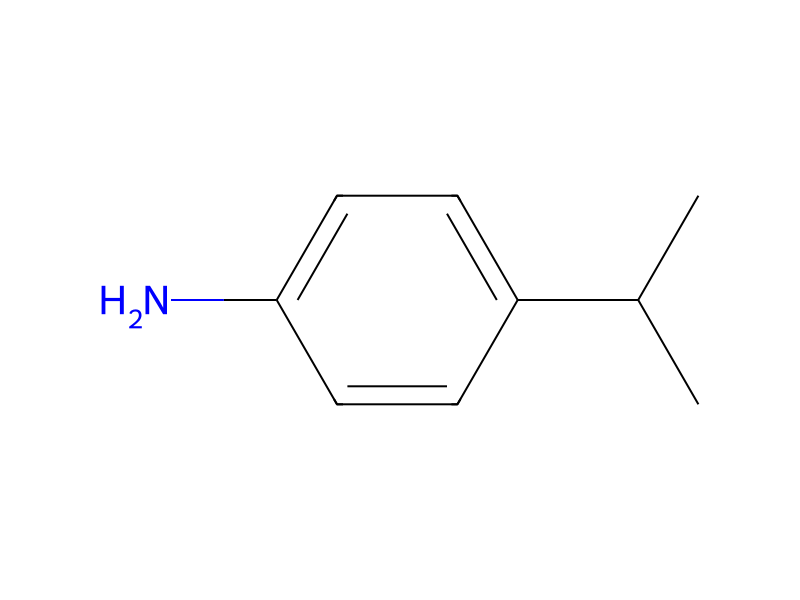
[CH:1]([C:3]1[CH:12]=[C:11]2[C:6]([CH:7]=[C:8]([OH:16])[C:9]([C:13]([OH:15])=[O:14])=[CH:10]2)=[CH:5][CH:4]=1)=O.C(O)(=O)C.[CH3:21][CH:22]([C:24]1[CH:30]=[CH:29][C:27]([NH2:28])=[CH:26][CH:25]=1)[CH3:23].C([BH3-])#N.[Na+].Cl>CO>[OH:16][C:8]1[C:9]([C:13]([OH:15])=[O:14])=[CH:10][C:11]2[C:6]([CH:7]=1)=[CH:5][CH:4]=[C:3]([CH2:1][NH:28][C:27]1[CH:29]=[CH:30][C:24]([CH:22]([CH3:23])[CH3:21])=[CH:25][CH:26]=1)[CH:12]=27-Formyl-3-hydroxynaphthalene-2-carboxylic acid (40 mg, 0.19 mmol) (example 342) was suspended in methanol (300 μL). Acetic acid (16 μL, 17 mg, 0.28 mmol) and 4-(2-propyl)aniline (40 μL, 40 mg, 0.30 mmol) were added consecutively, and the resulting mixture was stirred vigorously at room temperature for 2 hours. Sodium cyanoborohydride (1.0 M in tetrahydrofuran, 300 μL, 0.3 mmol) was added, and the stirring was continued for another 17 hours. The reaction mixture was poured into 6 N hydrochloric acid (aq.) (6 mL), and the precipitate was filtered off and rinsed with water (3×2 mL) to yield the title compound (40 mg) as its hydrochloride salt. No further purification was necessary.