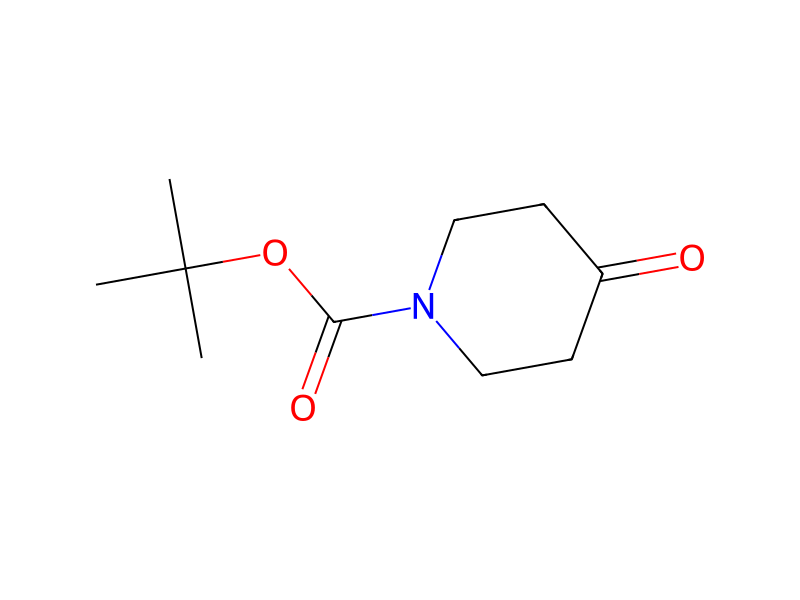
[CH3:1][CH:2]([C:4]1[CH:9]=[CH:8][CH:7]=[CH:6][C:5]=1[NH2:10])[OH:3].[C:11]([N:18]1[CH2:23][CH2:22][C:21](=O)[CH2:20][CH2:19]1)([O:13][C:14]([CH3:17])([CH3:16])[CH3:15])=[O:12].C(O)(=O)C.C([BH3-])#N.[Na+]>CO>[CH3:1][CH:2]([C:4]1[CH:9]=[CH:8][CH:7]=[CH:6][C:5]=1[NH:10][CH:21]1[CH2:22][CH2:23][N:18]([C:11]([O:13][C:14]([CH3:17])([CH3:16])[CH3:15])=[O:12])[CH2:19][CH2:20]1)[OH:3]Methyl-2-aminophenyl carbinol from Step 1 above (0.86 g, 6.3 mmol), N-Boc-4-piperidone (2.5 g, 12.6 mmol), and acetic acid (1.08 mL, 1.13 g, 18.9 mmol) were combined in methanol (10 mL). Sodium cyanoborohydride (0.79 g, 12.5 mmol) was added in portions, and the mixture was stirred at ambient temperature for 18 hours. The mixture was concentrated in vacuo. Ethyl acetate (100 mL) was added to the residue and the resulting mixture was washed with saturated aqueous sodium bicarbonate, dried over sodium sulfate, filtered, and evaporated in vacuo. The residue was chromatographed on silica gel eluted with 1:9 then 15:85 EtOAc:hexane. The combined product fractions were evaporated to dryness in vacuo to give methyl-(2-(1-Boc-4-piperidinylamino)phenyl) carbinol.