Benzhydrylpiperazine → HCID 20298863、化合物
HRID 1389296
反応式

[Cl:1][C:2]1[CH:7]=[CH:6][C:5]([CH2:8]Cl)=[CH:4][C:3]=1[N+:10]([O-:12])=[O:11].[C:13]1([CH:19]([C:26]2[CH:31]=[CH:30][CH:29]=[CH:28][CH:27]=2)[N:20]2[CH2:25][CH2:24][NH:23][CH2:22][CH2:21]2)[CH:18]=[CH:17][CH:16]=[CH:15][CH:14]=1>C(O)C>[Cl:1][C:2]1[CH:7]=[CH:6][C:5]([CH2:8][N:23]2[CH2:24][CH2:25][N:20]([CH:19]([C:13]3[CH:18]=[CH:17][CH:16]=[CH:15][CH:14]=3)[C:26]3[CH:31]=[CH:30][CH:29]=[CH:28][CH:27]=3)[CH2:21][CH2:22]2)=[CH:4][C:3]=1[N+:10]([O-:12])=[O:11]参加物
4
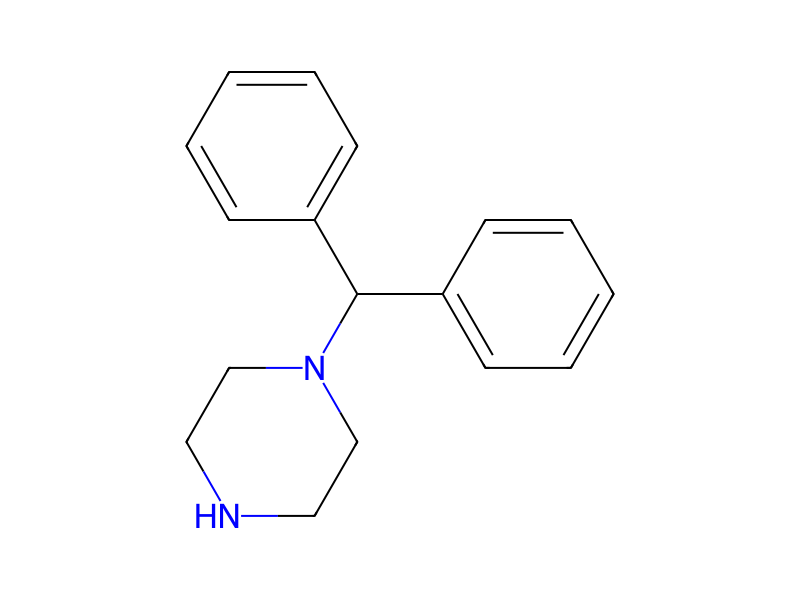



実験手順
A mixture of 10.3 parts of 1-chloro-4-(chloromethyl)-2-nitrobenzene, 25.2 parts of 1-(diphenylmethyl)piperazine and 120 parts of ethanol is stirred and refluxed for 4 hours. The reaction mixture is cooled and evaporated. The residue is taken up in about 100 parts of water and the products is extracted with methylbenzene. The extract is washed with water, dried, filtered and evaporated. The residue is purified by column-chromatography over silica gel using trichloromethane as eluent. The pure fractions are collected and the eluent is evaporated. The residue is crystallized from a mixture of 2,2'-oxybispropane and hexane (1:2 by volume). The product is filtered off, washed with hexane and dried, yielding 19.6 parts of 1-(4-chloro-3-nitrophenylmethyl)-4-(diphenylmethyl)piperazine; mp. 101.6° C.