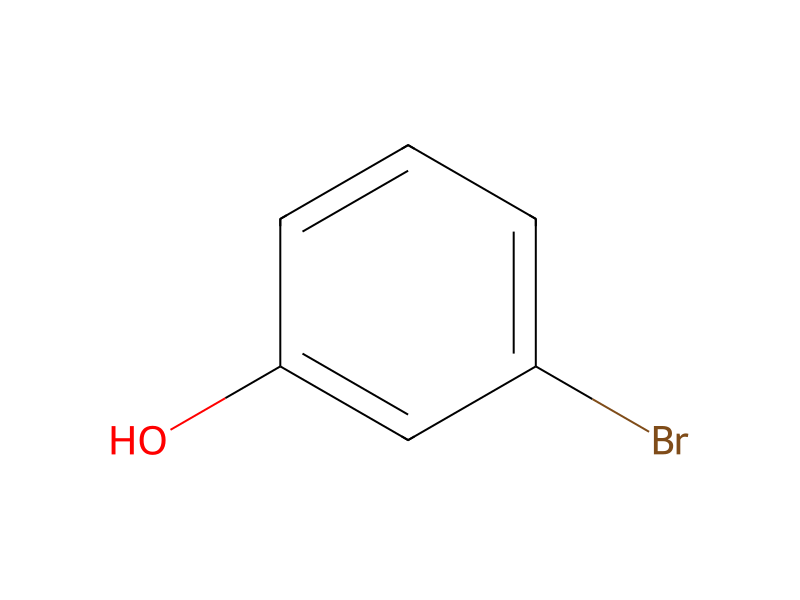
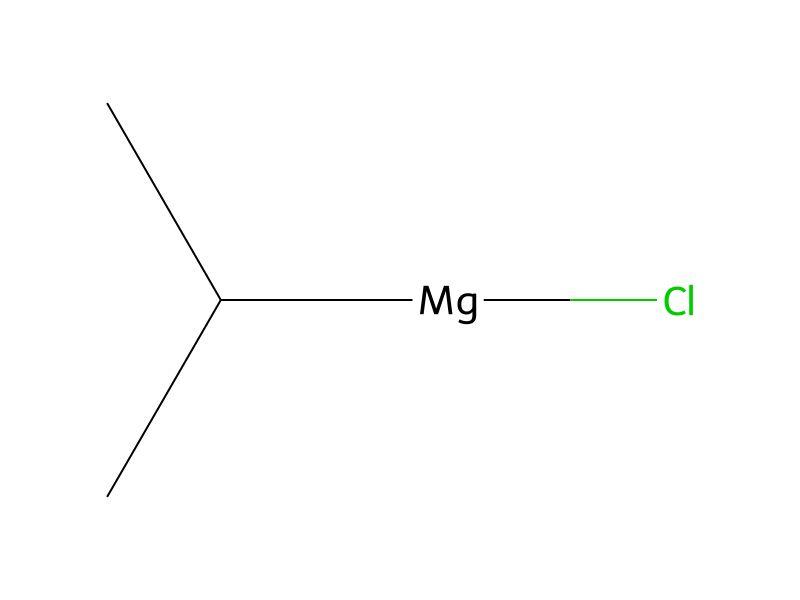
[Br:1][C:2]1[CH:3]=[C:4]([OH:8])[CH:5]=[CH:6][CH:7]=1.C([Mg]Cl)(C)C.[F:14][C:15]([F:34])([F:33])[C:16]1[O:20][C:19]([CH2:21][N:22]2[C:30]3[C:25](=[CH:26][CH:27]=[CH:28][CH:29]=3)[C:24](=[O:31])[C:23]2=[O:32])=[CH:18][CH:17]=1>O1CCCC1.ClCCl>[Br:1][C:2]1[CH:7]=[CH:6][C:5]([C:24]2([OH:31])[C:25]3[C:30](=[CH:29][CH:28]=[CH:27][CH:26]=3)[N:22]([CH2:21][C:19]3[O:20][C:16]([C:15]([F:34])([F:33])[F:14])=[CH:17][CH:18]=3)[C:23]2=[O:32])=[C:4]([OH:8])[CH:3]=1To a stirred solution of 3-bromophenol (4.4 g, 25.4 mmol) in tetrahydrofuran (100 mL) was added iso-propylmagnesium chloride (12.7 mL, 2 M tetrahydrofuran solution, 25.4 mol) slowly at 0° C. The mixture was allowed to stir for 30 min at 0° C., then the solvent was removed in vacuo. Dichloromethane (100 mL) was added, followed by the addition of a solution of 1-((5-(trifluoromethyl)furan-2-yl)methyl)indoline-2,3-dione (5.0 g, 16.9 mol) in dichloromethane (100 mL) at 0° C. The mixture was stirred at ambient temperature for 16 h, quenched by the addition of saturated ammonium chloride solution. The organic layer was washed with water, dried over sodium sulfate and concentrated in vacuo. The obtained solid was recrystallized from ethyl acetate/hexanes to afford 3-(4-bromo-2-hydroxyphenyl)-3-hydroxy-1-{[5-(trifluoromethyl)furan-2-yl]methyl}-1,3-dihydro-2H-indol-2-one (6.4 g, 81%) as a colorless solid: 1H NMR (300 MHz, DMSO-d6) δ7.49-5.83 (m, 9H), 5.13-4.71 (m, 2H); MS (ES+) m/z 449.9 (M−17), 451.9 (M−17).